Golden Proportion in Prosthodontics (Part-3)
Sardar Patel Postgraduate Institute of Dental and Medical Sciences, Lucknow, India, Sardar Patel Postgraduate Institute of Dental and Medical Sciences, Lucknow, India, 2Consultant Dental Surgeon, S.G.P.G.I., Lucknow, Department of Prosthodontics
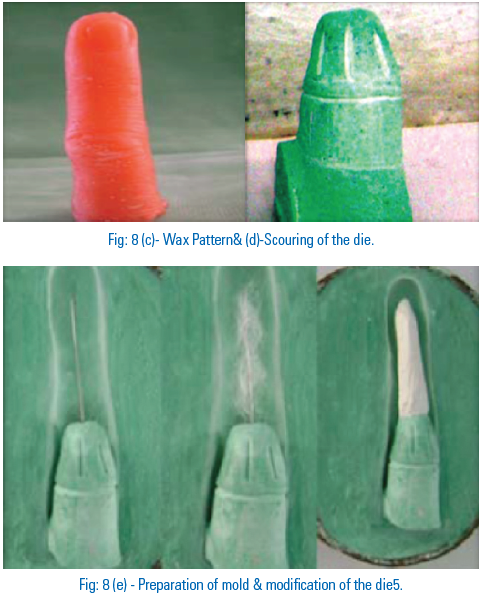
The Golden Proportion method is also applicable in fabrication of prostheses for maxillofacial defects like that in case of an ocular prosthesis (Fig no.6 a, b, c, d, e, 7 a, b, c, d & 8 a, b, c, d, e, f)3.
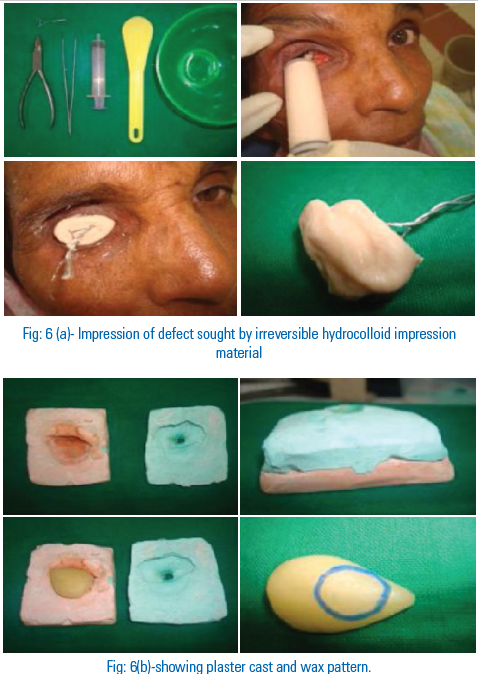
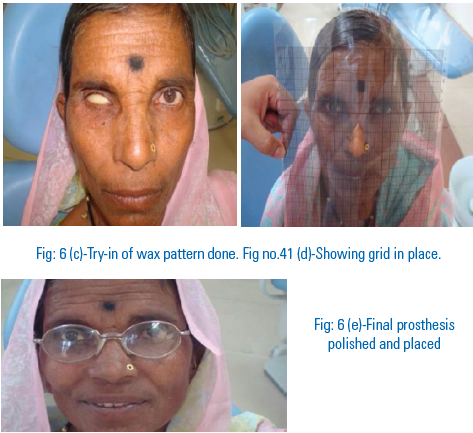
Into the ocular defect. The esthetic rehabilitation in conformity to the Golden Proportion is evident.
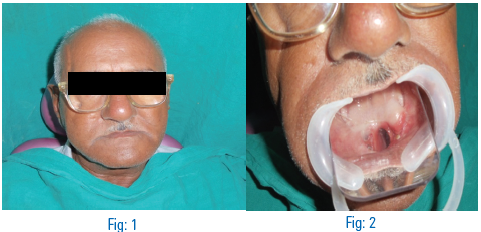
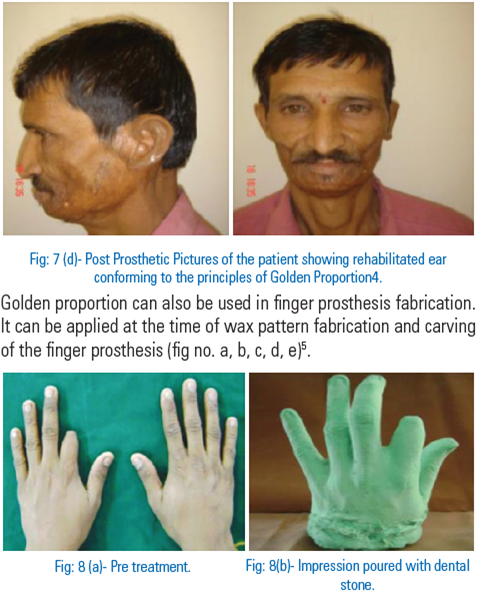
Golden proportion is also applicable in fabrication of an auricula prosthesis (Fig no. a, b, c, and d)4.

GOLDEN PROPORTION IN ADVANCED SMILE DESIGN
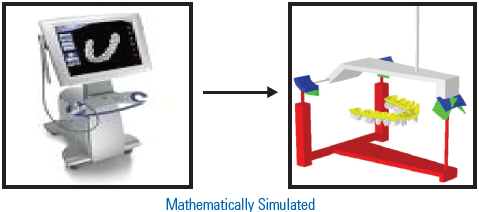
- Recent advances in electronics have made it possible to create a virtual smile for a patient eith the help of some basic data like front and profile digital photographs, casts, cone beam CT images)6.
- The following esthetic characteristics must be considered when asmile design is being planned-
- Line angles- the area where the facial surface of the tooth turns interproximally into the contact area.
- Outline form- the shape of each respective anterior tooth when mesial and distal line angles and the incisal and gingival aspects of a tooth are connected.
- Embrasure spaces- these must be evaluated to determine if they increase slightly as the teeth go from central to canine.
- Maxillary teeth- from central to canine, there should be a subtle increase in mesial inclination when viewing a patient’s smile from the front.
- Contact points- gradually decreases from central to canine. The more youthful the teeth, the more apically positioned the interdentalcontact. The more incisal the contact is placed, the more mature the teeth will appear.
- Gingival levels- the upper lip usually follow the upper gingival architecture, and the upper incisal edges follow the curvature of the lower lip.
- Buccal Corridor/Vestibular space- depending on the arch width, soft tissue patterns and muscle, most appealing smiles have minimal buccal corridor space.
- Incisal Edge position- is a key factor, considered by Dawson, governed by contour and position of the labial surfaces of each tooth. Anterior guidance must be developed or maintained. The central incisor is on the same plane as the tip of the canines and the buccal cusp tips of the premolars and molars.
- Dental/Facial midline- should be coincidental and at 90° to a horizontal reference plane eg. interpupillary line and lip line.
- Golden Proportion Rule- if the lateral incisors are a factor of 1, then centrals are 1.618 and the canines are 0.618 of the size of the laterals.
- Occlusal Plane- should be parallel to the facebow, and aligned with the interpupillary line.
- Facial assessment- the dental form should compliment the facial form. A round face can be made to appear narrow by elongating the teeth. A narrow face can appear wider with a fatter smile line.
- Phonetics- eg. F and Vsounds can be used to assess the length and labio-lingual position of the upper anteriors6.
- New software the Interactive Smile Style Guide (ISSG Digident.com) has been developed by Dr. Lorin Berland and Dr. David L. Traub6.
- Another software, called the Guided Positioning System GPS (mydentalgps.com) developed by Dr. Alain Methot, takes digitized images of the patient’s facial view at 1:10 ratio6.
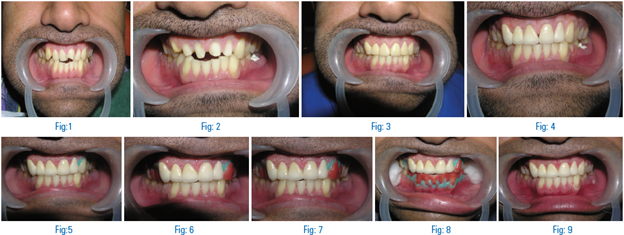
The software determines the Modified Golden Proportion Formula, specific for each patient. Using the photographic protocol in the dental GPS, axial inclinations, length of teeth, soft tissue levels, contact points, midline placement within the full facial complex, buccal corridor space are all determined. The software also prints out a grid of the Modified Golden Proportion ratio, which can be forwarded to the laboratory so that the wax up can be done accordingly (Fig no. 9 a to x)7.
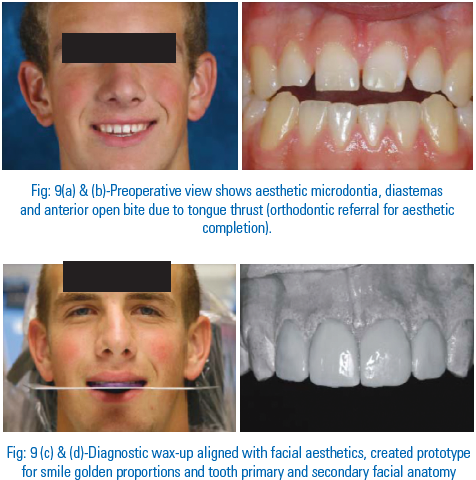
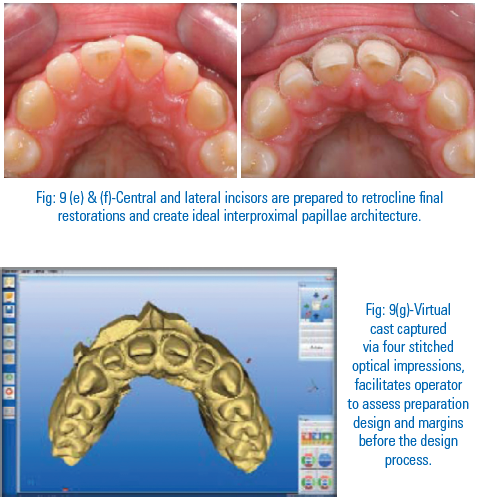
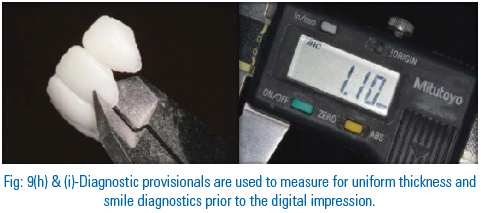

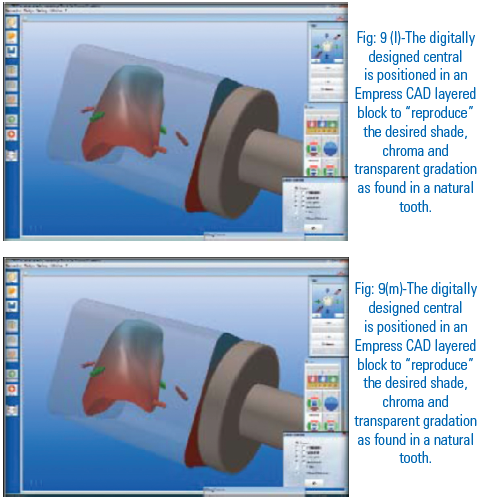

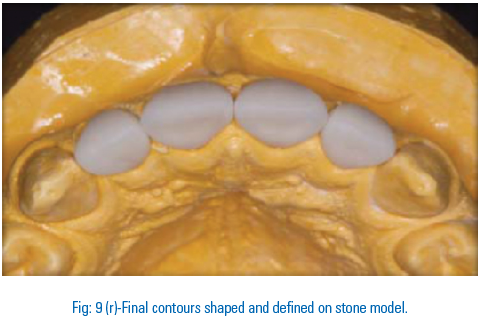
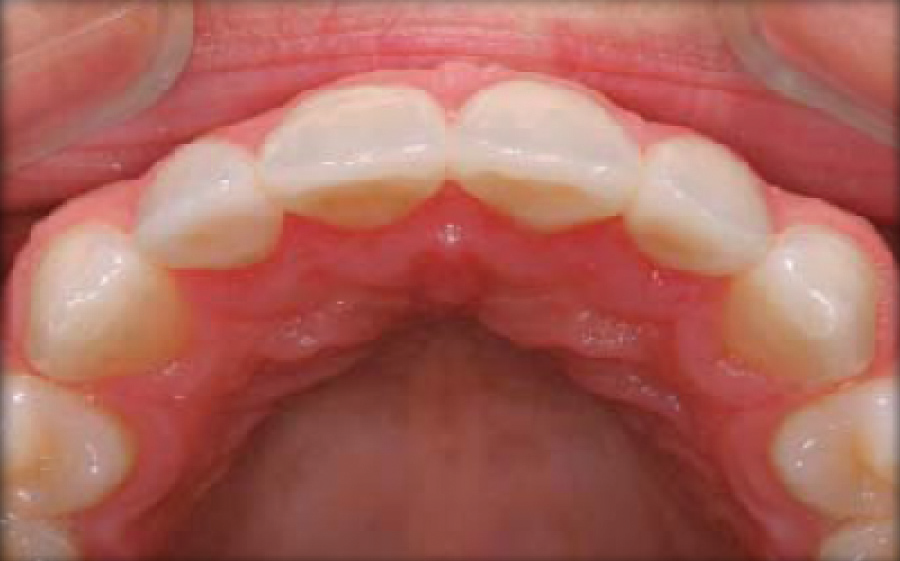
Fig: 9(s)-Final restorations illustrate the possibilities with the current CEREC software and Empress CAD Multi ceramics.
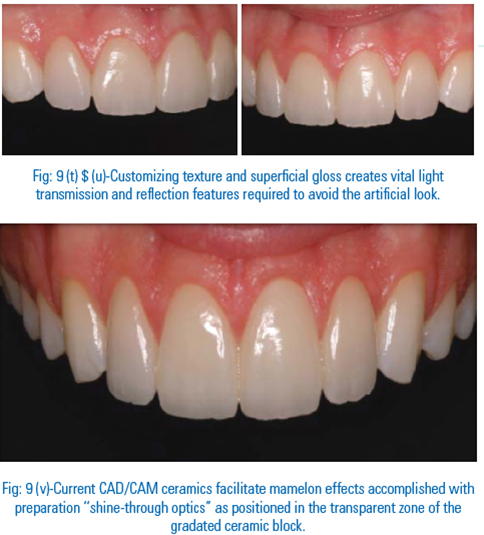
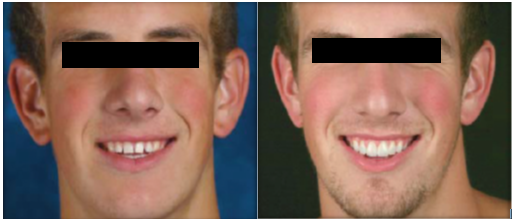
Fig: 9 (w) & (x) - Life changing smile transformation accomplished by treating the maxillary four incisors with chairside CAD/CAM CEREC technology and also conforming to the tenets of the Golden Esthetic Proportion7.
LIMITATIONS OF GOLDEN PROPORTION IN DENTISTRY
1. The size, shape, position of the maxillary central incisors plays an important role in designing a harmonious anterior dentition or smile. Positioning of the incisal edge of the maxillary central incisor is the key to esthetics, phonetics, and function.
2. Hakan et. al, in their study on perception of Golden Proportion in Orthodontically treated smiles, concluded that smile esthetics is a multifactorial concept which could not be relied on Golden Proportion Principles alone8.
DISCUSSION
Golden Proportion measurements have, long been a subject of research amongst dental professionals. Gillen et. al, reported a poor correlation between tooth size and Golden Proportion. Rosentiel et. al concluded that Golden Proportion was better correlated with long teeth1.
Preston positioned a millimeter scale directly below the cast during photography.Ward used a conversion factor by using a ratio of the cast dimension to image dimension. Levin (1978), asserted on the existence of the Golden Proportion in dentition. It was used to determine the relationship between maxillary anterior teeth widths. A Golden Proportion grid was also devised1.
Mashid et. al evaluated the Golden Proportion in individuals with an esthetic smile. They concluded that the proportion did not exist between perceived maxillary anterior teeth widths of individuals with an esthetic smile. Shillinberg et. al suggested a Golden Proportion range of 0.55 to 0.64. Gurel favored the Recurrent Esthetic Proportion more, when designing the smile. In reality, no two individuals can have the same facial morphology, lips, proportion, and dental arch form. Hence, using the RED proportion is more practical, since, it allows the freedom of using a different proportion, so long as it remains constant when moving distally in the dental arch. RED proportion offer superior esthetic results than when using Golden Proportion Formula2.
Anatomically accurate computer generated imaging is of value, in educating patients, as well as in predicting results and also a means of communication to the dental laboratory.
CONCLUSIONS
- Esthetics relates to sensation and perception. The smile can be considered to be the image of the soul.
- The Golden Proportion is everywhere around us in nature, and artists and philosophers had discovered this since ancient times.
- The Renaissance artists like Da vinci and Michelangelo have recognized and portrayed this Magical Proportion in some of their greatest works eg. Vitruvian Man and the Mona Lisa1.
- Lombardi and Levin were the first to demonstrate the Golden Proportion existence in the dental arches1.
- Workers like Ricketts, Levin, and La Corbusier have designed Golden Proportion and grids for use in evaluation of smile and to be used in reconstruction of smiles1.
- Ward demonstrated Recurrent Esthetic (RED) proportion, stating it to be more practical in use than the Golden Proportion in dental arch esthetics evaluation and rehabilitation1.
- Elements in smile viz., the midline, incisal edge position, occlusal plane, curvatures, etc. need to be understood and analyzed for every individual is different with different cultural background2.
- Perceptions of smile esthetics vary between individuals and also between lay persons and professionally trained persons.
- Recently developed interactive softwares by Berland and Traub (ISSG Digident.com) and Guided Positioning System (mydentalgps.com) by Methot, also use the Golden Proportion in virtual reconstruction and laboratory communication6.
- However, we can safely say that the Golden Proportion is a useful tool but not a rule, in evaluation and reconstruction of smile esthetics, maxillofacial reconstruction and in extensive dental rehabilitation work.
REFERENCES
- Omkar Shetty, and Sabita Ram – Dentogenic Concept-PartI, Scientific Journal-2007:Vol.I.
- Avi Donitza, DMD-Creating the Perfect Smile:Prosthetic Considerations and Procedures for Optimal Dentofacial Esthetics, CDA Journal-May 2008; 36(5):335-342.
- Dr. Nidhi Dinesh Sinha, Dr. Aruna J Bhandari, Dr. S.A. Gangadhar- Fabrication of custom ocular prosthesis using a graph grid, Pravara Med Rev.-2009; 4(1):21-24.
- Savadi Ravindra C., Kumar Satheesh, Preeti S., Jins John-Prosthetic Rehabilitation of a Burns Patient, Archives Of Dental Sciences-2010; 1(1):61-65.
- Suresh Babu. M, Gopinadh. A, Sandeep. C, Sreedevi. B, Krishna Kishore. K, Sanjay Dutt. M-An innovative technique for fabrication of finger prosthesis-A case report, J. ofOrofacial Sciences, April 2011;3(1):14-16.
- Peter D. Vastardis, DMD-Advanced Smile Design Technologies, Dentistry Today-December 2007:84-89.
- James Klim, DDS, FAGD, AAACD-Chairside CAD/CAM aesthetic restorations, Australasian Dental Practice-November-December 2009; 146-156.
- Harold R. Ortman, D.D.S., and Ding H. Tsao, D.D.S.-Relationship of November 1979; 42(5):492-495.
Disclaimer from Guident
The views and opinions expressed in articles published in Guident are solely those of the authors and do not necessarily reflect the views of the editors, the editorial board or the publisher, Ivory India. Guident does not endorse any product, technique or treatment described. Clinical content is intended for qualified dental and medical professionals and is not a substitute for individual clinical judgement. Guident, its editors and the publisher accept no liability for any consequence arising from the use of information published in the journal.
How to cite this article
Dr. Parul Singh, Dr. Manish Rai, Dr. Ajay Singh. Golden Proportion in Prosthodontics (Part-3). Guident. 2013 Jan;6(3). Available from: https://guident.in/articles/prosthodontics/golden-proportion-in-prosthodontics.html