Surgical Lip Repositioning: An Esthetic Correction for Gummy Smile
Department of Dentistry Medical College and S.S.G. Hospital, Gujarat, India
Abstract
Excessive gingival display commonly referred to as “Gummy Smile” can be a source of embarrassment for some patients. Delayed eruption and tooth malpositioning can be predictably treated with respective surgery and orthodontics. In patients with jaw deformities, orthognathic surgery can be performed, but it requires hospitalization and entails significant discomfort. This clinical report describes the successful use of lip repositioning technique for the reduction of excessive gingival display. A 32-year-old female patient reported with a chief complaint of gummy smile. The lip repositioning technique was performed under local anesthesia with the main objective of reducing gummy smile by limiting the retraction of elevator muscles (e.g. zygomaticus minor, levator anguli, orbicularis oris and levator labii superioris). The technique is fulfilled by removing a strip of mucosa from the maxillary buccal vestibule, creating a partial-thickness flap between mucogingival junction and upper lip musculature, and suturing the lip mucosa with mucogingival junction, resulting in a narrow vestibule and restricted muscle pull, thereby reducing gingival display. This procedure is safe, predictable with minimal risk or side effects and is an alternative treatment modality in esthetic treatment.
Key Words: Surgical lip repositioning, Gummy Smile
INTRODUCTION
Excessive gingival display is a common cause of patient dissatisfaction. In the so called “Gummy-Smile”, the gingiva is the dominant feature when compared to the lips and teeth. At least 50% of the patients exhibits some form of gingival display in a normal smile.1 However, exaggerated or forced smile patterns display gingiva in up to 76% of all patients. In absolute numbers, a normal gingival display between the inferior border of the upper lip and the gingival margin of the maxillary central incisors during a normal smile is 1-2 mm.1 In contrast, an excessive gingiva-to-lip distance of 4 mm or more is classified as “unattractive” by lay people and general dentists.1
Excessive gingival display is associated with different etiologies, which must be identified before treatment. Delayed eruption as a cause of excessive gingival display and its treatment by esthetic crown lengthening are well documented.2,3 Jaw deformities can also cause excessive gingival display and require orthognathic surgery.4 Surgery for the treatment of vertical maxillary excess can restore normal occlusal relationships and reduce gingival display. However, this surgery is associated with significant morbidity and requires general anesthesia & hospitalization. Therefore, lip repositioning is recommended as an alternative treatment for “Gummy Smile” which is an innovative, effective, less time consuming and performed under local anesthesia.
The objective of lip repositioning is to minimize the gingival display by limiting the retraction of elevator smile muscles (e.g. zygomaticus minor, levator anguli, orbicularis oris and levator labii superioris). This is accomplished by removing a strip of mucosa from the maxillary buccal vestibule, creating a partial-thickness flap between mucogingival junction and upper lip musculature, and suturing the lip mucosa with mucogingival junction, resulting in a narrow vestibule and restricted muscle pull, thereby reducing gingival display. This procedure was originally described in plastic surgery literature in 1973.4
CASE REPORT
A 30-year old female patient presented with a chief complaint of “Gummy Smile”. Her treatment goal was to minimize her gingival display in her smile (Fig 1). Patient’s medical history was non-contributory and there were no contraindications to surgical treatment. With an exaggerated smile, the patient’s teeth were visible from maxillary right first premolar to maxillary left first premolar. Informed consent was obtained after discussion of alternatives, benefits and possible complications of surgical lip repositioning.
Local anesthetic (Xylocaine 2% with Epinephrine 1:80,000) was administered in the vestibular mucosa and lip from maxillary right first premolar to left first premolar. Number 15 B.P. blade was used to mark the incision outline on the mucosa (Fig 2). A partial thickness incision was made at the mucogingival junction from the distal line angle of the maxillary right canine to distal line angle of maxillary left canine. A second partial thickness incision, parallel to the first, was made in the labial mucosa, 10-12 mm apical to the mucogingival junction (the amount of tissue excision should be double the amount of gingival display that needs to be reduced, with a maximum of 10-12 mm of tissue excision1). The incisions were connected at each canine, creating an elliptical outline. The epithelium was removed within the outline of incisions leaving the underlying connective tissue exposed (Fig 3). Care was taken to avoid damage to any minor salivary glands in the submucosa. Local anesthetic was used to control bleeding; use of electrocautery was not required because of less amount of bleeding. The parallel incision lines were approximated with interrupted stabilization sutures (Vicryl 4-0) at the midline and other locations along the borders of the incision to ensure proper alignment of the lip midline with the midline of the teeth (Fig 4). Then, a continuous interlocking suture was used to approximate both flap ends (Fig 5).
Nonsteroidal anti-inflammatory drugs (Diclofenac 50 mg three times a day for 5 days) and oral antibiotics (Amoxicillin 500 mg three times daily for a week) were given after surgery. The patient was instructed to use compresses for 3-4 hours and to minimize lip movement (while smiling and talking) for one week. Sutures were removed after 10 days (Fig 6). Uneventful healing (minimum ecchymosis and discomfort) was present. The patient reported tension and swelling on her upper lip and slight pain during smiling for a week after surgery. Suture site after 6 months can be appreciated in Fig 7. Six months follow-up examination reveals reduced gingival display (Fig 8). Patient’s maxillary right central incisor was non-vital due to trauma before 15 years; root canal treatment is planned for the same followed by fixed partial denture including maxillary central incisors and lateral incisors as spacing between these teeth was unaesthetic and unacceptable by the patient.
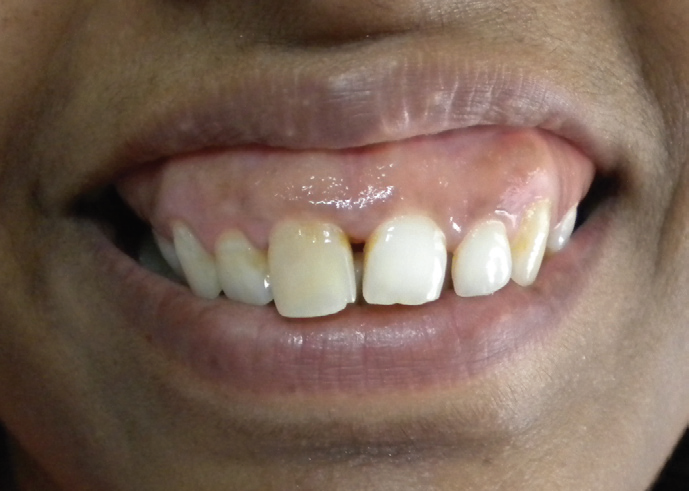
Fig 1: Pre operative Smile
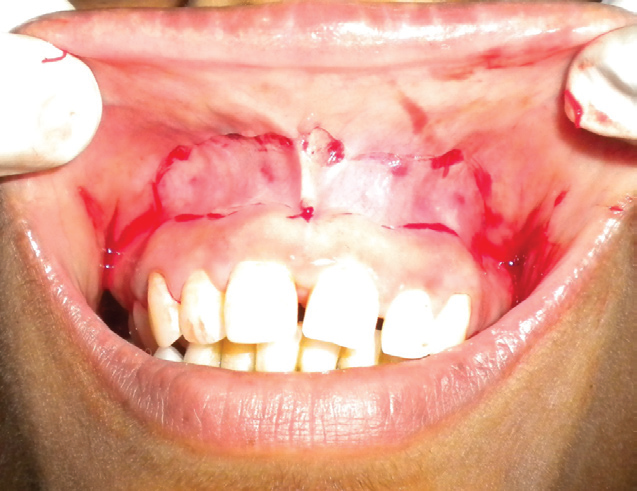
Fig 2: Incision Outline
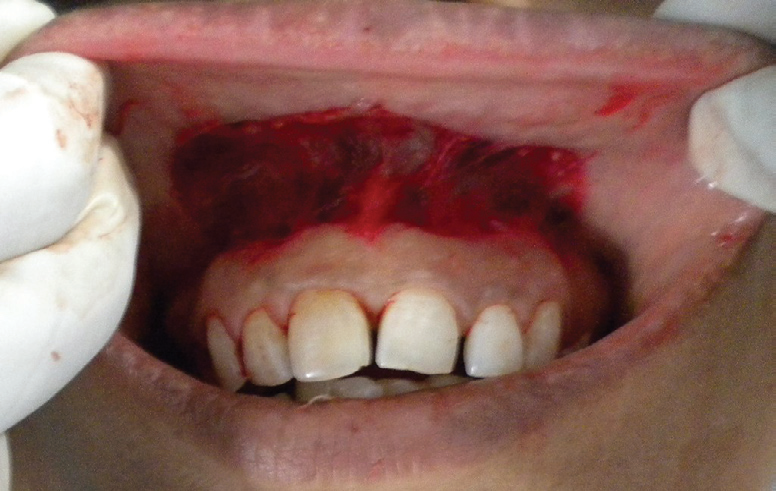
Fig 3: The epithelial layer is removed. A partial thickness flap exposes underlying connective tissue.
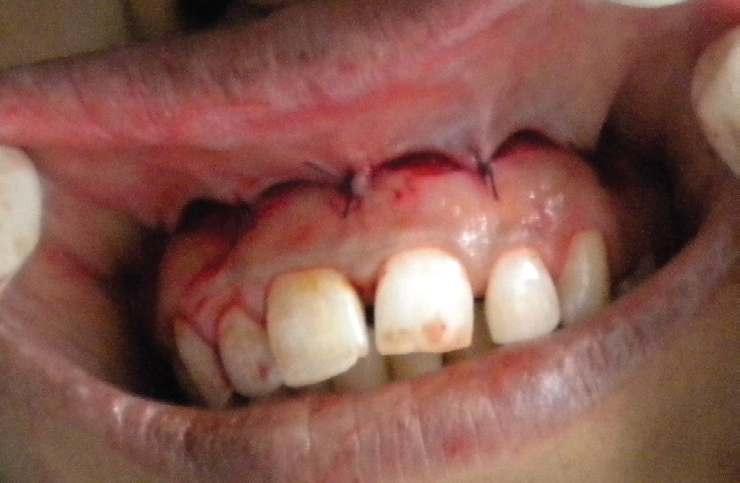
Fig 4: Interrupted sutures are applied to stabilize the desired line of closure.
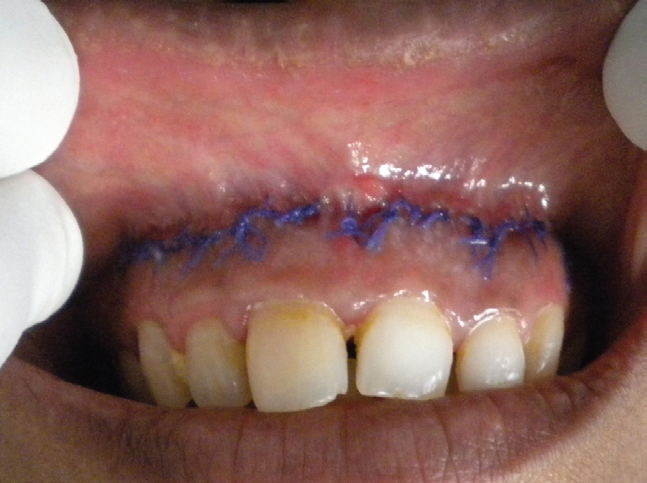
Fig 5: Continuous interlocking sutures in place.
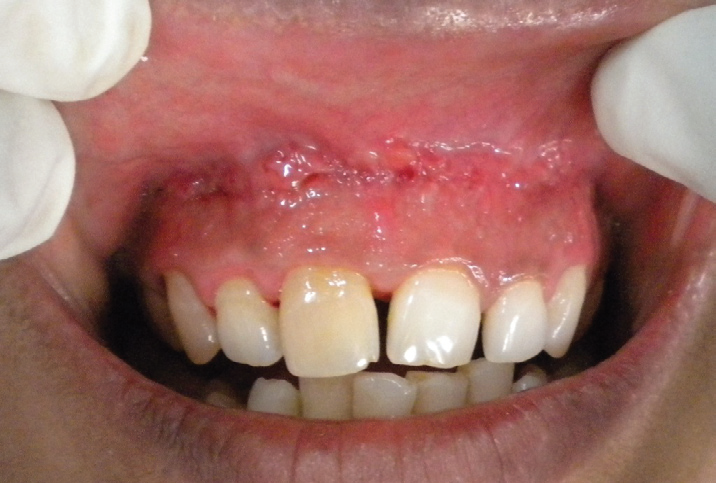
Fig 6: Immediately after suture removal (10 days after surgery)
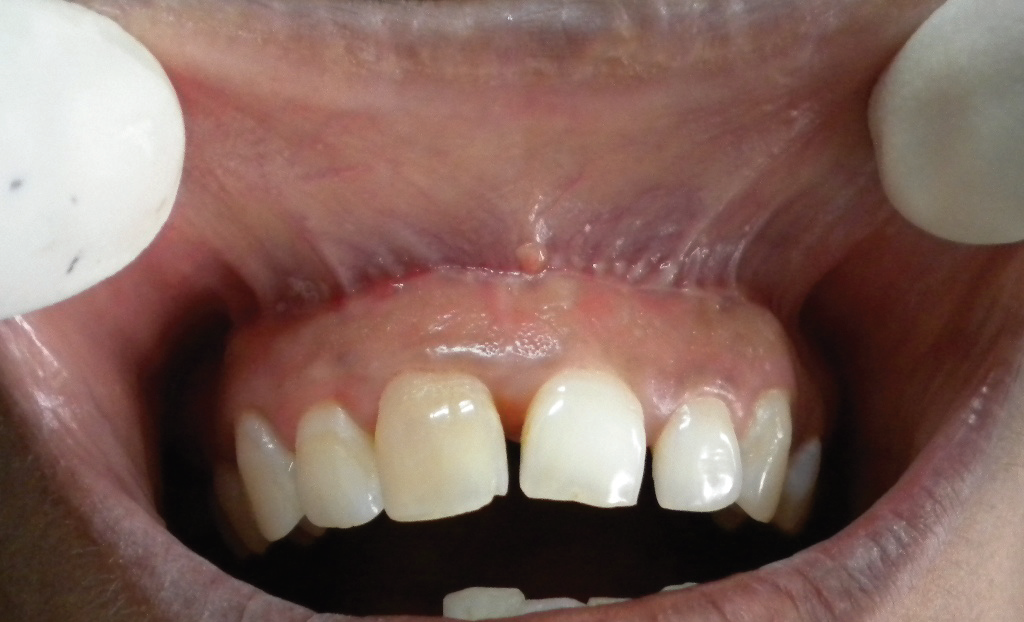
Fig 7: Healed site after 6 months
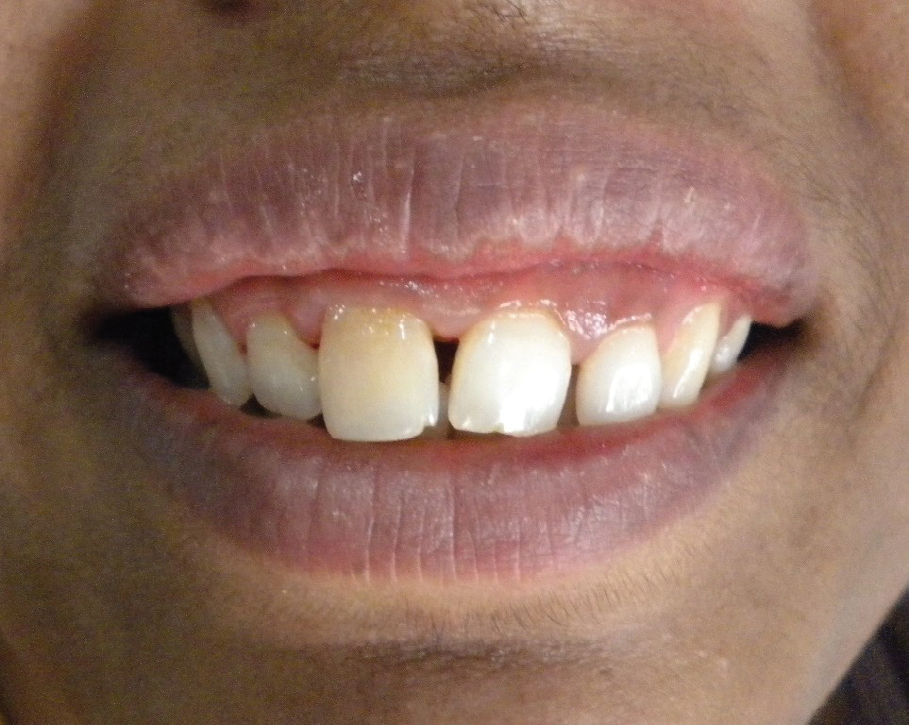
Fig 8: 6 months post operative smile
DISCUSSION
This clinical report describes the use of lip repositioning for the reduction of excessive gingival display. The procedure originated as a plastic surgical treatment but has rarely been described in the dental literature for many years, but now days; it has been described in dentistry particularly in periodontics. Variations in lip repositioning have been reported.5,6,7 The original technique5,7 did not include severing of the muscle attachment after flap reflection. Other authors advocated performing myectomies to detach the smile muscle attachment.5,6,7 The rationale for using myectomies was to allow for tension-free suturing and to prevent relapse.
Another method to prevent reattachment of the smile muscles is to use an alloplastic or autogenous separator.7 This spacer is placed with a nasal approach between the elevator muscles of the lip and the anterior nasal spine and thus prevents superior displacement of the repositioned lip.
Lip repositioning has also been performed in conjunction with Rhinoplasty.7 The nasal approach allows both surgical procedures to be combined; the surgical site is extended only minimally. This should be done only if Rhinoplasty is to be performed and if the patient desires a remedy for excessive gingival display.
Reports of postoperative bruising, discomfort and swelling of the upper lip in the literature, and in the authors’ experience, are rare.7 A more frequent complication may be formation of a mucocele because of the severing of minor salivary glands in the upper lip. The authors did not experience occurrence of mucocele in this case. Other rare complications that have been reported in the literature are parasthesia7 and transient paralysis.7
Contraindications for lip repositioning surgery are the same for any periodontal surgery. Patients with inadequate attached gingiva in the maxillary anterior sextant may not be candidates for lip repositioning (in present case, sufficient amount of attached gingiva was present in maxillary anterior region); the limited amount of tissue creates difficulties in flap design, stabilization, and suturing that could lead to relapse. Patients with severe vertical maxillary excess are not candidates for lip repositioning; instead, such patients should be treated with orthognathic surgery.
CONCLUSION
Surgical lip repositioning is an innovative and effective way to improve the gummy smile of a patient by placement of upper lip in a more coronal position. This technique is easy and less time consuming, cost effective way to give satisfactory results to the patient. The long term stability of results remains to be seen, but it holds promise as an alternative treatment modality in esthetic rehabilitation.
REFERENCES:
- Ziv Simon, Ari Rosenblatt, William Dorfman, Eliminating a gummy smile with surgical lip repositioning. Journal of Cosmetic Dentistry, Spring 23: 100-108, 2007.
- Lee EA, Aesthetic crown lengthening: Classification, Biologic Rationale and treatment planning considerations. Pract Proced Asthet Dent 16: 769-778, 2004.
- Chu SJ, Karabin S, Mistry S, Short tooth syndrome: Diagnosis, etiology and treatment management. J Calif Dent Assoc 32: 143-152, 2004.
- Haseeb H., Al-Dary, Surgical lip repositioning sing LASER for the reduction of excessive gummy smiles A case report Smile Dental Journal 7: Issue 3, 26-30, 2012.
- Krishna Kumar Gupta, Amitabh Shrivastava, Rameshwari Singhal et al, An innovative cosmetic technique called lip repositioning. Journal of Indian Society of Periodontology Vol 14: Issue 4; 266-269, 2010.
- Krishna Kumar Gupta, Amitabh Shrivastava, Chetan Chandra, Lip Repositioning with Crown Lengthening and Gingival Depigmentation –A Case Report. Journal of Periodontology and Implant Dentistry 3(1); 38-42, 2011.
- Ari Rosenblatt, Ziv Simon, Lip Repositioning for reduction of excessive gingival display: A clinical report. Int J Periodonics Restorative Dent 26; 433-437, 2006.
ACKNOWLEDGEMENT:
Hereby authors declare that source of funding was private and no conflict of interest is there. We would like to thank Dr. Jayman Raval, Dr. Bharat Chauhan, Dr. Neeta Rautela, Dr. Arun Gadhavi, Dr. Urvi Sukhadiya, Dr. Sajid Umarji, Dr. Mayur Charel, and Dr. Madhavi Pankhaniya for immense help and encouragement.
Disclaimer from Guident
The views and opinions expressed in articles published in Guident are solely those of the authors and do not necessarily reflect the views of the editors, the editorial board or the publisher, Ivory India. Guident does not endorse any product, technique or treatment described. Clinical content is intended for qualified dental and medical professionals and is not a substitute for individual clinical judgement. Guident, its editors and the publisher accept no liability for any consequence arising from the use of information published in the journal.
How to cite this article
Dr. Arti J. Raval, Dr. Prashant Patel. Surgical Lip Repositioning: An Esthetic Correction for Gummy Smile. Guident. 2013 Oct;6(12). Available from: https://guident.in/articles/periodontics/surgical-lip-repositioning-an-esthetic-correction-for-gummy-smile.html