LASER Technology- its Application in Periodontics
Departmemnt of Periodontics, Pad. Dr. D Y Patil Dental College and Hospital Nerul, Navi Mumbai, Maharashtra, India
Abstract:
The use of lasers has evolved as clinical experience along with scientific investigation. The dental lasers of today have benefited from decades of laser research and have their basis in certain theories from the field of quantum mechanics.
When used efficaciously and ethically, lasers are an exceptional modality of treatment for many clinical conditions that dental specialists treat on a daily basis. The concept of using lasers for the treatment of periodontal disease elicits very strong reactions from all sides of spectrum. Evidence suggests that lasers are useful as an adjunct or alternative to traditional approaches in periodontal therapy. With recent advances and development of wide range of laser wavelengths, different instrument designs and different delivery systems, the purpose of this review is to determine the application and current concept of lasers in periodontal therapy.
Keywords: lasers application , periodontics , Nd:YAG, LANAP
INTRODUCTION
The advent of newer modalities of treatment heralds a change in periodontics. One such modality which has been widely researched is lasers. The discovery of LASER (light amplification by stimulated emission of radiation) has seen a veritable explosion of research into clinical applications in dental practice. Once regarded as a complex technology with limited uses in clinical dentistry, there is growing awareness of the usefulness of lasers in the armamentarium of the modern dental practice, where it is used as adjunct or alternative to traditional approaches.[1] When used efficaciously and ethically, lasers are an exceptional modality of treatment for many clinical conditions that dentists or dental specialists treat on a daily basis. There is still controversy among clinicians regarding the application of dental lasers to the treatment of periodontal diseases.[2] The purpose of this paper is to provide an overview of various laser classifications, advantages, clinical application and its current status.
Properties of Laser: [2]
Frequency: Laser light has one specific color; a property called monochromatic; and is finely focused.
Collimation: refers to the beam having specific spatial boundaries. These boundaries ensure that there is a constant beam size and shape that is emitted from the laser unit which is similar to x-ray beam.
Coherency: It is a property unique to lasers. The light waves produced by a laser are a specific form of electromagnetic energy. A laser produces light waves that are physically identical. They are all in phase with one another; that is, they have identical amplitude and identical frequency. A laser produces a monochromatic, collimated and coherent beam of light energy that can do the work of accomplishing the treatment.
Brightness: This property arises from the parallelism or collimation of the laser light as it moves through space maintaining its concentration.
USES OF LASERS IN PERIODONTICS
The development of lasers energy as a modality of therapy in the management of periodontitis and various problems is ongoing. Presently, various laser systems have been used in dentistry. Among them CO2, Nd:YAG, semiconductor diode lasers are used for soft tissue treatment. Recently Er:YAG laser has been used for calculus removal, and decontamination of diseased root surface in periodontal non-surgical, surgical and implant therapy. The classification of lasers have been summarized in Table 1.[3,4,] Certain lasers are used specifically for soft tissue treatment. These include CO2, Nd:YAG and diode laser. Others can be used for both soft and hard tissue application. These are the Er:YAG and Er, Cr:YSGG lasers. Many of these lasers have been shown to provide periodontal treatment benefits. The clinical applications of some lasers have been summarized in Table 2.[4,5]
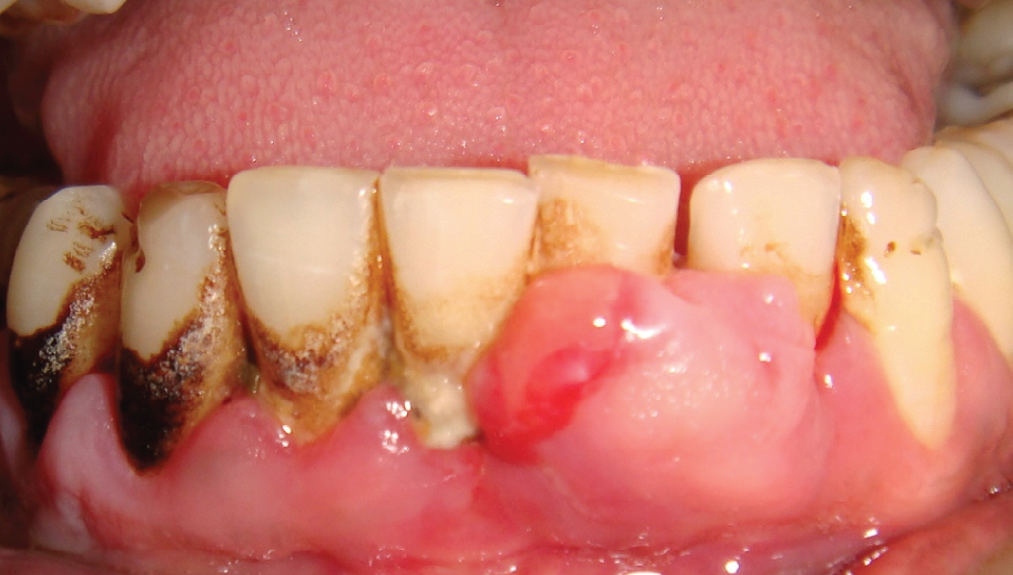
Lasers can be used for initial periodontal therapy and surgical procedures. This usage becomes more complicated because the periodontium consists of both hard and soft tissues.[6] Among the lasers available, high power lasers such as CO2, Nd:YAG and diode lasers can be used in periodontics because of their excellent soft tissue ablation and hemostatic characteristics. However, when they are applied to the root surface or alveolar bone, carbonization and thermal damage have been reported. Therefore the use of these lasers is limited to gingivectomy, gingivoplasty, frenectomy., depithelialization of reflected periodontal flaps, removal of granulation tissue, second stage exposure of dental implants, coagulation of free gingival grafts donor sites and gingival depigmentation.[7]


INITIAL PERIODONTAL THERAPY
Scaling and root planning:
Periodontal disease is a chronic inflammatory disease caused by bacterial infection. Hence , the bactericidal and detoxifying effect of laser treatment is advantageous in periodontal therapy.[5] Initial periodontal therapy includes nonsurgical debridement of tooth surface, host modulators, reduction in bacterial load and antimicrobial therapy.[8] In this context, soft tissue lasers such as argon, diode and Nd:YAG are good choice for bacterial reduction and coagulation as they are well absorbed by both melanin, hemoglobin and chromophores.[6] The diode lasers bactericidal effectiveness has been well documented. Research demonstrated increased reduction of bacteria, decreased gingival bleeding and inflammation,[8] decreased pocket depth as well as decreased clinical attachment loss.[9] Moreover, there is significant suppression of A.actinomycetemcomitans, an invasive bacterium that is associated with aggressive forms of periodontal disease that are not readily treated with conventional scaling and root planing.[10] The Erbium family of lasers demonstrated significant bactericidal activity on both P. gingivalis and A. actinomycetemcomitans.[11] Lasers also have potential to reach sites that conventional mechanical instrumentation cannot.[9] While reduction in the interleukin 1 beta[12] and pocket depth[13] have been noted with laser therapy, it is essential to note that the most studies summarize the use of laser as an adjunct and not as a substitute to scaling and root planing in periodontal therapy.
LANAP ( Laser assisted New Attachment Procedure):
Initial reports suggest that LANAP can be associated with cementum mediated new connective tissue attachment and apparent periodontal regeneration of diseased root surfaces in humans. However, translation of these results into clinical practice requires long-term well designed clinical trials with larger sample size.[14] The results of recent research on the PerioLase MVP-7 laser, a Free-Running, Pulsed Nd: YAG Laser suggests that this laser provides a viable alternative to traditional periodontal surgery. Properly applied the laser has been shown to produce less bleeding, swelling and discomfort. The PerioLase MVP-7 appears to address the cause of periodontal disease rather than the effects, by specifically targeting identifiable periodontal pathogens. Regeneration of periodontal tissues is the gold standard by which dentists measure treatment effectiveness. Evidence has emerged that the PerioLase MVP-7 provides an enhanced method for achieving this elusive goal, while eliminating many of the negative sequelae, which have been historically associated with conventional pocket elimination surgery.[15]
SURGICAL PROCEDURES:
The advantages of laser versus scalpel surgery have been enumerated by numerous authors and include increased coagulation that yields a dry surgical field and better visualization, tissue surface sterilization and therefore, reduction in bacteraemia, decreased swelling, oedema and scarring, decreased operative and post operative pain, faster healing response and increased patient acceptance.[3]
Lasers are effectively used to perform gingivectomies and gingivoplasties. CO2 lasers uses only light impinging on the tissue with surgical time reduced to one-fourth of the conventional method.[16] While this denies the operator any tactile feedback, Nd:YAG laser maintains contact with tissue.[17] Potential for damage with underlying bone remains a concern, particularly when used on thin soft tissues. These properties come handy in mucogingival procedures like frenotomy and frenectomy which can be performed in less than 3 to 4 minutes with CO2 laser and with added advantages of bloodless, painless and sutureless procedure.[11]
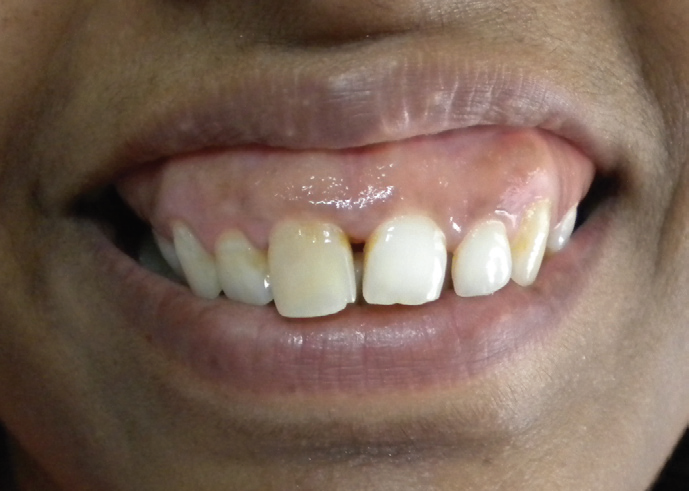
Excessive gingival pigmentation is a major esthetic concern for many people. Gingival depigmentation has been carried out using non-surgical and surgical procedures. Recently, laser ablation has been recognized as a most effective, pleasant and reliable technique.[15] Er:YAG laser in defocused mode with brush technique or contact mode mostly requiring only topical anaesthesia was followed by uneventful healing with no recurrences at 3 and 6 months check up respectively.[18]
LASER AND IMPLANTS
The long term success of an implant is highly dependent on its maintenance. Implant maintenance has included methods that mimic the care of periodontium after periodontic manipulations or surgery. One of the main reasons for the failure of implant is peri-implantitis. Peri-implantitis results in inflammation of surrounding soft tissues and gingival enlargement around implants.[19] Mechanical instrumentation using metal curettes and ultrasonic scalers are prohibited for decontamination of titanium implant surfaces as they easily damage them. Er:YAG and Er,Cr:YSGG lasers has been shown to be useful in the maintenance of an implant, taking advantage of its bactericidal effect and their wavelengths have a high reflection potential and thus hardly any absorption takes place in metallic surfaces.[20] Studies have shown that Er:YAG laser has a high bactericidal potential on implants with no excessive heat generation on the implant surfaces and also effective removal of plaque and calculus without damaging the implant surface.[21] It has been shown that the CO2 laser can be used for second stage uncovering procedures in endosseous implants, sculpting tissue around existing implant, control of mucosal abnormalities and control of implant soft tissue complications. The CO2 laser is ideal because its energy is rapidly absorbed by the high water content of mucosa so that the depth of tissue necrosis or vaporization is minute (only 100 – 200 microns).[19]
WOUND HEALING
Lasers are very effective for soft tissue applications including incision, hemostasis and coagulation.[20] When laser surgical procedures are carried out, the surface produced heals favourably as an open wound, without the need for sutures and surgical dressings. Reports suggest that laser created wounds heal more quickly and produce less scar tissue than conventional scalpel surgery.[22]
However, contrary evidence from studies indicate that the healing of laser wounds is delayed, that more initial tissue damage may result, and that wounds have less tensile strength during the early phase of healing. Abergel et al (1984) experiment with cultured human skin fibroblasts showed that collagen production and DNA synthesis were delayed when the fibroblasts were exposed to Nd: YAG laser radiation.[23]
Iliria et al (2003) analyzed the biocompatibility of root surfaces treated by Er: YAG laser and concluded that laser irradiation promoted faster fibroblast adhesion and growth than surfaces treated with root planing.[24]
ADVANTAGES AND LIMITATIONS [9,10]
Advantages :
- Reduced need for anesthesia
- Greater comfort during and after surgery.
- Hemostasis and reduced risk of blood borne pathogens
- High patient acceptance of treatment.
- Reduced stress and fatigue for the practitioner and staff.
- Leading edge technology for a perceived higher level of patient care.
- Produce less collateral thermal damage than will an electro cautery.
Limitations:
- All lasers require specialized training and attention to safety precautions.
- Slower than traditional methods.
- No single laser can perform all desired dental applications.
CURRENT CONCEPTS OF LASERS:
Lasers have the potential advantages of bactericidal effect, detoxification effect and removal of epithelial lining and granulation tissue. They are capable of removing dental plaque and calculus from root surface with extremely low mechanical stress and no formation of smear layer on treated root surfaces. Thus, its use in combination with conventional mechanical treatment as an adjunct has the potential to improve the condition of periodontal pockets more than mechanical therapy alone.[10] Some features of laser use are attractive with regard to patient appeal like post operative healing after soft tissue surgery. It is interesting that some early evidence suggests that Er:YAG laser energy can produce superior attachment levels after root debridement compared with mechanical root planing.[13] Such novel techniques, while requiring further development and testing hold exciting potential. Waterlase system is a revolutionary dental device that uses laser energized water to cut or ablate soft and hard tissue. Periowave, a photodynamic disinfection system utilizes nontoxic dye (photosensitizer) in combination with low intensity lasers enabling singlet oxygen molecules to destroy bacteria.[20] The recent development in laser dentistry is the advent of the Er,Cr:YSGG laser, which is used with a water spray (hydrophotonics effect). This laser is capable of multiple applications because its interaction with tissue is strongly influenced by variations in the air-to water ratio of the spray. It can be used on the soft tissue, enamel, dentin and bone, and its shallow interaction minimizes the risk of collateral damage. Also, the ability to be used for multiple applications improves the economic feasibility of this laser. Another significant benefit of this laser is that it does not necessitate the use of local anesthesia in many operative procedures. Recent innovations to improve patient appeal and the multi-use capability while achieving equivalent results make a strong argument in favour of the Er,Cr:YSGG laser.[10,22] Unfortunately , many studies done on laser suffer from poor study design, lack of long term clinical trials with insufficient evidence to suggest that any specific wavelength of laser is superior to the traditional modalities of therapy. Most of the laser usage is currently fuelled by increased patient demand for use of sophisticated technology, giving a boost to marketability of lasers in dentistry. Despite numerous advantages, the use of laser also has disadvantages that requires precautions to be taken during clinical application. Safe operation of laser is important both for the patient and the doctor. The operator, staff and the patient have to wear safety glasses to prevent ocular injury and should have good knowledge of laser specification to avoid tissue injury. Use of an appropriate evacuation system to draw off and filter the plume is essential to prevent any respiratory hazards. Extreme caution should be exercised when operating laser in the vicinity of explosive gases.[24]
FUTURE  DIRECTIONS
Laser technology for initial periodontal therapy and various surgical procedures is at a high state of refinement, having had several decades of development up to the present time. The fusion of concepts from differing technologies may open the door to novel techniques and treatments. The field of laser-based photochemical reactions holds great promise for additional applications, particularly for targeting specific cells, pathogens or molecules. The Alexandrite laser for clinical use is widely accepted for its excellent ability to remove dental calculus in a selective mode without ablating the underlying enamel or cementum from tooth surface.[23] Further research on the potential use of laser energy in periodontal therapy is indicated, and scientific literature should be followed for future developments.
CONCLUSION
Although lasers have been used in periodontal therapy for many years, the decision to use a laser for periodontal surgery should be based on the proven benefits of hemostasis keeping in mind the claimed (but undocumented) advantages of less postoperative pain with gingivectomy, frenectomy and other procedures. Further peer – reviewed, comparative clinical studies are required to establish the potential of lasers in periodontal therapy. Furthermore, no long term clinical studies have shown that laser therapy alone can effectively be used to treat adult chronic periodontitis. Advances in the use of laser devices in periodontal surgery will continue. Further laboratory and clinical experimentation may determine a significant place for lasers in periodontal surgery. This is an exciting field with many promising possibilities to be investigated and represents an area that many ultimately prove to be rich with utility in the context of periodontics.
REFERENCES
- Cernavin I. Laser dentistry – revolution of dental treatment in the new millennium. Am Dent Assoc News Bulletin 2002;304:8-9.
- Cobb CM. Lasers in periodontics: a review of the literature. J Periodontol 2006;77 :545-64
- Raffetto N. Lasers for initial periodontal therapy. Dent Clin North Am 2004;48:923-36
- Bader H. Use of lasers in periodontics. Dent Clin North Am 2000;44:779-92
- Akoi A, Mizutani K, Takasaki AA. Current status of clinical laser applications in periodontal therapy. Gen Dent 2008;674-87
- Aoki A, Sasaki KM, Watanabe H, Ishikawa I. Laser in non surgical periodontal therapy. Periodontol 2000. 2004;36:59-97
- Kreisler M, Meyer C, Strender E, Daublandr M. Effect of diode laser irradiation on periodontal ligament cells. An in vitro study. J Periodontol 2002;17:1312-17
- Kreisler M, Al Haj HA, D’Hoedt B. Clinical efficacy of semiconductor laser application as an adjunct to conventional scaling and root planning. Lasers Surg Med 2005;37:350-55.
- Ciancio A. Effect of a diode laser on actinobacillus actinomycetemcomitans. Biological Therapies in Dentistry. 2006;22:334-36..
- Borrajo JL, Varela LG, Castro GL. Diode laser (980 nm) as adjunct to scaling and root planning. Photomed Laser Surg. 2004;22:509-12.
- Yukna RA, Carr RL, Evans G. Histologic Evaluation of an Nd: YAG Laser-Assisted New Attachment Procedure in Humans. Int J Perio Rest Dent. 2007; 27:577–87.
- Brown S. Current Advances in the Use of Lasers in Periodontal Therapy: A LANAP Case Series. Clinical Advances in Periodontics. 2013; 67:3-20.
- Azzeh MM. Treatment of hyperpigmentation by Er:YAG laser for esthetic purposes. J Periodontol 2007;78:177-84
- Rosa DS, Aranha AC, Edurdo Cde P, Aoki A. Esthetic treatment of gingival melanin hyperpigmentation with Er:YAG laser: short-term clinical observations and patient folloe up. J Periodontol 2007;78: 2018-25
- Dortbudak O, Haas R, Bernhart T, Mailath-Pokorny G. Lethal photosensitization for decontamination of implant surfaces in the treatment of peri-implantitis. Clin Oral Implants Res 2001;12:104-8.
- Bach G, Neckel C, Mall C, Krekeler G. Conventional versus laser-assisted therapy of periimplantitis: a five year comparative study. Implant Dent 2000;9:247-51
- Sasaki KM, Aoki A, Masuno H, Ichinose S, Yamada S. Compositional analysis of root cementum and dentin after Er:YAG laser irradiation compared with CO2 lased and intact roots using Fourier transformed infrared spectroscopy. J Periodontal Res 2002; 37:50-9.
- Ciancio SG, Kazmierczak M, Zambon J. Clinical effects of diode laser treatment on wound healing. Am Acad Dent Res 2006; 23:2183-85.
- Feist IS, De Micheli G, Silvia RS, Carlos PE, Sueli PH, Marques MM. Adhesion and growth of cultured human gingival fibroblasts on periodontally involved root surfaces treated by Er:YAG Laser. J Periodontol 2003;74:1368-75.
- Walsh LJ. The current status of laser applications in dentistry. Aust Dent J 2003; 48:146-55.
- Ting CC, Fukuda M, Watanabe T, Aoki T, Sanaoka A, Noguchi T. Effects of Er, Cr:YSGG laser irradiation on the root surface: morphologic analysis and efficiency of calculus removal. J Periodontol 2007;78:2156–64.
- Stock K, Hibst R, Keller U. Comparison of Er:YAG and Er:YSGG laser ablation of dental hard tissues. SPIE 2000;3192:88-95.
- Ishikawa I, Aoki A, Takasaki AA, Mizutani K, Sasaki KM, Izumi Y. Application of lasers in periodontics: True innovation or myth? Periodontology 2000. 2009;50:90–126
- Rechman P, Henning T, Riechart T. SEM investigations of cementum surface after irradiation with a frequency doubled alenxandrite laser. Proc SPIE 1996;2672:176-80
Disclaimer from Guident
The views and opinions expressed in articles published in Guident are solely those of the authors and do not necessarily reflect the views of the editors, the editorial board or the publisher, Ivory India. Guident does not endorse any product, technique or treatment described. Clinical content is intended for qualified dental and medical professionals and is not a substitute for individual clinical judgement. Guident, its editors and the publisher accept no liability for any consequence arising from the use of information published in the journal.
How to cite this article
Dr. Devanand Shetty, Dr. Arvind Shetty, Dr. Sanyukha Shetty. LASER Technology- its Application in Periodontics. Guident. 2013 Dec;7(1). Available from: https://guident.in/articles/periodontics/laser-technology-its-application-in-periodontics.html