Nortriptyline Versus Pregabalin in Atypical Odontalgia: A Comparative Study of Efficacy and Safety
Department of Oral & Maxillofacial Surgery, K.D. Dental College & Hospital, Mathura, India, 2Department of Pharmacology, Rama Medical College- Hospital & Research Centre, Kanpur, India
Abstract:
Atypical odontalgia is difficult to diagnose because of atypical presentation. Pathophysiology of atypical odontalgia is mixed i.e. psychogenic, neuropathic and vascular. The pain is typically dull, aching, or burning, and occurs intermittently or constantly throughout the day at normal tooth, after tooth extraction, post endodontic treatment or in previous dental surgical site without an identifiable cause. Same side of face or whole face may involve with time. The objective of this study was to choose the better drug between nortriptyline and pregabalin for AO, by comparing their efficacy and safety profile. Forty eight patients (15 male and 33 female) age between 18 – 82 yrs having persistant orodental and facial pain with no obvious tooth or periodontal disease, clinically, pathologically or radiographically were enrolled in this randomized, open, outdoor-based clinical study to receive either Nortriptyline or Pregabalin for a period of 6 weeks. Before and after 6 weeks of therapy, they were studied with visual analog scale for pain and its frequency, duration and intensity. Nortriptyline treated patients responded much better than the pregabalin group. In nortriptyline group, ninety percent were pain free or had appreciable relief in pain intensity after 6 weeks. Contrast to this, in pregabalin group none became pain free; 20 % had marginal relief while 80 % derived no benefit. An analysis of the results is proves the superiority of Nortriptyline over pregabalin for atypical odontalgia.
Keywords: Atypical odontalgia, phantom tooth pain, tricyclic antidepressant, anticonvulsant.
INTRODUCTION
Atypical odontalgia (AO) is a rare chronic pain condition in the area of teeth, jaws and face1. AO is also known as phantom tooth pain. As etiology of this is unknown so other name of this is persistent idiopathic facial pain2. Some reports suggest the association with several psychological and neuropathic conditions3-4. AO is difficult to distinguish from toothache of dental origin. AO has been described as tooth-related pain or pain located at a site where a tooth was extracted or following some type of surgical therapy, in absence of clinical or radiographic evidence of tooth, soft and hard tissue pathology explaining the pain5. Pain has been ongoing for at least 6 months, is not paroxysmal in character, and is continuous or present during most of the day. Sleep is usually unaffected. All adult ages and both sexes can be affected, but with a preponderance of women 45–60 years5. Diagnosis of AO has been made with history taking and somatosensory changes such as hyperesthesia, allodynia and exacerbation of pain with temperature. Patients with AO are treated unnecessarily with root canal (endodontic) therapy or extraction of otherwise healthy teeth, after which symptoms persist6. The diagnosis of AO was made according to The International Classification of Headache Disorders criteria7 i.e. continuous pain in the teeth or in a tooth socket after extraction in the absence of any identifiable dental cause.
DIAGNOSTIC CRITERIA
A. Pain in the face, present daily and persisting for all or most of the day, fulfilling criteria B and C
B. Pain is confined at onset to a limited area on one side of the face, and is deep and poorly localized
C. Pain is not associated with sensory loss or other physical signs
D. Investigations including X-ray of face and jaws do not demonstrate any relevant abnormality.
There is a strong association with a history of anxiety/depression in patients with AO. Neuropathic pain is generally managed8-10 with a tricyclic antidepressant (TCA) or with certain antiepileptic drugs. In tricyclic antidepressant11-12 group, Nortriptyline may be better tolerated than amitriptyline. Pregabalin13-14 in doses of 150-600 mg/day has been shown to be effective in neuropathic pain e.g. diabetic peripheral neuropathy, post-herpetic neuralgia, post-traumatic neuropathy.
This study has been conducted to compare the therapeutic efficacy and tolerability of nortriptyline and pregabalin in patients suffering from AO.
MATERIAL & METHODS
Selection of patients
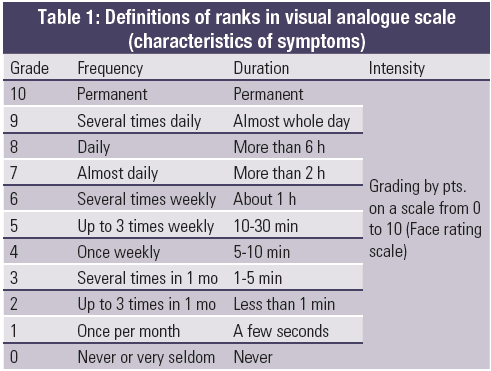
The study was conducted at a tertiary care dental college in Kanpur from May 2008| to June 2012. After approval of institute’s ethics committee, an informed consent was discussed, approved and signed by all volunteers. All these participants were between 18 to 82 years of age with mean age of 47 years. Inclusion criteria were chronic pain of at least 6 months duration in the region of teeth or jaw with no pathological cause detectable during clinical or radiological examinations. Exclusion criteria were patient with trigeminal neuralgia, migraine, sinusitis, apical periodontitis or marked renal function impairment. These cases were intensively scrutinized. A total of 48 such cases (15 male and 33 female) were included for the present study. Participants thus selected were randomly assigned to take either Nortriptyline (start with 10-25 mg at bedtime then titrate upto antidepressant drug level, max. daily dose 75 mg) or a Pregabalin (start at 75 mg twice daily maximum dose 300 mg twice daily). Patients visited the clinic for assessment at baseline, week 1 and week 6 (or upon early discontinuation). Patients were asked for symptoms and were helped to grade the pain frequency, duration and particularly the intensity using the numeric rating scale (NRS), visual analogue scale (VAS) or face rating scales characteristics (Table I, Fig. I). The presence of depression or a sleep disorder was also evaluated. At each visits, evaluations were made for each patients by the same investigator.
Faces rating scale (FRS):
Participants who had difficulty using the numbers on the visual/numerical rating scale were assisted with the use of the six facial expressions suggesting various pain intensities. They were asked to choose the face that best described how they felt.
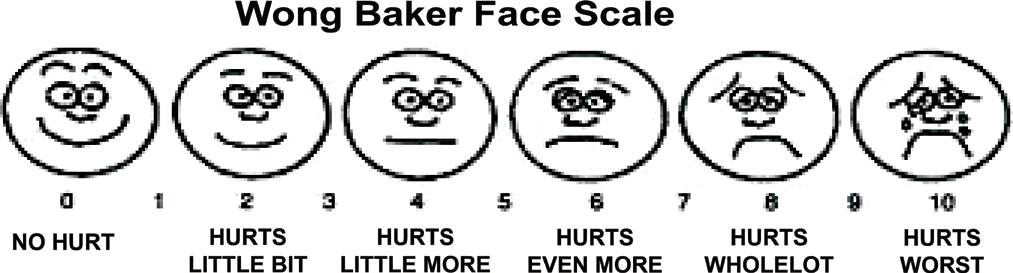
Fig :I
Here the far left face indicates ‘No hurt’ and the far right face indicates ‘Hurts worst’. Number corresponding to the face chosen was documented.
Safety and tolerability were assessed on the basis of the adverse events reported or by comparing the baseline symptoms with post-drug symptoms, or changes in vital signs and physical examination findings recorded before and at the end of treatment.
Stat analysis
The data thus obtained was evaluated by using the statistical Package for Social Science SPSS v. 16). A Wilcoxon Signed ranks test was used to analyze the percentage change.
RESULT
Out of 48 cases only 36 participants completed the study; 21 (6 male and 15 female) in Nortriptyline group and 15 (5 male and 10 female) in pregabalin group. After a week of therapy these participants were again evaluated on the basis of visual analog scale. All these participants were counseled to continue their "medication" for another 5 weeks.
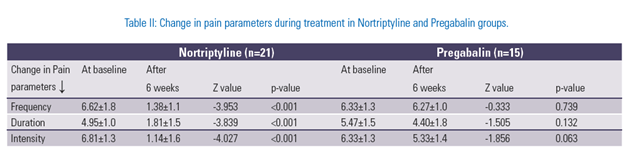
After a total of 6 weeks of therapy, study results were compared. Nortriptyline treated patients responded much better than the pregabalin group. 16 patients became absolutely pain free (76.19%), 3 patients were almost pain free (14.29%), 2 patients however did not had any benefit (9.53%). Compared to this, in pregabalin group none became absolutely pain free (0 %), 3 reported that they are much better (20%), 5 (33.3%) had some relief while 7 patients (46.67%) had no improvement or complained of worsening symptoms (Table II).
We did not encounter any major problem in Nortriptyline or pregabalin group. Both the drugs were well tolerated. In the nortriptyline group, out of four patients who experienced adverse effects, two complained of dry mouth and epigastric distress, one had sweating and tremors, and one patient showed a postural hypotension. In the pregabalin group, two patients complained of headache, one patient had nausea, and in two patients there was a peripheral edema. According to the CTC grading of adverse drug reactions, all the reported side effects were of grade 1 (mild).
DISCUSSION
Atypical odontalgia is a chronic, idiopathic pain condition of face. Diagnosis is difficult because this condition is a diagnosis of exclusion15. Management of the patient is better achieved through a multidisciplinary approach intended to improve patient’s quality of life as well as relieving the pain. This involves reducing the disability caused by the pain often with an increase in mood, activity and social contact. Medical management of idiopathic facial pain is mainly through the use of tricyclic antidepressant and anticonvulsant drugs. Anticonvulsant drugs, including pregabalin, increase the risk of suicidal thoughts or behaviours in people using them16. Monitor people treated with pregabalin for any unusual changes in mood or behaviour. There is a strong association with a history of anxiety/depression in patients with AO and our result also suggest that Nortriptyline, a tricyclic antidepressant is better than pregabalin in this condition. Depression may be a cause or outcome but shows a dramatic response to antidepressants.
CONCLUSION
In AO, Nortriptyline scores much better than pregabalin. Nortriptyline was found to be virtually safe, more efficacious and cost effective than Pregabalin. Disorders of this type require psychological support to accompany drug treatment. The findings of this exploratory study can be confirmed by multicentric, randomized, double-blind large population studies.
REFERENCES
- Marbach JJ, Hulbrock J, Hohn C, Segal AG. Incidence of phantom tooth pain: An atypical facial neuralgia. Oral Surg Oral Med Oral Pathol 1982;53:190–193.
- de Siqueira SR, Nóbrega JC, Valle LB, et al. Idiopathic trigeminal neuralgia: clinical aspects and dental procedures. Oral Surg Oral Med Oral Pathol Oral Radiol Endod 2004;98(3):311-5.
- Graff-Radford SB, Solberg WK. Is atypical odontalgia a psychological problem? Oral Surg Oral Med Oral Pathol 1993;75:579–582.
- R. Jacobs, C. H. Wu, K. Goossens et al., “A case-control study on the psychophysical and psychological characteristics of the phantom tooth phenomenon,” Clinical Oral Investigations, vol. 6, no. 1, pp. 58–64, 2002.
- Melis M, Lobo SL, Ceneviz C, Zawawi K, Al-Badawi E, Maloney G, Mehta N. Atypical odontalgia: a review of the literature. Headache 2003; 43:1060-74.
- Campbell RL, Parks KW, Dodds RN. Chronic facial pain associated with endodontic therapy. Oral Surg Oral Med Oral Pathol 1990;69:287–290.
- The International Classification of Headache Disorders: 2nd ed. Cephalalgia 2004;24 (Suppl 1):9-160.
- Dworkin RH, O’Connor AB, Audette J, et al. “Recommendations for the pharmacological management of neuropathic pain: an overview and literature update”. Mayo Clin Proc 2010; 85 (3 Suppl) : S3–14.
- Galluzzi KE: Management of Neuropathic Pain. J Am Osteopath Assoc 2005; 105: 12-19.
- Finnerup NB, Otto M, McQuay HJ, Jensen TS, Sindrup SH. Algorithm for neuropathic pain treatment: an evidence based proposal. Pain 2005;118:289-305.
- Sindrup SH, Otto M, Finnerup NB, Jensen TS, Antidepressants in the treatment of neuropathic pain, Basic Clin Pharmacol Toxicol, 2005;96:399–409.
- Gilron I, Bailey JM, Tu D, et al., Nortriptyline and gabapentin, alone and in combination for neuropathic pain: a double-blind, randomised controlled crossover trial, Lancet, 2009;374:1252–61.
- Rosenstock J, Tuchman M, LaMoreaux L, Sharma U. Pregabalin for the treatment of painful diabetic peripheral neuropathy: a double-blind placebo-controlled trial. Pain 2004;110:628-38.
- Freeman R, Durso-Decruz E, Emir B. Efficacy, safety, and tolerability of pregabalin treatment for painful diabetic peripheral neuropathy: findings from seven randomized, controlled trials across a range of doses. Diabetes Care 2008; 31(7): 1448-54.
- Battrum DE, Gutmann JL. Phantom tooth pain: a diagnosis of exclusion. Int Endod J 1996;29: 190-194.
- Andersohn F, Schade R, Willich SN, Garbe E. Use of antiepileptic drugs in epilepsy and the risk of self-harm or suicidal behaviour. Neurology 2010;75(4):335–40.
Disclaimer from Guident
The views and opinions expressed in articles published in Guident are solely those of the authors and do not necessarily reflect the views of the editors, the editorial board or the publisher, Ivory India. Guident does not endorse any product, technique or treatment described. Clinical content is intended for qualified dental and medical professionals and is not a substitute for individual clinical judgement. Guident, its editors and the publisher accept no liability for any consequence arising from the use of information published in the journal.
How to cite this article
Dr. Arti, Dr. P. K. Agarwal. Nortriptyline Versus Pregabalin in Atypical Odontalgia: A Comparative Study of Efficacy and Safety. Guident. 2013 Oct;6(12). Available from: https://guident.in/articles/research/nortriptyline-versus-pregabalin-in-atypical-odontalgia-a-comparative-study-of-efficacy-and-safety.html