Coconut: The Life Tree
Department of Conservative and Endodontics Sri Rajiv Gandhi Dental College & Hospital Bangalore, India
ABSTRACT
Coconut and its related products have wide range of use. It is not only popular as an ingredient in edible products but also has some vital uses in dentistry and medicine as well. This review aims at highlighting these established and potential benefits of Coconut.
KEY WORDS:Coconut water, Coconut oil, Healing.
INTRODUCTION
To the increasing list of plants/ herbs sighting their use in dentistry, is yet another addition, The Coconut and its related Products. The word coconut is derived from the Spanish word “coco”, meaning "head" or "skull"[1] (deriving this name from the three small holes on the coconut shell that resemble human facial features). Coconut is scientifically called as “Cocos Nucifera”.[1, 2] The coconut is attached to innumerable traditional, religious and medicinal uses. This plant has a tremendous healing potential and is therefore rightly called “ A Miracle Plant”.
The Coconut Tree has many related products that are of both dental and medical importance. The most common being the, Coconut Water. It is the liquid inside an immature green coconut. It is the juice or endosperm of the young coconut. This water is now popular all over the world for its refreshing taste along with nutritious and health-benefitting properties (especially in the Tropical areas like Brazil, Southeast Asia, Pacific Islands, Africa and India). A coconut palm/tree can yield 150 – 200 coconuts a season. In mature coconuts, the endosperm solidifies and thickens to form a white edible kernel.(1)
Coconut milk is obtained by grating and grinding this kernel with water and passing it through a sieve. Coconut meat and milk have no significant medicinal use, but it is used to make Coconut Oil.(2)
Coconut oil is consumed in tropical countries for now thousands of years. Studies done on the population consuming native diets high in coconut oil, show that the population is generally in good health. Coconut Oil is classified as a Medium Chain Triglycerides, MCT. Coconut Oil is high in saturated fatty acids and hence highly resistant to oxidative rancidity.(2)
The oil has small amounts of Tocopherols, Tocotrienols and Phytosterols and is therefore (because of its constituents) known to have antiviral, antibacterial effects and excellent healing properties.(2)
COMPOSITION
Coconut: Coconut contains the following chemical constituents: Diethanolamide, Cocamide Sulphate, Sodium and Aluminium Laureth Sulfate, Sodium Cocoyl Sarcosinate, Potassium Coco Hydrolysed Collagen, and Disodium Dioctyl Sulfosuccinate. Coconut owes its typical smell to 6-pentyloxan-2-one molecule, known as Delta-Decalactone in the food and fragrance industries.(1, 2, 4)
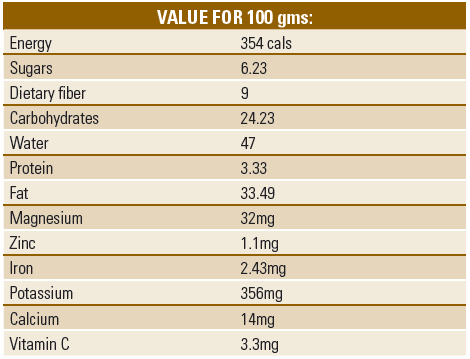
Coconut Water: Coconut has 94% of water. The coconut water is richest source of electrolytes like, Chlorides, Potassium, Magnesium, Manganese, Calcium and Sodium. It also contains vitamins like Riboflavin and Vitamin C with some amount of sugar and protein. Coconut water is a richest source of Potassium (it has more potassium than banana).(2) It is also rich in dietary fibers. The active agents of coconut water are Cytokinins (3), which promote plant cell division and growth and other biologically active ingredients in coconut is L-arginine (an essential amino acid). Each coconut contains upto 200ml – 1000ml of water. Coconut water is fairly low in calories offering only 50 calories a cup.(3)
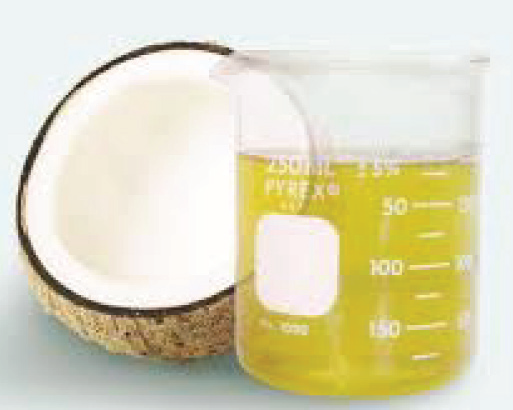
Coconut Oil: contains Triglycerides, Tocopherol, Phospholipids and Fatty Acids which render excellent anti-viral and anti-bacterial properties. Their composition is 92% saturated fats , 6% monounsaturated fats and 2% polyunsaturated fats.(3)
AVAILABLE FORMS OF COCCONUT:
1. Coconut Water

2. Coconut Milk

3. Virgin Coconut Oil
GENERAL USES
General Uses of Coconut Oil:
1. Anti-Cancer Effects of Coconut: Lim-Sylianco published a 50-year literature review showing the anti-cancer effects of coconut oil. In chemically induced cancers of the colon and breast, Cohen et al showed that coconut oil was by far more protective than unsaturated oils. For example 32% of corn oil eaters got colon cancer whereas only 3% of coconut oil eaters got the cancer. This shows the thyroid-suppressive and hence, immuno-suppressive effect of unsaturated oils. The hexane fraction of coconut peel contains novel anticancer compounds.(5,6)
2. Malabsorption: Children with Cystic Fibrosis supplemented with up to 75 ml of coconut oil per day experienced greater weight gain and reduced wasting/ excretion of fat through faeces(9). Coconut oil (an MCT) has been used in other malabsorption syndromes, including short-bowel syndrome, celiac disease, and hepatic disease and shown considerable improvement in the overall conditions.(8)
3. Healing properties of Coconut Oil: Coconut oil is an antiviral, antifungal and antibacterial. It attacks and kills viruses that have a lipid (fatty) coating, such as Herpes, HIV, Hepatitis C and Flu. It kills the bacteria that cause pneumonia, sore throats, urinary tract infections, meningitis, gonorrhea, food poisoning and many more bacterial infections. It also kills the fungus/yeast infections that cause candida and prevents ring worm infestations. (7,8)
General Uses of Coconut Water:
1. A substitute to Intra-venous Drip: It is recommended that coconut water can be effectively used as a short-term alternative to an intravenous drip for hydration and resuscitation of critically ill patients in remote regions. (3)
2. Helps in Weight Loss: A study has proved that the Virgin Coconut Oil (VCO) reduced total cholesterol, triglycerides, phospholipids, LDL, and VLDL cholesterol levels and increased HDL cholesterol in serum and tissues.[6]
3. Dermatological Use: Coconut water is believed to have a positive effect on skin. When applied to affected skin areas with acne, spots, wrinkles, stretch marks, cellulite and eczema and left overnight for two to three weeks, it clears up the skin and gives you a youthful-looking smooth skin. It can be applied to hands and nails for its smoothening and repairing properties. (6)
4. Renal Disorders: Tender coconut water is very beneficial to a person with kidney stones due to its minerals, potassium and magnesium content. This water also acts as a diuretic as it increases the flow and production of urine. Most urologists recommend coconut water every alternate day as it can reduce the size of kidney stones and even help eliminate them.
5. Recovery from Sports Induced Dehydration: the coconut water is rich in electrolytes especially potassium and sodium. It has twice the number of potassium as banana and therefore helps in quick recovery.
6. Miscellaneous: Coconut is also commonly used as a traditional remedy in Pakistan to treat bites from rats. In Brazil, the tea from the husk fibre is widely used to treat several inflammatory disorders.
DENTAL USES:
1. Storage Media: A pH balanced Coconut water can be used as a media for storage of avulsed tooth. It is supposed to be superior to Hanks Balanced Salt Solution (HBSS) and soya milk (which was considered to be the best so far). The growth factors present in the coconut water (i.e, Cytokinins and L-arginine) help maintain the vitality of periodontal ligament cells and is used as an appropriate storage media for the avulsed tooth(9). Coconut water is also traditionally used as a growth supplement in plant tissue culture and in micro-propagation.(10, 11)
2. Oil Pulling using Coconut Oil: Oil pulling is a practice in Ayurvedic Dentistry which has many proven dental health benefits. The Charaka Samhita describes oil pulling as effective means of improving 30 other systemic diseases ranging from headaches like migraine to diabetes and asthma.(12)
Oil pulling using coconut oil can help prevent halitosis, decay progression and gingivitis. It exerts soponification and emulsification of the bacterias like Streptococcus Mutans. Coconut oil emulsifies the lipid present in the cell membranes.
The method of oil pulling to be advised to the patient is as follows: One table spoon of Coconut oil has to be swished in the mouth on empty stomach for approximately 15-20 minutes on an empty stomach and then spitting it out. This has to be followed brushing the teeth with a natural, chemical free tooth paste. Only virgin coconut oil (pure oil extracted directly from the coconut milk and coconut meat) has to be used for this purpose.(12)
3. Prevention of Dental Caries and Gingival Recession: Coconut Oil is an antibacterial and antifungal agent. It helps prevent tooth decay and protects the enamel on the teeth when massaged over freshly brushed teeth and gums, twice a day.(13, 14)
4. Mouth Ulcers: The silky sensation of coconut oil can be an effective agent, when it comes to aphthous/ stress ulcers in mouth. It acts as a powerful anti-inflammatory and anti-oxidant and prevents the progression and worsening of the symptoms of these ulcers.(14)
5. Coconut Homemade Toothpaste: Coconut oil can be used to make “Homemade tooth paste”. It can be made by mixing equal parts of natural baking soda and coconut oil. A few drops of any other essential oil like peppermint, cinnamon, etc can be added to enhance the taste. Estevia a natural sweeter can also be added and mixed into a paste. This resembles the commonly used Tooth Paste but is far more healthy and beneficial because the coconut oil is bacteriocidal in nature. (12, 13,15)
6. Coconut Roots: The coconut plant’s roots can be used as a natural tooth brush because of its abrasive action. It can also be used as an ingredient in mouthwash and as a medicine for diarrhea and dysentery.(15)
PRECAUTIONS

1. Coconut related Dermatitis: Coconut-derived products can cause Contact Dermatitis. They can be present in cosmetics, including some shampoos, moisturizers, soaps, cleansers and hand washing liquids. Those known to cause contact dermatitis include caprylic triglycerides, cocoyl sarcosime, disodium oleamide sulfocuccinate(17, 18, 19).
2. High blood pressure: Coconut water might lower Blood Pressure. It can increase the effects of medications used to lower blood pressure.(17)
CONCLUSION
With more and more patients asking for non- allopathic remedies for either prevention or cure for their oral and systemic diseases, a lot of it still needs to be explored and applied into the daily practice. However, more research is needed to clearly understand the many good effects of coconut and its associated products.
REFERENCES
- Ralph Hoahland,George G. Snider, Digestability of certain higher saturated fatty acids and triglycerides. J. Nutri., 1943 26(3) 219-225.
- J. A. Heydnger, D. K. Nakhasi, Medium chain Triacylglycerols. J. of Food Lipids, (3) 1996 251-257.
- The chemical composition and biological properties of coconut (Cocos nucifera L.) water. [Review] [110 refs] Yong JW. Ge L. Ng YF. Tan SN. Molecules. 14(12):5144-64, 2009.
- "Data sheet about delta-decalactone and its properties". Thegoodscentscompany.com. 2000-07-18. Retrieved 2012-02-14.
- Lim-Sylianco, Tregenza, Tom; Norman, Mark D. (2009). "Defensive tool use in a coconut-carrying octopus". Curr. Biol.19 (23): R1069–R1070. doi:10.1016/j.cub.2009.10.052.PMID 20064403
- Gelineau, Kristen (2009-12-15). "Aussie scientists find coconut-carrying octopus". Associated Press. Retrieved 2009-12-15.
- Investigation of fruit peel extracts as sources for compounds with antioxidant and antiproliferative activities against human cell lines. Khonkarn R. Okonogi S. Ampasavate C.
- Beneficial effects of virgin coconut oil on lipid parameters and in vitro LDL oxidation. Nevin KG. Rajamohan T. Clinical Biochemistry. 37(9):830-5, 2004 Sep. Comparative Study. Journal
- Gopikrishna V, Baweja PS et al. Comparison of coconut water, propolis, HBSS, and milk on PDL cell survival. J Endod. 2008 May;34(5):587-9. doi: 10.1016/j.joen.2008.01.018. Epub 2008 Mar 19.
- Bourke, RM; Harwood T (2009). Food and Agriculture in Papua New Guinea. Australian National University. p. 327. ISBN 978-1-921536-60-1.
- Kurian; Peter KV (2007). Commercial Crops Technology: Vol.08. Horticulture Science Series. New India Publishing. pp. 202–6.ISBN 81-89422-52-9.
- Sharath Asokan, R Saravana Kumar, Pamela Emmadi, R Raghuraman, N Sivakumar. Effect of oil pulling on halitosis and microorganisms causing halitosis: a randomized controlled pilot trial. J Indian Soc Pedod Prev Dent. 2011 Apr-Jun;29(2):90-4. PMID: 21911944
- Sharath Asokan, Pamela Emmadi, Raghuraman Chamundeswari. Effect of coconut on plaque induced gingivitis: a randomized, controlled, triple-blind study. Indian J Dent Res. 2009 Jan-Mar;20(1):47-51. PMID: 19336860
- S Asokan, J Rathan, M S Muthu, Prabhu V Rathna, P Emmadi, ,. Effect of coconut oil on Streptococcus mutans count in plaque and saliva using Dentocult SM Strip mutans test: a randomized, controlled, triple-blind study.
- Harmon, Katherine (2009-12-14). "A tool-wielding octopus? This invertebrate builds armor from coconut halves". Scientific American.
- Henderson, Mark (2009-12-15). "Indonesia's veined octopus 'stilt walks' to collect coconut shells". Times Online.
- Living with food allergies; Venugopal P. (Sept.–Dec. 2006).Food Allergy. Pulmon – The Journal of Respiratory Sciences8 (3). ISSN: 0973-3809.
- Australasian Society of Clinical Immunology and Allergy.Coconut Allergy; National Health Service. United Kingdom. (January 12, 2010). Causes of a food allergy. NHS Choices.
- Australasian Society of Clinical Immunology and Allergy.Coconut Allergy.
Disclaimer from Guident
The views and opinions expressed in articles published in Guident are solely those of the authors and do not necessarily reflect the views of the editors, the editorial board or the publisher, Ivory India. Guident does not endorse any product, technique or treatment described. Clinical content is intended for qualified dental and medical professionals and is not a substitute for individual clinical judgement. Guident, its editors and the publisher accept no liability for any consequence arising from the use of information published in the journal.
How to cite this article
Dr. Puneeta Duggal. Coconut: The Life Tree. Guident. 2013 Oct;6(12). Available from: https://guident.in/articles/general/coconut-the-life-tree.html