Multiple Digital Prostheses:The Esthetic Way to Complete the Hand
Department Of Prosthodontics Seema Dental College and Hospital, Rishikesh, Uttrakhand
Abstract
Finger amputation is one of the most common types of amputation. Amputations affect both the physical and the psychological aspects of an individual, causing significant impact on self-esteem. The common causes of finger amputations are work-related accidents with machinery and road traffic accidents. Finger prostheses are difficult to fabricate as they demand both aesthetic and function. In dealing with these types of prostheses, the better way of gaining successful retention is to sleeve the remnant stump with thin silicone.
Retention and camouflage are the two important factors that must be achieved in an extra oral prosthesis. When evaluating the fit of prosthesis, the maxillofacial prosthodontist must evaluate the retention offered by the prosthesis when the hand is in function. The material used in the fabrication of the prosthesis should be strong, not stiffen in low temperatures and must be heat resistant. Silicone is the material of choice for the fabrication of finger prostheses because of its life-like appearance. This paper presents a simple technique for prosthetic rehabilitation of partial amputated stumps with multiple solitary digital prostheses.
Key words- digital prosthesis, silicone finger, amputated stump
INTRODUCTION
The hand is the representative of evolution. It is only because of the opposing action of the thumb that the human beings differ from the apes. Hands may be affected by many conditions varying from congenital abnormalities to diseases, but the greatest cause of functional impairment is trauma. Traumaticamputation of the fingers represents a serious injury to the hand, resulting in dramatic impairment of hand function.
Maxillofacial prosthetics may be defined as the branch of prosthodontics concerned with the restoration and/or replacement of the stomatognathic and craniofacial structures with prostheses that may or may not be removed on a regular or elective basis.1 However, the field of prosthetic practice is not limited to intra-oral and extra-oral prostheses alone and digit prostheses are an example of extraoral prostheses very commonly designed and fabricated by the maxillofacial prosthodontists.
A digital(finger or toe) prosthesis replaces a portion or all of an absent finger or toe, as a finger prosthesis will allow patients to resume normal activity, such as typing on a keyboard correctly and without discomfort.1Digital prostheses may be vacuum retained or adhesive retained. They may also be supported by osseointegrated implants. When planningvacuum retained digit prosthesis, the stump of the amputated finger should be minimally 1.5 cm in length to provide adequate retention.2 Digital prostheses are retained by a vacuum effect on the stump. If it is not so, then the prosthesis needs to be adhesive retained or implant supported. Implants arehypothesized to provide some tactile sensation to the affected digits.3, 4, 5
The article discusses a case report in which prosthetic rehabilitation was done with multiple digital prostheses, made for the partially amputated fingers and retention was achieved with the help of vacuum suction incorporated into the custom made silicone prostheses.
CASE REPORT
A fifty six year old female patient reported to the Department of Prosthodontics forprosthetic rehabilitation of partially amputated index, middle and ring fingers. History revealed that the distal phalanges were amputated in all the three fingers following trauma from train accident 5 years ago. During clinical examination, the stumps were well healed and of the same colour as the other hand. The length of the stumps were 8, 9 and 9.5cm but were greater in girth as compared tothe fingers of the opposing hand (Figure 1). There were no skin changes, scars, joint swellings or tremors on the examination of the affected hand.
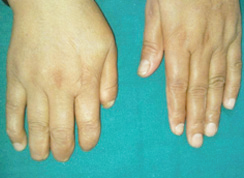
Figure 1: Preoperative view
TREATMENT PLANNING
Depending upon the level of amputations the treatment plan decided was the fabrication of solitary glove type of prostheses extending up to the middle phalanges for all the three fingers. The advantages and limitations of replacement of the finger were explained to the patient and an informed consent was signed.
TECHNIQUE FOR FABRICATION OF PROSTHESES
Impression procedure
The patient’s hand with missing fingers was lubricated with a thin layer of petroleum jelly. A modelling wax cylinder of sufficient length and diameter was made to confine the impression material. The cylinders were closed with modelling wax lid on one side (Figure 2).For making impressions of both the affected and normal hands, the patient was instructed to keep the hands in normal resting posture while the impressions were being made. Irreversible hydrocolloid material(alginate) was mixed using cold water to increase the working time and poured into the containers. Patient was asked to dip their hands vertically into the container without touching the sides or the bottom of the container. The material was allowed to set and the hand was removed quickly in a jerking motion after the material was set.(Figure 3)
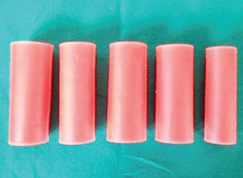
Figure 2: Modelling wax cylinders
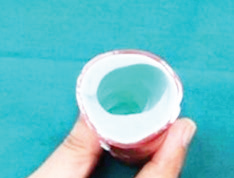
Figure 3: Making of Irreversible hydrocolloid impression
POURING OF MOULDS
The moulds of the affected fingers were poured in dental stone to obtain the working casts or the positive replicas. The normal hand was used as a reference to duplicate the size, shape and orientation of the fingers. (Figure 4,5).
STUMP PREPARATION
In order to fabricate a glove type prosthesis reduction of the stumpcasts was necessary. The patient’s fingers were checked for bearable compressionand accordinglymarkings were made on a measuring ribbon of the relaxed and the compressed state for each of thethree fingers. These markings were used as a guide to reduce the stone casts. Each of the stone casts were reduced in girth by 3mm. This would produce prosthesis with a smaller inner diameter which can be stretched over the amputated fingers to provide vacuum retention (Figures6,7,8).
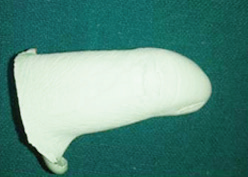
Figure 4: Model of amputated finger poured in dental stone
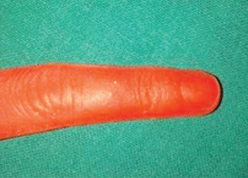
Figure 5

Figure 6

Figure 5, 6, 7: Model of contralateral finger poured in modelling wax
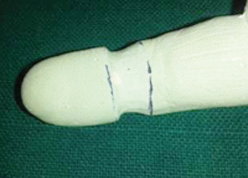
Figure 8: Adjusting the stump cast in accordance with soft tissue
FABRICATION OF WAX PATTERN
The moulds of the normal fingers were poured with help of modelling wax and thus a positive replica of the contralateral normal finger was obtained in wax. Modelling wax was used because it is easy to carve, sculpt and enhance it.These wax patterns were then made hollow to be later modified at the time of final sculpting of the wax patternsover the working stone casts.
MODIFICATION OF WAX PATTERN
The wax patterns that were earlier fabricated from the impression of the normal fingers were placed in warm water and then placed on the working casts. Thereafter, sculpting and carving of the wax patternswas carried out to resemble the fingers of the opposite hand. Since the fingers of the affected hand were greater in girth, modelling was increments were added to the wax patterns to camouflage the anatomy of the stumps.
FABRICATION OF PROSTHETIC NAILS
Elastomeric impression material (putty consistency) was used to record the impressions of the nails of healthy hand so as to duplicate them. The silicone putty moulds thus obtained could be used in the fabrication of the prothetic nails (Figure 9).The nails were made from autopolymerising clear acrylic resin and were characterised using acrylic stains.The acrylic powder was divided into two parts while mixing one for body of the nail and other for lunular or the cuticular region. Shade matching was done with the nail of adjacent finger. The corresponding mix were poured onto the impressions of the nails obtained in the elastomeric impression material (Figure 10,11).

Figure 9: Fingernail impression with polyvinyl siloxane impression material
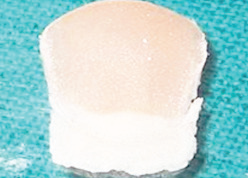
Figure 10: Body and lunula of nail made using autopolymerising resin
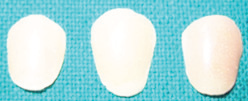
Figure 11: Finished acrylic nails
INCORPORATION OF NAIL
The size and position of the acrylic nail as recorded in the wax pattern was ascertained and the nail bed portion of the wax pattern was cut out with a sharp scalpel, nail bed was prepared where the custom made acrylic nail was adapted into place. A plastic cylinder, such as a pen cover can be cut into small cylinders depending upon the width and length of the nails. These were attached to the tissue surface of the nails to support the nail in the hollow wax pattern (Figure 12,13).

Figure 12: Prosthetic nails with plastic support attached
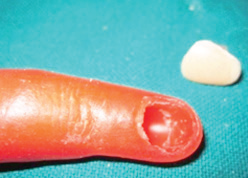
Figure 13: Attaching the prosthetic nail
TRY IN
The wax patterns were tried on the patient’s hand and the length and fit was verified. The shade matching of artificial nail was also verified. Approval from the patient was taken.
INVESTMENT TECHNIQUE
The wax patterns were invested separately in Type III dental stone in custom made flasks (Figure 14). The first pour was done and the wax patterns sealed to the working casts were embedded partially into it, making sure that the prosthetic nails were spared. After setting of the first pour, separating medium was applied and the second pour was completed.The invested flasks were then subjected to the dewaxing procedure. The plastic supports of the prosthetic nails wereeasily removed at the dewaxing stage as the prosthetic nails wereembedded in the dental stone (Figure 15).The flasks were obtained in two portions:themould of the dorsal aspect and the mould of the ventral aspect. The Silicone and pigments were mixed intrinsically to match patient‘s skin(Figure 16).Colour matching of the dorsal and ventral surface wasdone separately in natural light(Figure 17).
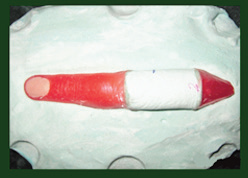
Figure 14: Flasking the wax pattern sealed to the stump
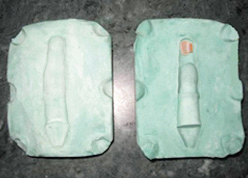
Figure 15: Flask after dewaxing
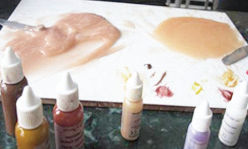
Figure 16: Mixing silicone for the dorsal and ventral aspects

Figure 17: Shade matching
After getting the desiredshade, the silicone material was packed into the mould andlight pressure was applied to remove excess material.The medical grade silicone (Cosmesil) was used for the fabrication of the prosthetic fingers. The material was then kept at 100° C for 1 hour. After polymerization, the prostheses were carefullyretrieved from the mould and finishing was done using alpine stones and silicone burs.The finished prostheses were finally placed onto the patient hand. Good retention and esthetics were achieved and the patient was instructed about the use and maintenance of the prostheses (Figure 18).
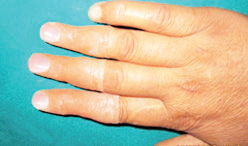
Figure 18: Final prostheses
FOLLOW UP
Periodic follow-up was done after 1 month and then after 6 months on a regular basis. The prostheses were checked for retention and colour stability.
DISCUSSION
Maxillofacial prostheses replace lost body parts using artificial substitutes like acrylic or silicones. These prostheses support the patients psychologically and enhance their social acceptance.A precisely fitting prosthesis can improve function by restoring length, and providing opposition for the remaining digits, maintaining sensitivity through a thin lamina, protecting the sensitive stump and transmitting pressure and position sense for activities such as writing or typing.6 The use of digital prostheses with modern prosthetic designs provides excellent esthetics and can be fabricated such that a stable point for light grasping is created.7
This article describes the rehabilitation of three partially amputated fingers with a silicone prosthesis, which is simple to construct, aesthetic, retentive and easy to maintain.6,8The material chosen for the fabrication was silicone which gave a more life-like appearance and feel to the prostheses.9,10 The characterised acrylic nails provide more realism to the rehabilitation and were fabricated in acrylic resin to mimic the natural nails in colour and texture.In the present technique, a modified approach was used for getting an accurate fit of the finger prosthesis with improved aesthetics, which is one of the most important criterion for the success of any prosthesis. Individual custom vacuum retained prostheses were planned for the patient because the stumps were of adequate length for providing the necessary retention. The prosthesis thus fabricated merged with the adjacent tissues providing desired aesthetics and psychological boost to the patient.
CONCLUSION
Successful prosthetic rehabilitation of patientswith total or partial amputations is a challenging task as most of the patients look forward to functional rehabilitation. Our endeavour and responsibility lies in making the best use of the available materials and techniques to enable these less fortunate patients to re-enter the society as confidently as possible. Most of the patients cannot afford expensive procedures such as microsurgical re-implantation and hence prosthetic rehabilitation remains the most affordable alternative. The most important aspect of such rehabilitation still remains and will continue to be the psycho-social aspect.
REFERENCES
- The glossary of prosthodontic terms. J Prosthet Dent 2005; 94(1): 10-92.
- Pereira BP, Kour AK, Leow EL and Pho RW. Benefits and use of digital prostheses. J Hand Surg Am 1996; 21(2): 222–228.
- Mc Kinstry RE.Fundamentals of facial prosthetics. Arlington: ABI ProfessionalPublications;1995.p.181-92.
- Pilley MJ, Quinton DN. Digital prostheses for single ï¬nger amputations. J Hand Surg 1999;24(5):539-41.
- Aydin C, KarakocaS,Yilmaz H. Implant-retaineddigitalprostheseswithcustom-designedattachments: Aclinicalreport. J Prosthet Dent 2007;97:191-5.
- Leow ME, Kour AK, Ng WK and Pho RW. Creating a model for fabricating a partial hand glove prosthesis using the realigned casts of the contralateral digits. Prosthet Orthot Int 1999; 23(1): 72–74.
- The use of digital prostheses with modern prosthetic designs provides excellent esthetics and can be fabricated such that a stable point for light grasping is created. Beasley RW,deBeze GM. Prosthetic substitution for ï¬ngernails.Hand Clin 1990; 6:105-10.
- Pillet J. Esthetic hand prostheses. J Hand Surg Am 1983; 8:778–781.
- Taylor TD. Facial prosthesis fabrication – Technical aspects clinical maxillofacial prosthesis. Chicago:Quintessence Publishing Company; 2000.
- Beumer J III, Curtis TA, Firtell DN. Maxillofacial rehabilitation, prosthodontic and surgical considerations.London: C.V. Mosby Company; 1979.
Disclaimer from Guident
The views and opinions expressed in articles published in Guident are solely those of the authors and do not necessarily reflect the views of the editors, the editorial board or the publisher, Ivory India. Guident does not endorse any product, technique or treatment described. Clinical content is intended for qualified dental and medical professionals and is not a substitute for individual clinical judgement. Guident, its editors and the publisher accept no liability for any consequence arising from the use of information published in the journal.
How to cite this article
Dr.Himanshu Aeran, Dr. Varun Kumar, Dr. Anuruti Uniyal. Multiple Digital Prostheses:The Esthetic Way to Complete the Hand. Guident. 2014 Dec;8(1). Available from: https://guident.in/articles/prosthodontics/multiple-digital-prostheses-the-esthetic-way-to-complete-the-hand.html