Management of Internal Screw Fracture in Conventional Implant Prosthesis Using Corticobasal Implants: A Case Report
Dentonic Oral Surgery Implant Centre Rajbagh, Srinagar, J&K
Abstract:
Implant-supported prostheses, while highly successful, are not without complications. One such complication includes internal screw fracture, which presents significant challenges in retrieval and restoration. This case report outlines the clinical presentation, diagnosis, and management of a fractured internal screw in a maxillary anterior implant and illustrates how immediate functional loading with corticobasal implants provided a rapid and reliable solution.
Keywords:
Corticobasal implants, internal screw fracture, immediate loading, implant prosthesis complication, monoimplant, dental implantology
Introduction:
Conventional implantology has evolved significantly; however, mechanical complications such as screw loosening and fracture continue to affect long-term implant success. Internal screw fractures can severely compromise prosthetic stability and are often time-consuming and complex to manage. Traditional retrieval techniques may fail, necessitating alternative protocols. Corticobasal implantology offers a viable and immediate solution, particularly when dealing with emergencies involving prosthetic failures. This report presents a clinical scenario demonstrating such a situation and the benefits of corticobasal implants.
Case Presentation:
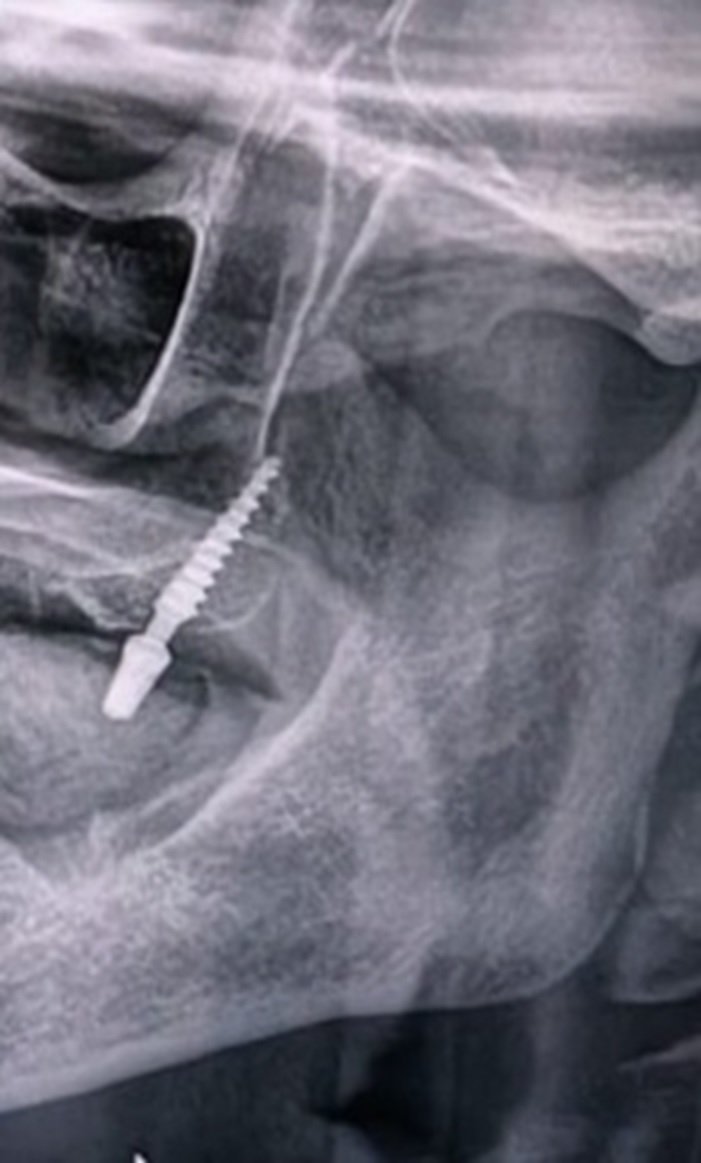
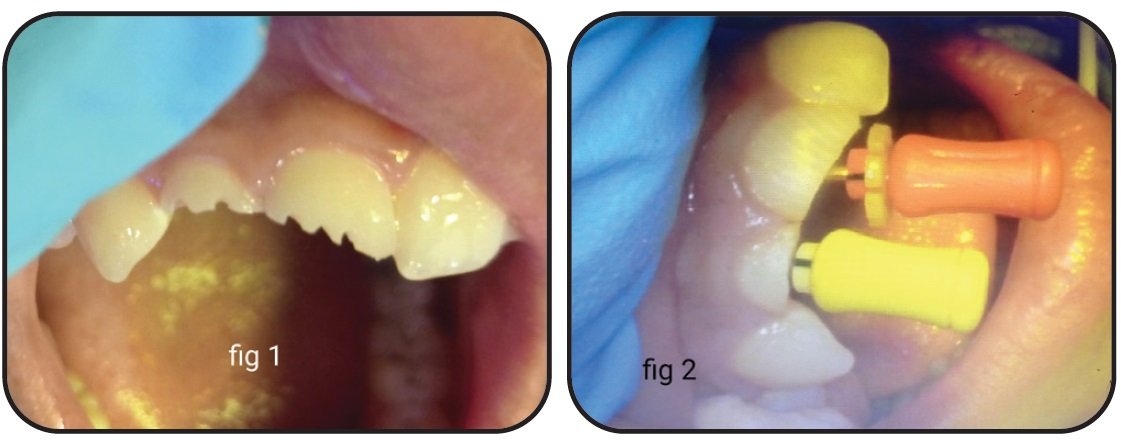
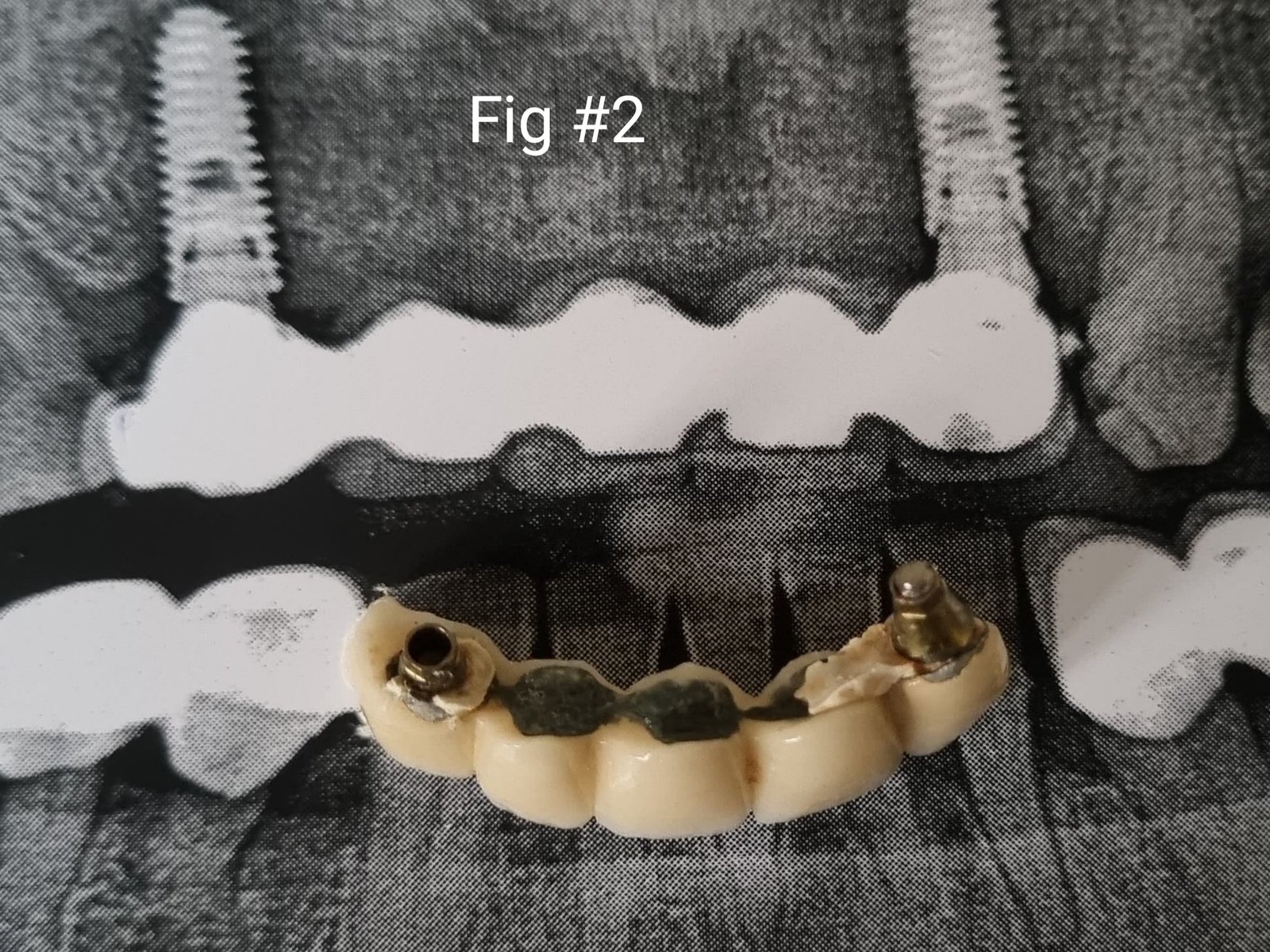
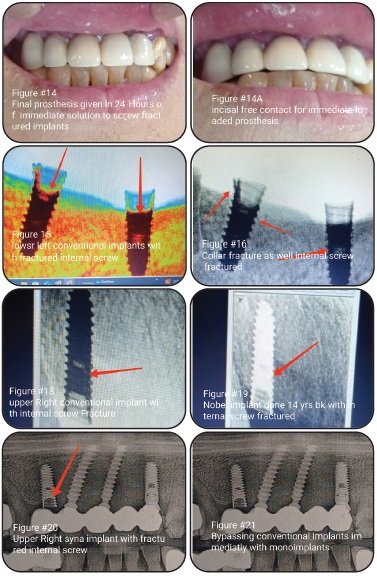
A 52-year-old female patient presented with a complaint of a loosened anterior maxillary prosthesis. She had received multiple conventional implants in 2018. Upon clinical and radiographic evaluation, a fractured internal connecting screw was noted on the right central incisor implant. The fractured fragment, lodged within the implant body, was inaccessible despite multiple retrieval attempts using ultrasonic scaler tips and screw retrieval tools.
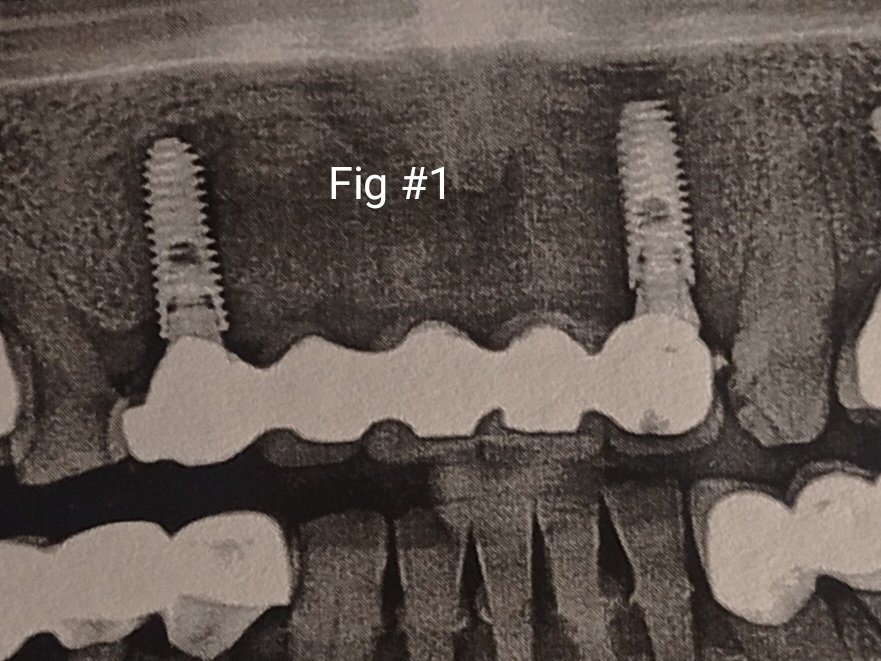
Given the complexity and time delay associated with ordering and replacing proprietary screw components, the case demanded an immediate functional and aesthetic solution.
Clinical Intervention:
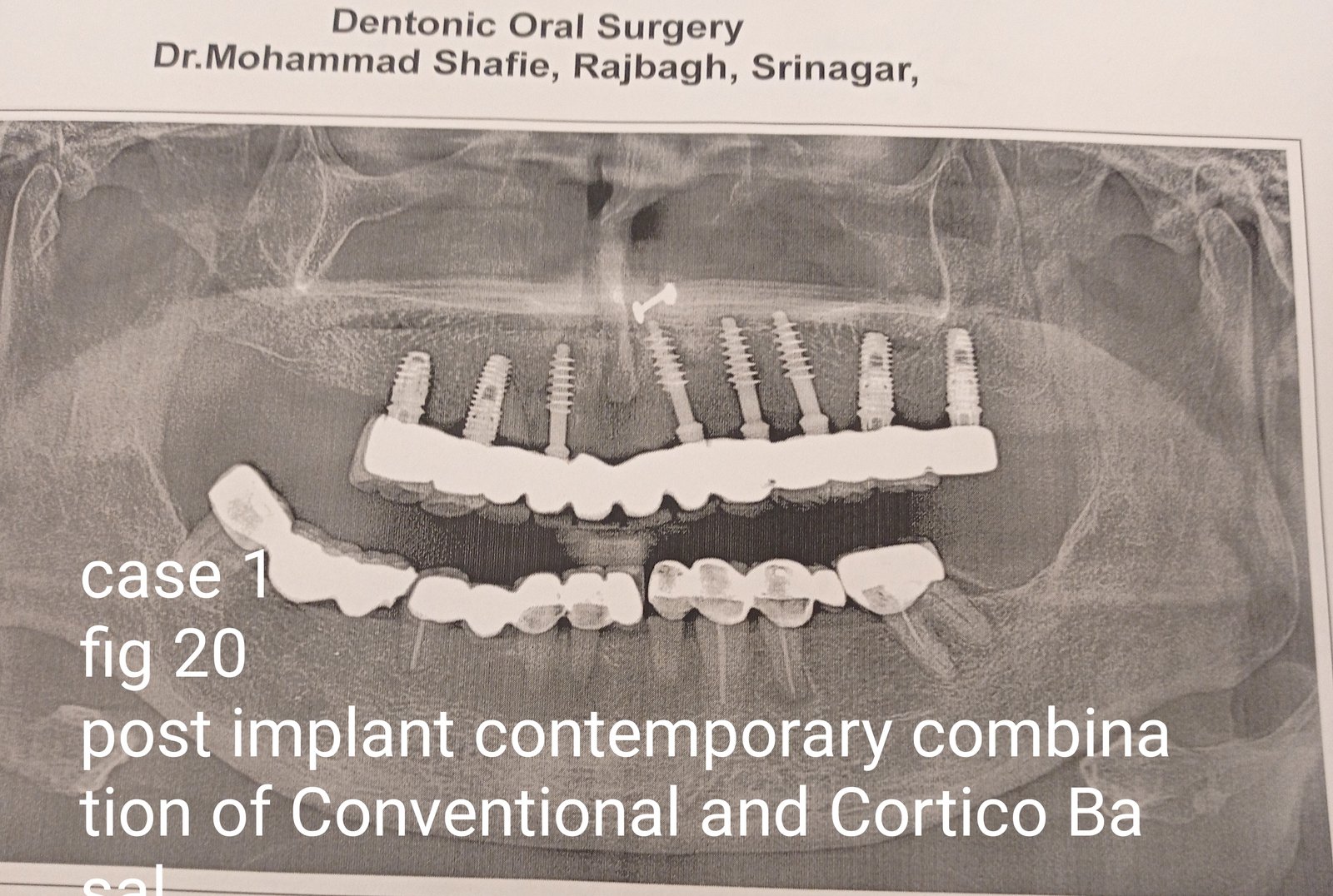
In light of the mechanical failure and patient discomfort, the treatment plan was revised to replace the failed implant with a corticobasal implant system. The fractured conventional implant was bypassed, and an immediate-load monoimplant was placed in the basal bone, ensuring primary stability. Within 24 hours, a stable and functional prosthesis was delivered.


The patient reported high satisfaction with both the function and aesthetics of the new prosthesis, and follow-up at one week and one month confirmed favorable healing and prosthetic performance.
Discussion:
Internal screw fractures present both diagnostic and therapeutic challenges in implant dentistry. The difficulty in accessing and removing fractured components often leads to frustration for both clinicians and patients. Traditional treatment pathways may require lengthy waiting periods, potentially undermining patient confidence.
Corticobasal implants, characterized by their engagement with basal cortical bone and immediate loading capability, offer a promising alternative. In cases where conventional implants fail or are deemed irretrievable, monoimplants enable rapid rehabilitation without the need for extensive grafting or complex surgical interventions.
Conclusion:
This case highlights the importance of being prepared with alternative treatment modalities such as corticobasal implantology. In situations involving mechanical failures like internal screw fractures, corticobasal implants provide a predictable, time-efficient, and patient-friendly solution. Clinicians are encouraged to familiarize themselves with such systems to confidently manage implant emergencies.
Conflict of Interest: None declared.
Funding: No external funding was received for this case.
Ethical Approval: Patient consent was obtained for both treatment and use of clinical information for educational and publication purposes.
Disclaimer from Guident
The views and opinions expressed in articles published in Guident are solely those of the authors and do not necessarily reflect the views of the editors, the editorial board or the publisher, Ivory India. Guident does not endorse any product, technique or treatment described. Clinical content is intended for qualified dental and medical professionals and is not a substitute for individual clinical judgement. Guident, its editors and the publisher accept no liability for any consequence arising from the use of information published in the journal.
How to cite this article
Dr. Muhammad Shafie. Management of Internal Screw Fracture in Conventional Implant Prosthesis Using Corticobasal Implants: A Case Report. Guident. 2025 May;18(6). Available from: https://guident.in/articles/implantology/management-of-internal-screw-fracture-in-conventional-implant-prosthesis-using-corticobasal-implants-a-case.html