From Edentulism to Excellence: A Full-Mouth Implant Rehabilitation Success Story
Department of prosthodontics & Crown and Bridge, I.T.S Dental College, Murad Nagar, Ghaziabad, UP India
ABSTRACT
Implant-supported prostheses, particularly the All-on-4 technique, have revolutionized dental rehabilitation for patients with severe edentulism or failing dentition. This method offers aesthetic restorations with fewer implants and reduced surgical complexity. However, challenges like inadequate bone volume may require alternative approaches, such as combining a hybrid prosthesis with All-on-4 implants opposed by an implant-supported overdenture. This hybrid solution balances the stability of implants with the flexibility of removable prostheses.
Key treatment considerations include patient selection, diagnostic imaging, surgical protocols for osseointegration, and prosthetic design. Postoperative care is also crucial for long-term success. This case report reviews the application of this hybrid approach, offering insights on its rationale, planning, and execution, and helping clinicians better address the needs of edentulous patients for improved oral health and quality of life.
Keywords:
All-on-4 implants, hybrid prosthesis, implant-supported overdenture, prosthetic rehabilitation, patient satisfaction.
Introduction
Implant-supported prosthetic solutions have transformed the landscape of dental rehabilitation, particularly for patients with extensive edentulism or failing dentition. Among these, the All- on-4 implant technique has gained widespread popularity for its ability to provide full arch restorations with fewer implants and less surgical complexity compared to traditional methods. This technique offers a functional, aesthetic solution that improves both the quality of life and oral health for patients, even in cases with compromised bone volume.
However, certain clinical challenges, such as insufficient bone quality or volume in the edentulous maxilla or mandible, may require alternative approaches to ensure optimal results. One such approach involves the use of implant-supported overdentures, which offer increased stability and support compared to traditional removable prostheses. When combined with the All-on-4 implant concept, implant-supported overdentures provide a versatile and effective solution, blending the benefits of fixed and removable options for improved patient comfort, function, and aesthetics.
This article aims to explore the indications, benefits, and clinical techniques involved in All- on-4 implant rehabilitation and implant-supported overdentures. By examining current literature, case studies, and expert opinions, we will provide insights into the planning, execution, and long-term success of these treatment modalities. Through this comprehensive understanding, clinicians can better address the diverse needs of edentulous patients, enhancing their overall treatment outcomes and satisfaction.
Case report
A 52-year-old female patient reported to the department of prosthodontics with the chief complaint of difficulty in chewing due to missing teeth in upper and lower back region of jaw in the past 1 year. A detailed case history was recorded followed by a thorough intraoral examination. Ethical approval with reference number ITSCDSR/IIEC/2022- 25/PROSTHO/04. An informed consent was taken prior to procedure. The patient was advised to undergo routine blood investigation, full mouth radiograph, and CBCT scan to execute a treatment plan. They reported back with normal laboratory findings. Radiographic examination brought us to a treatment plan involving all on 6 implants for both maxilla and mandible. But due to patient’s cost restraints the plan was shifted to all-on-4 concept with maxilla and implant supported overdenture with 2 implants in mandible.

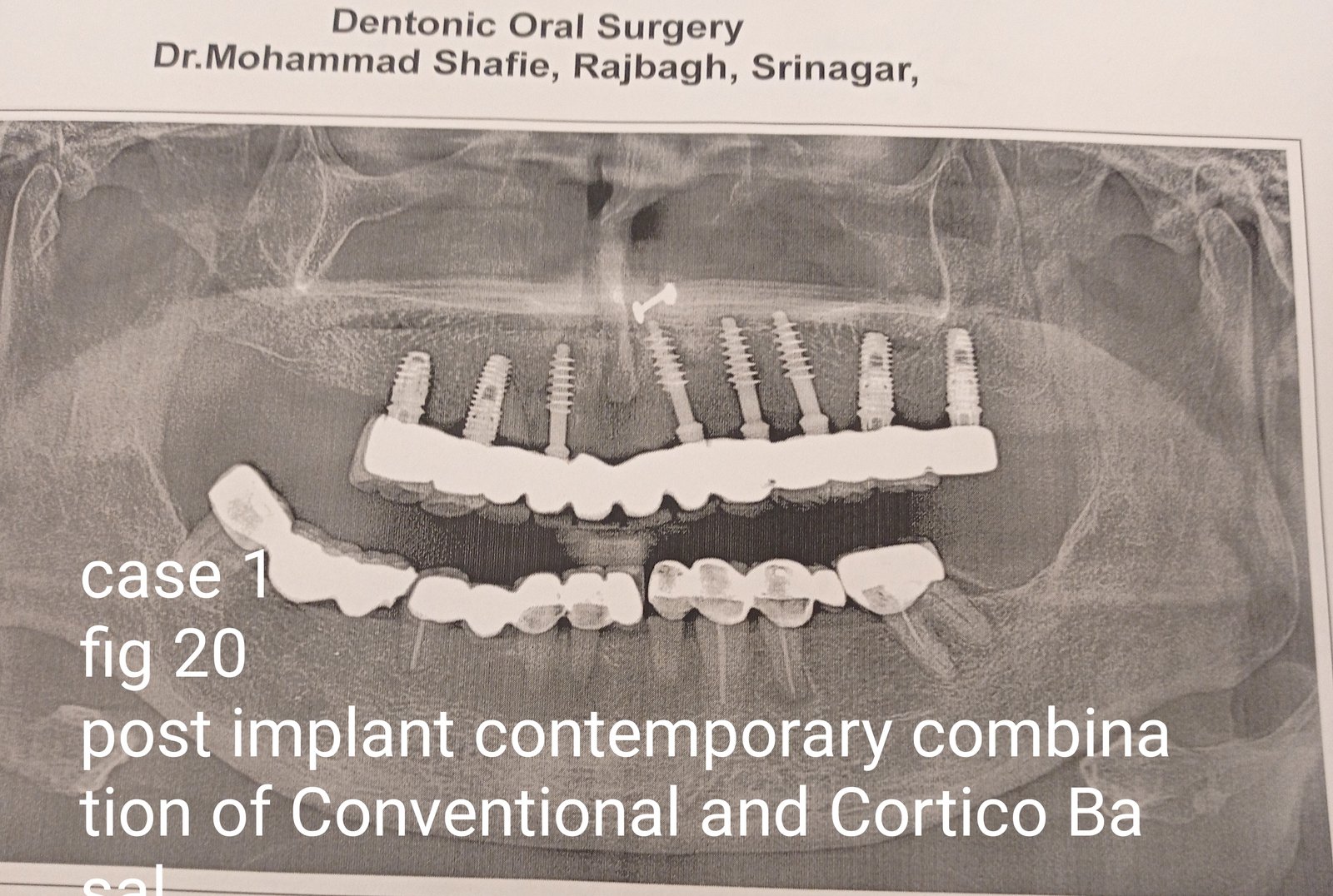
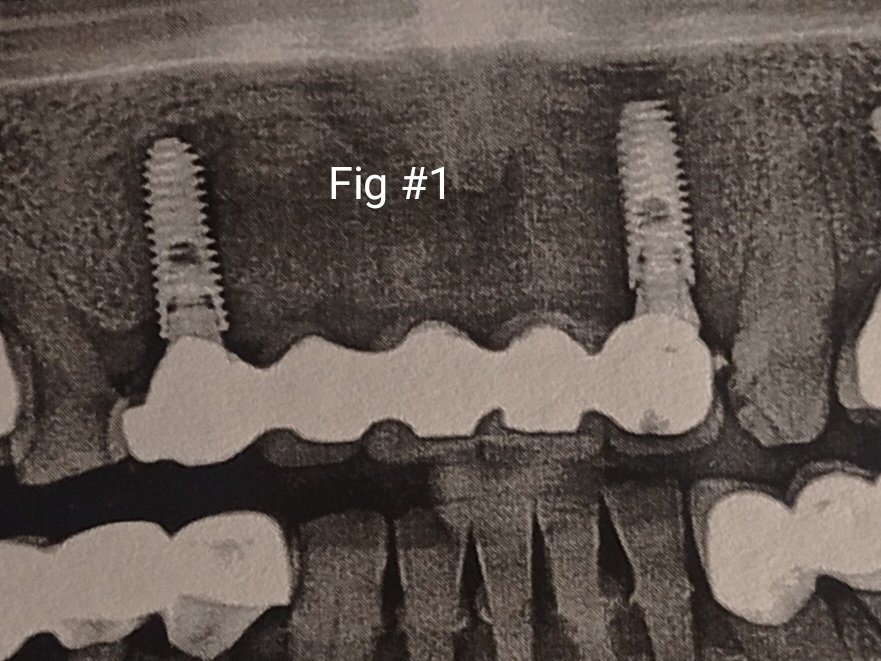
Fig 1: Post-surgical OPG Fig 2: OPG after 3-months
Radiographic examination showed only 2 to 3 mm of bone height in the sinus region, so to avoid the sinus augmentation, the all on 4 implants for maxillary and 3 implants and ball attachment supported overdenture for mandibular arch was planned. The implant site was selected according to the CBCT scan. After obtaining consent from the patient, implant surgery was planned. For maxilla, posterior superior alveolar and infraorbital nerve block was given. Mid-crestal incision was given and full thickness with papilla preservation flap was reflected. Osteotomy was prepared in 12 15, 22, 25 regions, implant placement was done and Interrupted sutures were given. For mandible, inferior alveolar nerve block was given followed by Implant placement in A, C and E region (fig.1).
Cover screws were placed and interrupted sutures were given. Postoperative instructions were given. After 4 months, a stage 2 surgery was performed (fig.2-4). Two weeks later or maxillary arch, the open tray technique with the splinted impression post using pattern resin, followed by the sectioning of the resin material and re-splinting was performed for the impression (fig.5). Jig verification was done (fig.6). Jaw relation was performed and teeth arrangement was done on semi adjustable articulator and wax trial was done (fig.8). Customized abutments were fabricated to correct the implant angulation and to maintain a single path of insertion. Metal trial was done (fig.7,11) and final hybrid prosthesis was fabricated (fig.9 and 12). Final cementation of maxillary hybrid prosthesis was done. For mandibular arch, conventional denture was fabricated and during insertion, healing abutment was removed and the male attachment was tightened on both implants placed in the mandible. Silicone separator was placed on male attachments and housing with O-ring placed above it (fig.13). Sufficient relief was made on the impression surface of mandibular denture. Auto polymerizing resin was mixed and o ring with housing was picked- up in the final denture (fig.10). During pickup both maxillary and mandibular prosthesis were closed in centric relation. Finishing and polishing of excess resin material on intaglio surface and final prosthesis were cemented in both maxillary and mandibular arch (fig.14-17) After occlusal adjustment, post insertion and oral hygiene instructions was given to patient. The patient was evaluated with radiographs periodically and after 6 months prosthetic evaluation was done.
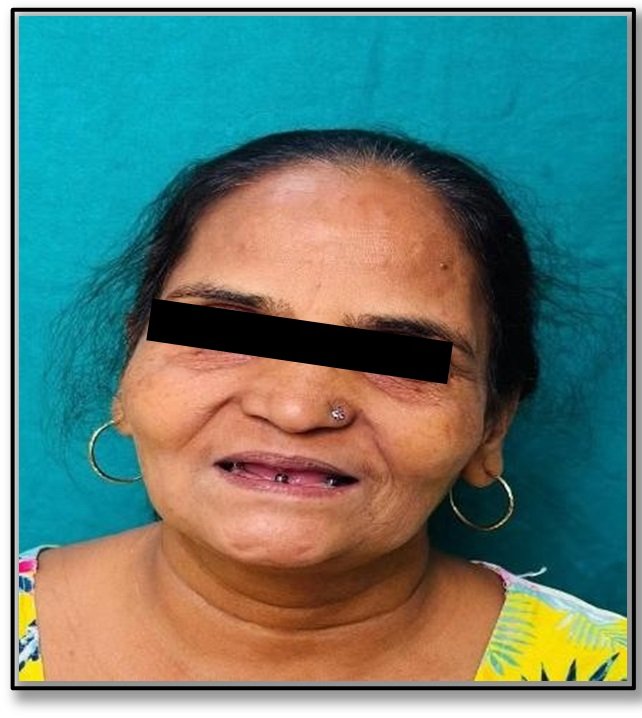
Fig 3: Pre-op photograph

Fig 4: Pre-op Intra-oral view
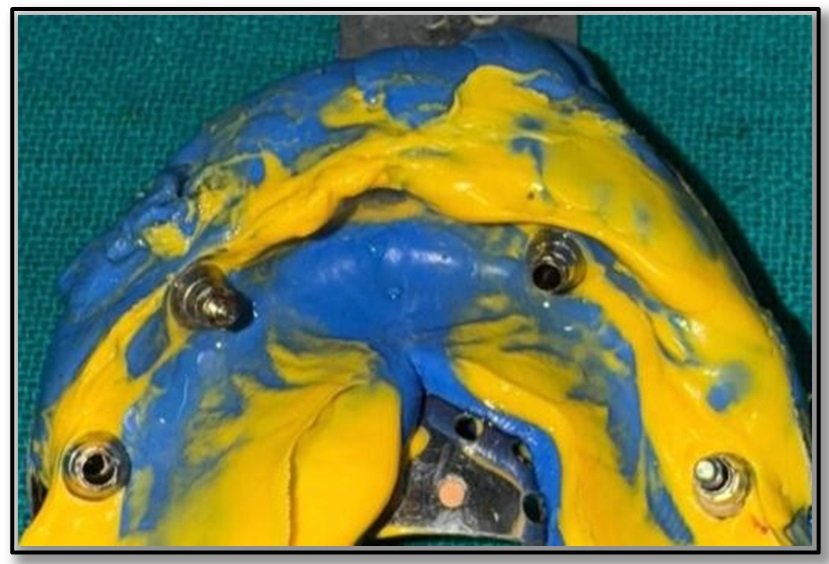
Fig 5: Open tray pick-up impression
Fig 6: Jig trial for verification
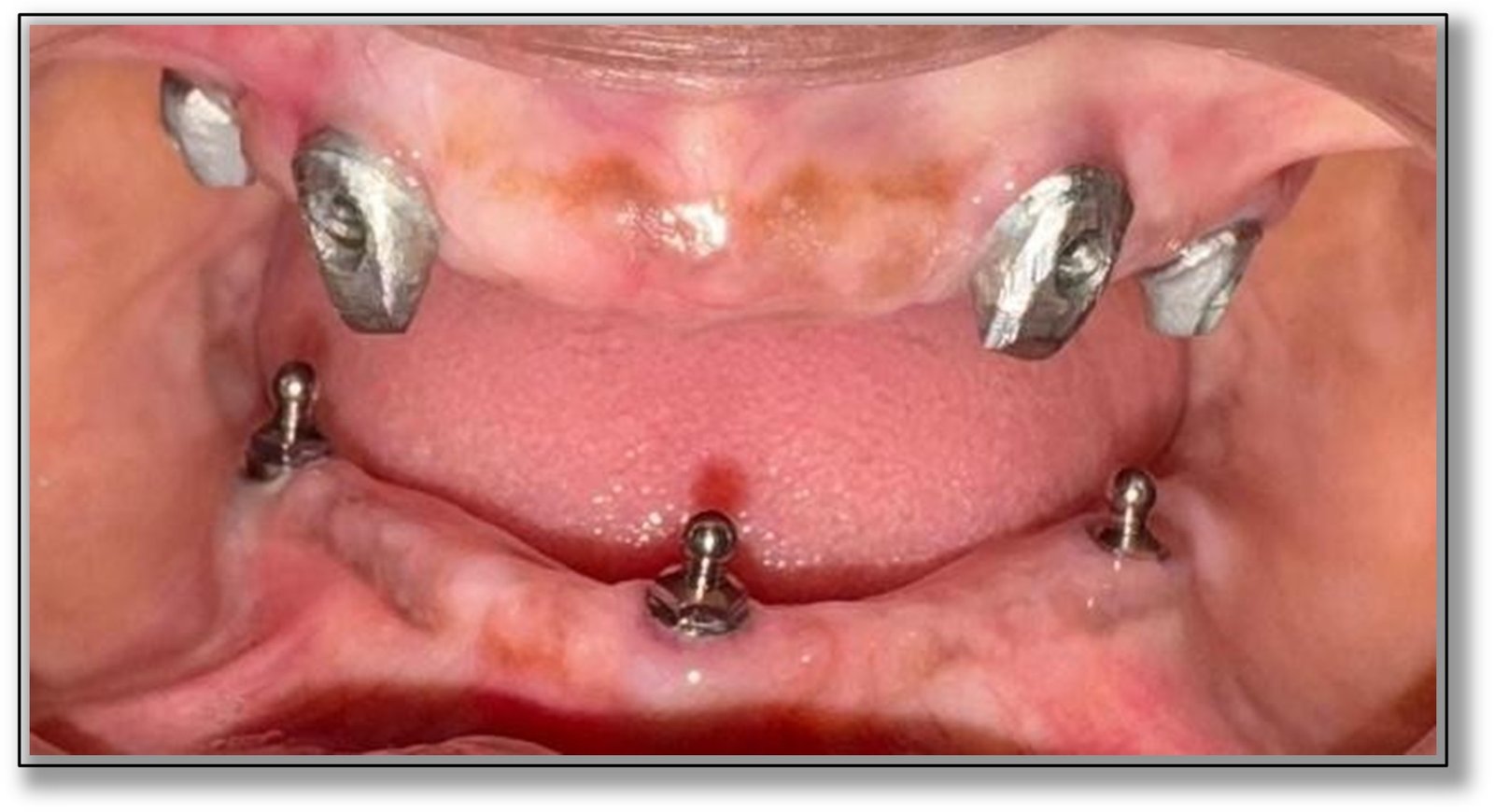
Fig 7: Abutments and ball attachment

Fig 8: Try in of trial denture

Fig 9: Final prosthesis

Fig 10: Metal housing pick-up
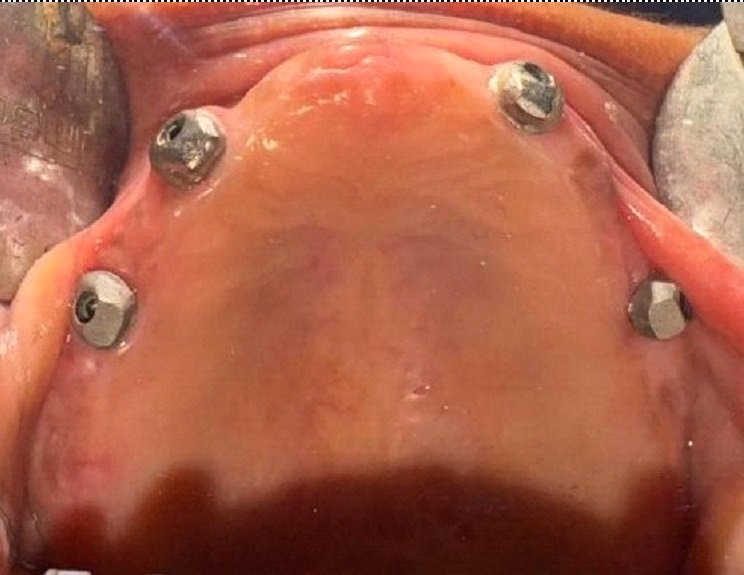
Fig 11:Customised abutments

Fig 12:Hybrid prosthesis

Fig 13: Attachment separators
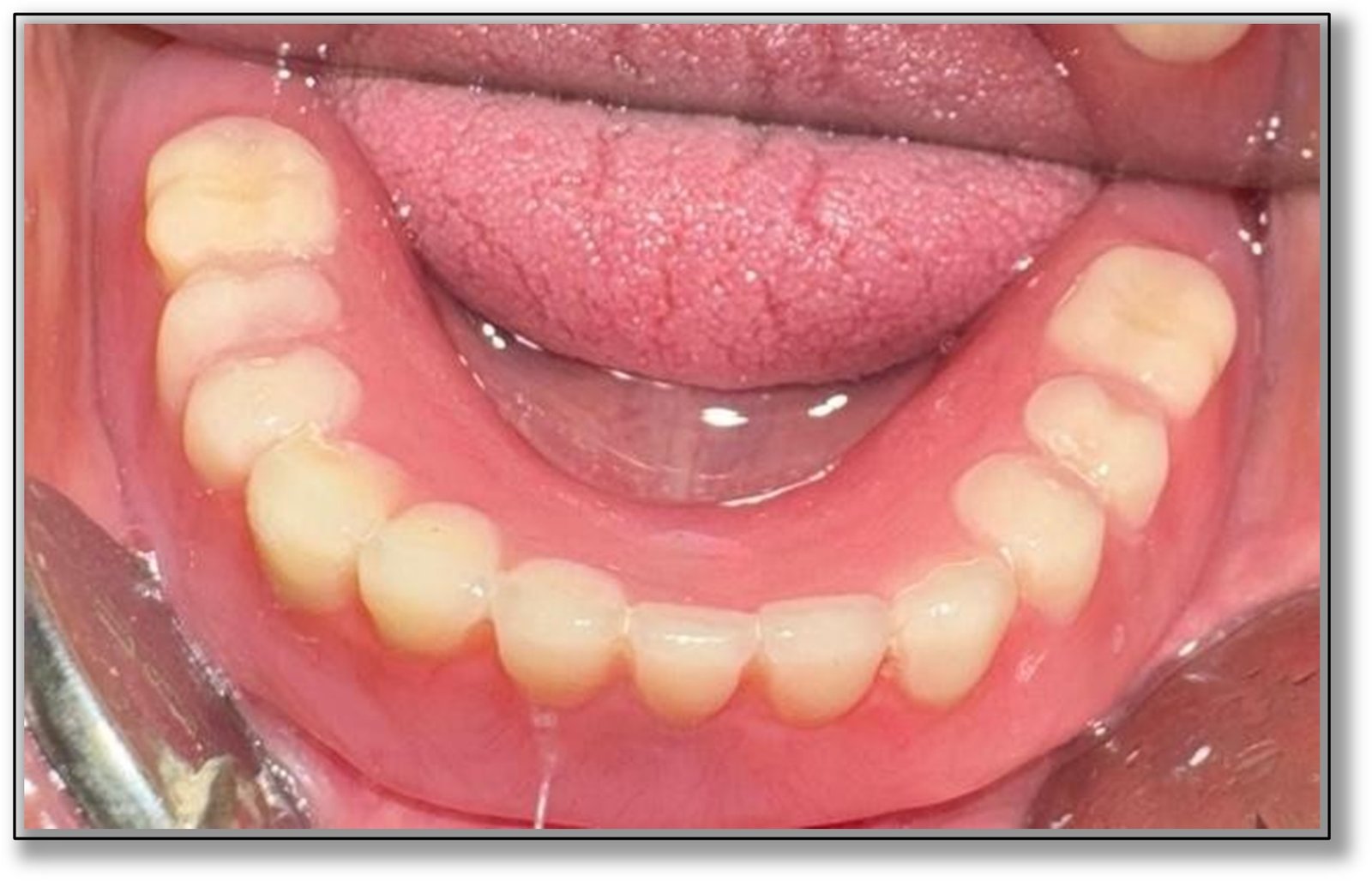
Fig 14: Implant supported overdenture
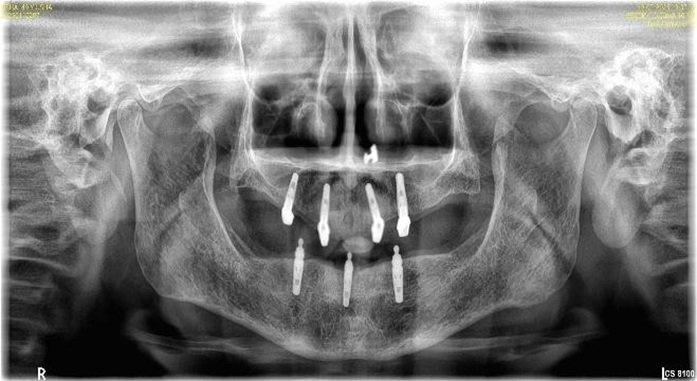
Fig 15:Post-op OPG

Fig 16:Post-op Intra-oral view

Fig 17: Post-op photograph
Discussion
Full-arch rehabilitation in edentulous patients involves addressing complex functional, esthetic, and psychological challenges, and one of the most effective and widely accepted solutions is the combination of a maxillary hybrid implant prosthesis with a mandibular implant-supported overdenture. This approach strategically integrates both fixed and removable prosthetic concepts, tailored to the distinct anatomical and biomechanical characteristics of each arch while accommodating individual patient needs. The maxillary hybrid prosthesis is a screw-retained, implant-supported fixed dental solution that replaces the entire upper arch, typically supported by four to six implants placed in the anterior and premolar regions, often avoiding the need for sinus augmentation. Modern techniques like guided surgery and tilted implant protocols have expanded the applicability of this solution. It offers enhanced functional stability through rigid fixation, esthetic benefits through the use of gingiva-colored materials for soft tissue replacement, and high patient acceptance due to its fixed nature. However, it demands rigorous hygiene practices and ongoing maintenance. In contrast, the mandibular implant-supported overdenture, retained by two to four implants using attachments such as locators, bars, or balls, provides a removable yet stable alternative to conventional dentures. It benefits from the typically denser mandibular bone, offers simplified hygiene, lower surgical complexity, cost-effectiveness, and adaptability over time. The rationale for using a fixed maxillary and removable mandibular prosthesis is based on principles such as optimal load distribution, prosthetic space availability, and minimizing occlusal trauma, particularly when compared to two removable arches. This combination supports a patient-centered approach, offering esthetics and stability in the maxilla and practicality in the mandible, making it especially suitable for elderly, medically compromised, or economically limited patients. Long-term success requires diligent follow-up, including periodic adjustments, attachment replacements, and soft tissue monitoring, along with comprehensive patient education on maintenance and hygiene to prevent complications such as peri-implant disease or prosthetic wear. This integrated treatment modality ultimately enhances oral function, esthetics, and overall quality of life for edentulous individuals.
Conclusion
Full arch implant rehabilitation is particularly challenging in cases with significant residual alveolar ridge resorption. To meet the cosmetic demands and patient expectations, simplifying treatment procedures is essential. In this case, the All-on-4 concept effectively addressed the patient’s needs by using angled distal implants and a hybrid prosthesis design, eliminating the need for complex bone augmentation or multiple graft surgeries. This approach has also improved communication between clinicians and laboratory technicians during the fabrication of frameworks and prostheses, reducing the time and complexity of the process.
Conflict of interest- None
Funding- Not Applicable
References
- M.Taruna, B.Chittaranjan, N.Sudheer, Suchita Tella, Md.Abusaad. Prosthodontic perspective to all on-4 concept for dental implants. Journal of clinical and diagnostic research. 2014 oct, vol-8(10): ze16-ze19
- Mohamed, A.M.A., Askar, M.G. & El Homossany, M.EM.B. Stresses induced by one piece and two-piece dental implants in All-on-4® implant supported prosthesis under simulated lateral occlusal loading: non-linear finite element analysis study. BMC Oral Health 22, 196 (2022). https://doi.org/10.1186/s12903-022- 02228-9
- Soto-Penaloza D, Zaragozí-Alonso R, Penarrocha-Diago M, Penarrocha Diago M. The all- on-four treatment concept: Systematic review. J Clin Exp Dent. 2017 Mar 1;9(3): e474-e488. doi:10.4317/jced.53613. PMID: 28298995; PMCID: PMC5347302
- YuYuan Chan, Min-Cheih Liu. Full mouth rehabilitation with all on 4 concepts: case report. Journal of Prosthodontics and Implantology. Volume 8 number 4, 2019
- Chan Y, Liu MC. Full mouth rehabilitation with All-On-4 concept-A case Report. Journal of Prosthodontics and Implantology. 2019 Oct 1;8(4):21- 5
- Capote-Moreno AL, Naval-Gías L, Muñoz-Guerra MF, Rodríguez-Campo FJ. Zygomatic distraction osteogenesis for correction of midfacial support after hemi-maxillectomy: experience and technical considerations. Journal of Oral and Maxillofacial Surgery. 2013 Apr 1;71(4): e189-97
Disclaimer from Guident
The views and opinions expressed in articles published in Guident are solely those of the authors and do not necessarily reflect the views of the editors, the editorial board or the publisher, Ivory India. Guident does not endorse any product, technique or treatment described. Clinical content is intended for qualified dental and medical professionals and is not a substitute for individual clinical judgement. Guident, its editors and the publisher accept no liability for any consequence arising from the use of information published in the journal.
How to cite this article
Dr. Neha Singla, Dr. Saatvik Garg, Dr. Siddhi Tripathi. From Edentulism to Excellence: A Full-Mouth Implant Rehabilitation Success Story. Guident. 2025 Jun;18(7). Available from: https://guident.in/articles/implantology/from-edentulism-to-excellence-a-full-mouth-implant-rehabilitation-success-story.html