Biomarkers in Orthodontics
Department of Orthodontics and Dentofacial Orthopedics, Rural Dental College, PIMS (DU), Loni. Maharashtra
INTRODUCTION
Bone remodeling is a dynamic process that involves the balance between bone formation and resorption. Orthodontic tooth movement is achieved by applying mechanical forces that induce bone remodeling around the teeth. Biomarkers can be used to monitor the biological response of bone to orthodontic forces and to evaluate the effectiveness and efficiency of orthodontic treatment. Some of the biomarkers that have been studied are:
- Alkaline phosphatase (ALP): an enzyme produced by osteoblasts that is involved in bone mineralization. ALP levels increase during active bone formation and decrease during quiescent or resorptive phases.
- C-telopeptide of type I collagen (CTX): a peptide fragment that is released during bone resorption by osteoclasts. CTX levels increase during active bone resorption and decrease during quiescent or formative phases.
- Prostaglandin E2 (PGE2): a lipid mediator that is involved in inflammation, pain, vasodilation, and bone metabolism. PGE2 levels increase during the initial phase of orthodontic tooth movement and decrease during the later phase.
These biomarkers can be measured in GCF or saliva using various methods such as ELISA or immunoassay. The advantages of using these biomarkers are that they can provide real-time information about the biological activity of bone around the teeth and can help to optimize the force magnitude, duration, and frequency for orthodontic tooth movement. However, there are also some limitations such as the variability of biomarker levels due to individual differences, oral hygiene, inflammation, medication, and other factors. Therefore, more studies are needed to validate the clinical relevance and applicability of these biomarkers for orthodontic practice.
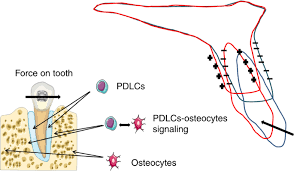
Inflammation is a physiological response to tissue injury or infection that involves the activation of immune cells and the release of various mediators such as cytokines, chemokines, growth factors, and enzymes. Inflammation plays a role in both orthodontic tooth movement and craniofacial growth by modulating bone remodeling, angiogenesis, cell proliferation, differentiation, and apoptosis. Biomarkers can be used to assess the inflammatory status of the periodontal tissues and craniofacial structures during orthodontic treatment and growth modification. Some of the biomarkers that have been studied are:
- Interleukin-1 beta (IL-1β): a pro-inflammatory cytokine that is involved in bone resorption, pain, and fever. IL-1β levels increase during the initial phase of orthodontic tooth movement and decrease during the later phase.
- Interleukin-6 (IL-6): a pro-inflammatory cytokine that is involved in bone resorption, inflammation, and immune response. IL-6 levels increase during the initial phase of orthodontic tooth movement and decrease during the later phase.
- Interleukin-8 (IL-8): a chemokine that is involved in neutrophil recruitment, angiogenesis, and inflammation. IL-8 levels increase during the initial phase of orthodontic tooth movement and decrease during the later phase.
- Matrix metalloproteinases (MMPs): a family of enzymes that are involved in extracellular matrix degradation, tissue remodeling, and inflammation. MMPs levels increase during the initial phase of orthodontic tooth movement and decrease during the later phase
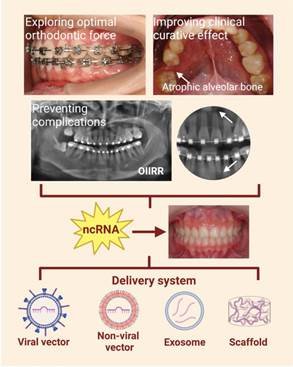
These biomarkers can be measured in GCF or saliva using various methods such as ELISA, zymography, or polymerase chain reaction (PCR). The advantages of using these biomarkers are that they can reflect the inflammatory response of the periodontal tissues and craniofacial structures to orthodontic forces and growth modification and can help to prevent or manage potential complications such as root resorption, gingival recession, pain, infection, and relapse. However, there are also some challenges such as the variability of biomarker levels due to individual differences, oral hygiene, inflammation, medication, and other factors. Therefore, more studies are needed to determine the optimal timing and frequency of biomarker measurement and to establish the normal ranges and cut-off values for different populations and age groups.
Tissue damage is an inevitable consequence of orthodontic tooth movement and craniofacial growth that involves mechanical stress, cellular injury, oxidative stress, and apoptosis. Tissue damage can affect the periodontal tissues, dental pulp, alveolar bone, and craniofacial sutures. Biomarkers can be used to evaluate the extent and severity of tissue damage and to monitor the healing and repair process. Some of the biomarkers that have been studied are:
- Lactate dehydrogenase (LDH): an enzyme that is involved in glycolysis and is released from damaged cells. LDH levels increase during tissue damage and decrease during tissue repair.
- Aspartate aminotransferase (AST): an enzyme that is involved in amino acid metabolism and is released from damaged cells. AST levels increase during tissue damage and decrease during tissue repair.
- Glutathione (GSH): an antioxidant that is involved in protecting cells from oxidative stress. GSH levels decrease during tissue damage and increase during tissue repair.
- Caspase-3: an enzyme that is involved in apoptosis or programmed cell death. Caspase-3 levels increase during tissue damage and decrease during tissue repair.
These biomarkers can be measured in GCF or saliva using various methods such as ELISA or spectrophotometry. The advantages of using these biomarkers are that they can indicate the degree and duration of tissue damage and can help to prevent or manage potential complications such as pulp necrosis, root resorption, alveolar bone loss, and suture fusion. However, there are also some limitations such as the variability of biomarker levels due to individual differences, oral hygiene, inflammation, medication, and other factors. Therefore, more studies are needed to validate the clinical significance and utility of these biomarkers for orthodontic practice.
CONCLUSION
In conclusion, biomarkers are promising tools for orthodontics and craniofacial growth that can provide valuable information about the biological processes involved in tooth movement and growth modification. Biomarkers can be obtained from non-invasive sources such as saliva, GCF, or urine using various methods such as ELISA, HPLC, MS, or PCR. Biomarkers can be used to assess skeletal maturity, bone remodeling, inflammation, and tissue damage in relation to orthodontic treatment and growth modification. However, more research is needed to standardize the biomarker assays, establish the normal ranges and cut-off values, validate the clinical relevance and applicability, and optimize the timing and frequency of biomarker measurement for different populations and age groups.
REFERENCES
- Krishnan, V., & Davidovitch, Z. (2006). Biological mechanisms of tooth movement: Part 1—Orthodontic forces and tissue response. American Journal of Orthodontics and Dentofacial Orthopedics, 129(4), 469.e1–469.e32. doi:10.1016/j.ajodo.2005.10.007
- Nakano, S., Kawanami, M., & Inoue, M. (2002). Changes in biochemical markers during orthodontic tooth movement. Bulletin of Tokyo Dental College, 43(2), 99–106. doi:10.2209/tdcpublication.43.99
- Rygh, P. (1998). Orthodontic tooth movement and tissue reaction at the cellular and molecular levels. European Journal of Orthodontics, 20(5), 419–431. doi:10.1093/ejo/20.5.419
- Xiong, H., Li, B., & Deng, X. (2014). Biomarkers in orthodontic tooth movement: A systematic review. International Journal of Oral Science, 6(1), 20–27. doi:10.1038/ijos.2013.88
Disclaimer from Guident
The views and opinions expressed in articles published in Guident are solely those of the authors and do not necessarily reflect the views of the editors, the editorial board or the publisher, Ivory India. Guident does not endorse any product, technique or treatment described. Clinical content is intended for qualified dental and medical professionals and is not a substitute for individual clinical judgement. Guident, its editors and the publisher accept no liability for any consequence arising from the use of information published in the journal.
How to cite this article
Dr. Nikita Navgire, Dr. Shubhangi Mani, Dr. N. G. Toshniwal. Biomarkers in Orthodontics. Guident. 2025 Jun;18(7). Available from: https://guident.in/articles/orthodontics/biomarkers-in-orthodontics.html