Direct Laminate Veneers - Part III
Victoria, Australia
Much about the way we wish to present ourselves to the world is based upon current concepts of fashion and beauty, the criteria of which are constantly changing.
The smile is much the same, during the ‘30’s an attractive smile was the “cupid doll” look, small mouth with slightly pouted lips. Extraction orthodontics worked well in this era but not today when an attractive smile just fits in between the ears.
We recognize people by their eyes and once we have established who we are talking to the mouth plays an important role in flagging the emotional aspects of conversation. Even if we are not consciously aware of it our mouths are continuously being scrutinized at a subliminal level during conversation.
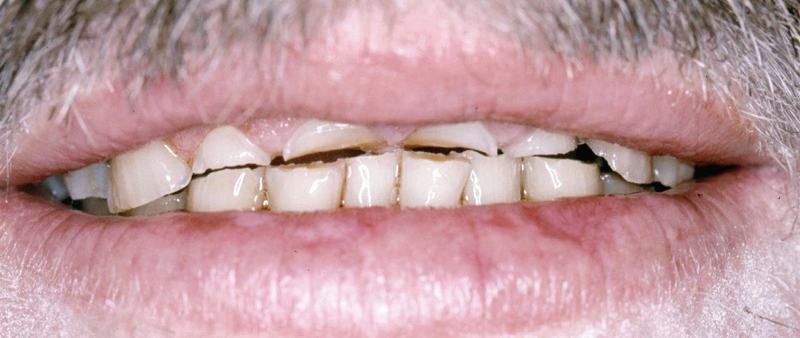
When planning a smile, incorporating contemporary concepts of aesthetics play an essential part of having a happy patient at the procedure’s completion. A wider smile and a brighter smile are starting points for achieving a successful outcome when placing laminate veneers. This means that laminates usually need to be placed from the first bicuspid to first bicuspid on the opposite arch and the value of the teeth increased and often the hues lightened. A word of caution here: super white can be okay on a female, because
she can enhance their face with make up, whereas often an older male looks unusual with an “Arlington Smile”.
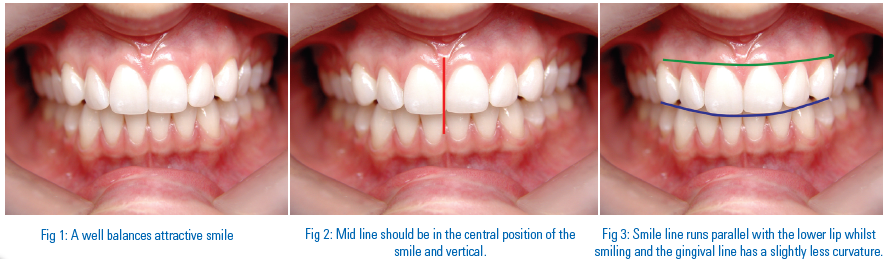
For the majority of people an aesthetic smile is based upon symmetry, parallelism and mirror imaging. Figure 1. Further to this there are a number of basic landmarks that require attention if an aesthetic smile is to be achieved. Nothing is ever set in concrete and compromises are usually part of the outcome, however getting the best achievable result is getting as many landmarks incorporated into a smile as practicable.
MID LINE
The mid line is best positioned in the middle of the smile and should be in the patient’s vertical axis. Shifts in the position of the mid line are difficult to compensate, however small adjustments to the mesial aspects of the central incisors prior to placing laminates may assist in creating a vertical line Figure 2.
SMILE LINE
The smile line is achieved by asking a patient to smile and contouring the incisal margins of the upper laminates parallel to the lower lip. If a patient has an asymmetrical lip line use the plane between the eyes as a reference point. Figure 3.
GINGIVAL LINE
The gingival line is described as a curved line parallel with the smile line but with slightly less curvature. The line contacts the zeniths of the central incisors and canines and should pass slightly above the lateral incisors. Figure 3.
ANTERIOR EMERGENCE PROFILE
The anterior emergence profile is the profile of the central incisors parallel to the lateral facial profile of the patient whilst smiling. Figure 4.
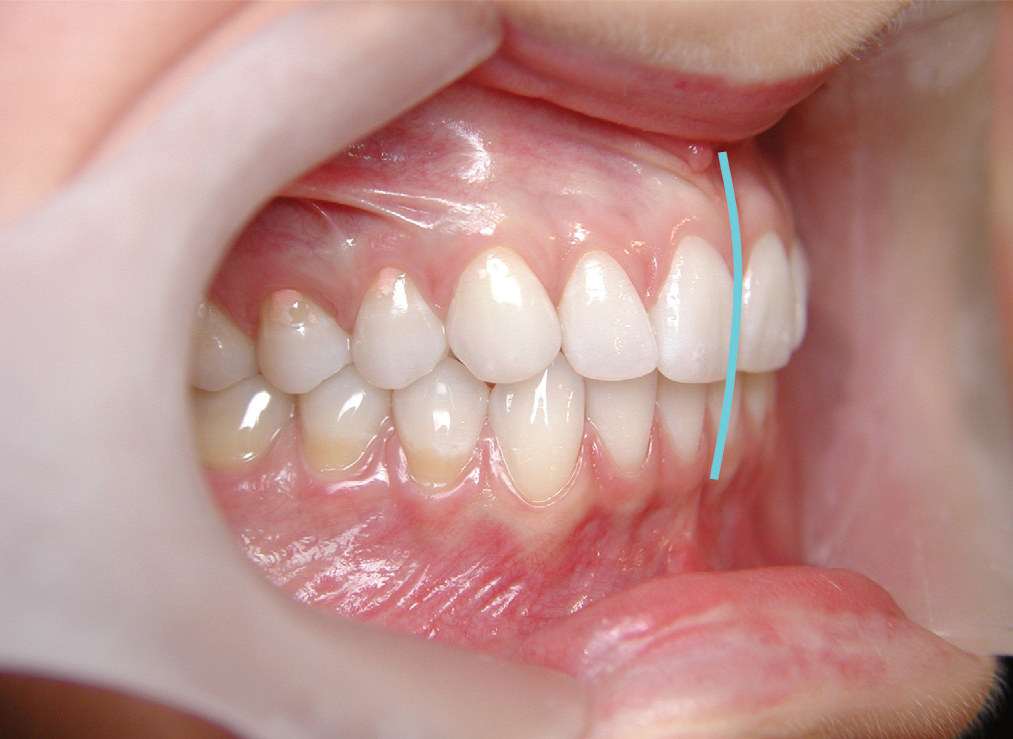
Fig 4: Anterior emergence profile is parallel to the lateral profile of the patients whilst smiling.
LATERAL EMERGENCE PROFILE
The lateral emergence profile consists of the profiles of the distal margins of the teeth. They should be parallel and mirror images with a slight mesial incline. The emergence profile of the outer laminate should be parallel with the facial aspect of the first visible natural tooth. Figure 5.
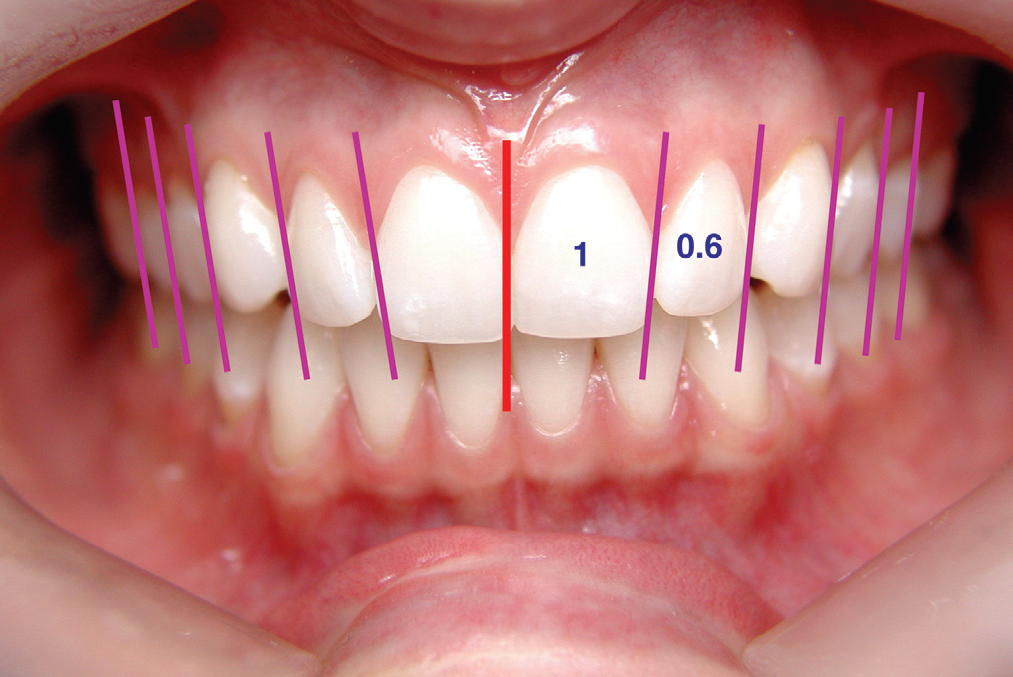
Fig 5: Lateral emergence profiles should be parallel and mirror images of each other with a slight mesial inclination. Length, width and facial aspects of teeth should reflect the Golden Proportion ratio.
TEETH LENGTH WIDTH PROPORTIONS
As a rule of thumb the ratio between the width of a tooth and the height should fall within the range of the Golden Proportion (ratio 0.618). Furthermore the width of the facial aspect of the lateral incisor should be about .6 the width of the central incisor and the facial aspect of the canine about .6 the width of the lateral. Figure 5.
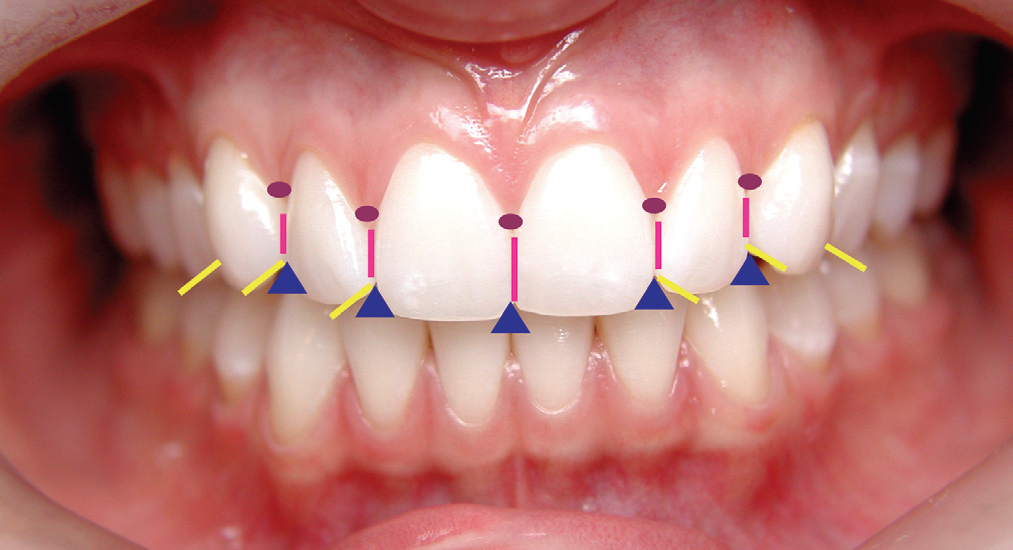
Fig 6: Gingival embrasures need to be minimal and incisal embrasures slightly increased to create a youthful appearance. Emergence angles of incisal embrasures should be parallel and mirror images of each other.
GINGIVAL AND INCISOR EMBRASURES
With aging, gingival embrasures open and incisal embrasures close. The reversal of this phenomenon has the effect of rejuvenating a smile. Incisal emergence profiles should be parallel and mirror images and the lengths of the contact areas should shorten slightly towards the lateral. The depth of the incisal embrasures increase slightly moving laterally from the central incisors. Figure 6.
THE TOTAL PACKAGE
The culmination of these parameters forms the basic landmarks of an aesthetic smile. Figure 7.
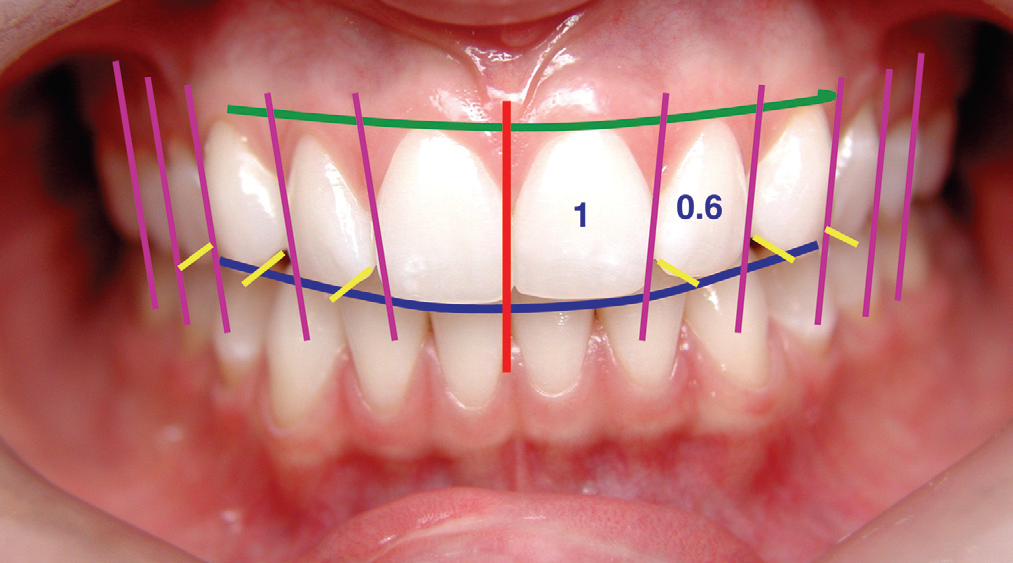
Fig 7: Parameters of a smile.
The next paper in this series will demonstrate a sequence for placing, contouring and polishing direct laminate veneers.
DISCLAIMER
“Published in the Australian Dental Association News Bulletin November 2008 Reprinted with permission of the editor and Author.”
Disclaimer from Guident
The views and opinions expressed in articles published in Guident are solely those of the authors and do not necessarily reflect the views of the editors, the editorial board or the publisher, Ivory India. Guident does not endorse any product, technique or treatment described. Clinical content is intended for qualified dental and medical professionals and is not a substitute for individual clinical judgement. Guident, its editors and the publisher accept no liability for any consequence arising from the use of information published in the journal.
How to cite this article
Dr. Geoffrey M Knight. Direct Laminate Veneers - Part III. Guident. 2013 Oct;6(12). Available from: https://guident.in/articles/aesthetic-dentistry/direct-laminate-veneers-part-iii.html