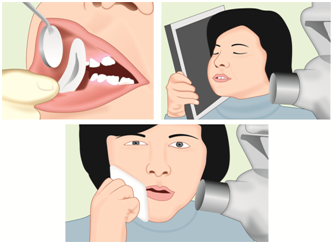
Detecting Child Abuse and Neglect
Department of Pedodontics and Preventive . Dentisry, K.D Dental College, Mathura, U.P, India
Child abuse is a sinful activity that occurs globally under the veil of secrecy, especially where children are unaccompanied. This activity seems to be quite prevalent in an underprivileged area of developing nations. Researchers have indicated that children with disabilities are more vulnerable to child abuse and neglect than normal individuals that includes children with impairments such as visual, hearing, speech along with intellectual disabilities.
According to the latest data the sexual exploitation involves perpetrators known to the child than strangers. 25% of the sexual abuse of children were committed by their employers and co-workers. This information has been derived from national crime records bureau (NCRB) 2015 data on 8,800 child rape cases registered using the protection of children against sexual offences act (POSCO). Interestingly women were less affected than men. A study conducted in 2007along with the ministry of women and child development, boys were as frequently affected as girls. The number of cases registered for child abuse raised from 8904(2014) - 14913(2015) under the POSCO act. In a nutshell 94.8% of the cases of sexual abuse in children are done by someone they knew, such as neighbours are found to be biggest abusers ie 35.8% and 10% of cases by their own direct family members.
Physical abuse (41.0 %) was more prevalent than sexual abuse (35.4%) and neglect (23.6%). 37.5% of physical abuse cases presented with orofacial injuries, i.e. (head, face, oral cavity and neck). According to American Board of Pedodontics (1979) majority of dental injuries were: Fracture of teeth (32%), Bruises of oral tissues (24%), Laceration of oral tissues (14%), Dentoalveolar fractures (11%), Burns of oral tissues (5%)
Craniofacial, head, face, and neck injuries occur in more than half of the cases of child abuseshould be examined carefully not only for signs of oral trauma but also for caries, gingivitis, and other oral health problems. Some authorities believe that the oral cavity may be a central focus for physical abuse thereby putting a bigger responsibility on dentists and paediatric dentists.
Oral injuries may be caused with instruments such as eating utensils or a bottle during forced feedings, hands, fingers, or scalding liquids or caustic substances. The abuse may result in: contusions, burns, or lacerations of the tongue, lips, buccal mucosa, palate (soft and hard), gingivae, alveolar mucosa, or frenum; fractured, displaced, or avulsed teeth; or facial bone and jaw fractures. Although Unintentional or accidental injuries to the mouth are common and must be distinguished from abuse by judging whether the history, including the timing and mechanism of injury, is consistent with the characteristics of the injury and the child’s developmental capabilities.
Physical abuse
: according to WHO is that which results in potential harm from an interaction and lack of interaction which is reasonable within the control of parent or person in a position of responsibility, power and trust. The different forms of physical abuse are : Female infanticide, Battering of the child, Murder of the child, Branding or body piercing, Child labour, Abandonment of the child.IF CHILD/INFANT SHOWS
- Multiple signs of trauma.
- Unexplained burns, bites, bruises, broken bones or black eyes.
- Bruises or trauma associated with face, ear, neck and genitalia.
- Vertical marks or linear bruises.
- Slap may leave a finger outline.
- Fading bruises or other marks noticeable after a long absence from school.
- Fracture of hands and arms are quite normal in an ambulatory child but can be quite alarming in defenceless infants, who are not on their own.
- Any child who presents with unexplainable fractures, it becomes imperative to rule out his medical and genetic history for bone fragility along with his blood and serum calcium levels.
- The distribution and location of burn should be identified.
- Intentional burns can be seen on feet, legs, hands and buttock and will generally have clear line of demarcation.
- Symmetrical burns are also of concerns as accidental burns rarely occur bilaterally.
- Seems frightened of the parents and protests or cries when it is time to go home.
- Shrinks at the approach of adults.
- Reports injury given by a parent or another adult caregiver.
SUSPECT AN ABUSE (PHYSICAL) IF
- Child injuries are unexplainable, unconvincing and unfathomable as per parents, explanation.
- If the child’s attitude is expressed in a negative way by a parent.
- Harsh physical punishment for the child.
- History of child abuse.
Child sexual abuse:
is the gravest form of abuse where most of the children are bearing it silently and suffering their entire life due to emotional and mental trauma on their minds. 53.22% have been reported to suffer from some form of sexual abuse where 52.94% are boys and 47.06% are girls.Child sexual abuse involves an inappropriate sexual behavior that includes reaching out to child genitals/ getting them to touch genitals of adults, indecent/vulgar language, use of appropriate words, rape, exhibitionism or sexual explanation with/without touching them, done by a stranger/caretaker/babysitter/teacher/parent
Types of Sexual Assault According to “The Protection of Children from Sexual Offences Act”:
Penetrative Sexual Assault: Penetration of an organ or any other object into vagina, urethra, anus or mouth or makes the child do vice versa.
Aggravated Penetrative Sexual Assault is considered when the same is done by police officer, public/ government servant, member of armed forces staff of private hospitals or staff of an education institution if a child is part of it.
Sexual Assault is if a person touches the private parts of a child with sexual intent without penetration or makes the child do vice versa.
Aggravated Sexual Assault is considered when the same is done by police officer, public/government servant, member of armed forces staff of private hospitals or staff of an education institution if a child is part of it.
Sexual Harassment: When a person with sexual intent uses inappropriate words, pornographic video/pictures and question.
Child sexual abuse can be characterized by syndrome of secrecy and dependency. This is a strong conflict as the child fears and loves the perpetrator. With this act he is left behind with the basic feeling of loss of trust, guilt, shame and helplessness.
FORMS OF SEXUAL ABUSE
- Child prostitution
- Child pornography
- Sex tourism.
SUSPECT AN ABUSE (SEXUAL)WHEN THE CHILD
- Has difficulty in walking or sitting.
- Reluctant to expose his body over-clothe to hide scars, full-length sleeves in hot weather.
- Reports nightmares or bed-wetting.
- Experiences a sudden change in appetite.
- Demonstrates bizarre, sophisticated or unusual sexual knowledge or behavior not appropriate for his age.
- Becomes pregnant or contracts a venereal disease, particularly if under age 14 years.
Runs away - Reports sexual abuse by a parent or another adult caregiver.
SUSPECT AN ABUSE (SEXUAL) WHEN THE PARENT
- Is over protective about the child.
- Limits his contacts with other people, specially opposite sex.
Is jealous of other people interacting with the child. - Secretive about the child.
Child Neglect:
is one of the most ignored and least understood of all the types of abuse. The other forms of abuse such as physical or sexual are easily identifiable unlike neglect especially if it involves parents as it is often considered unintentional and occurs due to lack of awareness. Child neglect is prevalent globally, affecting all ethnicity, religion, socioeconomic status and different religions.WHO defines neglect as inattention or omission on the part of caregiver to provide for the development of child in all spheres—health, education, nutrition, emotional, development, shelter and safe conditions.
National child abuse and neglect data system (NCANDS) defines neglects as maltreatment that refers to failure of care given by the caretaker to provide needed, age appropriate care although financially be able to do so. People in close contact are frequently the ones to know and report it.
Polansky defines neglect as a condition in which caretaker is responsible for the child, either deliberately or extraordinary inattentiveness, and permits the child to experience avoidable suffering and fails to provide things that are essential for developing person’s physical, intellectual and emotional capacities.
Till date many people do not consider neglect as abuse especially when there is a parental involvement and is considered to be in their best interest. This may be true in certain circumstances but later it results in total distortion of child’s personality which is often difficult to identify as it can happen to child of any age.
CAUSES OF CHILD NEGLECT
- Unwanted child/female child
- Psychotic illness, over-ambitious mother
- Drug or substance abuse
- Inadequate parenting skills
- Poor socioeconomic status
- Unemployed/large family
- Immigration due to war
- Loss of family member: blaming the child.
TYPE OF NEGLECT
Physical Neglect
- Includes majority cases of maltreatment.
- Failure to support physical needs of child such as clothing, food shelter, etc.
- Not providing education to the children that involves basic ethics of human relationship.
- Refusal to give needed care for physical injury or medical illness.
- Abandonment, inadequate supervision, expulsion from home are all the forms of physical abuse.
Emotional Neglect
- Failure to provide love, affection and care to the child.
- Ignoring the child.
- Verbal assaulting or threatening.
- Terrorizing the child including antisocial behavior.
- Depriving of emotional needs, i.e. rejecting.
- Emotional neglect can be far more devastating and can lead to poor self-image, low self-esteem or even suicidal tendencies.
Educational Neglect
- Failure to educate the child.
- Making them work at home instead of providing education.
- In a country like India where a girl child education is discontinued in order to take care of younger brother/ sibling is the most common form of education neglect.
- Educational neglect can cause lack of confidence that can seriously impact the normal psychological growth and development.
- Not educating special child/child with learning disability can be categorized again a form of educational neglect.
Nutritional Neglect
- Children who are categorized as non-organic failure to thrive and acutely malnourished can fall under the category of nutritional neglect.
- Failure to supply essential nutrients necessary for the normal growth and development.
- The high mortality in developing nation is due to nutritional negligence.
Obesity a manifestation of overnutrition is also a form of neglect due to failure of parents to realize the nutritive needs of growing child. This is generally a finding in a family of busy parents. - Stress resulting from maltreatment also causes children to compensate by increasing food intake and decreasing activity as maltreatment is closely associated with depression, anxiety and development of obesity in later years.
- Stress has also found to affect the metabolism thereby increase in appetite can lead to obesity.
Medical Neglect
- Failure to provide the medical facilities to a child is a form of medical neglect.
- Despite the known history of disease, failure to render treatment.
- Not maintaining proper immunization schedule and subjecting them to disease.
Dental Neglect
Dental neglect, as defined by the American Academy of Paediatric Dentistry, is the “wilful failure of parent or guardian to seek and follow through with treatment necessary to ensure a level of oral health essential for adequate function and freedom from pain and infection”.
Dental caries, periodontal diseases, and other oral conditions, if left untreated, can lead to pain, infection and loss of function. These undesirable outcomes can adversely affect learning, communication, nutrition and other activities necessary for normal growth and development (Figs 1- 4).
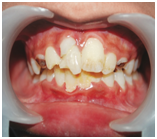
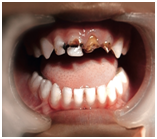
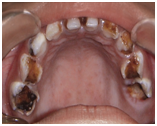
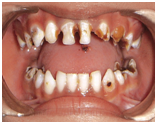
Figure 1-4 Traumatic tooth, extensive decay and rampant caries are few examples of dental neglect
Some children who first present for dental care have severe early childhood caries (formerly termed “baby bottle” or “nursing” caries); caregivers with adequate knowledge and wilful failure to seek care must be differentiated from caregivers without knowledge or awareness of their child’s need for dental care in determining the need to report such cases to child protective services. Failure to seek or obtain proper dental care may result from factors such as family isolation, lack of finances, parental ignorance, or lack of perceived value of oral health.
Disclaimer from Guident
The views and opinions expressed in articles published in Guident are solely those of the authors and do not necessarily reflect the views of the editors, the editorial board or the publisher, Ivory India. Guident does not endorse any product, technique or treatment described. Clinical content is intended for qualified dental and medical professionals and is not a substitute for individual clinical judgement. Guident, its editors and the publisher accept no liability for any consequence arising from the use of information published in the journal.
How to cite this article
Dr.Priya Verma. Detecting Child Abuse and Neglect. Guident. 2018 Jul;11(8). Available from: https://guident.in/articles/pedodontics/detecting-child-abuse-and-neglect-19.html