Early Loading of DS Primetaper Active Implant in Posterior Mandibule
Wisdom Dental Clinics ®, Jaipur, India
ABSTRACT
An immediate implant is when a single tooth/root is extracted and then an implant is inserted in the same location n in a single process. It has been suggested that this will conserve soft tissues, reduce the number of surgical procedures required, potentially preserve adjacent bone tissue, and act as a guide for implant placement, all of which will minimize treatment times. In this case report an immediate implant placement protocol was followed in mandibular left first, second molar area. After 2 months post-operatively a cement-retained prosthesis was given to respective site. A well osseointegrated dental implant without any post-operative complication was placed in posterior region.
Keywords: Crestal bone, dental implant, posterior tooth
INTRODUCTION
Endosseous implants have long been the preferred method of replacing lost teeth. The first endosteal titanium implant was successfully placed by Branemark in 1965. The initial protocols called for implant placement to occur in healed edentulous ridges and to indicate that the implant has healed in the extracted socket after at-least 4-6 months. Several studies conducted in the last few years have validated the safety of implants placed at that time.
According to Schwartz et al. (2000), immediate implant placement is the process of placing a dental implant into a newly created extraction socket following tooth extraction. It has been deemed a reliable and acceptable treatment. The benefits of immediately implanting into extraction sockets over delayed implant placement include the elimination of the need to wait for the bone to grow for 4-6 months following extraction and a lower rate of crestal bone loss in immediately placed implants as compared to delayed placed implants. This means that the healing period will be quick and allow the woven bone to change into lamellar bone. The natural socket has abundance of matrix and periodontal cells speeds up and improves the predictability of the healing process.
Conventional procedures state that a healing period of three to four months is necessary for the consolidation of the extraction socket. Patients often have to wait up to a year for the replacement of a missing tooth, considering the prosthetic therapy.1
Approaches such as early or immediate loading after implant placement, instant implant implantation in a new extraction site, and immediate implant placement with early or immediate loading have been the focus of attempts to reduce the total duration of therapy.2-4
Immediate implant loading has gained popularity recently since it reduces damage, shortens treatment times overall, slows the resorption of hard and soft tissues, increases patient acceptability, and improves function, aesthetics, and psychological well-being.5,6 In current case report an immediate implant placement was done in mandibular posterior teeth area to preserve soft and hard tissue harmony along with reduction of treatment time overall.
CASE REPORT
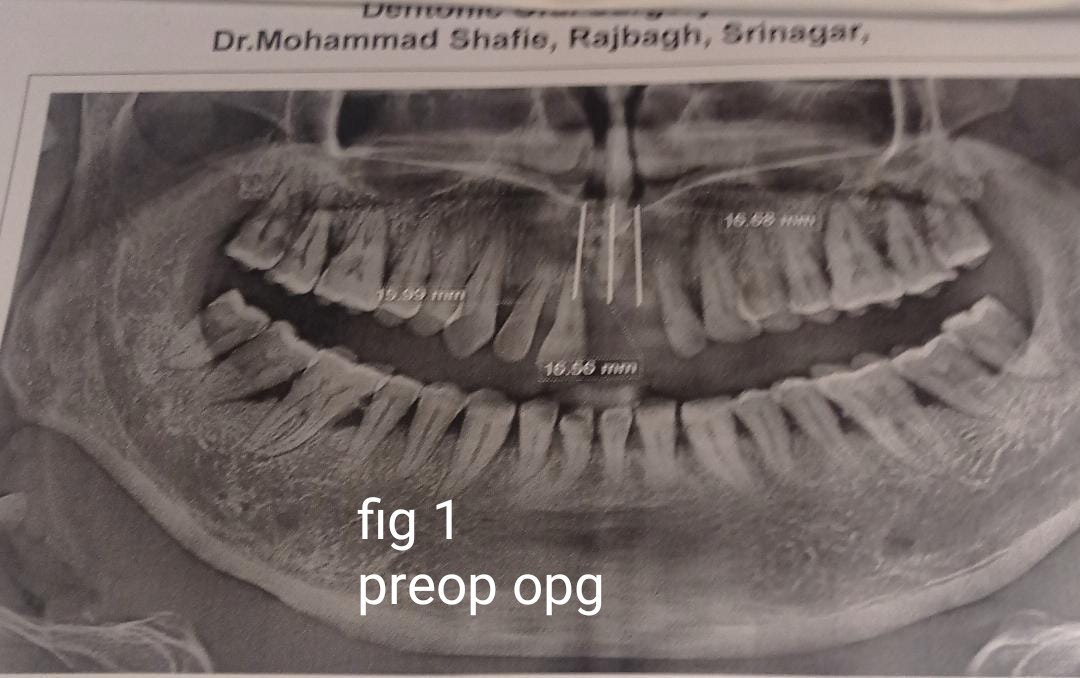
A 64-year-old healthy male patient came to our clinic with retained root stump in lower back tooth region. He was not able to maintain adequate oral hygiene in lower back region. The patient was concerned and wished for the single sitting permanent solution due to frequent dental visits. Patient communicated his willingness for immediate implant placement and early loading after extraction after a detailed discussion. Patient was advised for OPG and CBCT which revealed sufficient bone for implant placement. [Figure 1]

Figure 1a,b:Root stump in posterior mandibular
Under local anaesthesia, the root stump was atraumatically removed. [Figure 2]

Figure 2a,b: Extraction done
Flapless osteotomy commenced after extraction. For achieving good primary stability, osteotomy was done around 4 mm apical to the extraction socket to gain anchorage. Two PRIME TAPER EV OSSEOSPEED implants measuring 4.8 X 11mm were placed with insertion torque of more than 40 NCM was achieved. Insertion torque is the vital factor in determining, whether or not to load immediately encouraging for immediate loading. Immediately ISQ was done with Osstell ISQ device, which showed very promising readings (77and 81),
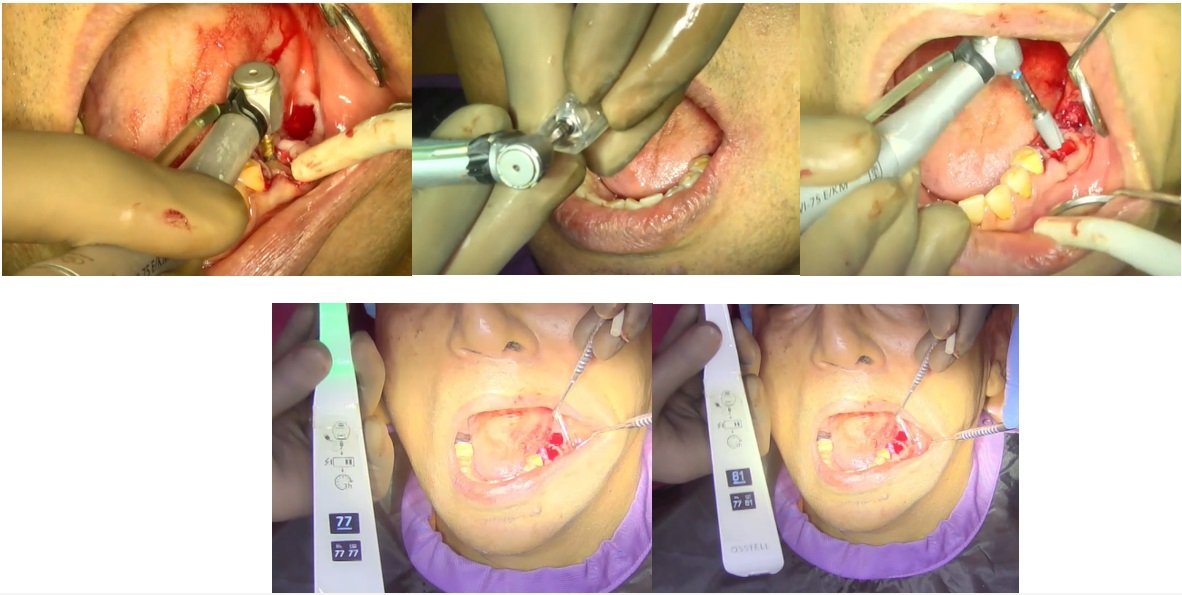
Figure 3a,b,c,d,e :Implant placed
The patient was recalled after 2 months for the prosthetic procedures. ISQ test done again, which showed excellent biological stability with reading measuring in between 84-87 showing excellent secondary stability or osseointegration. Post-operative OPG was taken [Figure 4]. Thereby,
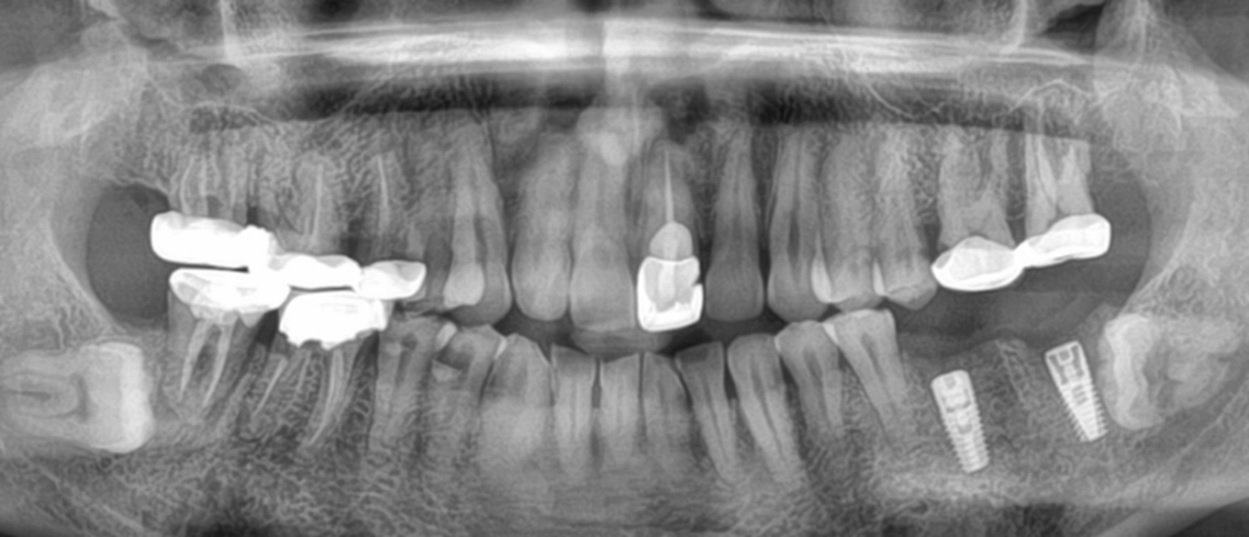
Figure 4 :Post-operative OPG
Impression was made with the impression post attached to the implant using the close tray impression technique. Shade selection was also done during this appointment. Healing abutment/ gingival former was replaced till the prosthesis in lab was manufactured. After approx. 4-7 days, the healing abutments were removed and replaced with final abutment. The PFM crown was checked for its passive fitting to abutment and non- interference with adjacent teeth. Crown was then cemented with translucent cement.Occlusion was checked. Patient was given post -operative and oral hygiene instructions. [Figure 5]
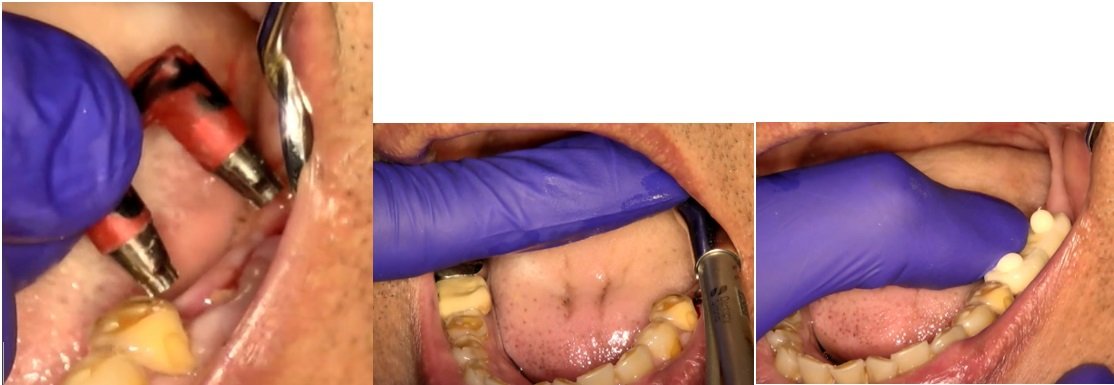
Figure 5a,b,c: PFM crown placed
The clinical and radiographic appearance after 2 years of periodic follow up showed good esthetics, osseointegration and maintenance of bone around the implant. [Figure 6]
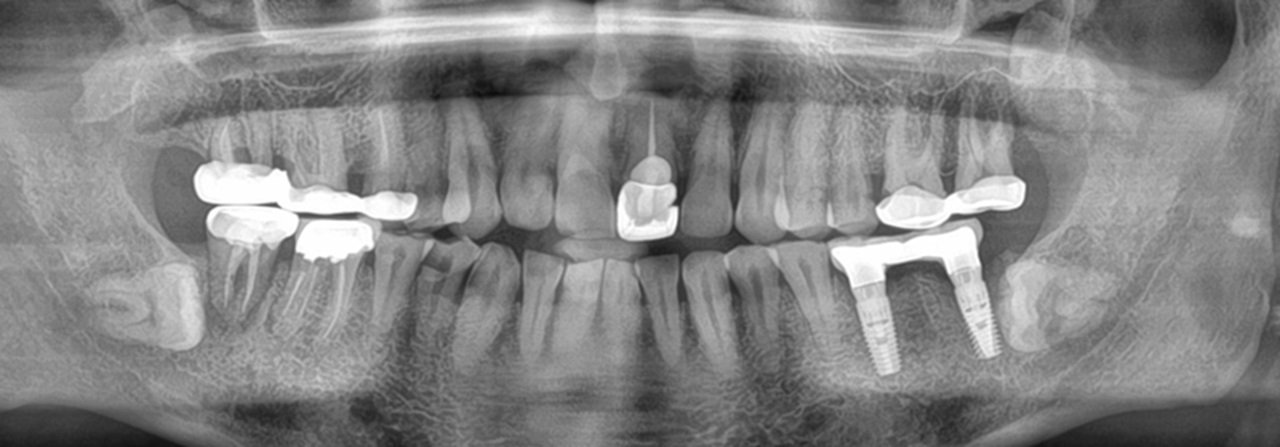
Figure 6:Follow-up OPG
DISCUSSION
A successful implant procedure should not result in any technical, biological, or cosmetic complication Clinicians are increasingly adopting immediate implants in response to patient demands for accelerated rehabilitation. In certain ways, an immediate implant also stops the alveolar bone and the soft tissue from going through a sequence of adaptive modifications after extraction and keeps the socket's integrity intact.
The most common reasons for immediate implant placement are trauma, endodontic lesion, root fracture, root resorption, root perforation, unfavorable crown to root ratio (not from periodontal loss), and intact alveolar bone walls.7
Contra-indications include the existence of an active infection, insufficient bone (<3 mm) beyond the tooth socket apex for primary implant stability, and wide and/or long gingival recession. According to a study, following a year's follow-up, the survival percentage of immediate implant placement in posterior teeth was 96%, while the success rate in molar teeth was 93%.8
Patients with a history of periodontitis, bruxism, radiation, and early implant loss are at risk. The primary risk factor for implant failure is smoking more than ten cigarettes a day. This risk increases if buccal dehiscence, infection, or both are present.9
CONCLUSION
A well osseo-integrated dental implant without any post-operative complication was placed in posterior region. A complete preoperative clinical and radiological evaluation of the case is something we strongly support. The potential for difficulties and failures should be explained to the patient.
REFRENCE
- Brånemark PI, Adell R, Breine U, Hansson BO, Lindstrom J, Ohlsson A. Intra-osseous anchorage of dental prostheses, I: Experimental studies. Scand J Plast Reconstr Surg. 1969;3:81–100.
- Flanagan D. Immediate placement of multiple mini dental implants into fresh extraction sites: A case report. J Oral Implantol. 2008;34:107–10.
- De Rouck T, Collys K, Cosyn J. Immediate single tooth implants in the anterior maxilla: A 1-year case cohort study on hard and soft tissue response. J Clin Periodontol. 2008; 35:897–904.
- Ataullah K, Chee LF, Peng LL, Tho CY, Wei WC, Baig MR. Implant placement in extraction sockets: A short review of the literature and presentation of a series of three cases. J Oral Implantol. 2008;34:97–106.
- Schropp L, Kostopoulos L, Wenzel A. Bone healing following immediate versus delayed placement of titanium implants into extraction sockets: A prospective clinical study. Int J Oral Maxillofac Implants. 2003;18: 189–99.
- Quirynen M, Van Assche N, Botticelli D, Berglundh T. How does the timing of implant placement to extraction affect outcome Int J Oral Maxillofac Implants. 2007;22(Suppl):203–23.
- Douglass GL, Merin RL. The immediate dental implant. J California Dent Assoc. 2002; 30:362–5.
- Ragucci GM, Elnayef B, Criado-Cámara E, Del Amo FS, Hernández-Alfaro F. Immediate implant placement in molar extraction sockets: a systematic review and meta-analysis. Int J Implant Dent. 2020;6(1):40.
- Urban T, Kostopoulos L, Wenzel A. Immediate implant placement in molar regions: risk factors for early failure. Clin Oral Implants Res. 2012;23(2):220–7.
Disclaimer from Guident
The views and opinions expressed in articles published in Guident are solely those of the authors and do not necessarily reflect the views of the editors, the editorial board or the publisher, Ivory India. Guident does not endorse any product, technique or treatment described. Clinical content is intended for qualified dental and medical professionals and is not a substitute for individual clinical judgement. Guident, its editors and the publisher accept no liability for any consequence arising from the use of information published in the journal.
How to cite this article
Dr. Gaurav Gupta, Dr. D.K. Gupta, Dr. Neelja Gupta. Early Loading of DS Primetaper Active Implant in Posterior Mandibule. Guident. 2025 Feb;18(3). Available from: https://guident.in/articles/implantology/early-loading-of-ds-primetaper-active-implant-in-posterior-mandibule.html