Rubber Dam Frames and Accesories
Director, Upskill Dental Academy Mumbai, India
The rubber dam frame reflects the rubber dam sheet and holds it in place,it stabilises and stretches the dam so that it fits tightly around the teeth and gives operator a clear working field. Harnesses were used instead of the frame initially and this was eventually replaced with radiolucent plastic frames over a period of time.
TYPES OF RUBBERDAM FRAME
- Young s frame
- Star Visi frame
- Nygard-Ostby frame
- Articulated frame(Le cadre articule)Dr G Sauvuer (France)
Young s frame

(Pic courtesy –internet sources)
Young s frame –maintains the borders of the rubber dam in position.
Its a U shaped metal frame with small metal projections. An optional strap may be placed behind the neck attached to the two hooks.
Nygard Ostby Frame

Its a U shaped frame made of plastic ,because of its shape it exerts less tension on the dam.
Articulated frame

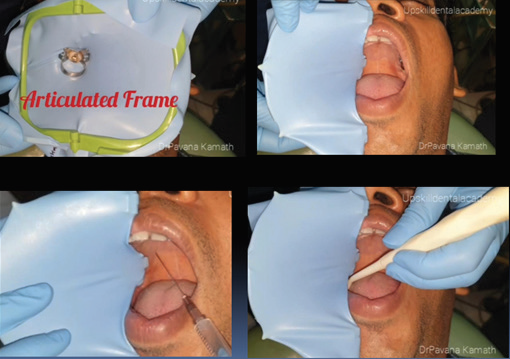
The device consists of an articulated frame that maintains the currently used standard rubber dam sheet in position. A hinge allows the frame to be folded, resulting in easier accessibility to the working area. This accessibility facilitates taking of radiographs, administration of additional doses of anesthetics, and evacuation of therapeutic liquids, which may have accidentally entered the buccal cavity. In addition, a reservoir at the bottom of the frame allows the placement of gauze compresses and an aspiration canula to avoid leakage of
fluids such as sodium hypochloride onto the patient’s clothing.1
RUBBER DAM ACCESSORIES
Rubber Dam Napkin
Soft dental dam napkins are used to avoid direct contact of dental dam with sensitive skin.
Made of sensitive, non-woven fabric in both frame size for use with standard frames or larger size for use with a strap-holder.
Offers maximum absorption of saliva, water, and perspiration.

Liquid Dam

Liquid dam is a heatless liquid dam and block out resin that can be applied on the gingiva or tooth surfaces prior to power bleaching, sandblasting or other procedures requiring intraoral protection, or used to block out undercuts prior to making impressions.
Caulking and Putty material

Effectively adheres to wet rubber dams, wet gingival and mucosal tissues, wet teeth, metals,etc.— even under water or in saliva. Adheres under water and saliva.
Use OraSeal Caulking when an adequate seal is difficult to obtain with compromised teeth or roots. OraSeal may also be used to repair rubber dam leaks. It seals the rubber dam when performing a porcelain repair, protecting gingiva from hydrofluoric acid. Deliver into undercuts and below implant bars, precision attachments,etc. to prevent cold cure acrylic or impression material from locking into empty spaces. Fill in gingival embrasures of splints and bridges to facilitate easy clean up of permanent cement. Adheres under water and saliva.
Teflon
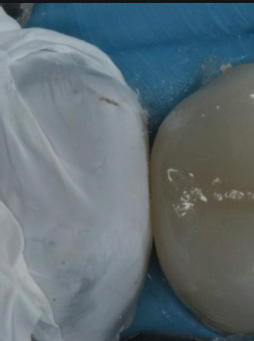
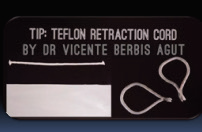
Teflon, or polytetrafluoroethylene (PTFE), is a polymer of tetrafluoroethylene; it’s a plastic non-stick material resistant to high temperatures.
(Pic courtesy –internet sources)
Properties:
- Very low coefficient of friction (the third-lowest of any known solid material) which results in a high surface smoothness.
- Chemically inert.
- Insoluble in water and in organic solvents.
- Non-stick.
- Resistant to high temperatures.
- Excellent dielectric properties.
It’s non-sticky, moldable, it can be stretched and adapted to the surfaces, it´s chemically inert and it´s really cheap. If necessary, it can also easily be autoclaved at 121° C.
Teflon tape can sometime be helpful to improve the isolation,teflon can be a wonderful supplement to rubber dam isolation,in retraction of soft tissues.
We can find several thickness of teflon tape. Probably the most versatile for dentistry is 0.2 mm.2
THE DENTAL FLOSS
Dental floss (or simply floss) is a cord of thin filaments used to remove food and dental plaque from between teeth in areas a toothbrush is unable to reach.
The dental floss is one of the best options for a very good inversion, After the rubber dam is in place, the first thing to do is to put the rubber under the gingival margin, into the sulcus. This process is called inversion. If the rubber is in tension, the inversion is almost impossible to get. The elastic properties of the rubber are very helpful in this process.
That means placing the rubber around the cervical area and in the sulcus, and keep it there until the end of the restorative process. This gives us a
- Dry working field
- Having a large working field
- Maximum tissue retraction
One of the techniques to invert the rubber dam in the sulcus is to use a dental floss placed around the tooth; with apical pressure and slow movements the rubber dam should roll and be inverted. The inversion should be done to all the teeth that are to be isolated , not just around the teeth that are operated, in order to prevent unwanted salivary leakage during our adhesive procedures, where the inversion was not properly achieved.
This technique provides two main advantages: one is that the floss pushes the rubber deep in the sulcus, close to the epithelial insertion, and second, the floss tightens around the tooth and holds the rubber dam in place during the restorative procedure. This option of isolation can only work if the destruction limit doesn’t affect the epithelial attachment. Since the rubber and floss are materials that have elastic properties, they won’t go more subgingivally than the epithelial attachment. Each time we have a situation in which the lesion is deeper than the clinical attachment level, we should change our strategy.


(Pic courtesy –internet sources)
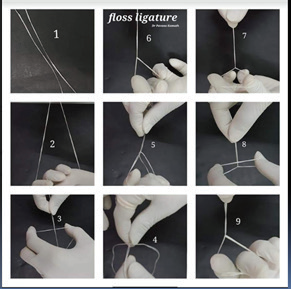
Floss tie
WEDGETS
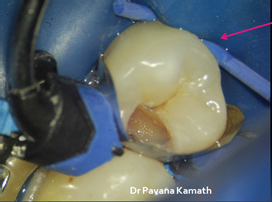
These are stretchable elastic stabilizing cords made from natural latex rubber and used as a rubber dam retainer . These are a faster and easier method of retaining the rubber dam than using conventional clamps. It is placed like dental floss over the rubber dam in the interproximal areas of the teeth, holding the rubber dam in position. It is available in extra small, small and large sizes. It reduces patient trauma and discomfort caused by metal clamps.
They are especially used in the isolation of anterior teeth3

CUSHIES
These are soft thermoplastic cashew shaped nodules which are grooved on their inner surface and act as rubber dam clamp cushions.
It is slipped over the tooth attachment blade of clamp prior to clamp application. It increases patient comfort through elimination of contact of steel clamp with gingiva or tooth enamel, and thus helps to protect the natural tooth structure and costly restorations.
It also enhances rubber dam seal to limit leaking from above or below the dam and reduces clamp slippage. They are sterilizable and reusable.
It can be applied to one or both the jaws of rubber dam clamps. They are available in two sizes: yellow for anterior and bicuspid clamps and blue for molar clamps

(Internet sources)
REFERENCES
- Improvement of the rubber dam frame Gabriel Sauveur, MCU-PH1 December 1997Volume 23, Issue 12, Pages 765–767
- https://www.styleitaliano.org/four-levels-of-inversion-for-rubber-dam-isolation/ Author Dr Dan Lazar
- https://ap.coltene.com/products/treatment-auxiliaries/dental-dam-kits/phygenicsupRsup-dental-dam-kitsp/
Disclaimer from Guident
The views and opinions expressed in articles published in Guident are solely those of the authors and do not necessarily reflect the views of the editors, the editorial board or the publisher, Ivory India. Guident does not endorse any product, technique or treatment described. Clinical content is intended for qualified dental and medical professionals and is not a substitute for individual clinical judgement. Guident, its editors and the publisher accept no liability for any consequence arising from the use of information published in the journal.
How to cite this article
Dr. Pavana Kamath. Rubber Dam Frames and Accesories. Guident. 2019 Sep;12(10). Available from: https://guident.in/articles/endodontics/rubber-dam-frames-and-accesories.html