Direct Laminate Veneers
Victoria, Australia
“Microfill Composite resin is the most aesthetic material available to the dental profession.” This was a quote from John McLean when he was last in Australia about 10 years ago, a surprising statement considering the influence he had in developing dental porcelains. While the composition of microfill resins remains relatively unchanged the ability of the dental professions to handle it has come a long way since it was introduced two decades ago. There was no formal training in how to use these products and it took a lot of persistence to push through the failures by trial and error until eventually a satisfactory clinical outcome could be achieved.
The advantage clinicians have today is the ability to combine the superior optical properties of the micro/nano hybrid resins and overlay them with translucent microfill resins to produce a direct laminate that closely mimics a natural tooth. Fig 1.
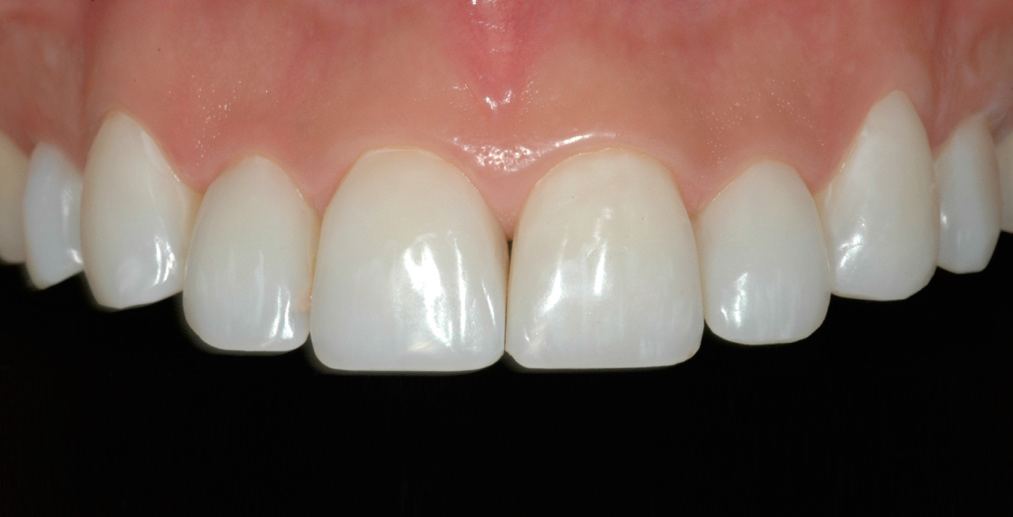
Fig 1: Shows a close up viwe of Polychromatic multi layered direct laminates With minimal maintenance these restorations will last around fifteen years. Fig 2
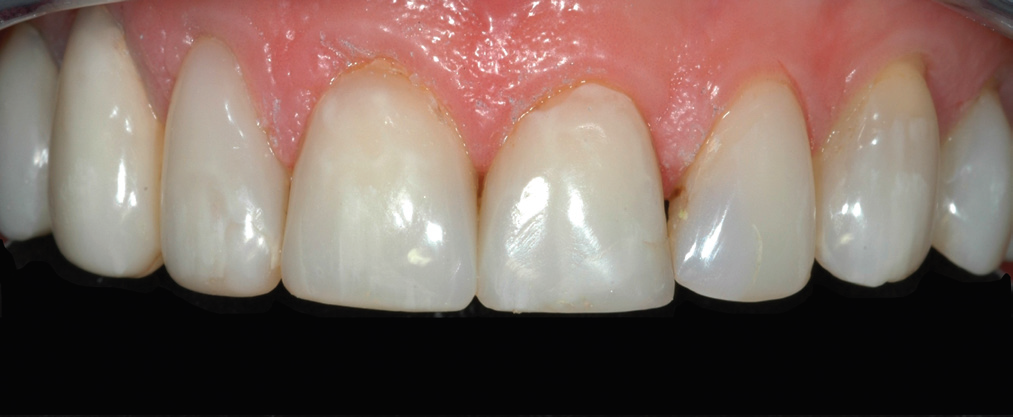
Fig 2: Shows direct laminate veneers that were placed 16 years previously. The longevity of direct laminates is quite dependend on patients having a disciplined approach to their oral hygiene.
A major benefit of direct laminates is that placement requires little if any tooth preparation.
As minimally invasive restorative dentistry becomes the standard of care, minimal preparation cosmetic dentistry will also be expected by a more demanding and better informed community. Future generations of dentists will be bemused and confused at the amount of tooth preparation currently deemed necessary to achieve a transient change in dental aesthetics.
Direct laminates are extremely time efficient to place. There are two real benefits here. Firstly clinicians are able to provide direct laminates at a lower fee than indirect procedures so that a larger number of people are able to access this type of dentistry. Secondly as tooth preparation, temporization and placement

procedures are eliminated as well as less time required for case presentation, the hourly return to practitioners, taking laboratory expenses into account, may well exceed that of indirect techniques.
Once the basic principles of direct laminate veneers have been mastered, clinicians have a whole range of opportunities open to them. Straight forward clinical situations where existing restorations and attrition have disfigured teeth present dentists with the opportunity to take a person back to the days when they had a 20 year old smile. Fig 3 and 4. More challenging clinical situations can be completed by recreating teeth using the same basic principles of placing a single laminate veneer. Fig 5 and 6. For a dentist who has taken the time to master direct laminates, one of the pleasures of dentistry is combining these clinical skills with the theoretical knowledge that have taken so long to acquire and master.
It is proposed to revisit the construction and some of the clinical applications of direct laminate veneers over forthcoming issues in this series during 2008.
DISCLAIMER
“Published in the Australian Dental Association News Bulletin May 2008 Reprinted with permission of the editor and Author.”
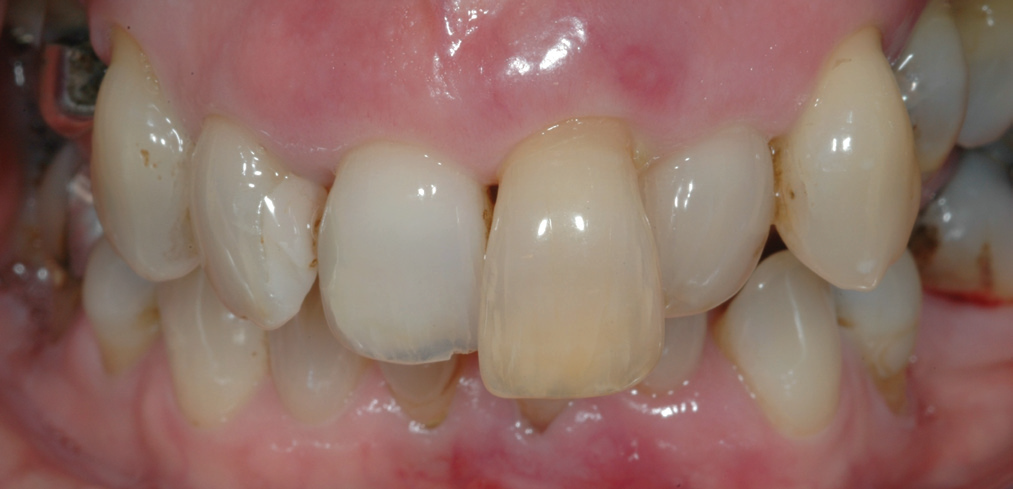
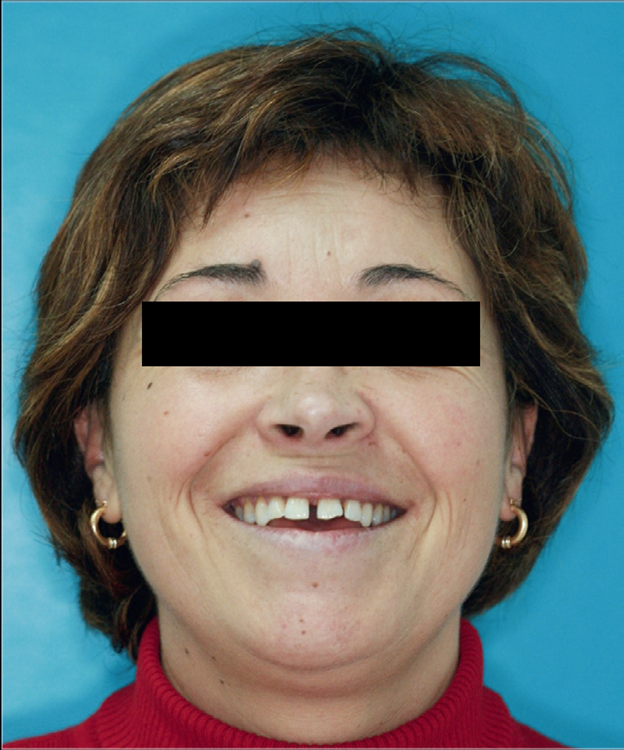
Fig 3: Patient had slightly irregular teeth and discolourations due to stained restoration.

Fig 4: Direct laminate veneers were able to create an even smile with a highervalue than the existing teeth giving a younger look for this patient
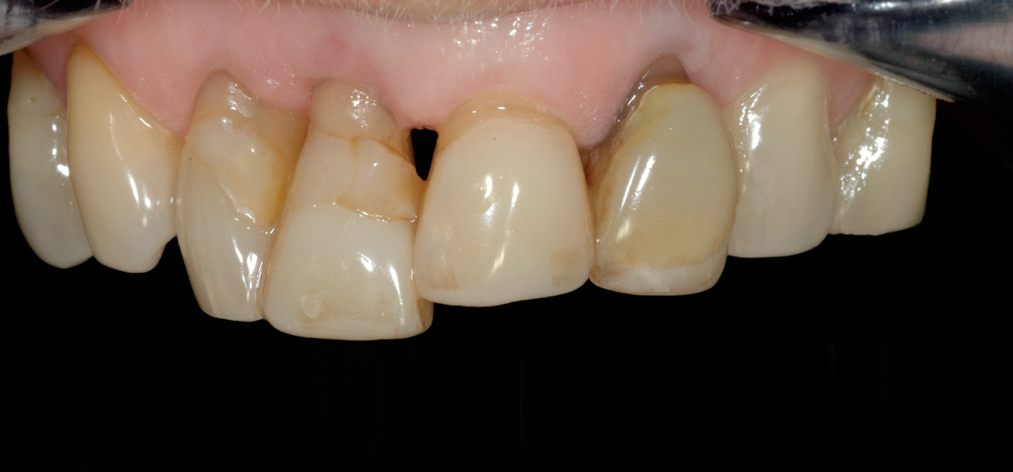
Fig 5: This is a patient with a badly broken down dentition: there was severe periodonal involvement of the right central incisor and a deeply stained root on left lateral incisor
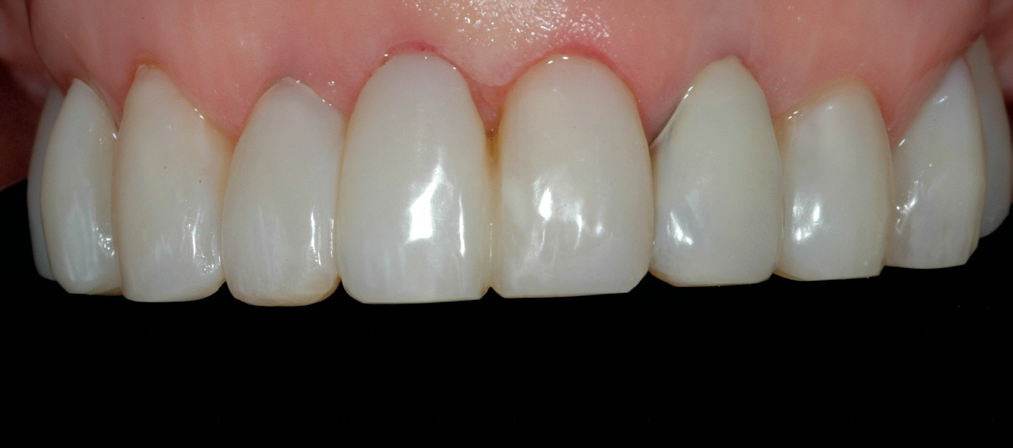
Fig 6: This shows Fig 5 two weeks after laminated placement. Some gingival contouring was required, the right central incisor was extracted and an immediate direct resin bridge plaed Serveral layers of tint were required to mask the stained root on the left lateral incisor
Disclaimer from Guident
The views and opinions expressed in articles published in Guident are solely those of the authors and do not necessarily reflect the views of the editors, the editorial board or the publisher, Ivory India. Guident does not endorse any product, technique or treatment described. Clinical content is intended for qualified dental and medical professionals and is not a substitute for individual clinical judgement. Guident, its editors and the publisher accept no liability for any consequence arising from the use of information published in the journal.
How to cite this article
Dr. Geoffrey M Knight. Direct Laminate Veneers. Guident. 2013 Jun;6(8). Available from: https://guident.in/articles/aesthetic-dentistry/direct-laminate-veneers.html