Cracking the Code: Terminal Hinge Axis Demystified Amidst Conceptual Debates
Department of Prosthodontics and Crown & Bridge, K.D. Dental College & Hospital, Mathura, UP, India.
INTRODUCTION
Accurate determination, documentation, and transfer of jaw relation records are crucial elements in prosthodontics, particularly when dealing with edentulous or dentulous patients. This process is vital for restoring proper function, enhancing facial appearance, and ensuring the ongoing oral health of patients. In the realm of prosthodontics, the restoration or replacement of missing teeth necessitates the precise mounting of maxillomandibular relations on an articulator. This mounting involves aligning maxillary and mandibular casts with the hinge axis, a critical step for subsequent laboratory procedures. Notably, the relationship between the maxilla and the temporomandibular joint varies among individuals due to differences in anatomy. This variability underscores the importance of recording orientation jaw relation using a FACE BOW. Understanding the opening movement of the jaw, which transitions from occlusal to rest position in an almost purely hinge-like manner, is essential. This movement occurs along an arc determined by the curvature of the condylar head and the glenoid fossa. Since the radius of this arc is not uniform for all patients, it must be individually determined, emphasizing the need to establish the relation of the maxilla to the opening and closing axis for each patient.
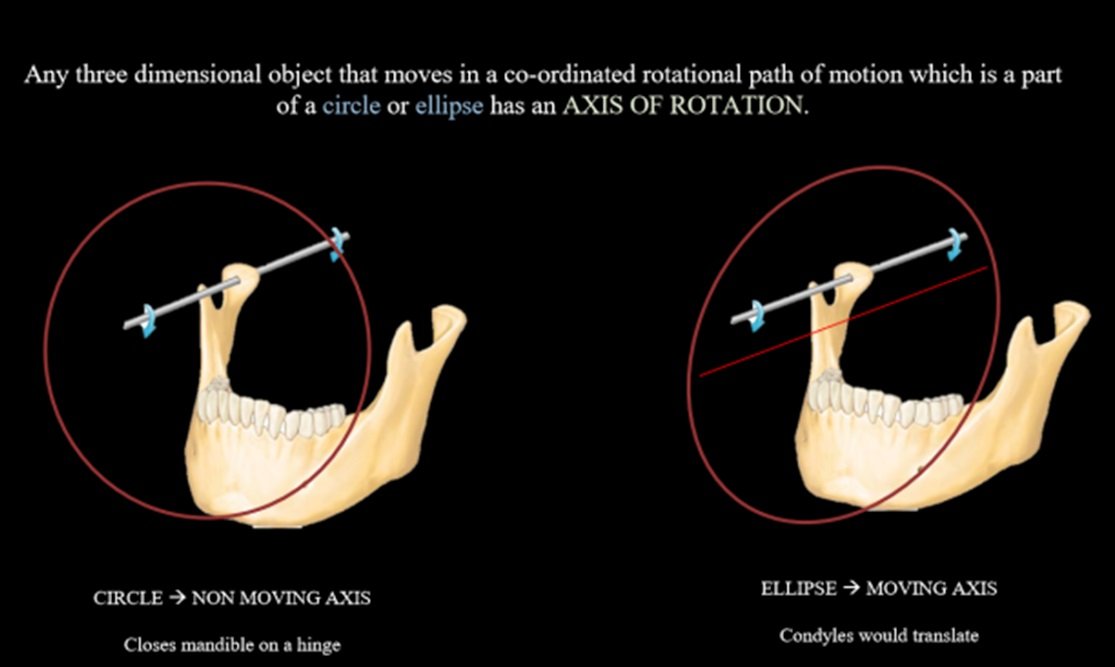
In the realm of mechanics, a fundamental principle dictates that any object with the capacity for rotation inherently revolves around a theoretical or imaginary axis, piercing through the object's center. This axis may manifest as a point center, seen in perfectly spherical shapes, or a line center, observed in irregular objects. Regardless of its form, the axis remains a mathematical certainty, serving as a pivotal point for regulating rotational motion. Translating this concept to dentistry becomes crucial as we endeavor to craft mechanical counterparts, such as articulators, capable of replicating natural and functional jaw movements. The essentiality lies in the meticulous recording and utilization of various axes that govern rotation, along with consistent linear hinge radii associated with specific points on the mandible. Without this meticulous approach, achieving accurate articulation becomes an insurmountable challenge.
The initial motion to transition the jaw from the occlusal to the rest position primarily involves a hinge-like movement. In this process, the mandible follows a circular arc with a specific radius originating from the temporomandibular joint. The trajectory of the condyle is influenced by the shape of the condylar head and the curvature of the glenoid fossa. Given that the radius varies among individuals, it becomes imperative to ascertain this parameter for each patient. This underscores the necessity of determining the relationship between the maxilla and the opening and closing axis on an individual basis.
Sagittal plane
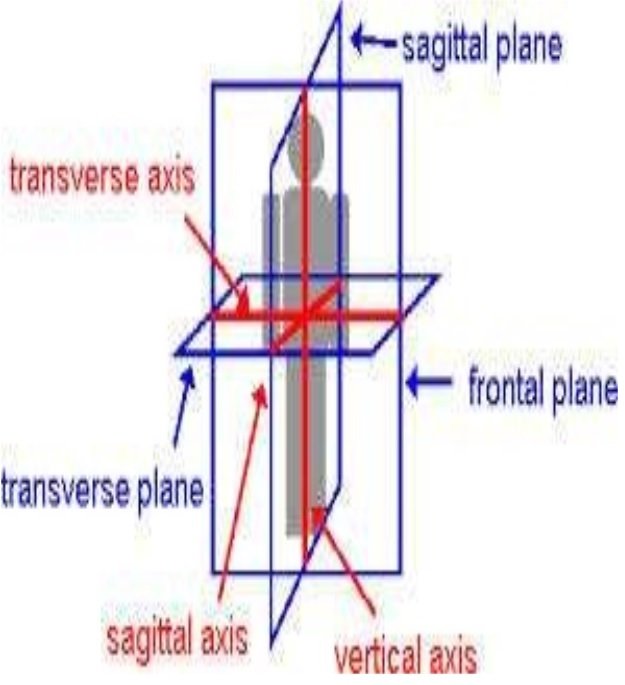
Any vertical plane or section parallel to the median plane of the body, that divides a body into right and left portions.
Terminal hinge axis
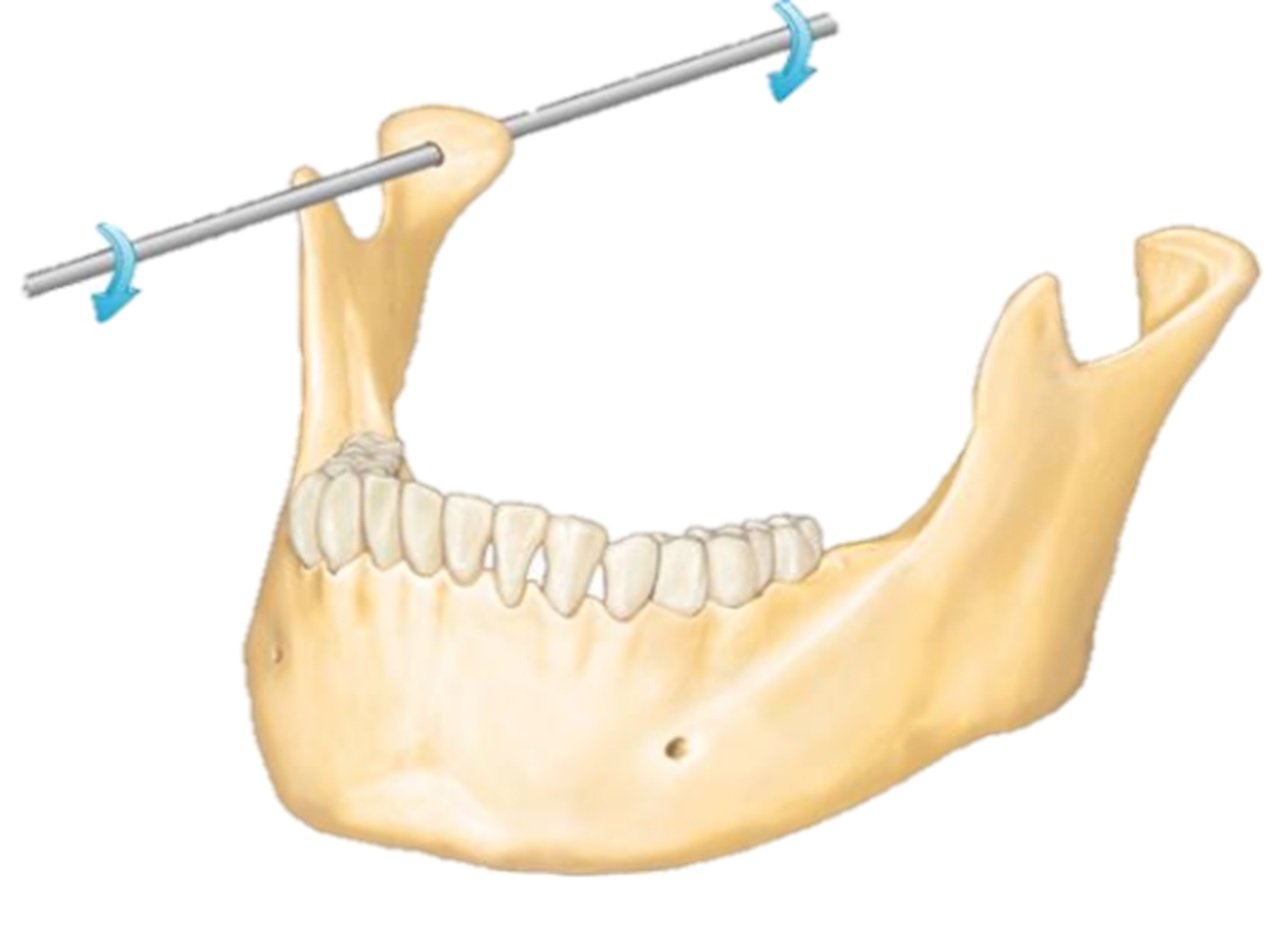
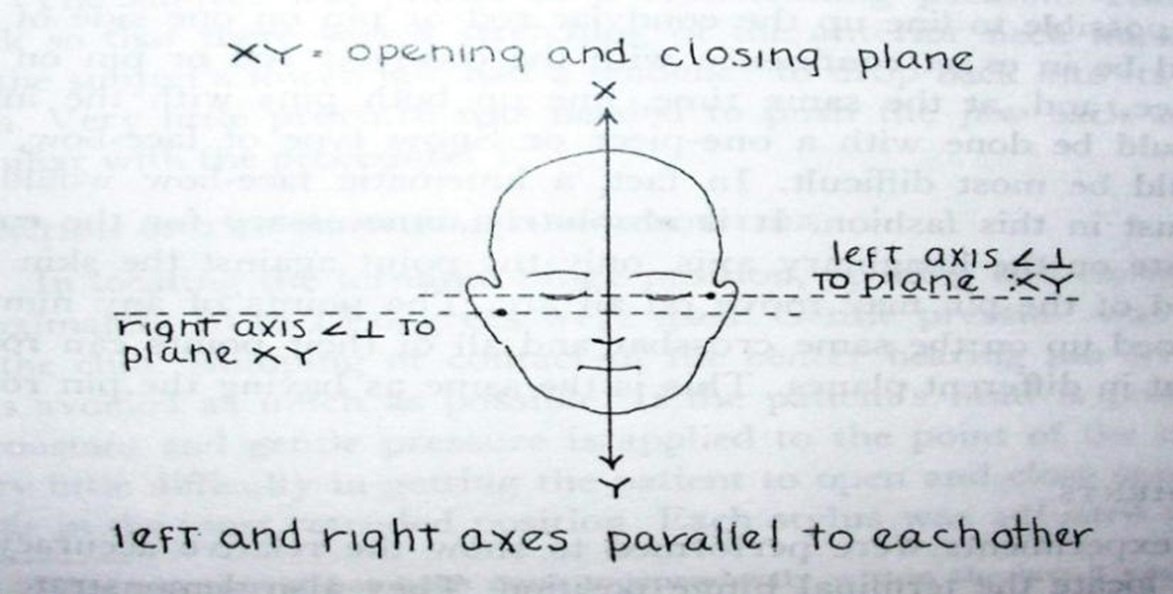
An Imaginary line around which the mandible may rotate within the sagittal plane is called as Terminal hinge axis. The trajectory of either movement type must, by definition, be perpendicular to the transverse hinge axis, regardless of whether the hinge axis is in motion. The condyle has the capacity to rotate simultaneously in three planes, but for the sake of simplification, it is essential to initially focus on the vertical-sagittal component of mandibular movement, which occurs around a horizontal axis. Until a specific degree of rotation (10°-13°) is reached, the mandible exhibits a purely rotational motion with a stationary axis. Similar to centric relation, this movement is stable, reproducible, and consistent. Consequently, it serves as a crucial reference point for mounting casts in an articulator, ensuring that the opening axis of the articulator aligns with the Terminal Hinge Axis.
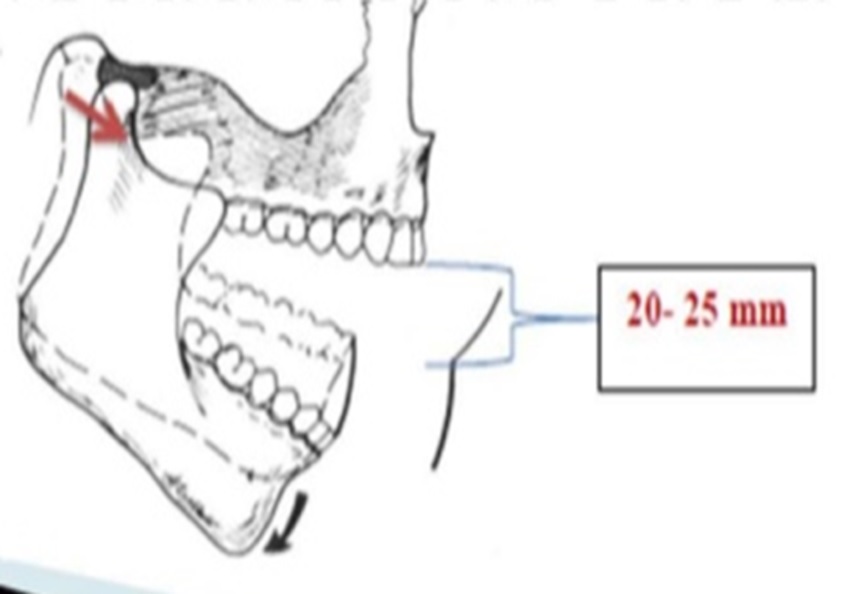
Inter-Incisal Opening: 20-25mm Pure rotation of condyle prior to translation

Maximum range of terminal hinge rotation:10-13 degrees
Transverse horizontal axis : An imaginary line around which the mandible may rotate within the sagittal plane. The physiological transverse hinge axis is located by series of controlled opening and closing movements of the jaws when the mandible is held in its most retruded position relative to the maxilla. These mandibular movements are called terminal hinge movements. (Zarb, 2009)
RELATIONSHIP BETWEEN THA & CR
The terms centric relation & terminal hinge position can be confusing. The terminal hinge position is the posterior border position that the mandible assumes when the hinge axis is located. The relation of the mandible to the maxilla when the mandible is in this same posterior border position "but at an established or given vertical height" is called centric relation.
In a fully dentulous state with a complete set of teeth, the maximum intercuspation position occurs when the upper and lower teeth are fully engaged. This position may or may not align with the centric relation position. Proprioceptive signals within the periodontal ligament of the teeth play a significant role in guiding this maximum intercuspation position, directing the movement of the mandible during closure. Conversely, in fully edentulous conditions, the absence of these proprioceptive signals in the periodontal ligament results in a loss of guidance mechanism.
However, specific proprioceptive receptors in the temporomandibular joint capsule become active only when the condyle is in the centric relation or hinge position. Once activated, these signals guide the mandible during both opening and closing movements. This underscores the crucial importance of determining the hinge axis. The capsular proprioceptors, initially serving a protective functional role, take on the role of a guiding principle. Consequently, patients can execute repeated opening and closing movements while maintaining the same occlusal pattern, as noted by Sicher in 1956.
For this reason, the determination of the hinge axis is essential. Temporomandibular joint capsule proprioceptors, which were primarily protective, now become crucial for guiding patients in replicating consistent opening and closing movements, adhering to the same occlusal pattern. Therefore, the Temporomandibular Hinge Axis (THA) proves valuable in obtaining centric relation records and verifying them during the try-in phase, particularly at an altered vertical dimension of occlusion.
The process involves the initial step of the anatomic or kinematic hinge axis face-bow transfer, which records the relationship between the maxillary arch and the condylar paths (Arbitrary/Absolute THA). Once the maxillary cast is appropriately oriented on the articulator, the centric relation record (CR) is established. This marks the completion of the static, or starting, relationship between the maxillae and the condyles in the temporomandibular fossae, as discussed by Weinberg in 1961.
IMPORTANCE OF HINGE AXIS
The significance of determining the hinge axis lies in its multifaceted impact on various aspects of prosthodontic procedures. Firstly, it plays a crucial role in aligning the maxillae and establishing the initial static position essential for functional mandibular movements. Secondly, the identification and accurate transfer of the hinge axis to an adjustable articulator for edentulous patients can greatly streamline both chair-side and laboratory procedures. This not only enhances efficiency but also contributes to the precision of prosthetic interventions. The recorded hinge axis further proves valuable in adjusting the vertical dimension of occlusion on the articulator, providing a critical parameter for treatment planning. Additionally, it facilitates the acquisition of centric relation records and their verification during the try-in phase, especially when considering alterations in the vertical dimension of occlusion. By doing so, it minimizes the necessity for remounting procedures, thereby refining the occlusal scheme with greater ease. The determination of the hinge axis also enables the secure utilization of a cusp-form (anatomic) posterior tooth where necessary, requiring minimal occlusal adjustments. Ultimately, this comprehensive approach to hinge axis consideration, as emphasized by Kurth in 1951, contributes to the development of an occlusion that not only preserves but also restores oral function.
THEORIES OF HINGE AXIS
There are four theories explaining the location and existence of the hinge axis.

GROUP I: ABSOLUTE LOCATION OF THE AXIS (Lucia, Mc collum & Stuart)
A specific transverse axis exists, and it is imperative to pinpoint its location with precision. This correlation can be established by utilizing the face bow, which enables the alignment of the maxillary cast with the transverse axis of the articulator, mirroring the relationship between the maxillae and the anatomic mandibular axis through the condyles.
The mandibular hinge axis is aligned and associated with the maxillary hinge axis through a centric relation record. Consequently, the closure path on the terminal hinge mirrors that occurring in the oral cavity. This alignment ensures that the cusps of the teeth can be positioned to avoid collisions during this border mandibular movement.
Recognizing the hinge axis as an integral element in every masticatory movement of the mandible is essential and cannot be overlooked. The hinge axis relationships on the articulator must precisely replicate those of the jaw; otherwise, the mechanical reproduction of jaw motions on the articulator becomes an unattainable feat.
GROUP II : ARBITRARY LOCATION OF THE AXIS
This cohort holds the perspective that while an exact determination of the terminal hinge axis position might offer some benefit, they do not consider it sufficiently valuable compared to an arbitrary location to warrant the additional effort required for its precise identification.
This group overlooks the crucial fact that if the hinge axis of the articulator does not align with the hinge axis of the patient, the trajectory of closure will diverge, leading to a mismatch in the paths of closure between the two axes.
GROUP III : NONBELIEVERS IN THE TRANSVERSE AXIS LOCATION
This particular group holds the viewpoint that accurately pinpointing the terminal hinge position is an unattainable task. Kurth and Fienstein conducted a study revealing that within a 2 mm range, numerous points could be considered potential points of rotation or non-movement.
Walker, in the Journal of Prosthetic Dentistry in 1980, highlighted discrepancies between arbitrary and true hinge axes. Their study led them to two conclusions :
- There is no universally applicable arbitrary hinge axis location for the entire population.
- The widespread distribution of true anatomic axis points suggests that any measurement chosen for an arbitrary axis would result in significant error and poor accuracy
Moreover, the majority of true axis locations tend to be inferior to the tragus–canthus line at the superior border of the tragus of the ear. Interestingly, a small percentage of individuals exhibit identical true axis point locations on both sides of the face.
GROUP IV: SPLIT AXIS ROTATION
This group believe that each condyle rotates independently of the other .
CONTROVERSIES RELATED TO THA
The determination of the terminal hinge axis (THA) in prosthodontics has been a subject of controversy and debate within the dental community. Several controversies surround the concept of the terminal hinge axis, including:
Variability Among Individuals: One major controversy is the inherent variability among individuals. Different patients may exhibit variations in anatomy, condylar movements, and other factors that influence the location of the terminal hinge axis. This variability makes it challenging to establish a universally applicable and precise method for determining the THA.
Reliability of Anatomical Landmarks: The reliance on anatomical landmarks, such as the external auditory meatus or the tragus, for determining the THA has been questioned. Critics argue that these landmarks may not consistently represent the true anatomical axis around which mandibular movements occur, leading to potential inaccuracies.
Methodological Differences: Controversies arise from differences in the methodologies used to determine the terminal hinge axis. Various techniques, including face bows, kinematic facebows, and imaging modalities, may yield different results. The lack of a standardized, universally accepted method contributes to uncertainty and debate.
Dynamic Nature of Mandibular Movement: The dynamic nature of mandibular movement, involving rotation and translation, adds complexity to the determination of the THA. Critics argue that focusing solely on a single axis may oversimplify the intricacies of jaw motion.
Influence on Prosthodontic Procedures: The controversy extends to the practical implications for prosthodontic procedures. Skepticism exists regarding whether precise alignment with the terminal hinge axis significantly influences the success of prosthetic treatments or if other factors play more crucial roles.
Advancements in Technology: With advancements in digital technology and virtual articulators, some question the relevance of traditional methods for determining the THA. The debate centers on whether these technological innovations provide more accurate and reliable results compared to conventional approaches.
Addressing these controversies requires ongoing research, collaboration among professionals, and a nuanced understanding of individual patient factors. As the field evolves, prosthodontists continue to explore and refine methods for determining the terminal hinge axis to enhance the precision and effectiveness of prosthodontic interventions.
DISCUSSION
The hinge axis, a topic extensively studied within the dental literature, remains a subject of considerable debate and controversy, reflecting divergent perspectives on its existence and precise location. This ongoing discourse has created persistent uncertainty surrounding the practical application of the hinge axis in clinical dentistry. Despite this controversy, the hinge axis plays a pivotal role in prosthodontics, serving as a fundamental element for replicating mandibular movements on the articulator and facilitating the transfer of the patient's oral configuration to the laboratory bench. The identification of the hinge axis involves a methodical process, including controlled opening and closing movements of the mandible, particularly when held in its most retruded position in relation to the maxilla. The accuracy of transferring the centric relation record is intricately linked to the precise determination of the terminal hinge axis. Recognizing the importance of the condylar axis further underscores the need to locate and replicate it on the articulator, emphasizing the significance of ensuring comfortable condyles for successful occlusal therapy. In essence, the precise localization of the hinge axis emerges as a fundamental requirement in prosthodontics. It not only enables the faithful reproduction of occlusal relationships on the articulator but also holds the potential to significantly enhance the overall success of various prosthodontic interventions. As the field continues to evolve, a nuanced understanding and accurate application of the hinge axis become essential for achieving optimal outcomes in clinical practice.
Controversies surrounding the hinge axis encompass several key aspects within the dental community. Questions persist regarding the very existence and precise location of the hinge axis, fueling ongoing debates and varying perspectives. Another point of contention revolves around whether a single hinge axis or multiple hinge axes exist, adding complexity to the understanding of mandibular movements. Furthermore, debates arise over the clinical usefulness of determining the location of the hinge axis, with differing opinions on its practical applications in dental procedures. An additional issue under discussion is whether an arbitrary point can effectively substitute for a kinematic axis, as raised by Gordon in 1984. These controversies underscore the challenges and diversity of opinions within the dental field regarding the hinge axis, reflecting the complexity and ongoing evolution of prosthodontic practices. These controversies can be resolved with the following explanations -
- Wheather an arbritrary point can be satisfactorily substituted for a kinematic axis (Gordon, 1984) : In a study by Palik et al, the arbitrary axis located with the ear face-bow was significantly different statistically from the true hinge axis located by kinematic facebow in an anteroposterior direction but not in a superior-inferior direction.
- Existence and accurate location of Hinge axis:
- Single or Mutiple hinge axis exists: In the 1950s, an experiment conducted by Dr. William Bransted, Dr. Raymond Gravy, and Dr. Robert Okey led to the conclusion that there is a single axis. Dr. Arne Lauritzen, in 1957, replicated the same experiment with a study group and arrived at the same conclusion. Supporting the mandibular hinge axis theory, Woelfel, Hickey, and Rinear (1957) provided electromyographic evidence indicating that the neuromuscular system is structured to enable hinge movement of the mandible when the temporomandibular joint's bony structure and meniscus shape permit. However, this hinge movement is not the normal opening pattern for most individuals (Weinberg, 1959). In 1959, the committee of the Greater New York Academy of Prosthodontics reiterated the experiment, concluding the presence of only one transverse axis through both condyles. Lucia, through extensive experiments, also concluded the presence of a single axis. McCollum and Stuart emphasized that only in the existence of a single THA can centric relation registrations be made at an increased vertical dimension of occlusion (Weinberg, 1963). Brekke (1959) and later Trapozanno & Lazzari supported the theory of two materially independent, non-collinear hinge axes and their clinical recordings. Weinberg (1959) conducted experiments supporting this Transographic theory, concluding the existence of multiple axes, opening the field for interesting conjecture. Aull (1963) discussed the impossibility of a split HA or a different HA for each condyle acting simultaneously. In 1979, Harry Page's experimentation further supported these views.
- Clinical usefulness regarding location of hinge axis: In the pursuit of obtaining a centric inter-occlusal record, our aim is to effectively "freeze" the terminal hinge closure at a strategically chosen vertical opening. The hinge axis proves to be indispensable in this process, as its absence would hinder the acquisition of an accurate centric inter-occlusal record. To achieve such a record, the recording medium must remain free from penetration by the teeth or occlusion rims. In dentulous cases, particularly, this necessitates obtaining the centric interocclusal record in an open relationship to prevent penetration. The coordination within the same arcs of closure is crucial; otherwise, our efforts would be futile. The verification of a centric inter-occlusal record becomes impractical without an axis mounting, as emphasized by Lucia in 1964. Cohen, in 1960, introduced the 'Hinge Axis Trainer,' an instrument designed to train patients in a hinge manner of mandibular movement. Notably, the condyle's position during this movement aligns with centric relation and is not a retruded or forced position. Cohen asserted that once hinge-axis points are located and permanently marked, repetition is unnecessary since the represented anatomical structures remain unchanged throughout life. The benefits derived from a hinge-axis record are multifaceted: it allows for mounting study models to assess harmony between the patient's centric occlusion and centric relation, facilitates the mounting of working models in the optimal relationship for teeth or denture bases, and enables adjustments to the vertical dimension on the instrument without disrupting centric relation.
- Validitiy of the Split Axes theory: Simple geometry shows that a rigid body cannot revolve around 2 axes simultaneously. In order to have two condylar axes, the mandible would have to bend every time it moved. Points of the Terminal Hinge position are located asymmetrically on either side of the head, opening and closing movements will be off the mid sagittal plane at a degree of asymmetry. [AULL, 1963]

Since , the angle made by the occlusal plane and Frankfort horizontal on the cephalogram should be equal to the angle between the occlusal plane and the upper member of the articulator, in a study by Ellis et al, the mean angular difference between the occlusal plane angle from the lateral cephalogram and the articulator was 6.8º.
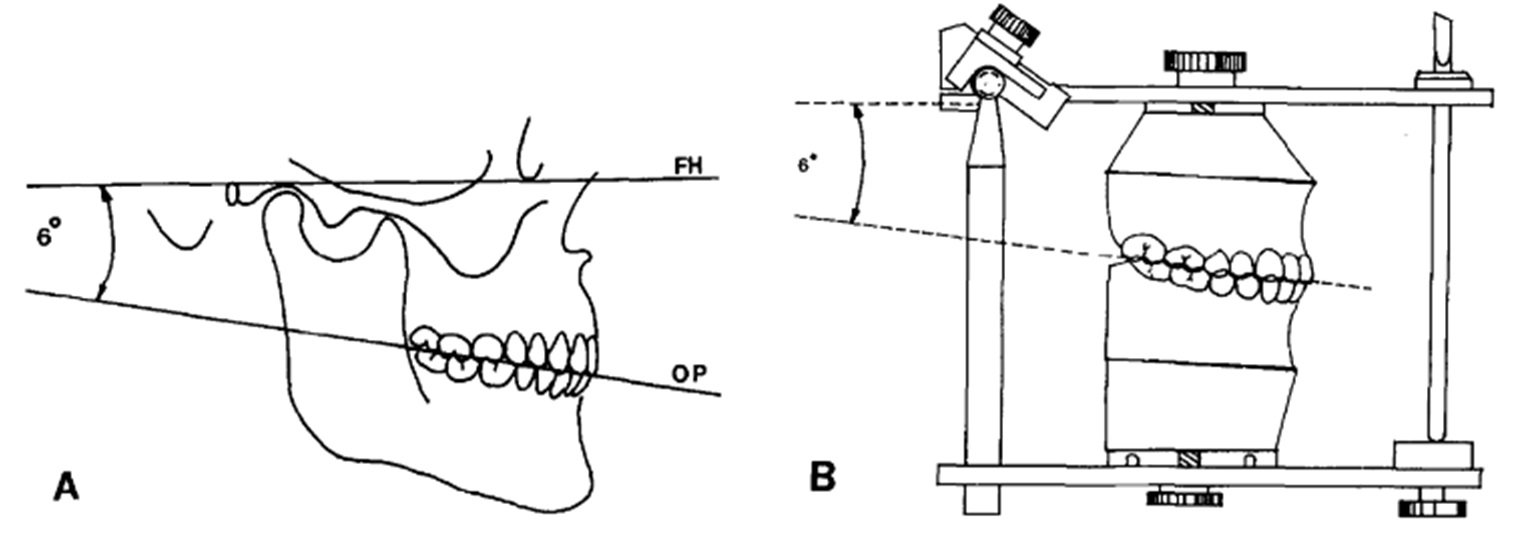
Arstad may have been the first to report the magnitude of error expected from the use of an arbitrary transverse axis and stated that a 5-mm error in its location will result in a 0.2-mm error on the articulator. When prosthodontic work is being done, as large changes in the vertical dimension requiring autorotation are not usually performed it is therefore unnecessary for the prosthodontists to pay as close attention to the occlusal plane angulation.When large vertical changes are performed, bite relationships at the new vertical dimension are made. In this way the casts are mounted at the new vertical dimension, making unnecessary the need for autorotation. It is therefore unnecessary for the prosthodontists to pay as close attention to the occlusal plane angulation. But it is of importance during orthognathic surgery.

CONCLUSION
The hinge axis, being an intrinsic element in every masticatory movement of the mandible, holds undeniable importance and should not be overlooked in dental practice. The accurate capture and meticulous transfer of the hinge axis to the articulator are essential steps, transforming the articulator into a precise representation of the patient's unique physiological characteristics. This attention to detail is critical for achieving a biologically acceptable restoration. Ultimately, the true value of our individual contributions to dentistry lies not in adhering to a specific school of thought but in the finesse with which we practice the art of dentistry. Prioritizing precision and patient-centered approaches underscores our commitment to excellence, enhancing the quality of care provided and ensuring optimal outcomes for our patients.
REFERENCES
- Dr. Bainiwal Deepika Bainiwal . HINGE AXIS RECORDING “THE ESSENTIAL NEED IN PROSTHODONTICS” International Journal of Current Research. Vol. 10, Issue, 07, pp.71178-71184, July, 2018
- Dr. Pal Dipankar . HINGE AXIS: CONCEPTS, THEORIES AND CLINICAL SIGNIFICANCE -A REVIEW. Asian Journal of Science and Technology. Vol. 10, Issue, 04, pp.9639-9641, April, 2019
- Palik JF, Nelson DR, White JT. Accuracy of an earpiece face-bow. J Prosthet Dent. 1985 Jun;53(6):800-4.
- Ellis E 3rd, Tharanon W, Gambrell K. Accuracy of face-bow transfer: effect on surgical prediction and postsurgical result. J Oral Maxillofac Surg. 1992 Jun;50(6):562-7.
- Shillinburg. Fundamentals of Prosthodontics. 3rd Edition
- Dawson Functional Occlusion from TMJ to Smile Design-1st Edition
Disclaimer from Guident
The views and opinions expressed in articles published in Guident are solely those of the authors and do not necessarily reflect the views of the editors, the editorial board or the publisher, Ivory India. Guident does not endorse any product, technique or treatment described. Clinical content is intended for qualified dental and medical professionals and is not a substitute for individual clinical judgement. Guident, its editors and the publisher accept no liability for any consequence arising from the use of information published in the journal.
How to cite this article
Dr. Mehr Yazdani, Dr. Srishti Mishra, Dr. Manesh Lahori. Cracking the Code: Terminal Hinge Axis Demystified Amidst Conceptual Debates. Guident. 2024 Jan;17(2). Available from: https://guident.in/articles/prosthodontics/cracking-the-code-terminal-hinge-axis-demystified-amidst-conceptual-debates.html