Evolution of Basal Implants in Dentistry: A Review
Trisa Dental Solutions, Mulund (west), Mumbai
ABSTRACT
Implantology has witnessed remarkable advances and has completely transformed the field of oral rehabilitation. Basal implantology is an emerging aspect of dental implantology that has potential to restore the most complicated and challenging cases. It provides a simplistic approach against the more complicated surgical treatment options. Minimally invasive nature and immediate functionality makes it highly acceptable to the patients. This review offers a comprehensive perspective and presents detailed insight into basal implantology.
Keywords: Basal implantology, osseoadaptation, single piece implants, BCS implant, basal implant.
INTRODUCTION
Rehabilitation of missing teeth using conventional dental implants has become a popular treatment modality in the past few decades. For placement of these implants and achieving optimum success rate, sufficient amount of alveolar bone availability is important.1 Insufficient bone often creates a challenging situation for the clinician. This requires the operator to perform additional surgical procedures like ridge augmentation, sinus lifts, nasal lifts, ridge splitting, nerve repositioning, etc. These extensive procedures not only increase the duration and cost of treatment, but are also accompanied with their individual merits and demerits.2-4 Many underlying systemic conditions increase the complexity and affect the prognosis of these augmentation surgeries.
Considering the hurdles that are encountered while rehabilitating severe atrophied cases with conventional implants, there is a need for a simple and suitable treatment. This deficit has led to the development of modern uniquely designed implants known as Basal implants or bicortical implants.5 Basal implants have revolutionized the treatment in atrophic jaws as they gain anchorage solely from the cortical bone. Over the years, the evolution of basal implants has made them a valuable addition to dental practice globally. Basal implant systems can be used for immediate rehabilitation in almost every atrophic case with good survival rates and limited complications.6,7 The recent digital advances have made fabrication of basal implant retained prosthesis faster, cost effective and customized as per the need of the patient. Newer prosthetic materials and advanced digital technology can be incorporated easily into basal implantology.8 This review aims to present a thorough and detailed insight into the modern basal implantology.
HISTORY AND EVOLUTION OF BASAL IMPLANTS
German and French dental surgeons are primarily credited for the developments in the field of basal implantology. Dr. Jean-Marc Julliet in 1972 developed the first single unit implants that were designed to engage the cortical bone.4,9 In the mid-1980’s, “disk-implants” were patented by Dr. Gerard Scortecci. These were the first laterally implants. They had a stiff external and internal connection for prosthetic superstructure. (Fig 1) Dr. Gerard Scortecci was acknowledged as the founding father of lateral basal implantology in 1984 at the World Implantology Congress, Munich Germany.10

Figure 1: Disk implant design by Dr. Scortecci.
The disc design of Dr. Gerard was eventually modified by german surgeons creating a new system known as Basal Ossesointegrated Implant (BOI). This system facilitated effective transmission of masticatory forces in vertical as well as basal region.10
Dr. Stephen Ihde introduced lateral implants similar to the disk implants with roughened surfaces in 1997. The implants had anti rotation property as its round base plate incorporated edges. Dr. Ihde was among the first pioneers to introduce resiliency in the vertical shafts of basal implants. Base plates resistant to fracture were later introduced and patented in 2002 with establishment of bending zones. 1n 2005, the screwable basal implant design was developed. Professor Ihde is considered as the father of Modern Basal Implantology. He introduced single piece basal implants around 2010 that could be placed with a crestal approach, thus modifying both the surgical technique and the design. (Fig 2)This was a significant paradigm shift in the field of basal implantology.9 The basal implant vertical shaft was the polished surface for designs manufactured before 1999. Later after 2003, the entire length of the implant was fabricated with a polished smooth surface.11
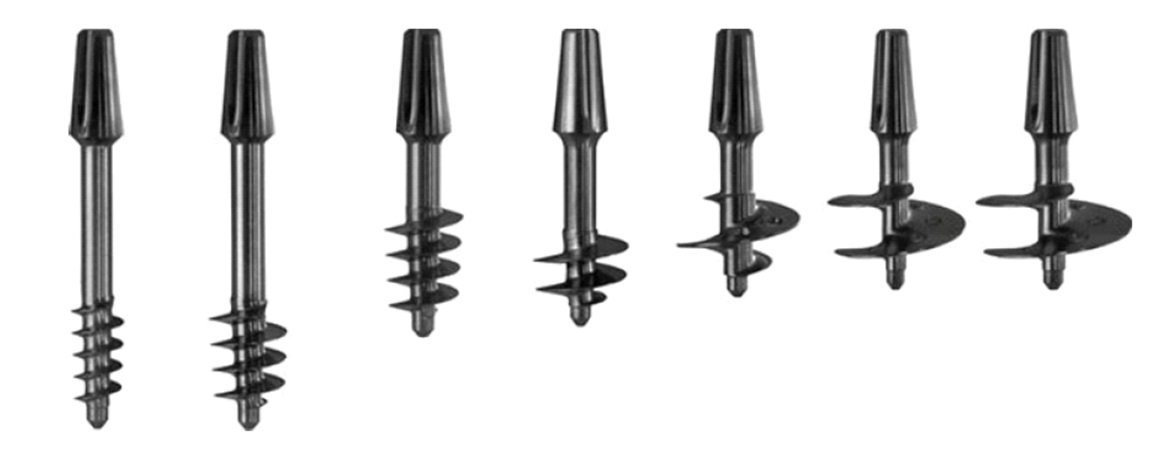
Figure 2: Current generation of single piece basal implants by Prof Ihde.
Rationale and Principle of Basal implantology
Jaw bone comprises of two components: alveolar and basal bone. Basal or the cortical bone is denser and offers better load bearing capacity. It is less prone to any tooth borne infection, injuries, and shows rare instances of resorption compared to the alveolar bone. Rationale for basal implants was derived from orthopedic surgeries. Orthopedicians use bicortical anchorage during rehabilitation of most load bearing bones like femur. (Fig 3)Similar concept was used for designing the basal implants.1,9,11

Figure 3: Bicortical screws used to stabilize femur bone.
Principles of orthopedic surgery were applied to basal implantology. The basal implants served as a symbolic representation of the orthopedic fixation screws and the rigid prosthetic framework symbolized the orthopedic fracture plate. (Fig 4)Thus, for immediate loading of the intraoral prosthesis bicortical engagement and rigid stabilization is crucial.2
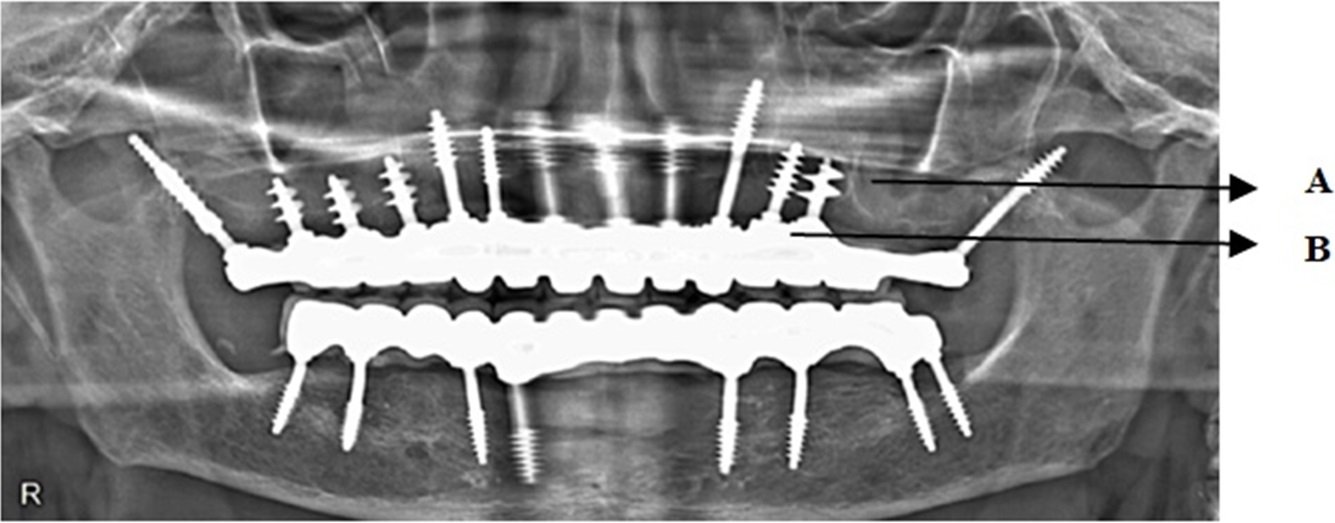
Figure 4: Principle of orthopedic traumatology applied to basal implantology. A- Basal implants act as bicortical screws. B- Prosthetic framework acts as fracture plate
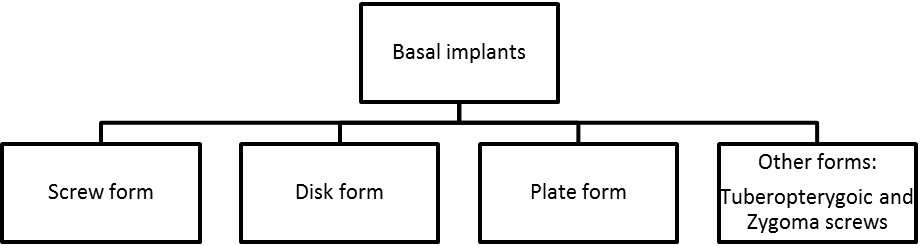
CLASSIFICATION OF BASAL IMPLANTS 3
They can be classified into basic four types:
CURRENT GENERATION OF BASAL IMPLANTS
Modern day basal implantology deals mostly with the screw form basal implants. These can be further classified into three types:
- Bicortical screw implants (BCS)
- Compression screw implants (KOS)
- Bicortical + Compression screw implants/ Hybrid variant (KOS plus implant)
MORPHOLOGY
Crestal single piece basal implants unlike conventional implants are designed as a single unit. They are fabricated using pure Titanium or Titanium Molybdenum alloy. Single piece design consists of abutment, neck, vertical shaft and threads/flutes.2,3,9 (Fig 5)

Figure 5: Basal implant morphology (Smooth surface)
Implant abutment portion aids in tooth replacement and remains exposed in the oral cavity. Neck is the constricted part below the abutment that helps in gingival adaptation. Shaft is the highly polished vertical component that allows for bending. 15°-25° bending can be achieved with basal implants. The threads or flutes help to establish good stability through cortical engagement. The threads are smooth in BCS implants. KOS implants however comprise of rough surface as they undergo surface treatments like sand blasting and acid etching. The KOS plus implants/ Hybrid implants have rough surface flutes with additional smooth surface threads in the apical third.9
PERI-IMPLANT HEALING FOR BASAL IMPLANTS
The screw form implants have distinctive designs that facilitate healing in a unique way. The healing mechanism of basal implantology differs for basal implants as they undergo “Osseoadaptation”. This originates from the philosophy that describes bone as a unit that has the potential to remodel and adapt under functional loads. The Bone multicellular unit (BMU) process of osseoadaptation is responsible for the remodeling of bone under functional stresses which leads to formation of a dense peri-implant bone.1,5,9
INDICATIONS 2,4
- Clinical cases that require replacement of multiple teeth or rehabilitation of entire segment or arch.
- Patients that present with reduced bone volume as a result of pneumatized sinuses, severe alveolar bone loss, bone atrophies, trauma.
- Failed bone augmentation cases and sites of failed conventional implants
CONTRAINDICATIONS 2,12
- Allergies or hypersensitivity to implant materials like titanium and titanium alloys.
- Ongoing radiotherapy or chemotherapy for cancer.
- History of drug abuse, psychological diseases.
- Uncontrolled systemic illness rendering patient unfit for any surgical treatment.
- Patients on long term high dose IV bisphosphonate treatment.
- Age less than 15 years.
- Heavy bruxers.
ADVANTAGES 2,12-14
- Immediate rehabilitation within 72 hours can be achieved.
- Basal cortical bone offers excellent support and good load bearing capacity. It is less likely for infection and less prone to resorption.
- The need for extensive surgeries for augmentation is completely eliminated.
- Offers a more cost effective treatment alternative to the patients.
- Reduced the overall treatment time.
- Have good survival in well controlled systemic diseases like diabetes, and patients with chronic periodontitis.
- Less prone to peri-implantitis.
- Minimally invasive flapless approach makes the surgery comfortable for the patients and promotes excellent healing.
LIMITATIONS 2,13,15
- Mastering the surgical technique has a learning curve as it is tactile driven.
- Anatomical knowledge of both the jaws and associated vital structures is extremely important for attempting flapless placement.
- Any errors in effective load distribution or rigid splinting could lead to overload and failure.
- More stock of the basal implants has to be kept in hand during surgeries.
PROSTHETIC REHABILITATION
Occlusion plays a significant role for the success of basal implants. A bilaterally balanced occlusal scheme is essential for proper and undisturbed healing. Rigid splinting of basal implants is mandatory in all cases. This splinting could be achieved with a rigid framework or intra-oral welding/ syncrystallization. The decision to perform intra-oral welding depends on the clinical requirements.8
The occlusal considerations while restoring basal implants are influenced by various surgical factors like quality of bone, number of implants, and arrangement of implants in strategically correct positions. Efforts to reduce the eccentric forces and effective load distribution prevent overloading of implants. Principles of implant protected occlusion used in conventional implantology can be successfully applied to basal implantology. Reduction of horizontal and vertical cantilevers, creating symmetrical chewing table, use of shortened dental arch concept, and bilaterally balanced occlusal scheme are integral while restoring full mouth cases.8,9
COMPLICATIONS
Possible complications like implant fracture, damage of adjacent tissues, nerve damage, and oro-antral fistulas could occur while placement of implants. Minor post operative symptoms like pain, swelling, and local tissue reactions are commonly associated with basal implant surgeries. After loading the implants improper load distribution can lead to overload osteolysis. However, they have a chance of getting reintegrated if loads are balanced or reduced.4,16,17 Proper treatment planning and regular follow up care help to reduce the possibility of complications.
CONCLUSION
The incorporation of basal implantology for immediate non-removable rehabilitation of atrophic jaws has upgraded the dental implantology practice globally. Basal implants come to rescue when the conventional approach fails. The research to further enhance the understanding of this unconventional approach would strengthen the faith of implantologists that still are hesitant towards the use of basal implants. The use of basal implants could benefit many patients that present with complicated clinical situations. The overall minimally invasive approach, reduced treatment time and high success rates make them a viable treatment modality in day to day practice.
REFERENCES
- Ihde S. Restoration of the atrophied mandible using basal osseointegrated implants and fixed prosthetic superstructures. Implant Dentistry. 2001 Mar 1;10(1):41-5.
- Virani R. Basal implantology simplified: Practical guidelines for clinicians. 1st edition. India. 2020.
- Gupta AD, Verma A, Dubey T, Thakur S. Basal osseointegrated implants: classification and review. Int J Contemp Med Res. 2017;4(11):2329-35.
- Sikri A, Sikri J. The BIG B of Implant Dentistry-Basal Implants: A Narrative Review. J Dent Mat. 2023;1(1):1-6.
- Ihde S. Comparison of basal and crestal implants and their modus of application.2009.36-46.
- Patel K, Madan S, Mehta D, Shah SP, Trivedi V, Seta H. Basal implants: an asset for rehabilitation of atrophied resorbed maxillary and mandibular jaw - a prospective study. Ann Maxillofac Surg. 2021;11:64–69.
- Lazarov A. Immediate functional loading: results for the concept of the Strategic Implant® Ann Maxillofac Surg. 2019;9:78–88.
- Virani R. Prosthetic and laboratory protocols in basal implantology. 1st edition. India. 2023.
- Ihde S. Principles of BOI- Clinical, Scientific, and Practical Guidelines to 4-D Dental Implantology. Springer, Heidelberg; Germany, 2005.
- Scortecci G. Immediate Function of Cortically Anchored Disk – Design Implants without Bone Augmentation in Moderately to Severely Resorbed Completely Edentulous Maxillae. Journal of Oral Implantology, 1999;25:70-79.
- Sharma R, Prakash J, Anand D, Choudhary A, Hasti A. Basal implants- An alternative treatment modality for atrophied ridges. IJCMPR. 2016;3(1):1186-1190.
- Pathania N, Gill HS, Nagpal A, Vaidya S, Sailo JL. Basal implants–A blessing for atrophied ridges. IP Annals of Prosthodontics and Restorative Dentistry. 2021;7(1):16-21.
- Niswade G, Mishra M. Basal Implants- A Remedy For Resorbed Ridges . WJPLS. 2017;3(1):565–72.
- Advantages of immediate loading basal implants; 2015. Available from: http://www.dentalimplantskerala.com.
- Disadvantages of basal implants; 2015. Available from: http://drmurugavel.in/content/boi-dental-implants-india-basaldental-implants-india
- Martin R, Burr D, Sharkey N. Skeletal Tissue Mechanics. 1st edition. New York: Springer; 1998.
- Ahmad O, Thamer B. Basal screw implantology without sinus lifting. Pak Oral Dent J. 2014;34:414–6.
Disclaimer from Guident
The views and opinions expressed in articles published in Guident are solely those of the authors and do not necessarily reflect the views of the editors, the editorial board or the publisher, Ivory India. Guident does not endorse any product, technique or treatment described. Clinical content is intended for qualified dental and medical professionals and is not a substitute for individual clinical judgement. Guident, its editors and the publisher accept no liability for any consequence arising from the use of information published in the journal.
How to cite this article
Dr. Sayali G. Dandekar, Dr. Rohan Virani, Dr. Bhavana Premchandran. Evolution of Basal Implants in Dentistry: A Review. Guident. 2024 Jan;17(2). Available from: https://guident.in/articles/implantology/evolution-of-basal-implants-in-dentistry-a-review.html