Children with Special Needs: An Inside View
K.D Dental College, Mathura, U.P, India
A disability is a story that sometimes requires subtitles for others to understand.
The birth of the child is always associated with tremendous joy and with the arrival of the new member in the family there also arrives a new hope, but when the parents of the neonate realizes that something is a miss about their child, their world is shattered and there beginsthe whole new journey of pain and agony.The discrepancy between the perfect child of their fantasy and the real child may be the cause for negative attitudes and parenting stress. Bhan(1995) suggested that often a range of emotions, such as denial, guilt, blame, frustration, anger and despair, sweep through the parents as they are confronted by their children with disability.
Looking back in to the historical back ground, the awareness regarding the children with special needs has come a long way. From the most brutal practices such as throwing away the children from the cliff upon suspecting a deformity to using them as an entertainment material were very common practices in Ancient Greece and Rome. It was only during the middle ages, when more human practices evolved leading to decline in infanticide and establishment of foundling homes. John Locke in 1690 published his essay concerning human understanding, where he emphasized that child's mind is a blank slate and with profound care and training, it can be influenced.
By definition, a disabled child is one who has a mental, physical, medical or social condition that prevents the child from achieving full potential when compared to other children of the same age. Disabled includes all handicapping conditions or combinations thereof that a health professional might encounter.
WHO defines a handicapped individual as “one who, over an appreciable time, is prevented by a physical or mental condition from full participation in the normal activities of his age group, including those of a social, recreational education and vocational nature”.
It is very easy to define disability but what is more challenging is to go through it or be a part of this never ending journey. Therefore before we attempt any sort of treatment on these children, it is very essential to take a sneak peek in to their world so that one can understand their daily struggles and take a view of their perception.
Child Perception(A view from within): when we look at the situation from the child's point of view there are many things that he is wants to share but unable to do so, one of it is inclusion, he doesn't want sympathy, all he wants is the normal childhood, like any other child and wants to be included. Many studies have suggested that children are reluctant to interact with these kids, lack of acceptance have been reported by Dion et al and many other researchers. Children with low socio economic status are found to be more favorable than children with high socio economic status. Boys are found to be more negative than girls toward children with mental retardation, particularly, when they are labeled as a “retarded”. This behavior make them aloof and develops a sense of low self esteem.
Parents Perception: Parents of children with special needs goes through emotional roller coaster ride i.e starting from the state of constant denial to the rejection of baby, then comes a state of self adjustment where they start accepting the reality and are ready to redefine their relationship with the child. It takes a lot to be a parent of a child with special need as they initially faces social stress that includes staring, discomfort, inappropriately ignoring or draw attention to the child. More favorable public attitudes have been observed toward mildly than severely affected individuals. Parents of normal children who are not familiar with the behavior of these children tend to favor segregation of these children in the community. Wikler et al, 1981 suggested that parents develop 'chronic sorrow' that can be recognized by recurrent episodes of shock, pain, guilt and sadness. Rangaswamy 1989 said that the parents are plagued by shame and hostility while Drew et al, 1984 described it as denial, projection of blame, guilt, grief, withdrawal, rejection, and acceptance are some of the usual parental reactions
Sibling Perception:The intense effort to care for children with disabilities can, at times, be at the expense of a non disabled sibling. In the early years, younger non disabled siblings may imitate the physical activities of the child with disabilities. As they grow older, the non disabled child stops trying to persuade his brothers and sisters who have disabilities to be more “normal”. In the years to come increased demands are placed on the siblings to aid in the supervision of the child with disabilities or parents limit their attention to the child with disabilities. Thus turning this inter-sibling play into frustration, hostility and eventual refusal to cooperate in the needed care.
SocietyPerception: Sen(1988), has described disability a “tragedy” with a “better dead than disabled” approach; due to lack of medical services, unstandardized was of living and the lifetime financial burden on parents, all these difficulties of developing nation showcases that it is not possible for these family to have a good quality if life. Cultural beliefs about disability plays an important role in determining the way in which the family perceives disability and the kind of measures it takes for prevention, treatment, and rehabilitation. It is important to realize that not all disabilities are diagnosed in the immediate postpartum period. Some developmental disabilities, such as cerebral palsy and mental retardation, may not be apparent until quite a long time after birth. Most parents report that they were better able to adjust to the difficulties when they were aware of the child’s diagnosis from the beginning. Unfortunately the journey has just begun for these families as several types of responses have been identified that seem to be manifested due to high levels of stress in parents of children with disabilities, including suicide, divorce and child abuse (Waldman, 1999).
Increased financial pressures resulting from the needs for special equipment, medical care and special programs.
Increased difficulties due to age as it gets harder to manage due to differences between the child and his/her peers become more noticeable.
Increased levels of family stress may be a factor leading to the eventual institutionalization of the child.
Single mothers report more stress than mothers in intact families. Varying family arrangements and complications can increase demands on parental time and stifle personal development.
As the child grows, the family may become increasingly isolated from relatives, family, friends and community events.
Absence of the father during working periods often can increase the stress placed upon the mother caring at home for a child with severe handicaps.
Stress can range from the physical burden of care to the emotional disturbance created by the child and from the disruption of normal patterns of family life to the impact on family finances.
NEED FOR DENTAL SERVICES
With the increasing financial medical burden on the family, oral health care tends to take a back seat in these children. Little does the parents know that compromised oral health can set in different problems such as malnutrition, speech and dental infection spreading to other areas
There is a general agreement that the population with disabilities has higher rates for poor oral hygiene, gingivitis and periodontitis than general population.
Moderate or severe gingivitis has been found almost universally with increasing age and degree of mental retardation, especially for individuals with Down syndrome.
Patients who were unable to perform their usual activity because of their chronic health issues were reported to have less dental visits as compared to other categories.
An extended series of reports on the utilization of dental services by children and adults with disabilities focuses on limited physical access to buildings, limited practitioner willingness to provide care, associated insurance and financial difficulties resulting in longer periods between dental visits.
The emphasis has been on the need to provide care to youngsters with disabilities who reside at home or in institutions. While the need for dental care of these youngsters continues, the aging of people with develop mental and disabling conditions is an increasing reality.
For years, pediatric dentists have treated patients with disabling conditions as they grew from childhood into their teens and twenties. As medical achievements continue to lengthen the life span of these patients beyond middle age, the skills of more and more pediatric dentists will be needed.
DENTAL OFFICE ACCESS
One of the first preconditions in the management of a disabled child is accessibility of dental offices and operators. It requires establishment of barrier free facilities to accommodate people with all kinds of disabilities that include:
More width of doorways, i.e. should be 32 inch wider than normal (Fig. 1). Provision of wheelchair turning space. Operatory specifically designed with moveable dental chair, instrument control unit and suction system. Dental chairs should be adjustable to match different wheelchair designs, etc. Parking lot,Walk away, Entrance door steps/ground level, Slope 1:20, Railing 1:12, Floor of the entrance (non slipping), Entrance calling bell, Elevator 5 inch × 5 inch, Space for wheelchair and transportation, Telephone, Rest room, Space in the operatory, Mobile units, Mobile dental services.
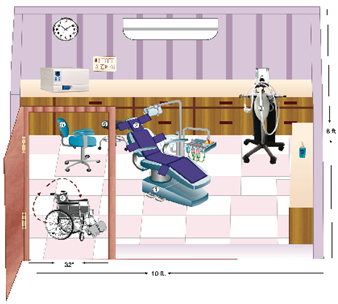
Fig. 1: Schematic presentation of a dental clinic for special children showing–1. Dental chair, 2. Papoose board, 3. Nitrous oxide inhalation sedation apparatus, 4. Wheelchair, 5. Doctor’s chair, 6. Assistant’s stool
FIRST APPRAISAL
The first dental appointment is very important and can set the stage for subsequent appointment. By scheduling the patient early in the day, giving sufficient time to talk with the parents and the patient before initiating any dental care, a practitioner can establish a good relationship with them. It is necessary to make appointments short and stress free for patients having poor stress tolerance and easy fatigability. Sending a short note before the appointment explaining the first visit to the family and afterward another note letting them how helpful they were is beneficial. This initial demonstration of sincere interest in the child often proves advantageous and saves time throughout the entire treatment process.
BEHAVIOR MANAGEMENT
The response of the developmentally disabled person to dental treatment is as varied as the patients themselves. Some will tolerate only a superficial examination and will not voluntarily set foot outside the waiting room area. While others will come to the dental operatory quiet happily, showing curiosity about the equipment, enjoy a ride on the chair, yet resist an examination. Setting out an unrealistic picture to the parent or guardian would not be of much help and may fall flat on expectations.
Many developmentally disabled patients show specific fear or intolerance to certain aspects of dental treatment—the sight of the operating light, the movement of the chair especially when tipped backward, the spray of water in their mouth, the saliva ejector, the noise of rotary instruments so try to identify their fears so that they can be addressed timely thereby making the patient more comfortable rather than startled and alarmed. These individuals relate fear directly to some specific feature in the dental treatment process.
Johnson and Baldwin stated that maternal anxiety appears to be the major factor affecting the behavior of young children in the dental situation.
The Tell–Show–Do technique is a familiar approach to orienting the child to new elements of dental management and is especially valuable in treating the developmentally disabled patient. We all have fear for unknown. Since an individual who is mentally slow understands even less than the individual with normal reasoning power; it becomes somewhat more difficult for him to overcome these fears.
Dentist should attempt to emotionally support the child by permitting the child to express his emotions—tears, fears, wishes, complaints, anger—without any rejection, criticism, or denial of his right to express feelings.
The use of the “towel treatment” or the Hand Over Mouth Exercise (HOME) has been advocated as a method of managing behavioral problems in children, particularly obstreperous children but these techniques have no place in the management of the intellectually challenged child who has limited reasoning power.
It is difficult to generalize about authority in dentistry. The dentists may be both firm and gentle, limiting and permissive; permit the child to face and meet the situation head on and adapt the situation to the child to face. There should be no hard and fast rules of operation. Permit the child to become involved in the dental treatment.
Within the behavior modification framework, reinforcement is commonly defined as a stimulus that increases the probability of the response. In addition, certain practical ramifications should be considered by the practitioner prior to the application of reinforcers that are unrelated to the behavior they are reinforcing. Behavior modification strategy has tremendous potential for working with atypical children. Its use with these children is promising. However, its misuse can be terrifying.
TREATMENT PLANNING
Before planning any treatment, the dentist must carefully assess and evaluate the handicap patient’s dental needs and his/her ability and willingness to cooperate during treatment. The family physician should be consulted if necessary. Treatment plans for handicapped patients are made with appropriate modifications as a result of the nature of the handicap. In case of mental retardation, as the patient is sometimes unable to enter discussions regarding treatment, the accompanying relative has the part in deciding the eventual care required.
In planning dental treatment for disabled child, there is no room for shortcuts. Stronger restorations such as chrome steel crowns should be used rather than large amalgam restorations. Pulp therapies should be accomplished rather than less reliable pulpcapping procedures (Fig. 2).When there are large facial decalcifications, particularly in the primary dentition, full coverage should be the treatment of choice. Chromic gut resorbable suture material should be used so that the individual does not have to go through the second procedure of removing the sutures. The placement of a stainless steel crown (SSC) on a tooth in a patient with uncontrolled movements can be very difficult. The fear of loss and/or aspiration can be eliminated by spot welding—a small wire loop on the labial or buccal surface is used to thread a piece of dental floss. The floss is tied and held by the dental assistant or secured to the neck apron by means of an alligator clip. After the crown has been cemented to place, the eyelet and dental floss can be easily removed and the crown is polished
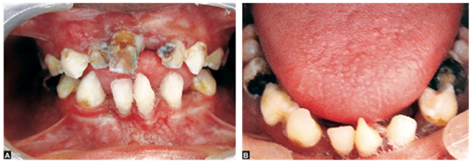
Fig 2: showing the need of extensive and a long term treatment in child with mental Retardation
CONCLUSION
Education is a powerful instrument of social change, and often initiates upward movement in the social structure. Thereby, bridging the gap between the different sections of society. Greater coordinated efforts should be made by the dental, medical, and social services to serve their needs. Professionals need to sensitize parents and school teachers so that the children’s self-esteem and coping strategy could be enhanced.The current article also highlights the need to educate parents and health care practitioners to lower their expectations from children with special needs and work in an integrated manner for the improved oral health of the child.
REFERENCES
- Verma P. General Considerations Pg No 1-20.Pediatric Dentistry for Special Child 1st ed/ 2016. ISBN: 978-93-5250-193-9
- Historical Background of Disabilities. https://us.sagepub.com/sites/default/files/upm-binaries 26491_Chapter_1_Historical_Background_of_Disabilities.pdf
- Bhan S (1995). Parental Role in the Life of a Special Child. Disabilities and Impairment. AnInterdisciplinary Research Journal; 9 (1): 37-43.
- Drew CJ, Logan DR, Hardman ML (1984). Mental Retardation – A Lifecycle Approach.Toronto: Times Mirror/ Mostle College Publishing.
- Rangaswamy K (1989). Construction of a Scale to Measure Parental Attitude Towards ProblemChildren. Child Psychiatry Quarterly; 22(2/3): 75-80.
- Sen A (1988). Psychosocial Integration of the Handicapped. New Delhi: Mittal Publications.
- Wikler L, Wasow M, Hatfielf E (1981). Chronic Sorrow Revisited: Attitudes of Parents and Professionals about Adjustment to Mental Retardation. American Journal of Ortho Psychiatry;51: 63-70. http://dx.doi.org/10.1111/j.1939-0025.1981.tb01348.x
- Chandramuki .Attitudes of Parents towards Children with Specific Learning Disabilities. Vol 23, No.1, 2012; doi 10.5463/DCID.v23i1.47
Disclaimer from Guident
The views and opinions expressed in articles published in Guident are solely those of the authors and do not necessarily reflect the views of the editors, the editorial board or the publisher, Ivory India. Guident does not endorse any product, technique or treatment described. Clinical content is intended for qualified dental and medical professionals and is not a substitute for individual clinical judgement. Guident, its editors and the publisher accept no liability for any consequence arising from the use of information published in the journal.
How to cite this article
Dr. Priya Verma Department of Pedodontics and Preventive Dentistry. Children with Special Needs: An Inside View. Guident. 2017 Dec;11(1). Available from: https://guident.in/articles/pedodontics/children-with-special-needs-an-inside-view.html