TISSUE RETRACTORS, BRINKERS CLAMPS and their Applications.
Director, Upskill Dental Academy Mumbai, India
Rubber dam clamps are an essential part of the rubberdam kit ,which helps you retain the rubberdam sheet on the tooth. Innumerable designs of clamps are available in the market, where the operator can choose them based on the requirement .
The effective use of a rubber dam requires stable, accurately fitting clamps. The design of the jaws of the clamps and the forces of retention are therefore important. Clamps should engage the teeth as closely as possible along the entire length of the jaws, at least with contact at four points, to prevent movement during the operation (Wiland, 1973). The forces exerted by clamps should not be so great as to fracture the teeth.1
One of the set of clamps specially designed for a specific purpose are the brinkers clamps.
Brinkers or tissue retractors are specially designed clamps designed primarily for the purpose of tissue retraction, while providing secondary retention.
APPLICATIONS
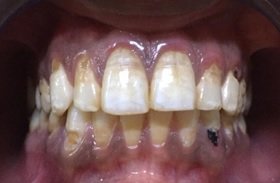
They are used as retainers in pedodontics .For isolation of cervical carious lesions by tissue retraction.
The brinkers clamps are available as metal clamps.They are metal clamps made of tempered carbon steel or stainless steel.
THE TYPES OF BRINKERS CLAMPS
- The B1 is primarily for lower molars in deciduous molars
- The B2 and B3 are useful for upper molars in deciduous molars
Molar brinkers display a broader jaw and a narrower jaw. The broader jaw always is applied on the buccal surface of the molar.
They are very useful for deciduous molars where they can be applied with minimal pinching of the gingiva, hence ensuring the patient comfort.
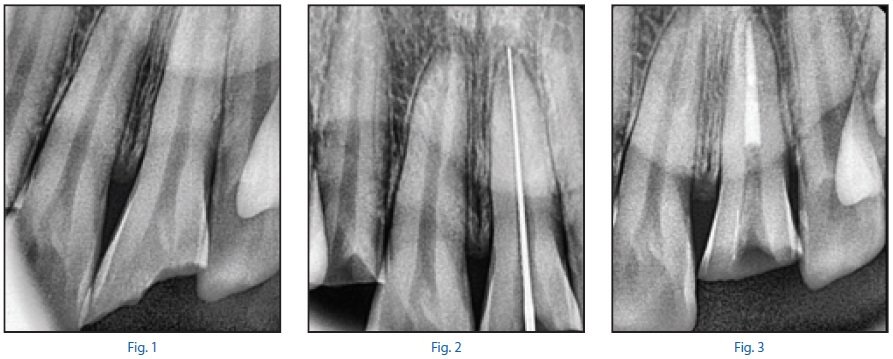
- B4 can be used for isolation, by tissue retraction of cervical carious lesion, it is also useful for isolation of structurally compromised teeth with additional retention.
- B5 brinkers are excellent for class 5 caries isolation as well as for isolation of incisors both upper and lower
- B6 can be used for class 5 caries isolation in incisors and canines.
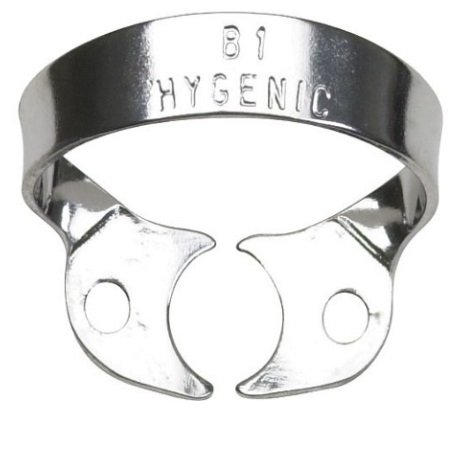
B-1
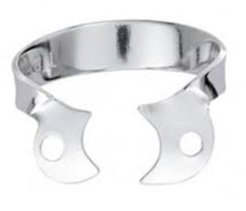
B-2
The buccal jaw is always wider than the lingual in B2 and B-3
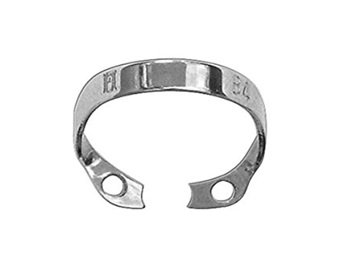
B-4
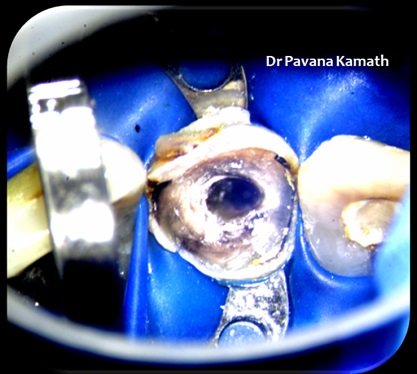
Isolation with B4 for badly broken down teeth
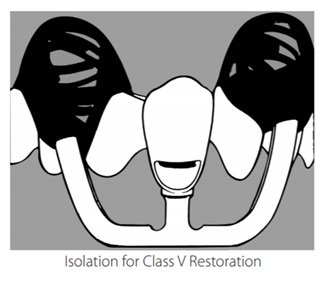
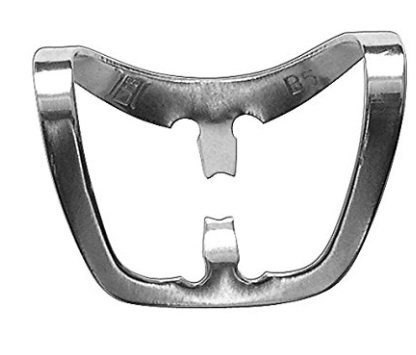
B-5
DISADVANTAGES
The only disadvantage of brinkers clamps is that they are gentle on the tissues hence an additional retainer is required for retention of the rubber dam sheet .References
- Rubber Dam Clamps Classified by Stiffness and Gap between the Jaws , OPERATIVE DENTISTRY, 1981, 6, 117-123. OLAV MOLVEN • NILS R GJERDET
- https://www.coltene.com/fileadmin/Data/EN/Products/Treatment_Auxiliaries/Dental_Dam/Dam_It__It_s_Easy__FINAL.pdf
Disclaimer from Guident
The views and opinions expressed in articles published in Guident are solely those of the authors and do not necessarily reflect the views of the editors, the editorial board or the publisher, Ivory India. Guident does not endorse any product, technique or treatment described. Clinical content is intended for qualified dental and medical professionals and is not a substitute for individual clinical judgement. Guident, its editors and the publisher accept no liability for any consequence arising from the use of information published in the journal.
How to cite this article
Dr. Pavana Kamath. TISSUE RETRACTORS, BRINKERS CLAMPS and their Applications. Guident. 2020 May;13(6). Available from: https://guident.in/articles/endodontics/tissue-retractors-brinkers-clamps-and-their-applications.html