Direct Composite Veneers: A Case Reports Series
, Department of Conservative Dentistry & Endodontics, K.D. Dental College & Hospital, Mathura (UP)
INTRODUCTION
Smile is an important feature of face predicting its attractiveness and need for esthetics will motivate patients to seek dental treatment.1 Color, shape, and structural and position abnormalities of anterior teeth might lead to important esthetic problems for patients.2 In order to solve such problems, various treatment modalities for esthetic rehabilitation exist like microabrasion, direct composite resin restorations or combination of both, indirect composites, crowns, esthetic veneers, and so forth. On the other hand, excessive preparations of teeth and damages to surrounding tissues, such as gingiva, are some disadvantages of crowns. Therefore, in recent years, veneer restorations, as a more esthetic and more conservative treatment option, have been used in dentistry.3-5
Direct composite veneers allow operator to control and evaluate entire procedure from shade selection to final morphology usually in a single appointment. It is most commonly utilized form of veneering.6 These are often been heralded as a more conservative alternative to porcelain. With the advent of microhybrid and nanohybrid composites, finishing and polishing of these restorations can rival that of porcelain.7 These restorations are called minimally invasive,
functional and long-lasting 'direct aesthetic restorations' that perfectly emulate natural dental tissues even in anterior area.8,9 In 1997, Peumans et al. found 89% success rate of direct composite veneers after 5-year follow-up.10 Esthetics and durability of composite materials have improved dramatically over years. However, materials have some inherent disadvantages like color instability, polymerization shrinkage, and excessive wear. Constant advancement of resin technology and advent of newer materials have resulted in reduced shrinkage, improved color stability, wear resistance, and biocompatibility.
Direct composite veneering results in minimal invasion and maximum preservation of sound tooth structure when compared to indirect restorations. These restorations can be easily repaired which is a more conservative and preferable option than replacement. Thus, direct composite resin restorations have become a viable alternative for young patients that require anterior restorative procedures.11,12 Here we present two case reports of single visit esthetic rehabilitation describes a step-by-step with direct composite veneers on maxillary incisors to canines with moderate dental fluorosis in adolescence with follow up of 2 years.
CASE REPORT 1
A 20-year-old young male was referred to the Department of Conservative Dentistry and Endodontics in K.D Dental College & Hospital for the esthetic rehabilitation. The patient was not satisfied with his smile because of the discolored and pitted appearance of maxillary anterior teeth (Deans Fluorosis Index-4, Figure 1a). Various treatment options were explained to patient and it was decided to opt for direct composite veneering taking age of patient into consideration. The color was recorded using the VITA Classical shade guide, and shade A2 were matched his tooth color. The teeth were isolated with rubber dam. Minimally invasive preparations rather than full veneer preparations were performed on maxillary central incisors to canines (Figure 1b). The depth of the preparations was limited in enamel tissue as much as possible. The enamel surface was acid etched using 37% phosphoric acid (D-Tech Etching Gel) for 30 seconds (Figure 1c). and rinsed for 10 seconds, and dried. A bonding agent (solare universal bond, GC) was applied on the prepared enamel and light-cured for 10 seconds (Figure 1d). A2 shade composite restorative material (GC Solare Sculpt) was applied on the prepared enamel. (Figure 1e). The composite was light-cured for 20 seconds on each surface. (Figure 1f). Increments of enamel shade composite A2 (GC Solare Sculpt & Bond) were placed for rebuilding the enamel and photo activated for 20seconds. Finishing and polishing were performed by using finishing diamond bur and Sof-Lex 3M ESPE (Diamond Polising System) (Figure 1g). Post operative photogragh was taken (Figure 1h).
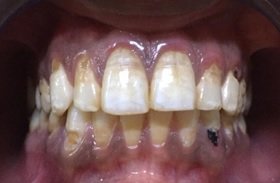
Figure 1(a): Preoperative phoograph
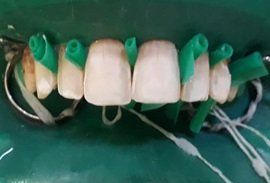
Figure 1(b): Rubber dam application and minimal invasive preparation done
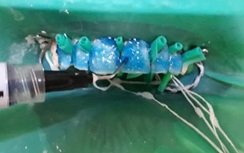
Figure 1(c): Etchant application
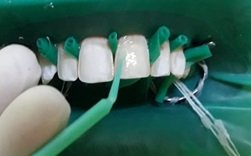
Figure 1(d): Bonding agent applied and cured for 10sec
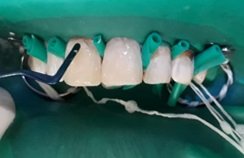
Figure 1(e): Composite application
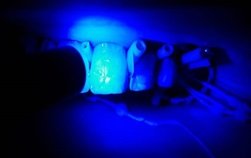
Figure 1(f ): Light curing of composite
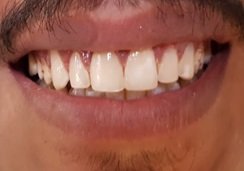
Figure 1(g): Post operative photograph
CASE REPORT 2
A 18-year-old young male patient reported to Department of Conservative Dentistry and Endodontics in K.D Dental College & Hospital with chief complaint of discolored maxillary incisors. The clinical examination revealed that, there was discoloration on maxillary anterior teeth with mild to moderate abraded incisal edges(Fig:1a). Final diagnosis was made with dental fluorosis classified as Dean’s fluorosis index (moderate type). The treatment plan was to perform direct composite veneering on anterior teeth. The initial shade was measured with the aid of a VITA shade guide (VITAPAN Classical). The teeth were isolated with rubber dam. The least invasive preparation with maximal preservation of enamel was performed on maxillary central incisors to canines (Fig:2b). The enamel surface was acid etched using 37% phosphoric acid for 30 seconds (Fig:2c). and rinsed for 10 seconds, and dried. A bonding agent (GC solare universal bond), was applied on the prepared enamel and light-cured for 10 seconds (Fig:2d). A composite layering technique was used to fill the tooth with (GC Solare Sculpt) shade A2 composite restorative material on the prepared enamel. (Fig: 2e). The composite was light-cured for 20 seconds on each surface. Each surface was polymerized from incisal, facial, and lingual aspects for additional 20 seconds. Finishing and polishing were performed by using finishing diamond bur and Sof-Lex 3M ESPE. Post operative photograph was taken (Fig:2f). Recall check-up was done in both cases in 6 months and there was no sensitivity or discoloration detected.
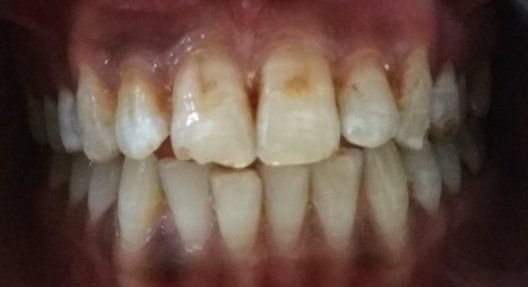
Figure 2(a): preoperative phoograph
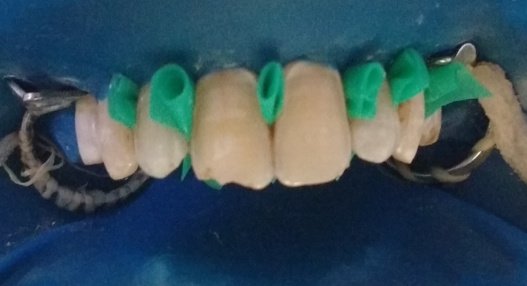
Figure 2(b): rubber dam application and minimal invasive preparation done
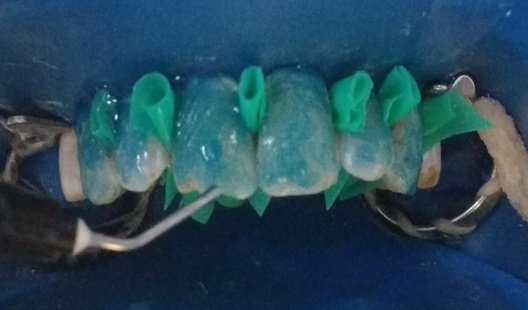
Figure 2(c): Etchant application
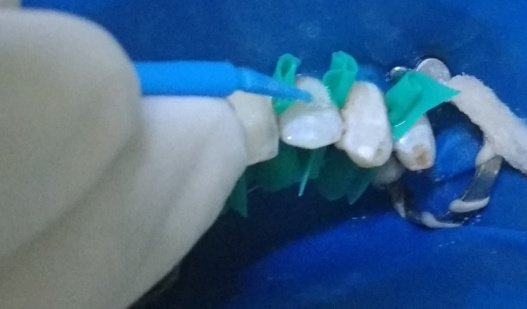
Figure 2(d): bonding agent applied and cured for 15s
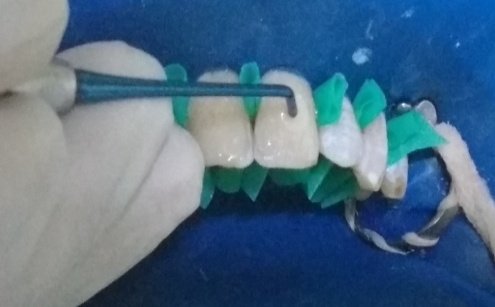
Figure 2(e): Composite application
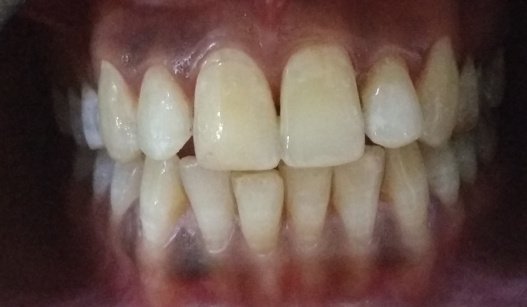
Figure 2(f): Post-operative photograph.
DISCUSSION
The importance for esthetics is increasing in the practice of modern pediatric dentistry. The demand for esthetic motivates the patient to seek dental treatment which is often dictated by cultural, ethnic, and individual preferences.13 The aim of treatment for both the cases is to restore patient’s esthetics and self-esteem.
In case 1, the patient had severe pitted anterior teeth which necessitated treatment with veneering procedure. In case 2, patient had discolored anterior teeth and in order to establish both functional and esthetic integrity, veneers were considered.
Direct and indirect veneers, as esthetic procedures, have become treatment alternatives for patients with esthetic problems of anterior teeth in recent years.2,14 In deciding between those two treatment options, the cost, social and time factors have to be considered. Although ceramic laminate veneer restorations have some advantages like color stability and high resistance against abrasion, they have also some disadvantages, including high cost and long chair time.2,15,4 Moreover, they have some problems such as necessity of an additional adhesive cement.
Direct composite veneers are indicated for esthetic rehabilitation in these cases because of conservative tooth preparation and because they can be completed in single appointment, frequency of replacement or repair is less, they are strong and durable, no luting agent is required, and it is cost-effective. In addition, they have similar abrasion rates as that of natural tooth structures.
Polishing of direct composite veneers is easy and any cracks or fractures on the restoration may be repaired intraorally.16 Also, marginal adaptation is better than that of indirect veneer restorations.17 However, the main disadvantages of direct veneers are low resistance to wear, discoloration and fractures, but the improvements of the new generations of resin composite restorations and adhesive techniques have surmount all these problems. But it’s worth mentioning that the material itself, and the ideal application of this technique is the main factor to achieve long lifespan for successful outcome.18 In these cases, the use of conservative direct composite resins provided both symmetrical and harmonious restoration of the teeth.
CONCLUSION
Direct composite veneer provides good esthetic result at the lesser cost and time due to absence of laboratory procedure and completion of work in single appointments. This minimally invasive technique is a better option in treatment of such dental fluorosis in young patient also as compared to full crown. By this technique we can get lot of benefits with wide range of people who seek improvements in there distorted smile due to numerous problems in anterior teeth.
REFERENCES
- Saha R and Malik P. Paediatric aesthetic dentistry: A Review. European Journal of Paediatric Dentistry 2012;13(1):6-12
- Yuzugullu B, Tezcan S. Comparative indications of laminate veneer restoration types used for colored and eroded teeth. CU DiÅŸhek Fak Der 2005;8(2):133–7
- Aristidis GA, Dimitra B. Five-year clinical performance of porcelain laminate veneers. Quint Int 2002; 33(3):185-9.
- Bagış B, Bagış HY. Porselen laminate veneerlerin klinik Uygulama aşamaları: Klinik bir olgu sunumu A.U.Dishek Fak Der 2006;33(1):49-57.
- Faunce FR, Myers DR. Laminate veneer restoration of permanent incisors. J Am Dent Assoc 1976;93(4):790-2.
- Fahl Junior N, “A direct/indirect composite resin veneers: a case report,” Pract Periodontics Aesthet Dent.1996 Sep;8(7):627-38
- Fahl Jr N. A polychromatic composite layering approach for solving a complex class IV/direct veneer/diastema combination: part II,” Pract Proced Aesthet Dent. 2007;19(1):17-22
- Xiaoling T, Ashraf MA, Yanyan Z. Paired observation on light-cured composite resin and nano-composite resin in dental caries repair. Pak J Pharm Sci. 2016;29(6):2169-2172.
- Barrantes JCR, Araujo JrE, Baratieri LN. Clinical Evaluation of Direct Composite Resin Restorations in Fractured Anterior Teeth. Odovtos-Int J Dent Sci, 2016;(16):47-62.
- Peumans M, Van Meerbeek B, Lambrechts P, Vanherle G. The 5-year clinical performance of direct composite additions to correct tooth form and position. II. marginal qualities. Clin Oral Investig. 1997;1(1):19-26.
- T. Vale, P. Santos, J. Moreira, M. C. Manzanares, and J. M. Ustrell, “Perception of dental aesthetics in pediatric dentistry,” European Journal of Pediatrics, vol. 2009;10:110–114
- Ardu S, Stavridakis M, and Krejci I, “A minimally invasive treatment of severe dental fluorosis,” Quintessence Int. 2007;38(6):455–458
- Al-Sugair MH and Akpata ES, “Effect of fluorosis on etching of human enamel,” Journal of Oral Rehabilitation, J Oral Rehabil. 1999;26(6):521–528
- Ozdemir E, Aguloglu S, Deyer Y. The esthetic rehabilitation of three patients with enamel defect on anterior teeth by using laminate composite and porcelain veneer (case reports). GU DiÅŸhek Fak Der 2009;26(3):171-176.
- Hickel R, Heidemann D, Staehle HJ et al. Direct composite restorations extended use in anterior and posterior situations. Clin Oral Invest 2004;8(2):43-44.
- S. Berksun, P. S. Kedici, and S. Saglam. Repair of fractured porcelain restorations with composite bonded porcelain laminate contours. J Prosthet Dent.1993;69(5):457-8
- Jordan RE. Esthetic Composite Bonding Techniques and Materials, Mosby-Year book, St. Louis, Mo, USA, 2nd edition, 1993
- Albounni R. Direct composite veneers as a permanent treatment of anterior teeth Oral Health Dent Manag 2015;14(2):2247-2452
Disclaimer from Guident
The views and opinions expressed in articles published in Guident are solely those of the authors and do not necessarily reflect the views of the editors, the editorial board or the publisher, Ivory India. Guident does not endorse any product, technique or treatment described. Clinical content is intended for qualified dental and medical professionals and is not a substitute for individual clinical judgement. Guident, its editors and the publisher accept no liability for any consequence arising from the use of information published in the journal.
How to cite this article
Dr. Muhammad Mutiur Rahman, Dr. Ajay Nagpal, Dr. Rohit Paul. Direct Composite Veneers: A Case Reports Series. Guident. 2020 Jun;13(7). Available from: https://guident.in/articles/endodontics/direct-composite-veneers-a-case-reports-series.html