Dentist Doing Disservice? a Retrospective Study on Antibiotic Prescribing Patterns by Dentists
Department of Pharmacology, Rama Medical College, Hospital & Research Centre, Kanpur, India, Department of Pharmacology, Rama Medical College, Hospital & Research Centre, Kanpur, India, Department of Oral & Maxillofacial Surgery, K.D. dental College & Hospital, Mathura, India
Abstract
Pain is the most important symptom for which patient consult a dentist and almost all are prescribed nonsteroidal anti-inflammatory drugs with one or more antimicrobials. This retrospective study was carried out to find the antibiotic prescribing pattern by dentists in eastern U.P. India. More than 20,000 OPD prescriptions by a reputed dental hospital were analyzed for the antibiotic prescribed, its dose, its duration and its frequency. Information thus gathered regarding choice of antimicrobials its dose and duration was compared with textbooks, literatures and prescribing guidelines issued by competent bodies. About 15 antibiotics were found to be most preferred, prescribed empirically and randomly. More than 70% of these prescriptions were found to be inadequate and not conforming to the guidelines.
Key words:- Antimicrobials, dentists, prescriptions.
BACKGROUND
Let’s face facts. Dentists prescribe antibiotics, they prescribe it right and left, often more than one for the management of a number of oral conditions. To be fair to them, they see lots of cases of orofacial infections; the dental hospital on which this review is based usually caters to cases of gingivitis, periodontitis, periapical abscess, pericoronitis, infected cyst and impacted tooth in its OPD, not necessarily in that order and almost all are prescribed one or more antibiotics. Antibiotic prescribing may be associated with unfavorable side effects ranging from gastrointestinal disturbances to fatal anaphylactic shock and most importantly- development of resistance[1].
The increasing resistance problems of recent years (" delhi bug"[2] is still a sensitive issue for us) are probably related to over- or mis-use of broad-spectrum agents such as cephalosporins and fluoroquinolones. Our emphasis in this study focused on type of antibiotic, its dose, duration and frequency of administration.
Therapeutic antibiotic prescribing by dentists: Most oral diseases presented to the dentists are primarily inflammatory conditions that are associated with pain. A considerable percentage of dental pain originates from acute and chronic infections of pulpal origin, which necessitates operative intervention,[3] rather than antibiotics. Non-indicated clinical cases for antibiotic use include acute periapical infection, dry socket, and pulpitis.[4] Chronic inflammatory periodontal conditions are also not indicated for antibiotics; systemic antimicrobials should only be used in acute periodontal conditions where drainage or debridement is impossible, where there is local spread of the infection or where systemic extension has occurred.[5] More common dental infections like pulpitis and periapical periodontitis require mainly operative measures like fillings, root canal therapy, or extraction if the tooth is not restorable. Unfortunately, dentists still prescribe antibiotics for this condition.[6-10] Cases with viral infection were prescribed antibiotics too.
Clinical situations that require antibiotic therapy on empirical basis are limited, and they include oral infection accompanied by elevated body temperature and evidence of systemic spread like lymphadenopathy and trismus.[11] There are also a limited number of localized oral lesions that are indicated for antibiotic use and these include periodontal abscess, acute necrotizing ulcerative gingivitis, and pericoronitis.[4] Dentists whom we interviewed were all aware of these facts. Yet their prescription carried one or more antibiotics almost regularly. Explanation given very sheepishly was that the patient expects it. Our impression was that these antibiotics were prescribed more in hope than in belief.
METHODS
The study was carried out in a dental college & hospital of Kanpur, U.P. for a period of 3 years in which all dental prescriptions were analyzed. If they contained antimicrobials; antibiotics used, its dose, frequency and duration were noted down.
RESULT
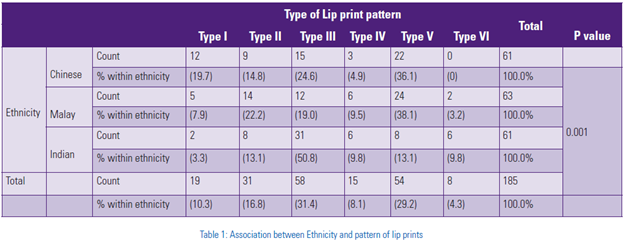
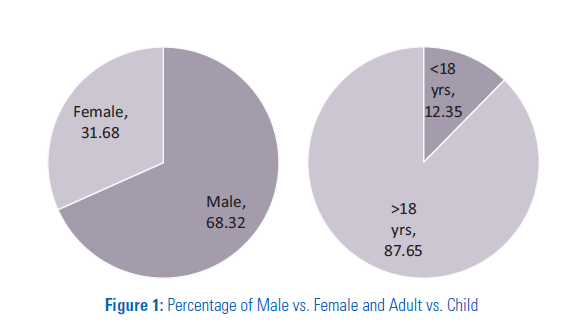
A total of 32,764 patients prescription were analyzed out of which 23559 contained antimicrobials comprising of 60.12% of adult male, 27.53% of adult female and 12.35% of patient from pediatric age group of which 8.2% belong to male group and 4.15% in female (Table 1 & 2; Fig. 1). In these 23559 prescriptions, the most preferred was metronidazole followed by co-amoxyclav, which were often co-prescribed. This was followed by a combination of ciprofloxacin and tinidazole; azithromycin was next preferred where more than 50% of prescription carried metronidazole too. Ofloxacin and levofloxacin with ornidazole were also routinely prescribed. In post operative cases or in prophylactic cover before surgery the most preferred antimicrobial were the combination of ciprofloxacin, metronidazole and amikacin infusion however these were not included in this study. In 6223 (26.42%) prescriptions the choice of antibiotics and its dose were found to be adequate for the indication mentioned. In rest of 17336 (73.58 %) prescriptions antibiotics were inadequate and improper for the indication mentioned. Even if the choice was antibiotic were adequate, the dose, duration and frequency of administration of antimicrobials in OPD cases were wayward; more than 24 % of prescriptions were outside of recommendation of British national formulary.[4] The average duration of administration of antibiotics was 3-5 days. This was much more evident in prescriptions meant for pediatric age group instructions like half a teaspoon, one teaspoon, one and half teaspoon were still in a vogue, as a result in most of the cases antimicrobials dose were unsatisfactory. We could not find out adverse reaction to these antibiotics prescribed as this was a retrospective study. In only 23 of prescriptions that we studied, antibiotics were stopped or changed due to gastrointestinal problem. Any other ADR were either not reported or the patient might have consulted some other institution.



DISCUSSION
Optimal therapy for infectious diseases requires a broad knowledge of medicine and careful clinical judgment.[12] Oral infections which may require antibacterial treatment include acute periapical or periodontal abscess, cellulitis, acutely created oral-antral communication (and acute sinusitis), severe pericoronitis, localized osteitis, acute necrotising ulcerative gingivitis, and destructive forms of chronic periodontal disease.[4] Most of these infections are readily resolved by the early establishment of drainage and removal of the cause.[13] Antibacterials may be required if treatment has to be delayed, in immunocompromised patients, or in those with conditions such as diabetes or Paget’s disease.[14] The dictum primum non nocere should be adhered to, and it should be remembered that all antimicrobial agents carry a risk (and a cost).[12] Allergic reactions are common and can be serious.[15] Combination of a penicillin (or erythromycin) with metronidazole may sometimes be helpful for the treatment of severe oral infections or oral infections that have not responded to initial antibacterial treatment.[4] In our study dentists preferred a combination of co-amoxyclav/ azithromycin together with metronidazole (>30%) but they were also partial to quinolones (ciprofloxacin, ofloxacin and levofloxacin) with either tinidazole or ornidazole (~25%). Infectious disease therapy should be directed toward as narrow a spectrum of infectious agents as possible to avoid superinfection[15-18] however in our study broad spectrum antibiotics are preferred by dentists.
CONCLUSIONS
Our study showed that there was inappropriate prescribing of antibiotics by dentists within dental hospitals. We need clear guidelines on prescribing of antibiotics in dental practice. The royal pharmaceutical society of Great Britain and the British medical association recommendation may not be suitable and appropriate in our country and setup. Government of India should come out with its own recommendation so that antimicrobial prescribing in dental practice improves.
REFERENCES
- Lewis MA. Why we must reduce dental prescription of antibiotics: European Union Antibiotic Awareness Day. Br Dent J 2008;205:537–8.
- Goel N, Wattal C. New delhi metallo-β-lactamase 1. The Lancet Infectious Diseases. 2010;10:751.
- Longman LP, Preston AJ, Martin MV, Wilson NHF. Endodontics in the adult patient: the role of antibiotics. J Dent 2000;28:539–48.
- British National Formulary No. 61: Dental Practitioners Formulary. Royal Pharmaceutical Society: Pharmaceutical press; 2011.
- Addy M, Martin MV. Systemic antimicrobials in the treatment of chronic periodontal diseases: a dilemma. Oral Dis 2003;9(Suppl 1):38–44.
- Palmer NO, Martin MV, Pealing R, Ireland RS. An analysis of antibiotic prescriptions from general dental practitioners in England. J Antimicrob Chemother 2000;46:1033–5.
- Al-Haroni M, Skaug N. Knowledge of prescribing antimicrobials among Yemeni general dentists. Acta Odontol Scand 2006;64:274–80.
- Öcek Z, Sahin H, Baksi G, Apaydin S. Development of a rational antibiotic usage course for dentists. Eur J Dent Educ 2008;12:41–7.
- Yingling NM, Byrne BE, Hartwell GR. Antibiotic use by members of the American Association of Endodontists in the year 2000: report of a national survey. J Endod 2002;28:396–404.
- Mainjot A, D’Hoore W, Vanheusden A, Van Nieuwenhuysen JP. Antibiotic prescribing in dental practice in Belgium. Int Endod J 2009;42:1112–7.
- Swift JQ, Gulden WS. Antibiotic therapy–managing odontogenic infections. Dent Clin N Am 2002;46:623–33.
- Madoff LC, Kasper DL. From introduction to infectious Diseases: Host–Pathogen Interactions. In Harrison’s Principles of Internal Medicine. Vol. I. 18th ed. In: Kasper DL, Fauci AS, Longo DL, Braunivald E, Hauser SL, Jameson JL, editor. New York: McGraw-Hill Medical Publisher Division; 2012. p.1011-2.
- Longman LP, Martin MV. The use of antibiotics in the prevention of post-operative infection: a re-appraisal. British Dental Journal 1991;170: 257–62.
- Martin MV, Longman LP, Hill JB, Hardy P. Acute dentoalveolar infections: an investigation of the duration of antibiotic therapy. British Dental Journal 1997;183:135–7.
- Grammer LC. From Drug allergy. In Cecil Medicine. 24th ed. In: Goldman L, Schafer AI, editors. Philadelphia: Saunders Elsevier; 2011. p. 1638-9.
- Surawicz CM. Antibiotic-associated diarrhea and pseudomembranous colitis: are they less common with poorly absorbed antimicrobials? Chemotherapy 2005;51(Suppl 1):81–9.
- Clark BM, Homeyer D, Glass KR, D’Avignon LC. Clindamycin-induced Sweet’s syndrome. Pharmacotherapy 2007;27:1343–6.
- Bubalo JS, Blasdel CS, Bearden DT. Neutropenia after singledose clindamycin for dental prophylaxis. Pharmacotherapy 2003; 23:101–3.
Disclaimer from Guident
The views and opinions expressed in articles published in Guident are solely those of the authors and do not necessarily reflect the views of the editors, the editorial board or the publisher, Ivory India. Guident does not endorse any product, technique or treatment described. Clinical content is intended for qualified dental and medical professionals and is not a substitute for individual clinical judgement. Guident, its editors and the publisher accept no liability for any consequence arising from the use of information published in the journal.
How to cite this article
Dr. P. K. Agarwal, Dr.B. Kumar, Dr.Arti Senior. Dentist Doing Disservice? a Retrospective Study on Antibiotic Prescribing Patterns by Dentists. Guident. 2014 Feb;7(3). Available from: https://guident.in/articles/research/dentist-doing-disservice-a-retrospective-study-on-antibiotic-prescribing-patterns-by-dentists.html