The Concept of Shade Guides
ITS Dental College, Greater Noida, India
ABSTRACT
To effectively overcome the challenges associated with accurate shade selection in aesthetic restorative dentistry, it is essential for dentists to understand both the science and art of color. This is difficult, because color and its perception have both subjective and objective elements. Furthering the dilemma is the inability of the human eye to perceive color in a clear, concise, and consistent manner; color perception varies from person to person.
INTRODUCTION
Restorative dentistry is a blend of art and science. The prognosis of restorative dentistry depends upon two factors i.e. FUNCTIONAL and AESTHETICS. The Aesthetic factor is determined by four basic determinants i.e. required in sequential order namely Position, Contour, Texture and Color.1
Shade guides are matching tools that most dental practitioners use to identify and communicate color and shade information. In this article, we will understand about different types of shade guides and the principles of shade selection.
COMPONENTS OF COLOR
According to Munsell’s Color Theory, color is usually described in terms of Hue, Chroma and Value.
HUE signifies the dominant color in the shade that yields the perceived color. It is signified by A, B, C and D on a Vita Classic Shade Guide.2 CHROMA, on the other hand, is the intensity of the dominant wavelength or the hue. It is represented by numbers on the Vita Classic Shade Guide in such a way that increase in number represents the increase in chroma.3
VALUE (Brightness) is the amount of light that is returned from an object. Munsell described the value in a white to gray scale that is High value objects have lower amount of gray and low value objects have high amount of gray.2 Value of the crown can be increased by either Reducing the Chroma or increasing the reflectivity of the surface of the crown.
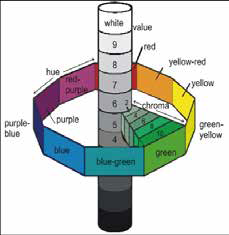
Figure 1: Munsell Color System
If a dye is continuously poured in a glass of water. The chroma i.e. the depth of the dye will increase with time but the value or the brightness of the glass will reduce with time. Hence, Value is indirectly proportional to chroma.
TOOTH SHADE GUIDES
Tooth shade guides were developed in late 1920s in response to acceptance of MUNSELL’S COLOR THEORY and introduction of ceramics in dentistry.4 Tooth shade guides are of two types i.e. MANUAL SHADE GUIDES and TECHNOLOGY ASSISTED SHADE GUIDE.
Manual Shade Guides are further divided into Hue-Based Shade Guides and Value-Based Shade Guides. Majority of the commercially available shade guides are Hue-Based and not Value-Based. Detecting the Value of any object is the function of the Rod Cells of the Retina, whereas the Cone Cells are sensitive to color. It is a known fact that Retina has 120 million Rod Cells compared to 6-7 millions Cone Cells. Hence, human eye is more sensitive to Value compared to Chroma. Thus, a good value match is much more important than a perfect hue match.
The most widely accepted and used Shade Guide worldwide is VITA CLASSICAL SHADE GUIDE. It was introduced in 1927 by Vita Zahnfabrik in Sad Sackingen, Germany. It is a Hue-Based Shade Guide that covers 6% of range of tooth color between it’s 16 shade tabs.5 The four hues are Reddish Brown (A), Reddish Yellow (B), Grey (C) and Reddish Grey (D). Each of the tabs do not posses any specific value and can be arrange from Lightest to Darkest. Other Hue-Based Shade Guides are Chromascop Shade Guide (Ivoclar Vivadent) and Trubyte Bioform Color Ordered Shade Guide (Dentsply Trubyte).
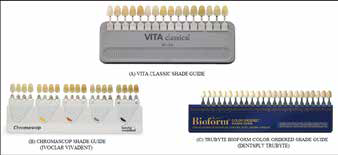
Figure 2: Hue-Based Shade Guides
Vitapan 3D Master Shade Guide (Vita) is surprisingly the only commercially available Value-Based Shade Guide. It was introduced in 1998 with 26 shade tabs having 6 Value based group i.e. 0, 1, 2, 3, 4 and 5, where 0 indicates highest value and 5 indicates lowest value.
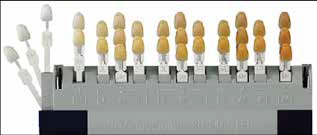
Figure 3: Value-Based Shade Guide (Vitapan 3D Master Shade Guide, Vita)
Within each Value, there are three Hue variations, which are denoted as M (Standard Hue), L (Yellow Hue) and R (Red Hue). Within each variations, there are 2-3 Chroma variation. Vitapan 3D Master Shade Guide covers 25% of the total tooth shades.6
Technology assisted Shade Guides are a more accurate and consistent method of shade matching compared to manual shade guides.7 These are of three types i.e. RGB Devices, Colorimeter and Spectrophotometer. RGB DEVICES are the least complicated devices which are commercially obsolete. Its actions can be summed in three steps: 1) Capturing a digital image; 2) Using the image for additive color (Red, Blue and Green) and chromatic mapping; 3) The final color maps are interpreted by complimentary software to elicit shade information. The weak link for these devices is the quality of the digital image. ShadeScan (Cynovad) is a RGB Shade Analyzer that is no longer commercially available.
A COLORIMETER is engineered to work in the similar manner as a human eye. It employs a color filter to reduce the total spectral load to a few specific wavelengths (Red, Blue and Green) from the tooth. This is also known as Tristimulus Values. These filters reduces the data load and manufacturing cost while increasing the operational speed. This is more accurate than RGB Device but lesser than Spectrophotometer. ShadeStar (DeguDent GmbH) is a small, portable and commercially available colorimeter.1
SPECTROPHOTOMETERS are the instruments i.e. designed to produce the most accurate color measurements. It measures and records the radiant energy reflected or transmitted by tooth one wavelength at a time for each
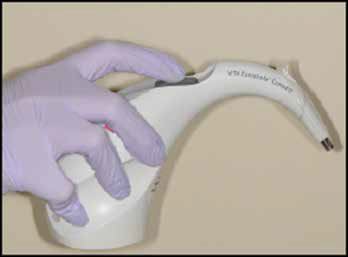
Figure 4: Easyshade Compact (Vita)
value, chroma and hue, hence, producing a large amount of data.8 EasyShade Compact (Vita), SpectroShade Micro (MHT Optic Research) and ShadePilot (DeguDent GmbH) are available spectrophotometers.
Shadewave is an alternative for Shade Taking Devices. It is a Cloud Based software that uses the clinicians digital camera & images and digitally matches tooth shades to popular shade guides. Advantages are: 1) the software is regularly updated; 2) utilizes any internet accessible device.9
PRINCIPLES OF SHADE SELECTION
There are certain principles that should be followed during shade selection.10-16 These are as follows:
1) The patient should be viewed at the eye level so that the most color-sensitive part of the retina will be used.
2) Shade comparison should be made under different lighting conditions. Normally, the patient is taken to a window and the color is confirmed in natural daylight after initial selection under incandescent and fluorescent lightening.
3) The teeth to be matched should be clean.
4) Shade comparison should be made at the start of the patient visit.
5) Brightly colored clothing should be draped and lipstick should be removed.
6) Shade comparison should be made quickly, with the color samples placed under the lip directly next to the tooth being matched.
7) The eye should be rested by focusing on a gray-blue surface immediately before a comparison since this balances all the color sensors of the retina and resensitizes the eye to the yellow color of the tooth.
SOURCE OF ILLUMINATION
Dagg et al. (2004)11 investigated some of the factors on which accurate shade taking depends. Four main factors were investigated, namely, the difference between the two types of porcelain used, the effect of light quality, the effect of porcelain thickness and the experience of the observer. The results indicate that the most influential factor on shade taking was the light quality.
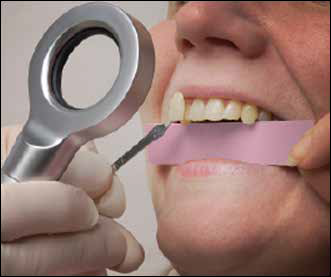
FIGURE 5: Hand Held RiteLite 2 (AdDent)
The ambient light conditions or a dedicated task light are employed to facilitate the most ideal shade selection. A good example of dedicated task light is RiteLite 2 (AdDent) i.e. a hand held task light which uses 2 types of LED’s to produce following 3 different controlled light temperatures: 1) 5500 K (the daylight standard for dentistry), 2) 3900 K (Ambient mix) and 3) 3200 K (incandescent). This allow the operator to judge the shade match under different light condition and avoid the problem of metamerism.17
SUMMARY
Achieving an excellent aesthetic match between a dental restoration and natural tooth is no longer considered to be an elective concept. Our dental patients expect and demands natural looking aesthetically pleasing restorations. While using manual shade guides, its recommended to keep multiple systems handy. Paravina et al (2002)18 reported a higher shade coverage of 52% when Vita Classical shade guide and Vitapan 3D Master shade guide was used in conjugation compared to shade coverage of individual of the two systems i.e. 6% for former and 25% for latter.
REFERENCES
- Sikri VK. Color: Implication in dentistry. J Cons Dent 2010; 13(4): 249-255.
- Boksman L. Shade selection; Accuracy and reproducibility. Ont Dent 2007: 24-27.
- Terry DA, Geller W, Tric O, Anderson MJ, Tourville M, Kobashigawa A. Anatomical form defines color; Function, form and aesthetics. Pract Proced Aesthet Dent 2002; 14: 59-67.
- Munsell AH. A color notation. Boston, MA: George H. Ellis Co; 1905.
- Hall NR. Tooth Color Selection: The application of color science to dental color matching. Aust Prosthodont J 1991; 5: 41-46.
- O’ Brian WJ, Hemmendinger H, Boenke KM, et al. Color distribution of three regions of extracted human teeth. Dent Mater 1997; 13: 179-185.
- Paul S, Peter A, Pietrobon N, et al. Visual and spectrophotometric shade analysis of human teeth. J Dent Res 2002; 81: 578-582.
- Cal E, Guneri P, Klose T. Comparison of digital and spectrophotometric measurements of color shade guides. J Oral Rehabil 2006; 33: 221-8.
- Jerry C, Wang CH, Kuhn D. New Algorithm in shade matching. J Cosm Dent 2016; 32(1): 62-72.
- Christopher CK. Shade selection. Aust Dent Prac 2007; 10: 116-9.
- Dagg H, O’ Connell B, Claffey N, Byrne D, Gorman C. The influence of some different factors on the accuracy of shade selection. J Oral Rehabil 2004; 31: 900–4.
- Capa N, Malkondu O, Kazazoglu E, Calikkocaoglu S. Evaluating factors that effect the shade matching ability of dentists, dental staff members and lay people. J Am Dent Assoc 2010;141:71–6.
- Denissen H, Dozic A. Photometric assessment of tooth color using commonly available software. Eur J Esthet Dent 2010;5:204–15.
- Okubo SR, Kanawati A, Richards MW, Childress S. Evaluation of visual and instrument shade matching. J Prosthet Dent 1998;80:642–8.
- Park JH, Lee YK, Lim BS. Influence of illuminants on the color distribution of shade guide. J Prosthet Dent 2006;96:402–11.
- Van der burgt TP, Bosch JJ, Borsboom PC, Plasschaert AJ. A new method for matching tooth colors with colors standards. J Dent Res 1985;64:837–41.
- Tooth color matching- what can be done to increase accuracy? CRA Foundation Newsletter 2005; 29: 2.
- Paravina RD, Powers JM, Fay RM. Color comparison of two shade guides. Int J Prosthodont 2002; 31: 73-78.
Disclaimer from Guident
The views and opinions expressed in articles published in Guident are solely those of the authors and do not necessarily reflect the views of the editors, the editorial board or the publisher, Ivory India. Guident does not endorse any product, technique or treatment described. Clinical content is intended for qualified dental and medical professionals and is not a substitute for individual clinical judgement. Guident, its editors and the publisher accept no liability for any consequence arising from the use of information published in the journal.
How to cite this article
Dr. Rohit Bansal. The Concept of Shade Guides. Guident. 2019 Apr;12(5). Available from: https://guident.in/articles/prosthodontics/the-concept-of-shade-guides.html