Stents in Prosthodontics
Department of Prosthodontics, AME Dental College & Hospital, Raichur, India
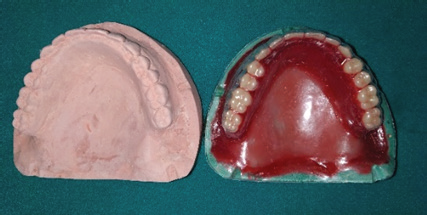
Any supplementary device used in conjunction with a surgical procedure to keep a skin graft in place; often modified with acrylic resin or dental modeling plastic impression compound that was previously termed Stent’s mass; also refers to any device or mold used to hold a skin graft in place or provide support for anastomosed structures.1
Functions: 2
- Radiographic diagnostic template
- Surgical guide template
- Conserve the tissue after skin and mucosal grafts and stabilize them in place until their revascularization
- Prevent contamination of wounds and promote healing
- Protection of teeth and associated structures in contact sports.
Materials used: 2,3
Types of stents
I- Intra Oral Stents
i ) Non Surgical Stent- Occlusal stent.
- Periodontal stent.
- For lip and cheek support.
- Pedodontic stents.
- Mouth guard.
- Oral screen.
- Fluoride Carrier.
- Dental implantation
- After removal of exostoses
- For epulis fissuratum
- Cyst plugs
- Drainage stents
- In resected maxilla
II- Extraoral Stents
- Nasal Stent
- Auditory stent
- Radiation protection stent
- Stent for neck scar
The following are the most commonly used stents in dentistry:
Dental Implantation
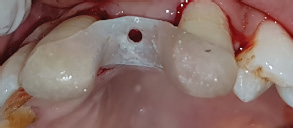
The success of implant therapy depends primarily on appropriate treatment planning and properly performed implant placement surgery. Misaligned placement of the implant is a very common dilemma that frequently
complicates the clinical laboratory procedures intended for the fabrication of superstructures. The use of surgical guides to implant placement will undoubtedly assist the surgeon to create biomechanically sound implant locations. It also dictates to the surgeon about the implant body placement that offers the best combination of support for the repetitive forces of occlusion, esthetics and hygiene requirements.4
Surgical Stent

The prosthesis supports the skin graft and maintains normal anatomic facial contours. Also provides immediate postoperative restorations of mastication,deglutition and speech shortens the patient’s recovery time.5
Occlusal Stent
Commonly there are two different materials, based upon consistency, which are used in the fabrication of occlusal appliances. There are hard acrylic resin Occlusal appliances that are either self cured (by chemical reaction) or heat cured, resulting in hard and rigid tooth-borne and occlusal surface. In other hand, there are soft or resilient occlusal appliances, the soft appliance are somewhat flexible and pliable tooth-borne and occlusal surface. A third variation of material known as dual laminated, as its occlusal surface consists of hard acrylic resin and the tooth-borne surface consist of a soft material. This produces an occlusal appliances with advantages of a soft material (fitting well and providing comfort for the supporting teeth), and an adjustable occlusal surface of the hard acrylic resin.3
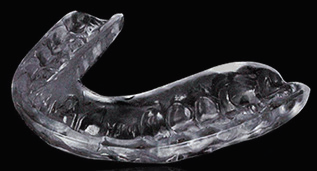
- Eliminates occlusal interferences.
- Minimizes the effect of bruxism and clenching on teeth (wearing).
- Guids the mandible into retruded position for treatment of T.M.J disorders
Periodontal Stent
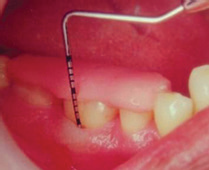

A better reflection of periodontal destruction can be obtained by the measurement of the clinical attachment level (CAL), i.e., the distance from the probe tip to the level of the cementoenamel junction (CEJ). However, there were several problems in CEJ identification. Due to the time consumption and inherent problems in CEJ identification. The use of stent is recommended during clinical trials which will minimize the errors in terms of over and underestimation of CALs. The stent are used for vertical probing (vertical/occlusal stent), horizontal probing (furcation stent), and interdental papilla (IDP) stent for IDP‑deficiency measurement.6
Mouth Guard

The mouthguard (also referred to as a gumshield or mouth protector) is defined as a resilient device or appliance placed inside the mouth to reduce oral injuries, particularly to teeth and surrounding structures. Mouthguards are effective because they considerably diminish the deflection of teeth subjected to stress in comparison with unprotected teeth [46]. Theoretically, a properly fitted mouthguard should be protective, comfortable, resilient, tear-resistant, odourless, tasteless, inexpensive, easy to fabricate and should not interfere with speech. The most common types of mouthguard available to athletes comprise:7
Type I: stock mouthguards, bought over-the-counter and designed to be used without further modification, such mouthguards are no longer widely available;
Type II: mouth-formed boil-and-bite mouthguards
Pedodontic Stents
Bruxism is very common among children, both in the primary dentition and in the mixed dentition. Acrylic resin bite splints are widely used for bruxism treatment among children and adults, although there are claims in the literature that bite splints are only used to control or lessen symptoms, not to cure bruxism. Based on some studies that have suggested the use of bite splints in children who have bruxism signs and symptoms, the objective of this study is to evaluate theeffectiveness of acrylic bite splints to reduce the habit or to eliminate or reduce the symptoms caused by bruxism in children during mixed dentition and make them accept this treatment method.8
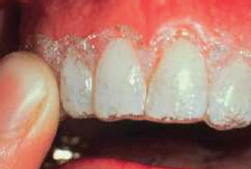
A custom-made stent for applying fluoride gel.8
REFERENCES
- Glossary of prosthodontic terms, Charles R. Stent, dentist, United Kingdom, 1845-1901; syn, SURGICAL STENT; comp, nasal stent
- M M Fouad et al Prosthodontic stent.
- Alqutaibi AY, Aboalrejal AN. Types of occlusal splint in management of temporomandibular disorders (TMD). J Arthritis. 2015 Nov;4(176):2.
- Kola MZ, Shah AH, Khalil HS, Rabah AM, Harby NM, Sabra SA, Raghav D. Surgical templates for dental implant positioning; current knowledge and clinical perspectives. Nigerian journal of surgery. 2015;21(1):1-5.
- Birnbach S. Immediate surgical sectional stent prosthesis for maxillary resection. The Journal of prosthetic dentistry. 1978 Apr 1;39(4):447-50.
- Singh S, Vandana KL. Stent as an accessory tool in periodontal measurements: An insight. Journal of Indian Society of Periodontology. 2019 Jan;23(1):81.
- Newsome PR, Tran DC, Cooke MS. The role of the mouthguard in the prevention of sports-related dental injuries: a review. International Journal of Paediatric Dentistry. 2001 Nov;11(6):396-404.
- De Oliveira MT, Bressan T, Pamato S, Niehues AC, Niehues NF, Netto JN, Bittencourt ST. Bruxism in children: Effectiveness of bite splints. Journal of Research in Dentistry. 2014 Feb 28;2(1):22-9.
- Epstein JB, van der Meij EH, Emerton SM, Le ND, Stevenson-Moore P. Compliance with fluoride gel use in irradiated patients. Special Care in Dentistry. 1995 Nov;15(6):218-22.
Disclaimer from Guident
The views and opinions expressed in articles published in Guident are solely those of the authors and do not necessarily reflect the views of the editors, the editorial board or the publisher, Ivory India. Guident does not endorse any product, technique or treatment described. Clinical content is intended for qualified dental and medical professionals and is not a substitute for individual clinical judgement. Guident, its editors and the publisher accept no liability for any consequence arising from the use of information published in the journal.
How to cite this article
Dr. Aroma Reji, Dr. Sunil Dhaded. Stents in Prosthodontics. Guident. 2019 Dec;13(1). Available from: https://guident.in/articles/prosthodontics/stents-in-prosthodontics.html