"Roofing the Cleft" Prosthetic Rehabilitation of a Patient with Cleft Palate
A.C Road, Kandivali (East), Mumbai, India
Abstract
The cleft palate deformity is a congenital defect of the middle third of the face, consisting of fissure of palate. Patient with cleft palate present with difficulty in swallowing, speech, altered appearance, many dental problems and psychological problems. This article described cases of cleft palate patients rehabilitated with obturators.
Keywords: Cleft Palate, Orburator
INTRODUCTION
The Cleft Palate is an opening in the hard and/or soft palate due to improper union of the maxillary process and the median nasal process during the second month of intrauterine development1. Most common causes for this abnormality are trauma, disease, pathological changes, genetics, surgical intervention, syndrome associated, drugs, radiation burns etc.
There are two important reasons for correctingthe cleft palate defect -
- Physical development and well being of the patient will be protected, and
- The morale and mental development of the patient will be greatly improved.
CASE REPORT2,3,4
These article deals with few of the cleft palate patients reported to the department of prosthodontics and crown and bridge, with chief complain of difficulty in deglutition.
A 27 year old Female patient with cleft of palate came to department. The extra oral and intra oral view as shown in photographs (Photographs – 1, 2) . The Preliminary impression with Irreversible Hydrocolloid impression material made (Photographs – 3, 4). It was decided that obturator will be fabricated. The trial was done (Photographs – 5, 6). The final prostheses made and inserted into patients mouth (Photograph – 7).
A 16 year old male patient with cleft of lip and palate came to department. The extra oral and intra oral view as shown in photographs (Photographs – 9,10,11). The Preliminary impression with Irreversible Hydrocolloid impression material made (Photograph – 12). It was decided that obturator feeding plate will be fabricated (Photograph – 13). The wax-up with rugae prominence was done (Photograph – 14). The trial for same done, the final prostheses made and inserted into patients mouth(Photograph – 15).
A 70 year old Female patient with cleft palate came to department. The extra oral and intra oral view as shown in photographs (Photographs – 16,17,18). The Preliminary impression with Irreversible Hydrocolloid impression material made (Photograph – 19). It was decided that obturator feeding plate will be fabricated. The wax-up was done
( Photograph - 20). The trial for same done, the final prostheses made and inserted into patients mouth( Photograph -21) .
A 13 year old male patient with cleft palate came to department. The extra oral and intra oral view as shown in photographs (Photographs 22,23,24,25). The Preliminary impression with Irreversible Hydrocolloid impression material made (Photographs 26). It was decided that obturator feeding plate will be fabricated. The wax-up was done. The trial for same done, the final prostheses made and inserted into patients mouth (Photographs 27).
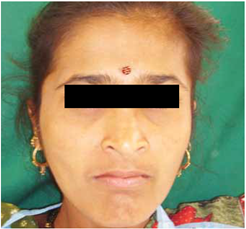
Figure No. 1 PRE - OPERATIVE EXTRA - ORAL VIEW.

Figure No. 2 CLEFT HARD & SOFT PALATE.

Figure No. 3 PRELIMINERY IMPRESSION.
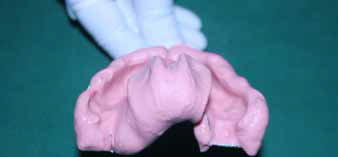
Figure No. 4 PRELIMINERY IMPRESSION.
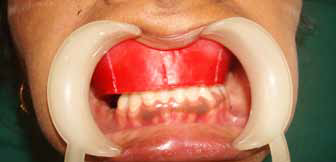
Figure No. 5 MAXILLI - MANDIBULAR RELATIONSHIP.

Figure No. 6 TRY - IN STAGE.
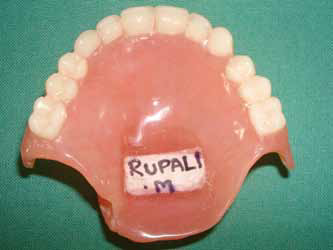
Figure No. 7 OBTURATOR PROSTHESES WITH IDENTIFICATION.
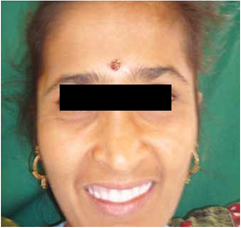
Figure No. 8 HAPPY PATIENT.
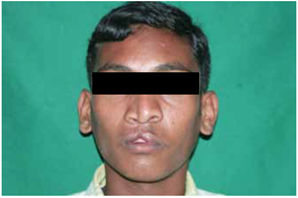
Figure No. 9 EXTRA - ORAL FRONTAL VIEW.
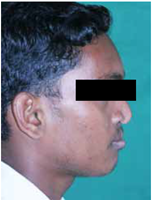
Figure No. 10 EXTRA - ORAL LATERAL VIEW.
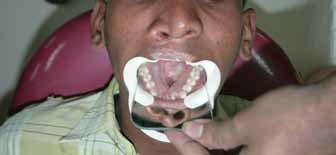
Figure No. 11 INTRA - ORAL DEFECT.
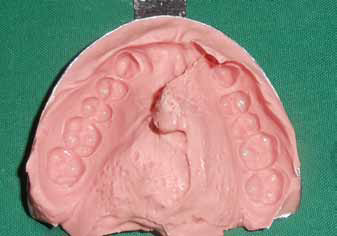
Figure No. 12 PRELIMINARY IMPRESSION.

Figure No. 13 MASTER CAST WITH CLASP ASSEMBLY.
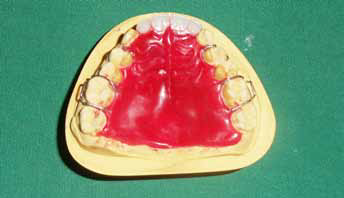
Figure No. 14 WAX - UP OF MASTER CAST WITH RUGAE PROMINENCE.
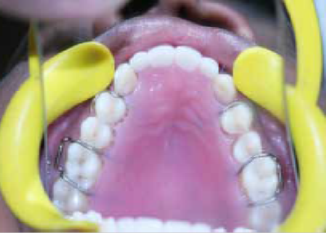
Figure No. 15 INTRA - ORAL VIEW OF PROSTHESES.
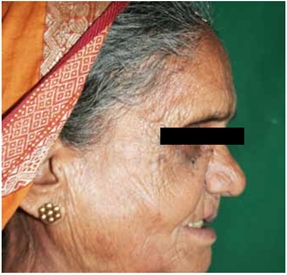
Figure No. 16 EXTRA - ORAL LATERAL VIEW.
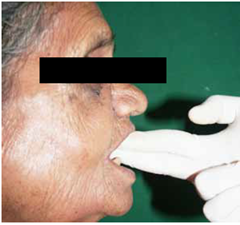
Figure No. 17 RESTRICTED MOUTH OPENING.

Figure No. 18 INTRA - ORAL DEFECT.
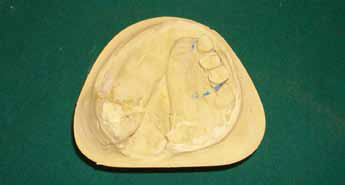
Figure No. 19 MASTER CAST.
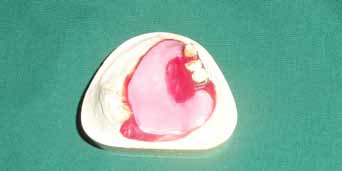
Figure No. 20 WAX - UP FOR FINAL PROSTHESES.
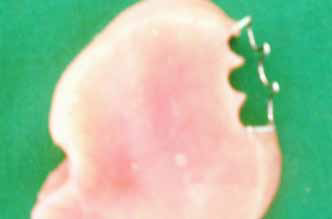
Figure No. 21 FINAL OBTURATOR PROSTHESES.
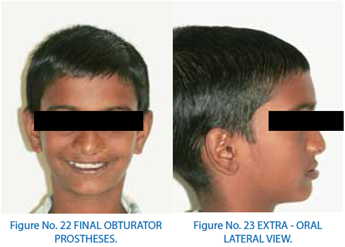

Figure No. 24 INTRA - ORAL FRONTAL VIEW.
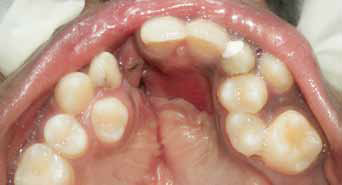
Figure No. 25 INTRA - ORAL VIEW.

Figure No. 26 PRELIMINARY IMPRESSION.
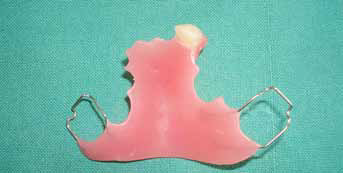
Figure No. 27 FEEDING PLATE.
DISCUSSION
Prosthodontic management of palatal defects has been employed for many years, Ambroise Pare probably was the first to use artificial means to close a palatal defect - as early as the 1500's. The early obturators were used to close congenital rather than acquired defects. The early objectives of treatment were artificial closure of the defect and adequate retention of the artificial closure. The ingenious designs of the early pioneers accomplished these objectives. As time progressed newer and better concepts of obturator evolved.
All prosthodontists are aware of the basic objectives of prosthodontic therapy. A comfortable, cosmetically acceptable prosthesis that restores the
impaired physiologic activities of speech, deglutition, and mastication is a basic objective of prosthodontic care. The most important objective of prosthodontic
care, As DeVan’s stated, our objective should be “The perpetual preservation of what remains rather than the meticulous restoration of what is missing.” This principle is most important in the treatment of the cleft-palate patient.
The discomfort caused by hard resin presents another problem. Albert has almost completely abandoned the use of rigid prosthetic materials for making obturators. Among the synthesized materials, he found silicon-rubber components to be the most effective. They are easy to produce and function well. However, for the permanent obturator, Brown states5,6, “heat-curing methyl methacrylate resin still remains the material of choice for tissue compatibility, environmental resistance, and ease of adjustment.”
SUMMARY
A thorough knowledge of what is normal is a must for a maxillofacial prosthodontic to understand the acquired defects which he interacts. It is important that the clinician become familial with a technique and master it. It must always be remembered and patient must be so counseled in advance of treatment that the prosthodontic can only try to provide a alternative means of what the patient has lost and how successful that alternative will depend upon the patient’s ability to accept the defect and to adapt to an alternative environment. “Not mere survival from disease alone, but a return to a normal functioning life”
REFERENCES
- Glossary of Prosthodontic Terms – 8.
- Ronald P. Desjardins. Obturator Prosthesis Design for Acquired Maxillary Defects: J Prosth. Dent 1978;39:424-435.
- Ronald P. Desjardins. Prosthodontic management of the Cleft – Palate Patient: J Prosth. Dent 1975;33:455-465.
- N. G. Toremalm. A Disposable Obturator for Maxillary Defects : J Prosth. Dent 1973;29:94-96.
- Brown, K. E.: Clinical Considerations Improving Obturator Treatment, J. Prosthet. Dent. 1970;24: 461-466.
- Albert, D. J.: Plastics for the Construction of Maxillofacial Prosthesis,
J. Am. Dent. Assoc. 1967;74:1241 -1246.
Disclaimer from Guident
The views and opinions expressed in articles published in Guident are solely those of the authors and do not necessarily reflect the views of the editors, the editorial board or the publisher, Ivory India. Guident does not endorse any product, technique or treatment described. Clinical content is intended for qualified dental and medical professionals and is not a substitute for individual clinical judgement. Guident, its editors and the publisher accept no liability for any consequence arising from the use of information published in the journal.
How to cite this article
Dr. Sejal Shah Ashok Nagar. "Roofing the Cleft" Prosthetic Rehabilitation of a Patient with Cleft Palate. Guident. 2015 Jan;8(2). Available from: https://guident.in/articles/prosthodontics/roofing-the-cleft-prosthetic-rehabilitation-of-a-patient-with-cleft-palate.html