Extra - Oral Anatomical Considerations for Complete Denture Prosthesis
Department of Prosthodontics, A.B.Shetty Memorial Institute of Dental Sciences, Nitte University, Deralakatte, Mangalore, India
Abstract
In today’s world there is an increase concern about esthetics among the edentulous patients. While planning complete denture fabrication, dental specialists should consider not only intra oral but also extra oral anatomical changes of an individual.Complete loss of teeth has many detrimental extra oral anatomical changes which can add years to a persons’ age which are mainly because, the muscles which are important for facial expressions loses their support and tonicity.
Certain modifications in teeth arrangement and appliances like cheek plumper, lip plumper can be given to provide support to the muscles.This article will guide the readers to understand the various changes following an edentulous state and different ways to rehabilitate them.
Key words: Extra oral anatomical changes, cheek plumper, lip plumper, muscle tonicity
INTRODUCTION
We dental specialists, especially prosthodontists come across various types of edentulous patients in our day to day clinical practice. In today’s world where there is increasing demand of esthetics, we should plan our treatment and fabricate prosthesis in such a way that it not only fulfils patients’ functional requirements but also esthetics as it plays a very important role in persons’ social, personal and professional life.
There are some important extra oral changes seen when there is complete loss of teeth. The muscles of face which are responsible for various expressions do not have any bony attachments as other muscles in the body. They get support mainly from teeth, ridges or dentures. So when there is complete loss of teeth, these muscles lose their support and eventually tonicity, which ultimately leads to detrimental extra oral changes. There is loss of cheek and lip fullness, increased naso-labial angle, depressed mento-labial sulcus which gives the individual an aged appearance and esthetic discomfort.
To rehabilitate these changes we should modify our treatment plan by altering arrangement of teeth and by giving additional appliances like cheek plumper and lip plumper.
CLINICAL EXAMINATION
- Fabrication of any prosthesis begins with a thorough assessment of the patient’s physical and psychological condition and determining a treatment that will satisfy the expectations of the patient. Loss of tonicity of facialmuscles as in an edentulous state causes loss of facial expression ,esthetics and discomfort to the patients.
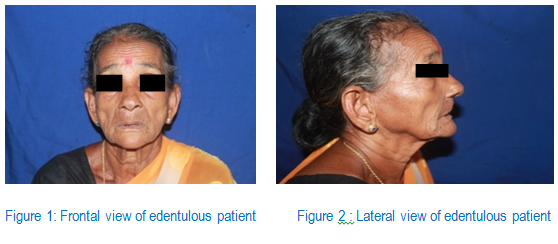
- The facial features which shows prominent changes after complete loss of teeth in both the arches are the following which will be discussed here:1(figure1,2)
Facial profile
: There is a tendency of facial profile to be more concave in edentulous patients due to centripetal resorption of mandible and centrifugal resorption of maxillae.
Tonicity of muscles:
Edentulous patients can present with three kinds of muscle tonicity which can be classified as2


Majority of edentulous patients have experienced some degree of degeneration and usually only immediate denture patients have normal musculature.
Lips:
Inspection of lips of an edentulous patient can reveal presence of cracks, fissuring and ulcerations at the corners of the lips due to reasons like decreased vertical dimension and nutritional deficiencies. Lip support and fullness is decreased which will give collapsed and wrinkled appearance.Some stroke patients may have paralysis of half the lip leading to unilateral mouth droop and facial asymmetry.
Naso-labial angle:
Naso-labial angle for a normal individual varies from 90-110 degrees.which is decreased in an edentulous patient as the upper lip loses support from the maxillary incisors.
Cheeks:
Hollowing of cheeks is seen due to loss of posterior teeth and alveolar process ,which provide support.

Rehabilitation of extra-oral changes in an edentulous patients :
Certain modifications while teeth arrangement for a complete denture can correct the few extra oral changes mentioned above.
Increasing the proclination of maxillary anterior teeth within acceptable limits can increase the lip fullness and naso-labial angle whereas increasing the thickness of denture flange can provide fullness to the cheeks.
Various appliances like lip bumper and cheek plumper can also be incorporated in the dentures by modifying its design to improve the esthetics.
Various studies have shown that cheek fullness can be achieved by using cheek plumper along with complete denture prosthesis.(Figure 3,4)
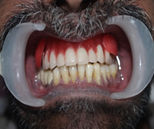
Figure 3: Intra oral view of cheek plumper
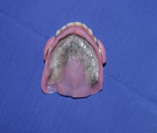
Figure 4: Fabricated cheek plumper with denture
DISCUSSION
Loss of teeth and resorption of alveolar bone causes the maxillae and mandible to collapse due to the unopposed contraction of buccinators and orbicularis oris muscles. Hence the position of modiolus gets altered medially and posteriorly which distorts the muscles of facial expression decussating into it. This change in muscle orientation affects the facial form and relate directly to the stage of jaw atrophy. Decrease in commissure width, increase in the naso-labial angle, inversion of lips and hollowing of cheeks are related to the early stages of jaw atrophy whereas in the late stage decrease in lower facial height and increase in chin prominence can be seen. With the loss of dento-alveolar support the lips invert and there is a loss of vermillion show of lips.
All these changes attribute to esthetic disharmony which often hampers patient’s psychology. The quality of life is affected as often the personal and social life is compromised mainly for socially active individuals. Hence there is a need to rehabilitate such conditions to improve functional, esthetics and social well-being of such patients.
Cheek plumper prosthesis is single unit prosthesis with extension near premolar molar region which support the cheek.3this, when used can improve the patient’s appearance by providing better support to the cheeks.
A lip plumper prosthesis can be attached to the denture in the region around buccal vestibule to provide lip support. This prosthesis can not only restore the contour of the lip but also improve oral function.4
A case was treated in department of prosthodontics of A.B. Shetty memorial institute of dental sciences , the patient had collapsed cheek and it was not possible to treat this situation with conventional approach. To provide cheek fullness we had modified our treatment plan by arranging two rows of teeth (from first premolar to second molar). Teeth placed palatally served the purpose of occlusion and teeth arranged buccal to it provided the support to hollowed cheek and satisfactory results were achieved.
CONCLUSION
The main objective of a clinician is to not only provide a comprehensive dental treatment but also satisfy the patient’s basic needs. To achieve best prosthetic results in different clinical situations the dental specialist should have good knowledge of normal anatomical structures to diagnose abnormalities and thus alter treatment plans accordingly.
REFERENCES
- Iordanova MV1, Iordanova SV, Chaprashikian OG.Changes of the facial soft tissue profile in complete denture prosthetic treatment.Folia Med (Plovdiv), 2006;48(3-4):74-8.
- Dental Clinics of North America .january 1996;40(1).
- KeniN,Aras M ,Chitra V. Customised Attachments Retained Cheek Plumper Prosthesis: A Case Report. J Indian ProsthodontSoc, Sep 2012; 12(3): 198–200
- .Mukohyoma H ,Kadota C ,Ohyama T ,Taniguchi H. Lip Plumper prosthesis for a patient with marginal mandibulectomy: A Clinical Report. J Prosthetic Dent, July 2004;92(1):23-6
Disclaimer from Guident
The views and opinions expressed in articles published in Guident are solely those of the authors and do not necessarily reflect the views of the editors, the editorial board or the publisher, Ivory India. Guident does not endorse any product, technique or treatment described. Clinical content is intended for qualified dental and medical professionals and is not a substitute for individual clinical judgement. Guident, its editors and the publisher accept no liability for any consequence arising from the use of information published in the journal.
How to cite this article
Dr.Krishna Prasad D. Dr.Anupama Prasad D., Dr.Manan Buch. Extra - Oral Anatomical Considerations for Complete Denture Prosthesis. Guident. 2014 Jun;7(7). Available from: https://guident.in/articles/prosthodontics/extra-oral-anatomical-considerations-for-complete-denture-prosthesis.html