Esthetic Oral Rehabilitation with Mandibular Telescopic Overdenture Opposing Maxillary Fixed Dental Prosthesis- a Case Report
Department of Prosthodontics, K.D. Dental College & Hospital, Mathura India
ABSTRACT
The treatment modality for treating a partial edentulous patient is either extracting the remaining natural teeth followed by fabrication of complete denture but the conservative approach is the fabrication of overdenture with remaining natural teeth. Overdenture provides better retention, stability, support and most importantly better proprioception. It is therefore, more acceptable to patient. A telescopic overdenture incorporates two copings which provide retention by frictional fit mechanism. This case report describes the rehabilitation of patient with few remaining teeth in mandible present bilaterally.
INTRODUCTION
A telescopic denture also known as overdenture or overlay denture is a removable dental prosthesis that covers and rests on one or more remaining natural teeth, the roots of natural teeth, and/or dental implants.1 These dentures have a full coverage milled primary coping which is cemented to the prepared teeth and a secondary coping which is incorporated into the denture. The secondary coping fits over the primary coping and provide retention by friction fit and interfacial surface tension mechanism.2,3 These two mechanisms are depends on the tapered configuration of the contacting walls. Smaller the degree of taper, greater the frictional retention of prosthesis.4
Overdenture offers many advantages over conventional denture. Overdenture incorporates remaining teeth which enhances retention and support. It reduces the amount of residual ridge resorption as forces are transmitted to the long axis of teeth and provides proprioception by preserving the periodontal membrane.5 Telescopic overdentures can also be given in case of periodontally compromised teeth as it disperses the forces thereby preventing pathologic migration.2
CASE REPORT
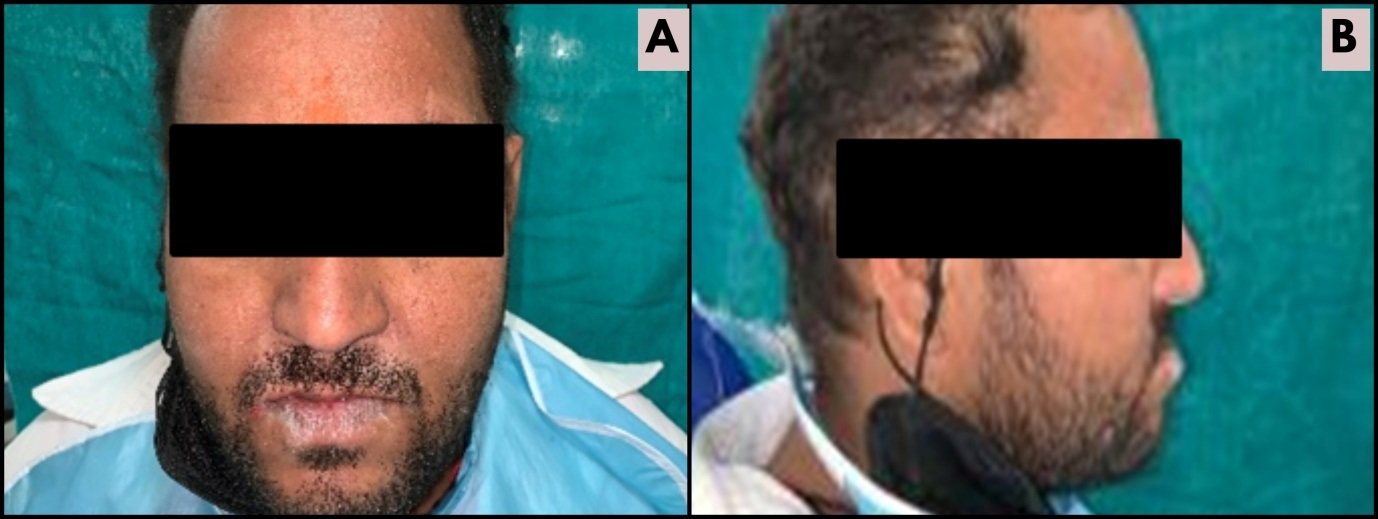
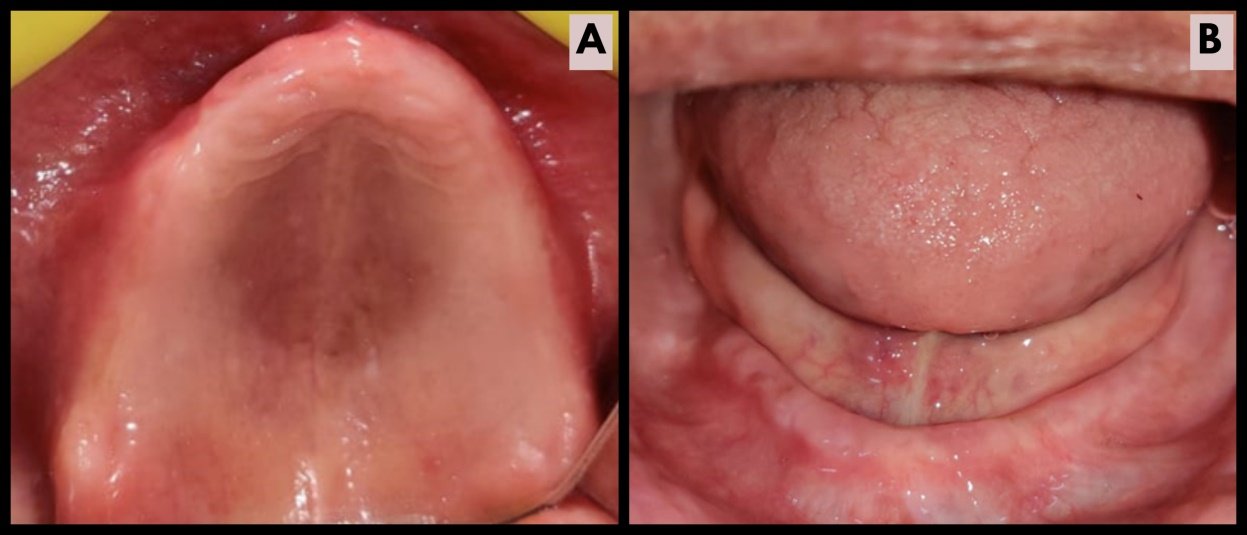
A 65-year-old male patient reported to the department of Prosthodontics with a chief complaint of missing teeth. History revealed extractions due to caries and periodontal disease around 1 year back. Intraoral examination revealed retroclined anterior maxillary teeth, supraeruption i.r.t. 21,22 and missing all mandibular teeth except 32,33 and 43 (Fig. 1). Grade III mobility was seen. After explaining various treatment options to the patient, a treatment plan was formulated to preserve 33 and 43 and to make a mandibular telescopic overdenture retained by stud attachments against maxillary fixed dental prosthesis.

Fig. 1: Intraoral preoperative view
Extraction was done i.r.t. tooth 32. Root canal treatment of tooth 14, 13, 12, 11, 21, 22, 24, 33 and 43 was done. For the maxillary teeth, tooth preparation was done (Fig. 2) followed by final impression with polyvinyl siloxane elastomeric impression material by double step putty wash technique and temporization (Fig. 3). After 1 week, metal ceramic crowns were cemented with glass ionomer cement.

Fig. 2: Tooth preparation done
Coronal height of the mandibular teeth were reduced 3 mm short of marginal gingiva and shaped like a dome (Fig.2). After the preparation of the abutments, the impression was made by using a polyvinyl siloxane elastomeric impression material by double step putty wash technique. The impression was poured with Type III stone to obtain a cast on which the primary copings were fabricated (Fig. 4). The fit of the primary coping was evaluated in the patient’s mouth, after which they were cemented with glass ionomer cement. Another impression was made by using double step putty wash technique by using a custom acrylic resin tray to obtain a cast on which the secondary copings attached through bar were fabricated (Fig. 5). The fit of the secondary copings over the primary copings was evaluated in the patient’s mouth.

Fig 3: Temporization done on maxillary teeth

Fig 4: Primary copings
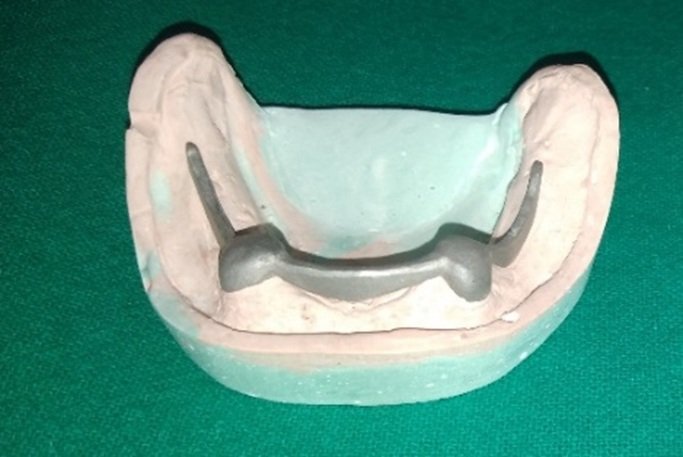
Fig 5: Secondary copings with retentive bar
The secondary copings were placed on the master cast, covered with wax (for easy separation during dewaxing) and the trial denture base was fabricated. Occlusion rims were fabricated over the trial denture base. Horizontal and vertical maxillomandibular records were obtained. Mandibular cast was mounted using centric relation record. Teeth arrangement and try-in was done (Fig. 6). Dentures were then processed in a conventional manner, finished, polished and delivered to the patient (Fig. 7 & 8).

Fig 6: Try-in done
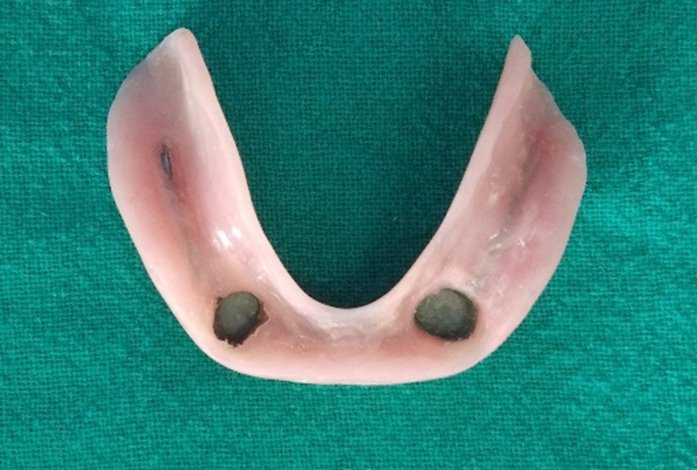
Fig 7: Intaglio surface of denture with secondary copings

Fig 8: Pre-treatment and Post-treatment intraoral view
DISCUSSION
Telescopic dentures offer many advantages over conventional dentures therefore, extraction of all natural teeth and subsequent replacement with a complete mandibular denture is not the most desirable treatment option. Retaining few natural teeth preserve proprioception, prevent ridge resorption and give a psychological comfort to the patient; which ultimately improves the stability and acceptability of the dentures.6,7 Teeth which are unsuitable to support a fixed partial denture and a removable partial denture can be conserved and suitably modified to act as abutments under overdentures.8 The major advantage offered by telescopic overdentures is retrievability. The dentures can be easily repaired or relined without the need of reconstructing a new prosthesis.
The success of overdenture depends on the condition of the underlying abutments and denture. Therefore, patient should be given proper detailed instructions about the denture maintenance, oral hygiene and periodontal health of abutments.
CONCLUSION
Rehabilitation of partial edentulous arches with overdentures has become a widely accepted treatment modality as it successfully overcome many of the difficulties associated with conventional denture. Modified design with bar attachment fixed to copings as used in this case provides added retention which improves patient compliance and success. Even though implant supported overdentures are used increasingly but tooth supported telescopic dentures should always be advocated as an alternative treatment plan.
REFERENCES
- The Glossary of Prosthodontic Terms: Ninth Edition. J Prosthet Dent. 2017 May;117(5S):e1-e105.
- Devi S, Nallaswamy D, Duraisamy R. Oral rehabilitation with telescopic overdenture-A case report. J Res Med Dent Sci, 2021, 9 (1): 210-214.
- Abraham PA, Koka P, Murugesan K, Vasanthakumar M. Telescopic overdenture supported by a combination of tooth and an implant: A clinical report. J Indian Prosthodont Society 2010; 10:230-233.
- Singh, K. & Gupta, N. Telescopic denture - A treatment modality for minimizing the conventional removable complete denture problems: A case report. Journal of Clinical and Diagnostic Research 2012; 6(6). 1112-1116.
- Sharma HK, Padiyar N, Kaurani P, Singh DP, Meena S, Gupta A. Tooth-supported Overdenture using Castable Ball and Socket Attachments. J Mahatma Gandhi Univ Med Sci Tech 2017;2(2):106-108.
- Satyendra K, Kumar D, Legha VS, Arun Kumar KV. Specially designed tooth supported mandibular overdenture with enhanced retention. Med J Armed Forces India. 2015;71(Suppl 2):S546-S548.
- Prakash V.S., Shivaprakash G., Hegde S., Nagarajappa Four and two tooth supported-Conventional over denture: two case reports. Int J Oral Health Sci. 2013;3:61–64.
- Shruthi CS, Poojya R, Ram S, Anupama. Telescopic Overdenture: A Case Report. Int J Biomed Sci. 2017;13(1):43-47.
Disclaimer from Guident
The views and opinions expressed in articles published in Guident are solely those of the authors and do not necessarily reflect the views of the editors, the editorial board or the publisher, Ivory India. Guident does not endorse any product, technique or treatment described. Clinical content is intended for qualified dental and medical professionals and is not a substitute for individual clinical judgement. Guident, its editors and the publisher accept no liability for any consequence arising from the use of information published in the journal.
How to cite this article
Dr. Yashi Garg, Dr. Manesh Lahori. Esthetic Oral Rehabilitation with Mandibular Telescopic Overdenture Opposing Maxillary Fixed Dental Prosthesis- a Case Report. Guident. 2021 Oct;14(11). Available from: https://guident.in/articles/prosthodontics/esthetic-oral-rehabilitation-with-mandibular-telescopic-overdenture-opposing-maxillary-fixed-dental.html