Alternatives to Conventional Complete Dentures
A.M.E Dental College And Hospital, Raichur, India
Abstract
Specific alternatives to traditional complete denture therapy have been controversial because of the uncertainties surrounding effectiveness of retention. Although these alternatives are not routinely used in making complete dentures, they have been successfully used for the treatment of the edentulous patient.
Alternatives serve as valuable prosthodontic treatment options that greatly enhance denture aesthetics & function, should be considered for edentulous patients. The various types of alternate denture with the purpose have been discussed from the literature to overcome the shortfall of conventional denture thereby providing the functional, esthetic and also therapeutic needs where needed
INTRODUCTION
A well-managed transition from what remains of the natural dentition to totally artificial dentition carries a good level of success. Clinician’s skills and experience play a major role in designing and fabrication of the optimum prosthodontic restoration. Selection of denture is equally important. Lack of treatment planning may lead to failure and loss of work time. As it is said necessity is the mother of invention, so the alternative denture was introduced as necessary to overcome the drawbacks of the conventional complete denture prosthesis and selecting alternatives as primary treatment for the edentulous patients, greatly enhancing the denture esthetics, retention and function, considering the socio-economic status and general health of the patient.
Types of alternative denture:
- Flangeless denture
- Palate less denture
- Liquid supported denture
- Reservoir denture
- Over denture
- Characterized dentures
- Denture with cheek plumper’s
- Hollow denture
FLANGELESS DENTURE
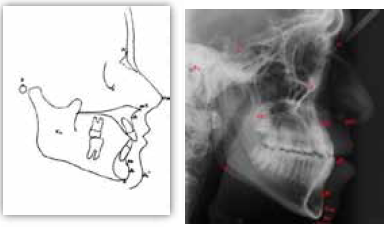
Presence of protruding trajectory before any tooth extraction in maxilla often produce the appearance of a protruding upper lip. In these instances, where there is existing lip support does not require additional flange thickness or length to create the illusion of normalcy .Hence, denture base extension in to buccal flange can distort the facial support and muscles of facial expression, limit the function, and compromise esthetics. So the flangeless maxillary complete denture is indicated in residual anterior mandible and premaxillae are at 450 angle to meet the esthetic requirements and ideal support of the upper lip.
Advantage of the modified flange is that by eliminating the labial flange, there is no distortion of desired aesthetic facial support. No additional surgical intervention is required to remove osseous residual ridge.
Limitations of flangeless denture are that the retention of the denture is compromised sometimes.1
 |
 |
PALATELESS DENTURE
Since traditional dentures were introduced, patients have struggled with the problems posed by a covered soft palate. Normally, upper dentures cover the top of the mouth so thoroughly that a person’s ability to taste and experience their food is diminished, not to mention hamper proper function. Now, modern prosthetic dentistry has overcome this hurdle with palateless dentures. These are upper dentures without a palate, which can improve comfort and sense of taste.
Palateless dentures are any upper denture that has no plate covering the upper palate, including dental implants, natural tooth-retained overdentures, fixed/removable restorations, or even a conventional palateless denture with a horseshoe shaped frame.
This type of denture is often recommended for patients with a highly sensitive gag reflex who have trouble adjusting to the palate in a conventional denture.
LIQUID SUPPORTED DENTURE
Liquid supported denture is based on the theory that when the force applied on the denture is absent, the base assumes its preshaped form that is the one during processing. A complete denture is designed so that the base is covered with a preshaped, close fitting, flexible foil containing a thin film of high-viscosity liquid. This technique allows continued adaptation and eliminates the disadvantages of denture designs based on the application of temporary tissue conditioners or soft liners. In contrast to the traditional tissue conditioners and soft liners, the foil remains elastic and preserves the plasticity of the liquid.2
A clinical study by Gert Boere et al showed that it is possible to make a liquid-supported denture that in general fits and feels comfortable, has proper retention, a slightly diminished masticatory function, and that can provide a solution to some problematic prosthodontic situations.3
Fibrous ridges pose a prosthodontic challenge for the achievement of stable and retentive dental prosthesis. The use of liquid supported denture can further improve the patient’s acceptance due to more uniform distribution of forces and due to the improved comfort level.
 |
 |
RESERVOIR DENTURE
Reservoir dentures are given in Xerostomia patients. Xerostomia is defined as the dry mouth resulting from the reduced or absent salivary flow. Saliva plays an important role in retention and comfort of denture. In patients with extreme or prolonged dry mouth, substances that replace lost salivary function and components can be used. These options include artificial saliva, which humidifies the oral cavity, particularly protecting it from irritating mechanical or chemical factors and infections
Saliva substitute has been used effectively to help dialysis patients control water intake. It has also successfully aided psychiatric patients with xerostomia caused by drug regimens. In many instances, a palatal reservoir could be incorporated into a removable partial or complete maxillary denture to act as a vehicle for delivery of saliva substitute.4
The major drawback of artificial saliva is that it must be mechanically introduced into the oral cavity by the patient at regular intervals. Patients object to carry a bottle of artificial saliva and would prefer a more convenient saliva delivery system in the form of reservoir dentures or oral lubricating devices. The reservoir dentures store the artificial saliva and thus keep the oral cavity moist
Vergo and Kadish in 1981 developed an intraoral saliva reservoir in the hollowed lingual flange of a mandibular denture. Their results were poor because adequate cleansing of the denture was difficult, which prevented flow of the saliva substitute into the mouth.5
A reservoir is not suitable for all patients. The large size of the maxillary and mandibular reservoirs is required to provide storage of an adequate volume of saliva. Therefore, an adequate reservoir cannot be constructed for patients who have only a slight resorption of the mandibular alveolar process or a shallow palatal vault.6 Artificial or natural mucin protects the oral mucous membrane.7 Artificial saliva that contains fluoride has potential for enamel hardening.8,9 A continuous flow of calcium, phosphate, and fluoride ions around the teeth may be an important factor in reducing rampant caries. The oral microflora may also be changed by this continuous flow. Rehardening of the teeth and the influence of saliva substitutes on oral flora are under investigation.
 |
 |
 |
OVER DENTURE
Any removable dental prosthesis that covers and rests on one or more remaining natural teeth, the roots of natural teeth, and/or dental implants.
Synonyms are Biologic denture, Hybrid denture, Telescopic denture, Overlay denture, Onlay denture, Tooth supported dentures, Super imposed denture
Crum and Rooney (1975) in a 5 years study found that the retention of mandibular canines for over denture led to the preservation of alveolar bone.10 Jerge showed that the periodontal receptors actively influences the cyclic joint movements of mastication by influencing the muscles of mastication by their proprioceptive feedback mechanism.11
Study by Pacer and Bowman compared occlusal force discrimination between conventional and overdenture wearers and found that overdenture patient possessed more typical sensory function, i.e., closer to natural teeth than a complete denture patient in discriminating between occlusal forces.12
The advantages of overdentures include, preservation of alveolar bone, proprioceptive response, provides additional support & retention to the prostheses, increased masticatory ability, increased patient acceptance, periodontal maintenance, Harmony of arch form and convertibility.
The overdentures can be tooth supported or the implant supported. The support gained in implant supported overdentures is from the implants rather than the natural teeth hence there are some differences between the two.
CHARACTERIZED DENTURES
“Denture characterization is modification of the form and color of the denture base and teeth to produce a more lifelike appearance.” As said by Frush and Fisher, “the environment of the teeth is as important as the tooth itself”. Thus the two elements that must be considered in denture esthetics are teeth and their supporting denture base. Complete dentures must be esthetic as well as functional13 Hardy stated that, “To meet the esthetic needs of the denture patient, we should make the (denture) teeth look like (the patient’s) natural teeth.” 14
Complete denture can be characterized by two basic methods.
- Characterization by selection, arrangement and modification of artificial teeth.
- Characterization by tinting the denture bases.15
Characterization by selection: (arrangement and modification of artificial teeth). The teeth can be modified to harmonize with the patient's age, sex, and personality to provide subjective unity. Fisher said that gender, personality, and age can be used as guidelines for tooth selection, arrangement, and characterization to "enhance the natural appearance of the individual.16
Pound in 1951 incorporated the racial and individual colour peculiarities, of the gingiva in artificial denture. He was the first to suggest a method of tinting acrylic denture bases to simulate the gingival colour. Kemnitzer used a combination of blue and brown stain to reproduce the melanotic pigmentation of the gingiva.17
 |
 |
 |
DENTURE WITH CHEEK PLUMPER’S
Rehabilitating a patient with loss of teeth with dentures may result in increased confidence and social interactions due to positive esthetic changes.18 However sometimes the denture flanges do not give adequate support to the facial muscles. The external form of lips and cheeks are reliant on the internal structure of their underlying support. When cheeks and lips are unsupported muscles do not function properly and become weak.
As a result skin wrinkles and the lips and cheeks sag. In order to deal with the slumped tissue extra support might be required .19 This is achieved with the help of cheek plumper, also known as cheek lifting appliance which is basically a prosthesis to support and plump the cheek providing a youthful appearance. 20 A cheek plumper can be of two types: Detachable and Un-detachable.
Lazzari described the fabrication of a maxillary removable partial denture for a patient with unilateral facial paralysis. The purpose of design was to elevate and support the upper lip and corner of the mouth.21
HOLLOW DENTURE
Extreme resorption of the maxillary denture-bearing area may lead to problems with prosthetic rehabilitation. These may be due to a narrower, more constricted residual ridge as resorption progresses, decreased supporting tissues, and a resultant large restorative space between the maxillary residual ridge and opposing mandibular teeth. 22
It has been proved that prosthesis weight can be reduced by making the denture base hollow. To decrease the leverage, reduction in the weight of the prosthesis would be beneficial (Brown, 1969l; el Mahdy, 1969).23, 24 It improves the cantilever mechanics of suspension and overtaxing of the remaining supporting structures.
This technique greatly reduces the weight of an exceptionally heavy maxillary denture. Whenever weight of a denture may be a contributing factor to the successful resolution of a patient’s problem, the hollow denture should be considered.
Various weight reduction approaches have been achieved using a solid three dimensional spacer, including dental stone (Ackermen, 1955),25 cellophane wrapped asbestos (Worley & Kniejski, 1983), silicone putty (Holt, 1981) or modelling clay (DaBreo, 1990) during laboratory processing to exclude denture base material from the planned hollow cavity of the prosthesis. 26
Holt (1981) processed a shim of indexed acrylic resin over the residual ridge and used a spacer which was then removed and the two halves luted with auto polymerized acrylic resin.26
Fattore et al (1988), used a variation of the double flask technique for obturator fabrication by adding heat polymerized acrylic resin over the definitive cast and processing a minimal thickness of acrylic resin around the teeth using different drag. Both portions of resin were attached using a heat polymerized resin.27
O’Sullivan et al (2004)22 described a modified method for fabricating a hollow maxillary denture. A clear matrix of the trial denture base was made. The various techniques mentioned can be used depending on the treatment need and considering the shortfalls of the techniques.
 |
 |
DISCUSSION
Loss of teeth, a part of normal aging can be restored with complete dentures. But not in all cases the conventional dentures will provide the needed satisfaction to the patient, and hence few modifications are adapted to enhance the lifestyle and dental care of the elderly. With increasing age, treatment modalities become increasingly challenging.
Although the flangeless complete denture is not used routinely, it has been successfully used for the treatment of edentulous patients with existing bone and lip support. The modified maxillary denture is a valuable treatment modality that should be considered when treating selected edentulous patients.1
Studies with overdentures have shown to preserve the alveolar bone in the mandible as compared to the patients with complete dentures showing eight times more loss. It may be hypothesized that the discrete proprioceptive ability of the teeth under an overdenture acts to signal against a physiologic overload of the system and thus prevents bone resorption. In the complete denture patients, the proprioceptive ability of the mucosa is poor, and the constant overloading may result in alveolar bone loss. The sensory feedback input of the tooth may contribute to the preservation of alveolar bone in overdenture patients, while the absence of tooth sensory feedback in complete denture patients may contribute to alveolar bone destruction.10
Extreme resorption of the maxillary denture-bearing area may lead to problems with prosthetic rehabilitation. Reducing the weight of a maxillary prosthesis, however, has been shown to be beneficial when constructing an obturator for the restoration of a large maxillofacial defect.4, 5 Given the extensive volume of the denture base material in prostheses provided to patients with large maxillofacial defects or severe residual ridge resorption, reduction in prosthesis weight may be achieved by making the denture base hollow.22
Liquid supported denture will have optimal stress distribution during masticatory functions. Load from biting forces and even bruxism will be distributed over a far larger surface. Thus pressure spots and overloading of the supporting tissues may be reduced. Vertically directed loads will also be distributed in other directions by the liquid, which minimizes local stressing of the supporting tissues. The spreading of the pressure might also reduce problems at the mental foramen in a resorbed mandible and a long-term advantage could be a slower and more even resorption of the residual ridge.2
Reservoir dentures are of very importance in patients with xerostomia. For optimal physiologic activity and protection of the oral cavity, continuous coating of the mucous membranes with natural or artificial saliva is necessary. In patients with xerostomia this may involve application of artificial saliva with a squeeze bottle or atomizer.
As the retention of a saliva substitute in the mouth is short, this method of application does not provide a continuous flow of saliva. Artificial saliva administered by an intraoral reservoir guarantees continuous flow into the mouth. Application of artificial saliva with an intraoral reservoir appears to be acceptable to patients who rejected applying artificial saliva with a squeeze bottle or atomizer. Thus prosthesis reservoir is easy to construct, is easy to refill, can be cleaned easily, contains an acceptable amount of artificial saliva, and is an important factor in the relief of symptoms associated with xerostomia.6
CONCLUSION
Prosthetic dentistry in this era provides a vast variety of options in materials and techniques for the treatment planning by understanding the need of the patients. Evidence based dentistry should be adapted for treatment. The nuances of prosthetic dentistry provides a prosthodontist to modify, adapt and provide a prosthesis depending on the patient oral & systemic condition, patient expectation and there by providing a functional, esthetic and psychological satisfaction for the patient.
REFERENCES
- Norma Olvera: Alternative to traditional complete dentures. DCNA 2014;58(1):91-101
- Carel L. Davidson and Gert Boere, D.D.S. Liquid-supported dentures. Part I: Theoretical and technical considerations J PROSTHET DENT. 1990;63:303-306
- Gert Boere, Hans de Koomen, and Carl L. Davidson. Liquid-supported dentures. Part II: Clinical study, a preliminary report. J PROSTHET DENT. 1989; 62:434-436.
- Joseph A, Toljanic D and Terry GZ. Use of a palatal reservoir in denture patients with xerostomia J PROSTHET DENT. 1984 ;52(4):540-544
- Vergo TJ and Kadish SP. Dentures as artificial saliva reservoirs in irradiated edentulous patients with xerostomia: A pilot study. Oral Surg. 1982; 51:229.
- Vissink A, EJ’s-Gravenmade, Panders AK, Olthof A, Vermey A, Huisman MC, and Visch LL. Artificial saliva reservoirs. JPD. 1984;52(5):710-715
- Tabak LA, Levine MJ, Mandel ID, and Ellison SA. Role of salivary mucin in the protection of the oral cavity. J Oral Pathol. 1982;11(1):1-17
- Shannon II, McCrary BR and Starcke EN. A saliva substitute for use by xerostomic patients undergoing radiotherapy for the head and neck. Oral Surg. 1977; 44:656.
- Gelhard TBFM., Fidler V, Gravenmade EJ’s, and Vissink A.: Remineralization of softened human enamel in mucin- or CMC-containing artificial saliva. J Oral Pathol. 1983;12(5):336-341
- Crum RJ, Rooney GE Jr. Alveolar bone loss in overdenture: JPD. 1978;40:610-613
More references are availabe on request.
Disclaimer from Guident
The views and opinions expressed in articles published in Guident are solely those of the authors and do not necessarily reflect the views of the editors, the editorial board or the publisher, Ivory India. Guident does not endorse any product, technique or treatment described. Clinical content is intended for qualified dental and medical professionals and is not a substitute for individual clinical judgement. Guident, its editors and the publisher accept no liability for any consequence arising from the use of information published in the journal.
How to cite this article
Dr. Kavita Patil, Dr. Sunil Dhaded, Dr. Subashani Department of Prosthodontics. Alternatives to Conventional Complete Dentures. Guident. 2015 Dec;9(1). Available from: https://guident.in/articles/prosthodontics/alternatives-to-conventional-complete-dentures.html