Early Treatment of Class III Malocclusion
Department of Orthodontics & Dentofacial Orthopaedics, Govt Dental College, PGIMS, University of Health Sciences Rohtak (Haryana)
Abstract
The occurrence of class 111 malocclusion is believed to be hereditary although the environmental factors such as habits like mouth breathing may play a role. The prevalence of class 111 malocclusion varies among different ethnic groups. Individuals with class 111 malocclusion may have combinations of skeletal and dento alveolar components. The present case report shows class 111 malocclusion in two siblings who were treated with the protraction face mask, during the mixed dentition
INTRODUCTION
The occurrence of class 111 malocclusion is believed to be hereditary although environmental factors such as habits and mouth breathing may play a role. The prevalence of class 111 malocclusion varies among different ethnic groups . The incidence in caucasions ranges between 1% and 4% depending on the method of classifying the malocclusion and the age group evaluated.
In Asian societies the frequency of class 111 malocclusion is higher due to large percentage of patients with maxillary deficiency. The incidence ranges between 4% to 5% among the Japanese and 4% and 14% among the Chinese1.
Class 111 treatment is considerable clinical challenge and commonly includes
- Growth modification involving a chin cup to restrain mandibular growth or face mask to protract the maxilla .
- Dentoalveolar compensation or camouflage involving extractions only in the lower arch.
- Orthognathic surgery.
CASE REPORT
A eight year old female with the chief complaint of forwardly placed lower front teeth reported to the OPD of Orthodontics. Her medical history was non contributory .Clinically the patient had an angle class 111 malocclusion, she had a mesoprosorpic facial form with mesocephalic head form and a concave profile. Her soft tissue characteristics included thin lips, and shallow mentolabial sulcus, she was mid face deficient.
Dentally the patient had bilaterally class 111 molar relationship and class 111 canine relationship.The anterior cross bite was present
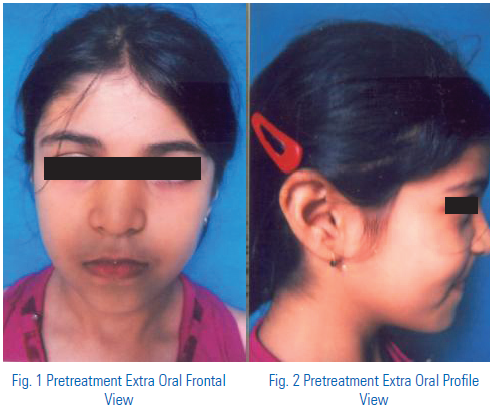
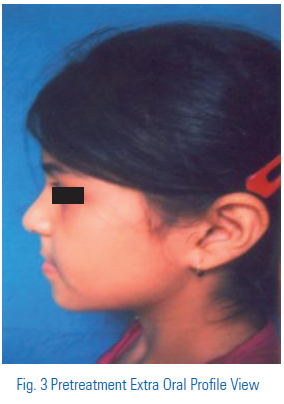
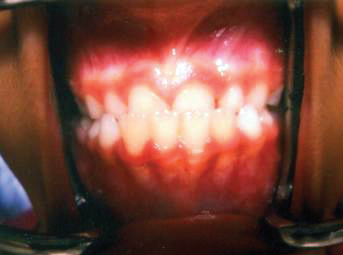
Fig. 4 Pretreatment Intra Oral Frontal View

Fig. 5 Pretreatment Intra Oral Left Buccal View
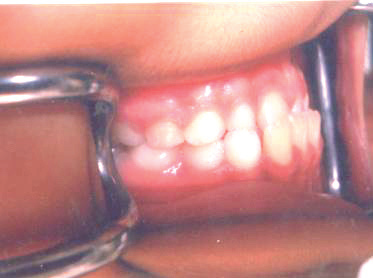
Fig. 6 Pretreatment Intra Oral Right Buccalview
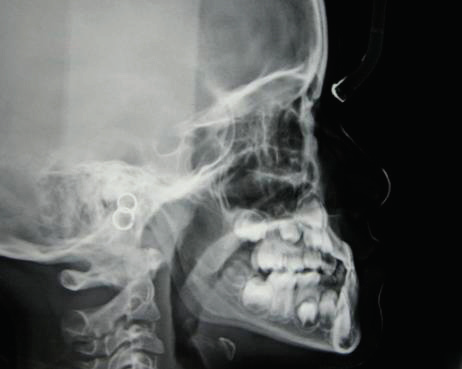
Fig. 7 Pre Treatment Lateral Cephalogram
DIAGNOSIS
1. Class 111 skeletal malocclusion with retrognathic maxilla and normal mandible
2. Full cusp class 111 molar relationship.
3. ANB angle negative 5 degrees
4. Average growth pattern
TREATMENT OBJECTIVES
The treatment objectives included correction of anterior cross bite, achieving normal over jet and over bite, achieving class 1 molar and canine relationships, eliminating the anterior functional shift and establishing canine guidance, improving facial appearance and correcting the appearance of retrognathic maxilla.
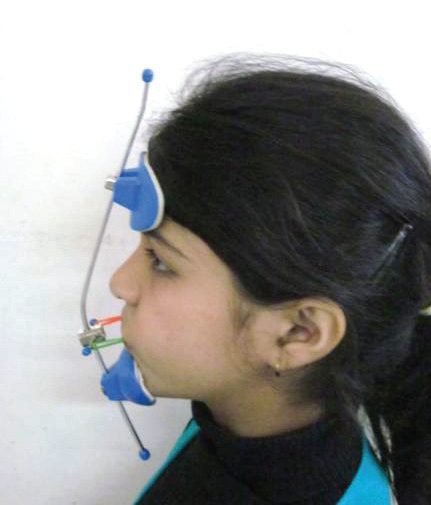
Fig. 8 Extraoral Photograph With Appliance
TREATMENT PROGRESS
Over bite got decreased significantly, because of the selective eruption of the lower posteriors. Both anterior as well as the posterior facial height increased significantly, but greater increase of anterior facial height was observed, which is desirable for average growing patients.
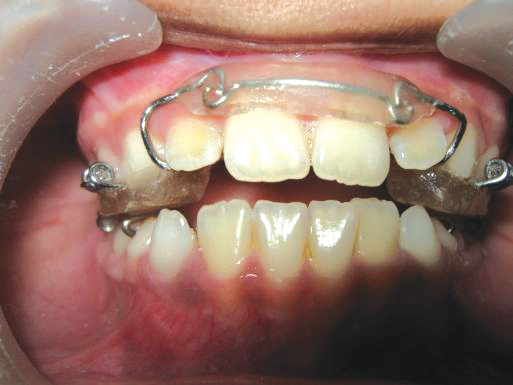
Fig. 9 Mid Treatment Intra Oral Frontal View
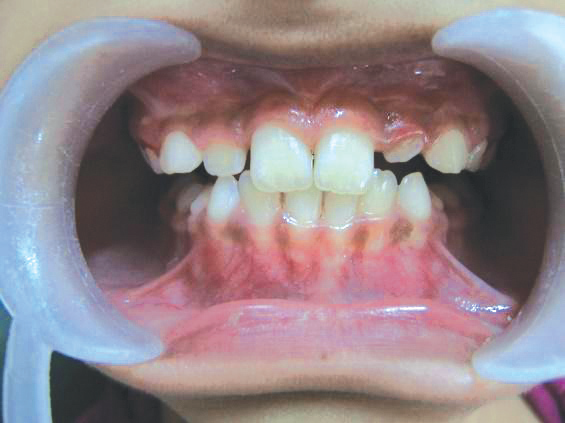
Fig. 10 Mid Treatment Intra Oral Photograph After Achieving Positive Overjet

Fig. 11 Mid Treatment Lateral Cephalogram
POST TREATMENT RESULTS
A perfect buccal interdigitation was achieved in a period of around 10 months.

Fig. 12 Post Treatment Intra Oral Frontal View
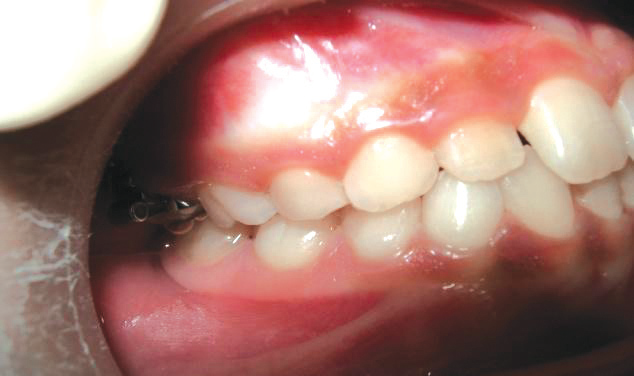
Fig. 13 Post Treatment Intra Oral Right Buccal View
CONCLUSION
Class II patients show specific clinical characteristics, such as a large overjet resulting in a soft tissue profile imbalance. This is closely related to patients and parents complaints concerning self-image and self-confidence. In order to reestablish their self-esteem, an early approach into correction of the dentoskeletal disharmony and improvement of facial esthetics may be indicated in the pre-pubertal stage, sometimes leading to two-phase orthodontic treatment. Although, the controversy regarding the best time of Class II skeletal malocclusion correction still remains
Interceptive correction of mandibular retrognathism in growing patients requires knowledge concerning the mechanism of functional orthopedic appliances. These appliances may be effective based on the possibility of inducing bone growth. The occurrence of additional mandibular growth during the active phase of treatment and stability of the results are important factors to be considered while deciding the treatment plan.
REFERENCES
- Clark WJ. The twin block technique. A functional orthopedic appliance system. Am J Orthod Dentofacial Orthop. 1988;93(1):1-18
- Tulloch JF, Phillips C, Proffit WR. Benefit of early Class II treatment: progress report of a two-phase randomized clinical trial. Am J Orthod Dentofacial Orthop. 1998;113(1):62-72.
Disclaimer from Guident
The views and opinions expressed in articles published in Guident are solely those of the authors and do not necessarily reflect the views of the editors, the editorial board or the publisher, Ivory India. Guident does not endorse any product, technique or treatment described. Clinical content is intended for qualified dental and medical professionals and is not a substitute for individual clinical judgement. Guident, its editors and the publisher accept no liability for any consequence arising from the use of information published in the journal.
How to cite this article
Dr. Manisha Kamal, Dr. Amit Dahiya. Early Treatment of Class III Malocclusion. Guident. 2014 Apr;7(5). Available from: https://guident.in/articles/orthodontics/early-treatment-of-class-iii-malocclusion.html