
Immediate Loading Implantology Using Conventional and Corticobasal Implants: A Case Series
Dentonic Oral Surgery Implant Centre Rajbagh, Srinagar, J&K
ABSTRACT
Immediate loading implantology has significantly advanced modern dental rehabilitation by enabling rapid restoration of function and esthetics. The integration of conventional and corticobasal implant systems has expanded treatment possibilities, especially in patients seeking reduced treatment duration. This case series presents two clinical cases demonstrating the successful application of immediate loading protocols using conventional implants and corticobasal implants, either individually or in combination. The outcomes highlight the clinical effectiveness, patient satisfaction, and practical advantages of maintaining both implant modalities in routine implant practice.
Keywords: Immediate loading, corticobasal implants, conventional implants, implant-supported prosthesis, case series
INTRODUCTION
Dental implantology has evolved from delayed loading protocols to immediate loading approaches, offering faster rehabilitation and improved patient acceptance. Advances in implant design, surface technology, and surgical techniques have made immediate loading predictable and clinically reliable. Conventional implants have long been the standard of care; however, corticobasal implants provide an alternative in situations requiring enhanced primary stability, reduced treatment time, or compromised bone conditions.
The present case series illustrates a contemporary approach using both conventional and corticobasal implants under immediate loading protocols, emphasizing their complementary role in modern implant practice.
CASE SERIES
Case 1
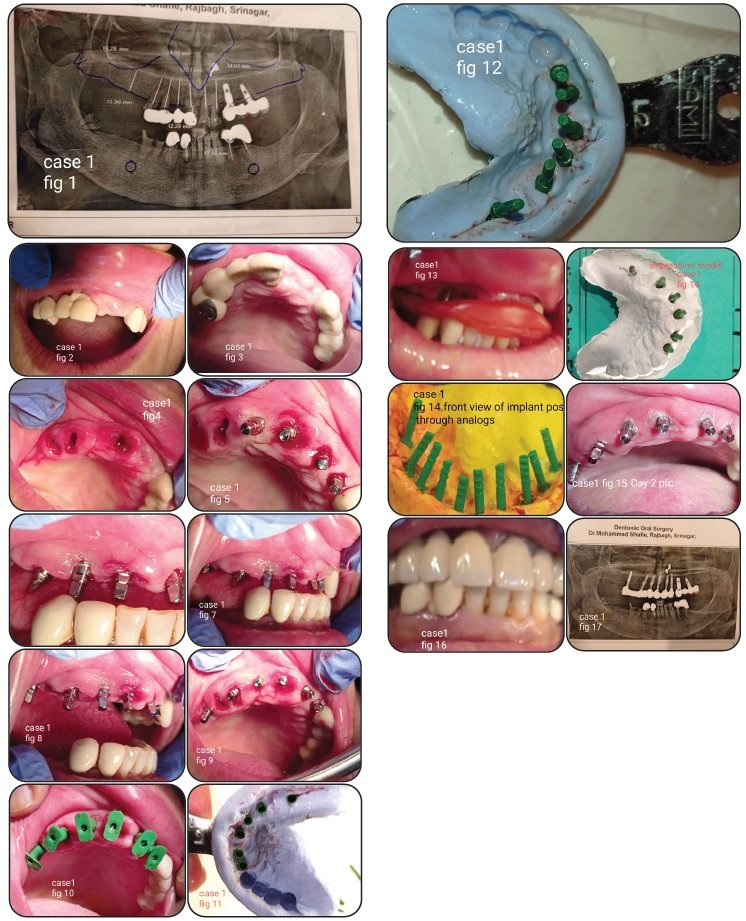
A 55-year-old female patient reported with an existing implant-supported prosthesis in the maxillary left posterior region, placed earlier using conventional implants. The prosthesis was clinically stable and functionally satisfactory. The patient desired rehabilitation of the remaining maxillary right posterior and anterior regions.
After a detailed clinical and radiographic evaluation, treatment options were explained, including immediate loading implant therapy. The patient consented to receive corticobasal implants for the untreated maxillary regions. The implants were placed following standard surgical protocols and immediately loaded with a fixed provisional prosthesis. Postoperative evaluation revealed satisfactory implant stability, optimal occlusion, and acceptable esthetic outcomes, with no reported complications.
Case 2
A 40-year-old female patient presented with fractured crowns in the maxillary anterior region. The primary concern was compromised esthetics, coupled with a strong preference for immediate restoration due to time constraints. Clinical and radiographic assessments confirmed suitability for immediate implant placement and loading.
Implants were placed in the affected region and immediately restored with a fixed prosthesis. The patient achieved immediate functional and esthetic rehabilitation. Follow-up evaluations demonstrated stable implants, satisfactory soft tissue response, and high patient satisfaction.

DISCUSSION
Immediate loading implant protocols have transformed patient expectations and clinical workflows. The cases presented demonstrate that both conventional and corticobasal implants can be successfully utilized under immediate loading conditions when proper case selection and biomechanical principles are followed.
Corticobasal implants provide enhanced anchorage in cortical bone, making them particularly useful in immediate rehabilitation scenarios. Conversely, conventional implants continue to deliver reliable outcomes in suitable bone conditions. The strategic use of both systems allows clinicians to customize treatment plans, reduce overall treatment time, and improve patient compliance.
CONCLUSION
Immediate loading implantology represents a scientifically sound and patient-centered approach to dental rehabilitation. Incorporating both conventional and corticobasal implant systems into clinical practice offers flexibility, predictability, and optimal outcomes. Implantologists are encouraged to adopt a comprehensive approach by maintaining both modalities to address diverse clinical scenarios effectively.
Disclaimer from Guident
The views and opinions expressed in articles published in Guident are solely those of the authors and do not necessarily reflect the views of the editors, the editorial board or the publisher, Ivory India. Guident does not endorse any product, technique or treatment described. Clinical content is intended for qualified dental and medical professionals and is not a substitute for individual clinical judgement. Guident, its editors and the publisher accept no liability for any consequence arising from the use of information published in the journal.
How to cite this article
Dr. Muhammad Shafie. Immediate Loading Implantology Using Conventional and Corticobasal Implants: A Case Series. Guident. 2026 Feb;19(3). Available from: https://guident.in/articles/implantology/immediate-loading-implantology-using-conventional-and-corticobasal-implants-a-case-series.html

