Digitizing the Path of Insertion: The Digital Reinvention of Removable Partial Denture Surveying and Design
Department of Prosthodontics St. Gregorios Dental College, Chelad, Kothamangalam, Ernakulam, India
ABSTRACT
While digital dentistry has transformed fixed prosthodontics and implant workflows, removable partial denture (RPD) treatment planning has remained largely dependent on analog diagnostic surveying. Mechanical surveyors continue to guide path-of-insertion analysis and framework design, limiting full digital integration. The recent introduction of browser-based digital surveyors, including the AiDENTAL RPD Surveyor and Designer, represents a significant step toward complete digital RPD workflows. This review explores the evolution of diagnostic surveying, examines the transition from mechanical to virtual analysis, and discusses the clinical and educational implications of digital surveying platforms. The integration of algorithm-guided framework generation and digital laboratory communication may reshape removable prosthodontics by enhancing efficiency, documentation accuracy, and educational standardization.
Keywords: Removable partial denture, digital surveying, prosthodontic workflow, CAD/CAM, artificial intelligence, dental education
THE ENDURING RELEVANCE OF REMOVABLE PARTIAL DENTURES
Despite the rapid expansion of implant dentistry, removable partial dentures remain indispensable in clinical practice. RPDs are frequently selected in cases involving economic constraints, insufficient bone support, or medical contraindications to surgical intervention.1-3 Their biomechanical versatility and affordability ensure continued global utilization.
However, unlike other domains of prosthodontics that have embraced digital transformation, RPD workflows have historically remained rooted in analog processes.5 This disparity highlights the need for innovation in removable prosthodontic diagnostics and design.
MECHANICAL SURVEYING: THE FOUNDATION OF RPD BIOMECHANICS
Diagnostic surveying is central to RPD success. By establishing the path of insertion and identifying retentive undercuts, clinicians ensure optimal support, stability, and retention.2 The Ney surveyor has long served as the gold standard for this analysis.
Traditional surveying requires:
- Physical diagnostic casts
- Manual tilt adjustment
- Graphite marking of height of contour
- Analog framework design documentation
Although reliable, this workflow introduces time demands, technique sensitivity, and challenges in digital integration. The necessity to scan hand-drawn designs for laboratory communication underscores the incomplete digitization of RPD procedures.9
DIGITAL DENTISTRY’S UNEVEN EVOLUTION
Digital dentistry has revolutionized:
- Impression techniques through intraoral scanning4
- CAD/CAM fabrication of prostheses6
- Additive manufacturing of frameworks8
- Electronic laboratory communication
Yet, while fabrication has progressed digitally, diagnostic surveying has lagged. Most CAD systems are laboratory-focused and lack chairside tools for comprehensive digital path-of-draw analysis.
This disconnect between digital fabrication and analog diagnosis has slowed the adoption of fully digital RPD workflows.
ENTER THE VIRTUAL SURVEYOR: A NEW DIAGNOSTIC PARADIGM
The AiDENTAL RPD Surveyor and Designer, introduced by Mahrous et al.,9 represents a browser-based solution designed to replicate mechanical surveying within a digital environment.
The system enables clinicians to:
- Upload STL files from intraoral scans
- Orient and level digital models
- Establish and visualize path of draw
- Automatically detect 0.01- and 0.02-inch undercuts
- Identify height of contour
- Generate algorithm-guided framework designs
- Export surveyed models and design prescriptions
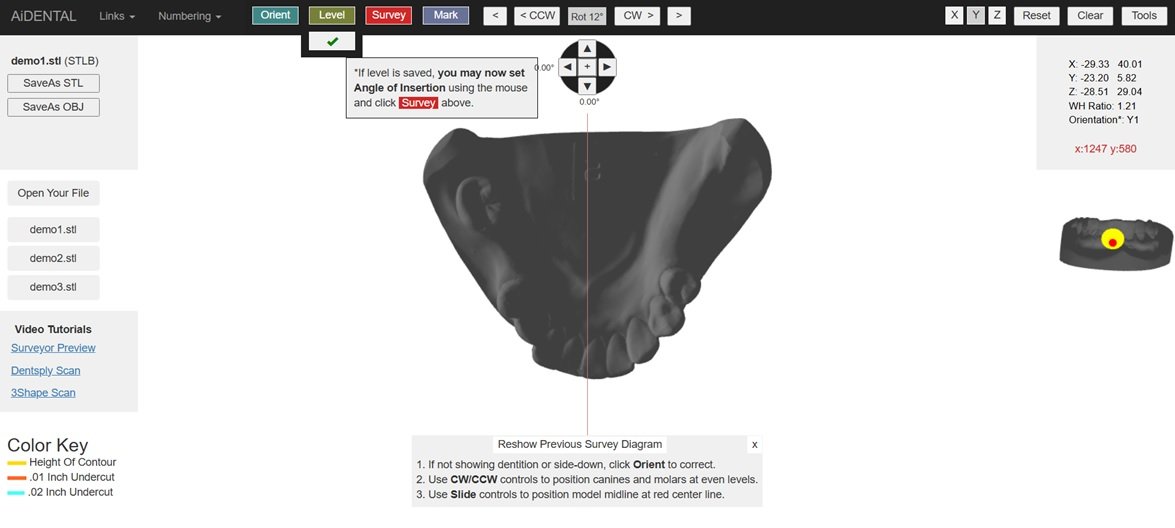
FIGURE 1: The model is uploaded into the AiDental Surveyor and is shown on the “Orientation” page. The Surveyor attempts to automatically orient the model, however, some manual orientation is sometimes needed depending on the shape and quality of the STL.

FIGURE 2 :set the path of draw and survey the model.
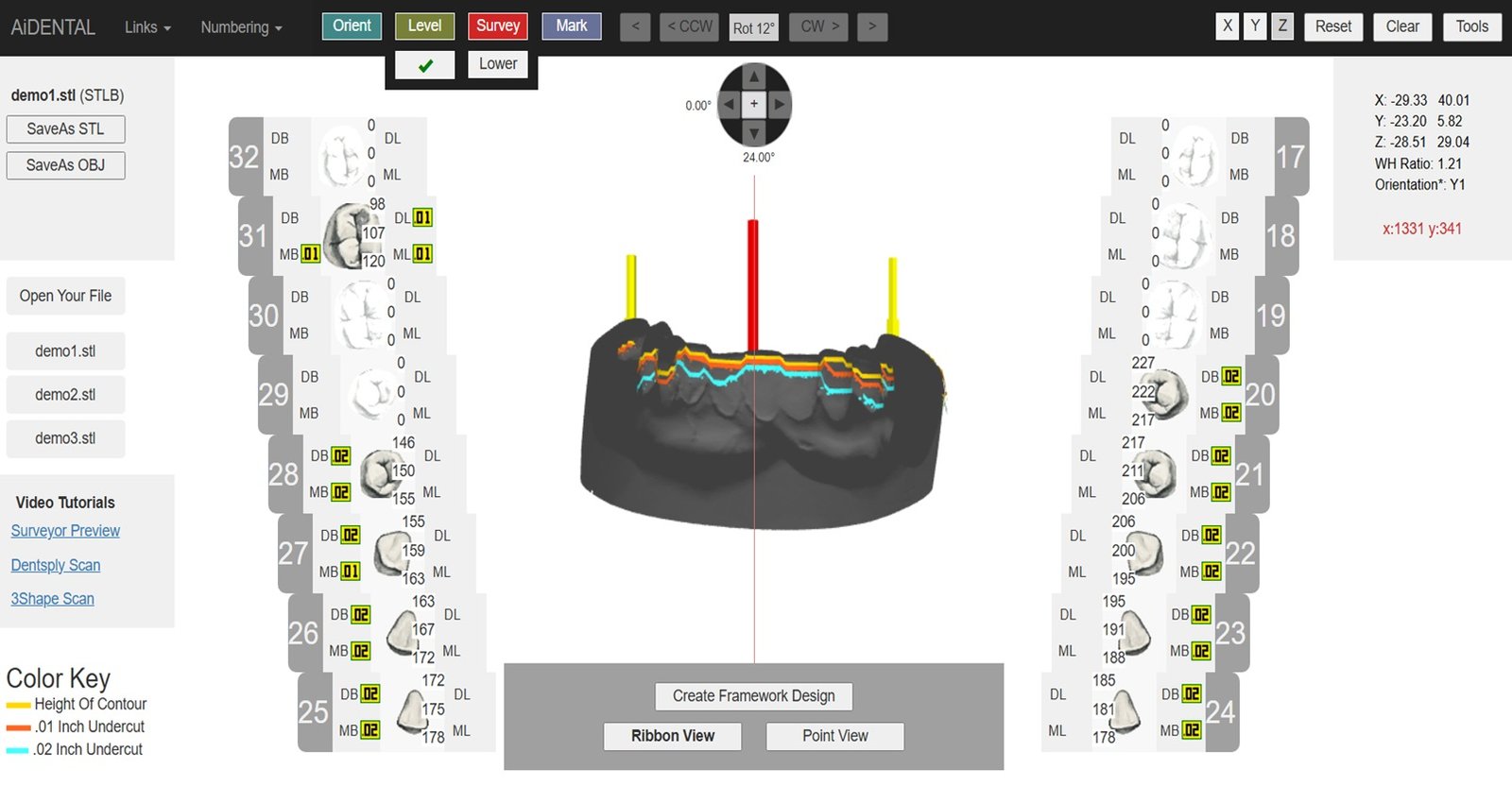
FIGURE 3: The surveyed model is shown.
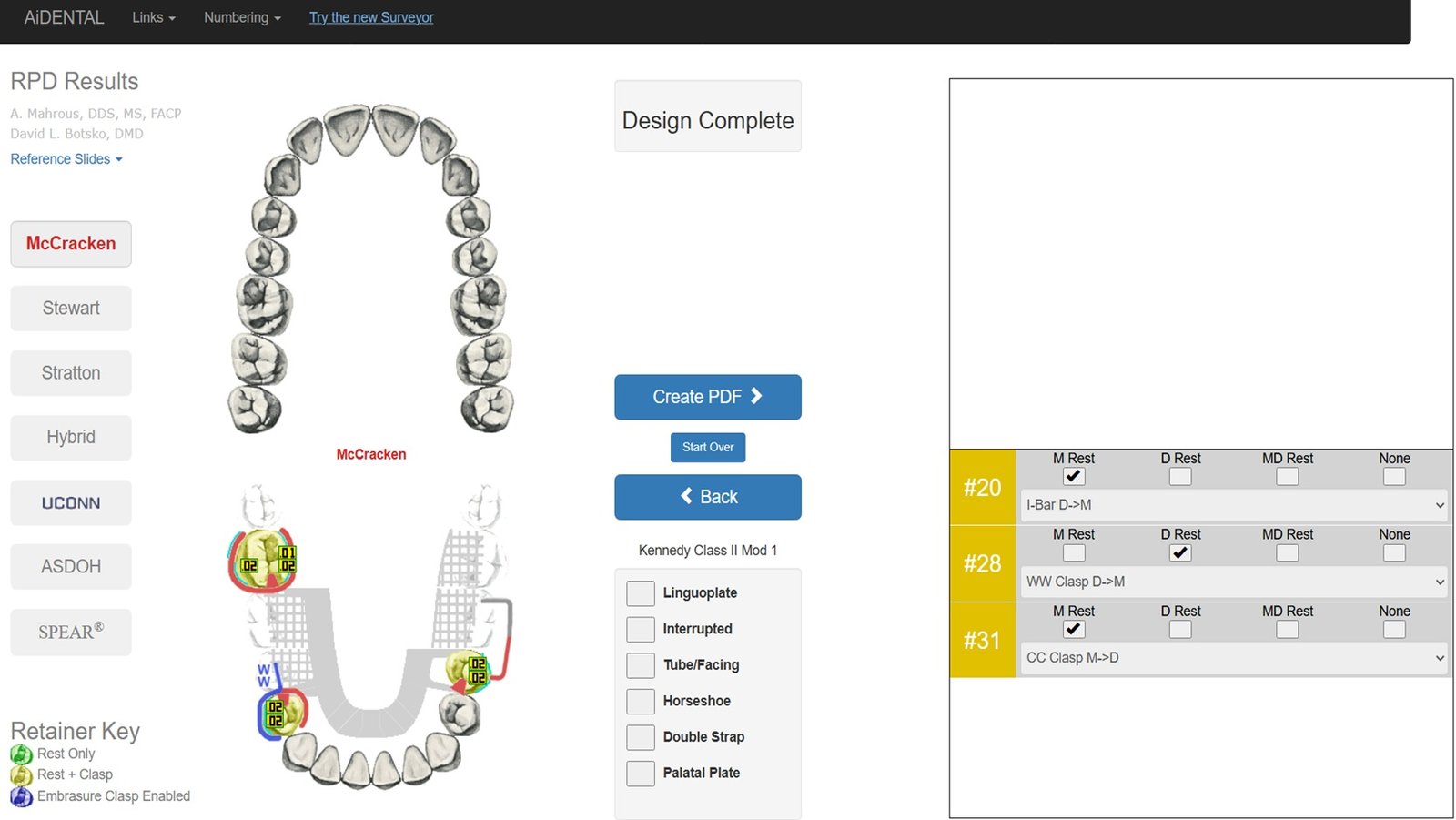
FIGURE 4: The algorithm-based design is generated in the AiDental Designer component.
The reported workflow duration of 2–5 minutes suggests meaningful procedural efficiency. Preservation of tilt and survey data within exported STL files enhances reproducibility and documentation continuity.
Importantly, compatibility with traditional mechanical surveyors is maintained through digital mounting adapters, bridging digital and analog workflows.
PRECISION, EFFICIENCY, AND COMMUNICATION IN THE DIGITAL ERA
Enhanced Workflow Fluidity
Digital surveying eliminates cast pouring and mechanical mounting, potentially reducing chairside and laboratory time while simplifying case documentation.
Automated Undercut Analysis
Algorithm-based undercut detection standardizes analysis and may reduce operator variability. Digital visualization tools enhance clarity of retentive zones.
Streamlined Laboratory Interaction
Digital export of surveyed models and framework designs enables seamless laboratory communication, minimizing transcription errors and design misinterpretation.
Preservation of Prosthodontic Principles
Despite technological advancement, digital surveying platforms remain grounded in established biomechanical principles. Framework selection continues to reflect conventional design philosophies, reinforcing foundational prosthodontic knowledge.
ARTIFICIAL INTELLIGENCE AND THE MODERN RPD
Artificial intelligence is increasingly integrated into diagnostic imaging, treatment planning, and educational platforms. Algorithm-guided framework generation represents a novel application within removable prosthodontics.
Rather than replacing clinician judgment, AI-based systems function as decision-support tools, synthesizing established design rules into reproducible digital workflows. Such integration reflects a broader movement toward data-driven prosthodontic practice.
TRANSFORMING PROSTHODONTIC EDUCATION THROUGH DIGITAL SIMULATION
Digital surveying platforms extend beyond clinical utility into dental education. The AiDENTAL platform incorporates interactive learning modules previously evaluated in academic settings.10 AI-assisted feedback and game-based learning demonstrated improvements in student comprehension of RPD design principles.
Educational advantages include:
- Standardized feedback mechanisms
- Unlimited virtual practice without material cost
- Improved faculty calibration
- Objective assessment opportunities
As dental curricula increasingly adopt competency-based models, digital simulation tools may enhance both learning efficiency and evaluation consistency.
TOWARD A FULLY INTEGRATED DIGITAL RPD WORKFLOW
The integration of intraoral scanning, digital surveying, algorithm-guided design, and CAD/CAM fabrication suggests the possibility of a seamless digital pathway from diagnosis to delivery.
Such integration may:
- Reduce analog dependency
- Enhance documentation traceability
- Improve interdisciplinary collaboration
- Encourage renewed interest in framework-based RPDs
Digital diagnostic surveying thus represents not merely a technological upgrade, but a structural evolution in removable prosthodontic workflow.
CONCLUSION
The transition from mechanical casts to virtual models marks a significant milestone in the modernization of removable prosthodontics. Digital surveying systems, exemplified by the AiDENTAL Surveyor and Designer, seek to bridge the longstanding gap between digital fabrication and analog diagnostic planning.
By integrating virtual orientation, automated undercut detection, algorithm-guided framework design, and digital laboratory communication, such platforms may enhance efficiency and educational standardization while preserving core biomechanical principles.
As digital dentistry continues to evolve, the reinvention of diagnostic surveying may serve as a catalyst for broader digital integration within removable partial denture practice.
REFERENCES
- Wöstmann B, Budtz-Jørgensen E, Jepson N, et al. Indications for removable partial dentures: a literature review. Int J Prosthodont. 2005;18(2):139–145.
- Bohnenkamp DM. Removable partial dentures: clinical concepts. Dent Clin North Am. 2014;58(1):69–89.
- Jones JD, Turkyilmaz I, Garcia LT. Removable partial dentures treatment now and for the future. Tex Dent J. 2010;127(4):365–372.
- Ahmed S, Hawsah A, Rustom R, et al. Digital impressions versus conventional impressions in prosthodontics: a systematic review. Cureus. 2024;16(1):e51537.
- Campbell SD, Cooper L, Craddock H, et al. Removable partial dentures: the clinical need for innovation. J Prosthet Dent. 2017;118(3):273–280.
- Lang LA, Tulunoglu I. CAD/CAM of removable partial denture frameworks. Dent Clin North Am. 2014;58(1):247–255.
- Mahrous A, El-Kerdani T. Teaching the design and fabrication of RPD frameworks with a digital workflow: a preclinical dental exercise. MedEdPORTAL. 2020;16:11041.
- Korkes A, Jomaa J, Kavouris A, et al. Seating accuracy of removable partial denture frameworks fabricated by different digital workflows compared with conventional workflow. J Prosthodont. 2024.
- Mahrous A, Botsko DL, El-Gendy T, Elgreatly A. Enhancing digital workflows for removable partial dentures: A novel diagnostic surveyor and designer. J Prosthodont. 2026;35:102–107.
- Mahrous A, Botsko DL, Elgreatly A, Tsujimoto A, Qian F, Schneider GB. Artificial intelligence and game-based learning in removable partial denture design: a comparative study. J Dent Educ. 2023;87(8):1188–1199.
Disclaimer from Guident
The views and opinions expressed in articles published in Guident are solely those of the authors and do not necessarily reflect the views of the editors, the editorial board or the publisher, Ivory India. Guident does not endorse any product, technique or treatment described. Clinical content is intended for qualified dental and medical professionals and is not a substitute for individual clinical judgement. Guident, its editors and the publisher accept no liability for any consequence arising from the use of information published in the journal.
How to cite this article
Dr. Dhanyasree V R, Dr. George Francis, Dr. Arun K Joy. Digitizing the Path of Insertion: The Digital Reinvention of Removable Partial Denture Surveying and Design. Guident. 2026 Feb;19(3). Available from: https://guident.in/articles/prosthodontics/digitizing-the-path-of-insertion-the-digital-reinvention-of-removable-partial-denture-surveying-and-design.html