Immediate Functional Loading of Cortical Implants in Uncontrolled Diabetic Patient: A Case Report
Chief Clinician, V.K Dental, Bangalore, KAR India, Chief Clinician at Lodha Dental Care, Jodhpur, RAJ India
ABSTRACT
IN CONTRAST TO CONVENTIONAL IMPLANTS WHERE IMPLANTS ARE CONTRAINDICATED IN UNCONTROLLED DIABETICS. CORTICAL IMPLANTS CAN BE DONE AS THE TARGET BONE IS DIFFERENT PERIOSTEUM BLOOD SUPPLY REMAINS UNINTERUPTED AS IT IS DONE FLAPLESS.CORTICAL IMPLANTS ARE FIXATATED IN INFECTION FREE 2ND CORTICAL BONE IN WHICH VERY LIMITED BLOOD SUPPLY IS PRESENT. THEREFORE THERE IS A LOT OF DIFEERENCE BETWEEN CONVENTIONAL AND CORTICAL IMPLANTS APPROACH.THIS PAPER PRESENTS A CASE REPORT OF PATIENT WITH ABNORMALLY HIGH SUGAR LEVELS DONE USING CORTICAL IMPLANTS.
INTRODUCTION
Dental implants are now very popular among dentists as well as patients for replacement of missing tooth/teeth. Rising popularity of Prof. Branemark system made implants a common treatment plan for missing teeth replacement. Soon clinicians became aware of limitations of these conventional implants .As lifestyle diseases are on rise and medical treatment becoming more affordable diabetic population is on rise, these patients demand fix teeth so that fibrous food can be chewed. These patients are refused conventional implants. Diet being is an important factor for controlling diabetics patients now are in compromised position in contrast to conventional implants where flap is opened which compromises blood supply of bone ,cortical implants are done flapless also. According to Carl E. Misch in diabetes Osseo-integration and bone implant contact is reduced in cancellous bone but not in cortical bone. Cortical implants thus is a boon for patients who are refused treatment by conventional implants. Taking advantage of osseofixation in cortical bone which is above the infected trabecular bone and minimum trauma during drilling as only one lance drill is done [NO SEQUENCEL DRILLING] with minimum time of contact with bone using high speeds,little or no trauma is done to soft tissues. Once implants fixated in cortical bone, other principles of cortical implantology like rigid splinting, adequate number to distribute occlusal forces evenly and functional loading is done.
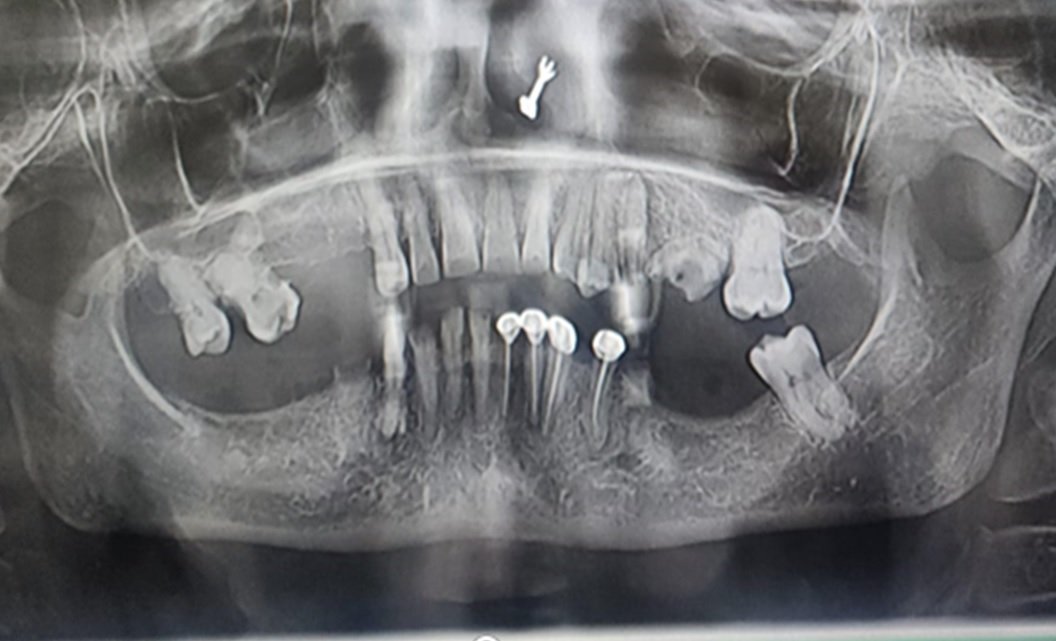
Pre-Operative OPG
CASE REPORT
The following case has been done replacing all posterior teeth in maxilla as well as mandible. The real challenge was high sugar level of patient which was around 340mg/dl [random] and HB1AC 13.5 fasting glucose level was 182mg/dl.surgery was done maintaing all protocols and cortical implants done in one sitting, impressions and bite registrations were also done in same sitting .Ceramic cement retained prosthesis given and balanced occlusion was achieved. The results obtained were quite satisfactory, patient was able to chew properly from 3rd day onwards.

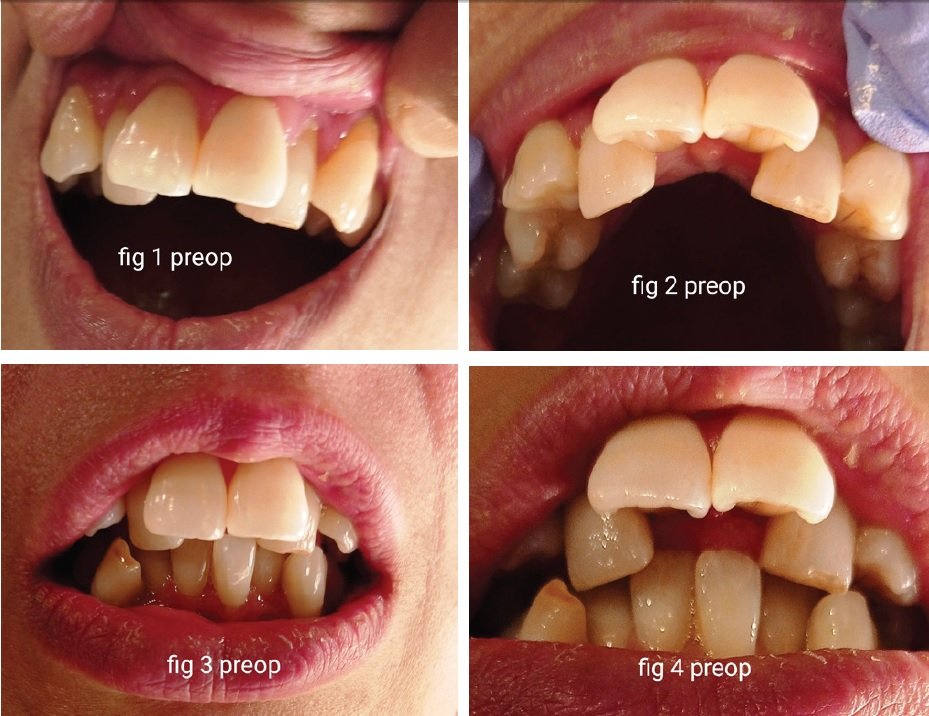
Pre-Operative Image
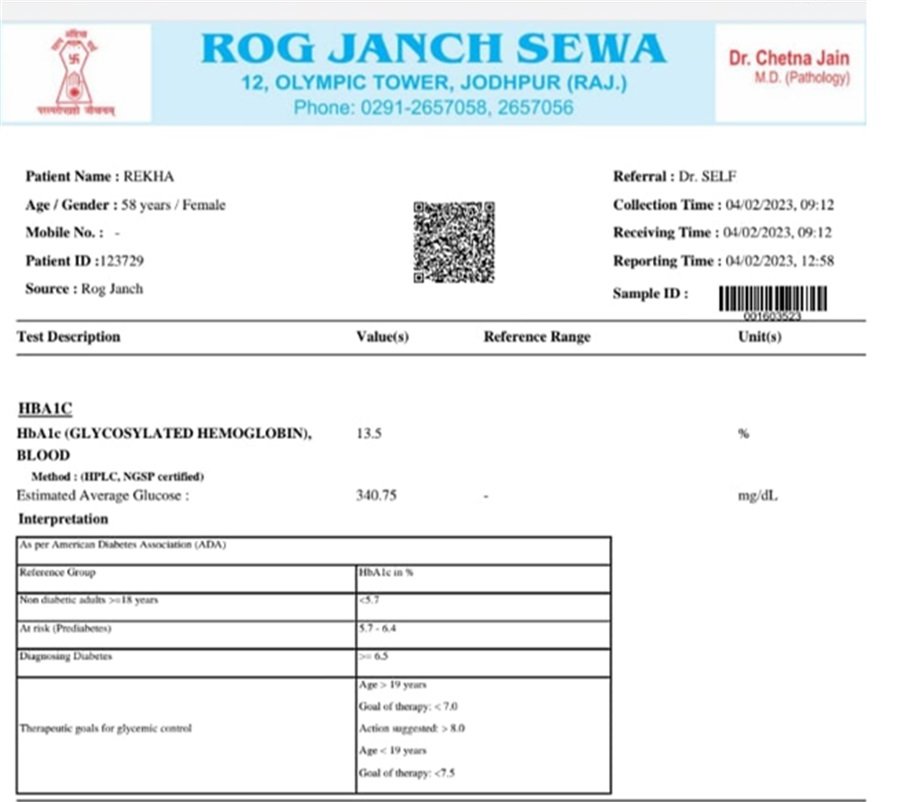
Pre-Operative Report

Post-Operative OPG
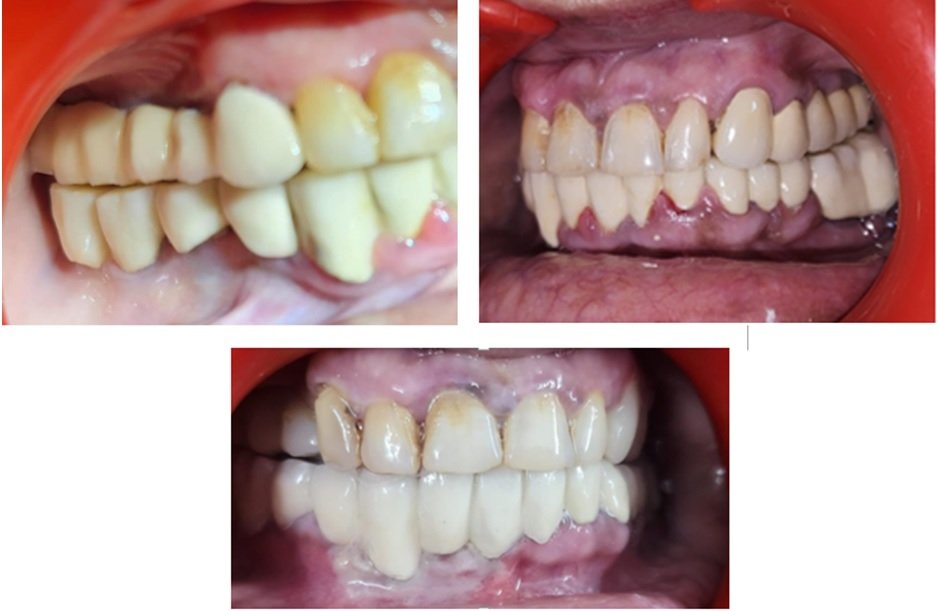
Post-Operative Clinical View
DISCUSSION
Cortical implants have been in use since 1960s using titanium as material of choice. Although the blood sugar of the patient was very high, Good initial stability was achieved using MULTITYPE MULTIMODAL APPROACH meaning using nasal floor, pterygoids and lingual corticals, wide body implants in socket corticals and compressive implants in healed mandible. This ensures no cancellous bone was used in load bearing areas .only smooth surface shaft was present in cancellous bone. Smooth surface does not allow much bacterial colonization so little or no infection. Using BIPOD and TRIPOD technique good balance is achieved to withstand compressive as well as torsional forces and punch hole technique was used so minimum bleeding was there during surgery assuring no clot for bacterial infection.
CONCLUSION
Many studies proved that osseointegration is taking place in diabetic patients only when cortical bone is used.one more reason evident in the scientific literature that ,diabetic patients shows a increased incidence of periodontitis, which can also be a problem as periimplantitis, since cortico basal implants are considered as periimplantitis free because of the features with cortical implants which are smooth surface, thin neck emergence, load bearing threads are away from the bacterial attack make it ideal implants in diabetic patients
REFERENCES
- McCracken M, Lemons JE, Rahemtulla F et al: Bone response to titanium alloy implants placed in diabetic rats, Int J Oral Maxillofac Implants 15:345-354, 2000.
- Chanavaz M: Patient screening and medical evaluation for implant and preprosthetic surgery, J Oral Implant 24:222-229, 1998.
- Peled M, Ardekian L, Tagger-Green N et al: Dental implants in patients with type 2 diabetes mellitus: a clinical study, Implant Dent 12:116-122, 2003.
- Balshi TJ, Wolfi nger GJ: Dental implants in the diabetic patient: a retrospective study, Implant Dent 8:355-359, 1999.
- Sugerman PB, Barber MT: Patient selection for endosseous dental implants: oral and systemic considerations, Int J Oral Maxillofac Implants 17:191-201, 2002.
- Raposo V: Simple diagnosis and treatment planning of the implant patient, J Colo Dent Assoc 80:16-17, 2001.
- Tonetti MS: Risk factors for osseointegration, Periodontology 17:55-62, 2000.
- Shernoff AF, Colwell JA, Bingham SF: Implants for Type 2 diabetic patients: VA implants in Diabetes Study
Disclaimer from Guident
The views and opinions expressed in articles published in Guident are solely those of the authors and do not necessarily reflect the views of the editors, the editorial board or the publisher, Ivory India. Guident does not endorse any product, technique or treatment described. Clinical content is intended for qualified dental and medical professionals and is not a substitute for individual clinical judgement. Guident, its editors and the publisher accept no liability for any consequence arising from the use of information published in the journal.
How to cite this article
Dr. Veerendrakumar SC., Dr. Sachin Lodha. Immediate Functional Loading of Cortical Implants in Uncontrolled Diabetic Patient: A Case Report. Guident. 2024 Mar;17(4). Available from: https://guident.in/articles/implantology/immediate-functional-loading-of-cortical-implants-in-uncontrolled-diabetic-patient-a-case-report.html