Direct Application of Fiber-Reinforced Composite Resins in Post-Endodontic Restorations: A Case Series
Department of Conservative Dentistry and Endodontics, Seema Dental College And Hospital, Rishikesh
ABSTRACT
Historically, cast-metal posts have been the go-to option for restoring teeth following endodontic treatment before aesthetic rehabilitation. However, due to the challenges associated with their use and the demand for biocompatible dental posts meeting both functional and cosmetic standards, resources have been directed towards innovation in this area.6 This has spurred the development of glass-fiber and carbon-based posts, specifically designed for use in adhesive dental procedures. These newer posts boast translucency and flexibility closely resembling that of dentin, offering enhanced aesthetic results.
This case study illustrates the application of translucent glass-fiber posts for the restoration of pulpless teeth, showcasing their efficacy in modern dental practices.
Keywords: Fiber post, retention, Kilogram- Force, fiber-reinforced composite posts.
INTRODUCTION
The restoration of endodontically treated teeth significantly impacts their long-term prognosis and is crucial during treatment planning.8 Due to factors like past restorations, access preparation, trauma, and caries, these teeth often experience considerable loss of coronal and radicular structure, impairing their ability to withstand stresses. To address this, posts are recommended for teeth with compromised structure, historically constructed from metal but prone to issues like root fractures and corrosion.
In response, carbon fiber posts were introduced in 1990, offering anisotropic behavior and reduced risk of fracture and decementation. This innovation aims to mimic tooth tissues' physical properties, with recent advancements including quartz and glass fiber posts encased in resin for aesthetic appeal. Dentistry now prioritizes restoring endodontically treated teeth with materials similar to dentin, free from metal and with uniform qualities.5
Glass fiber reinforced posts enhance light transmission and avoid corrosive reactions seen with metal posts, also facilitating easier removal during retreatment if necessary.4 These case report presents a detailed procedure for restoring damaged permanent mandibular molar and pre molar using glass fiber reinforced intracanal posts, showcasing their benefits and clinical relevance.9
CASE REPORT 1
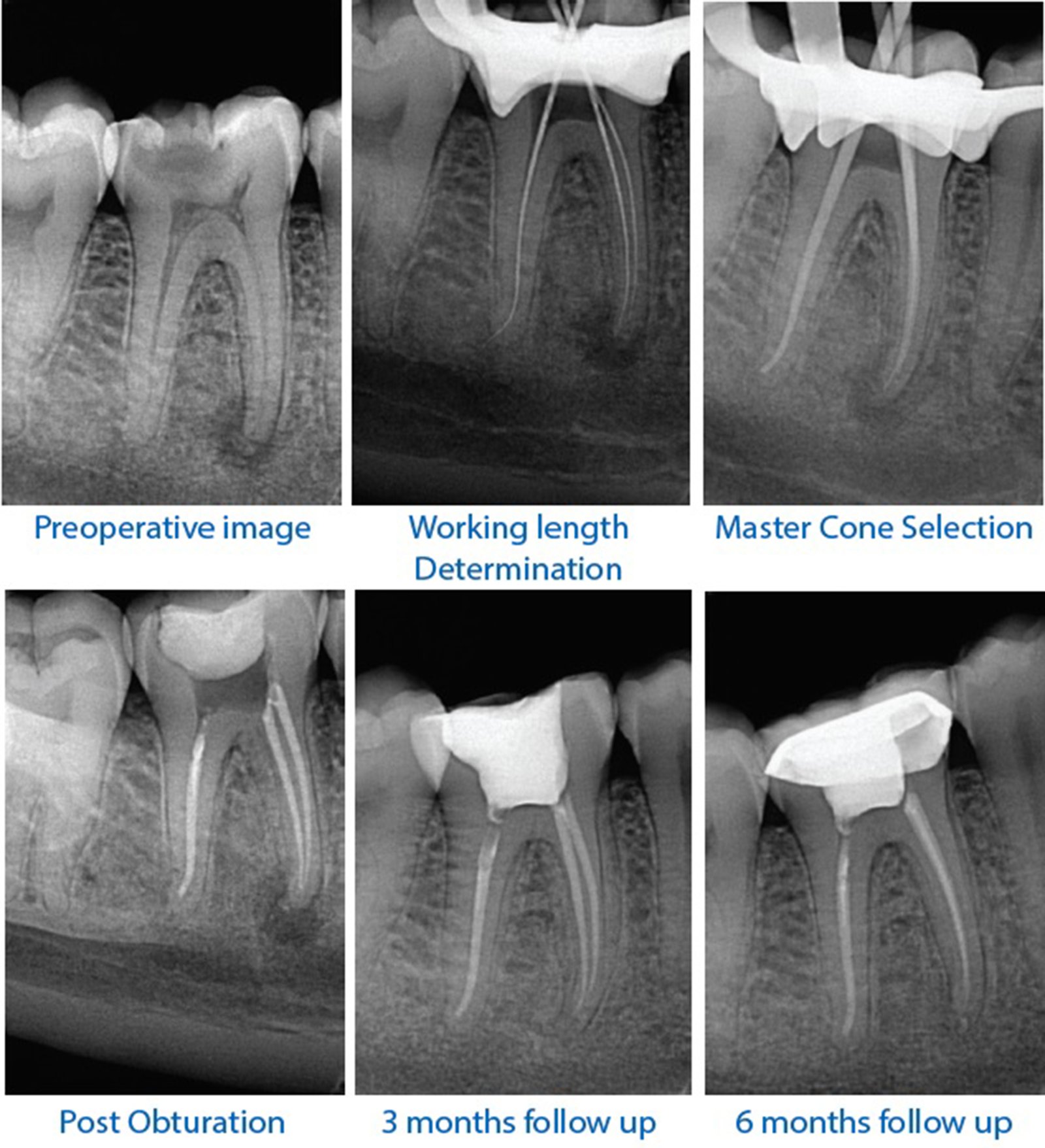
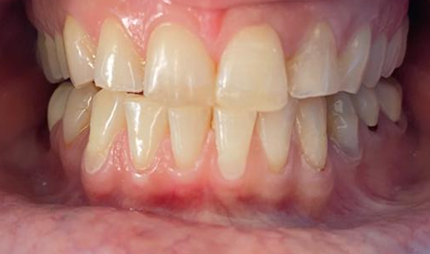
A 35-year-old female patient came with a chief complaint of broken tooth in lower left back region reported to the department of Conservative Dentistry and Endodontics and to get the teeth treated. On clinical examination grossly decayed 35 with previously initiated root canal treatment was seen. Tooth vitality was carried by using electronic pulp vitality tester and the teeth was found to be non vital. Clinical photographs were taken before initiating the procedure. The tooth was cleaned and prepared for endodontic treatment followed by fibre post and core with crown.

Preoperative radiograph

Working length determination

Obturation

Post space preparation with fibre post try in

Fibre post placement with core
Pre-operative radiographs were evaluated. Root canal treatment was initiated and intra canal medicament was placed for 1 week and recalled for completion of root canal treatment. Post space preparation was done using peeso reamers. Impression of upper and lower arches was made using putty wash technique. Cast was poured using dental stone.
Postoperative Image
Postoperative clinical photographs were recorded and postoperative instructions were given. Patient was recalled after 1 week for evaluation.
CASE REPORT 2
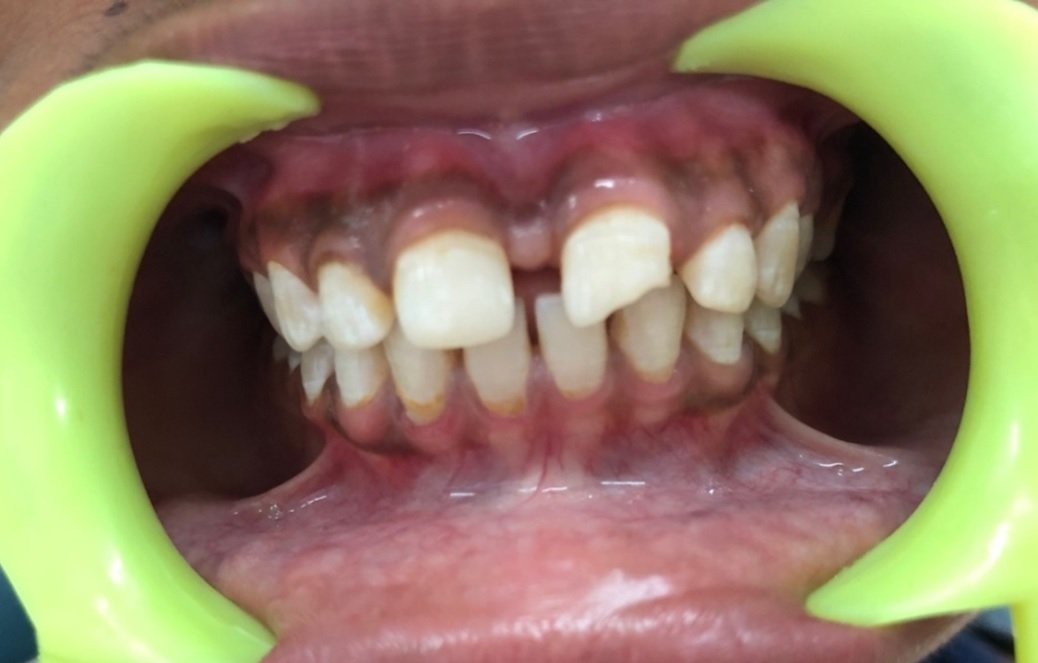
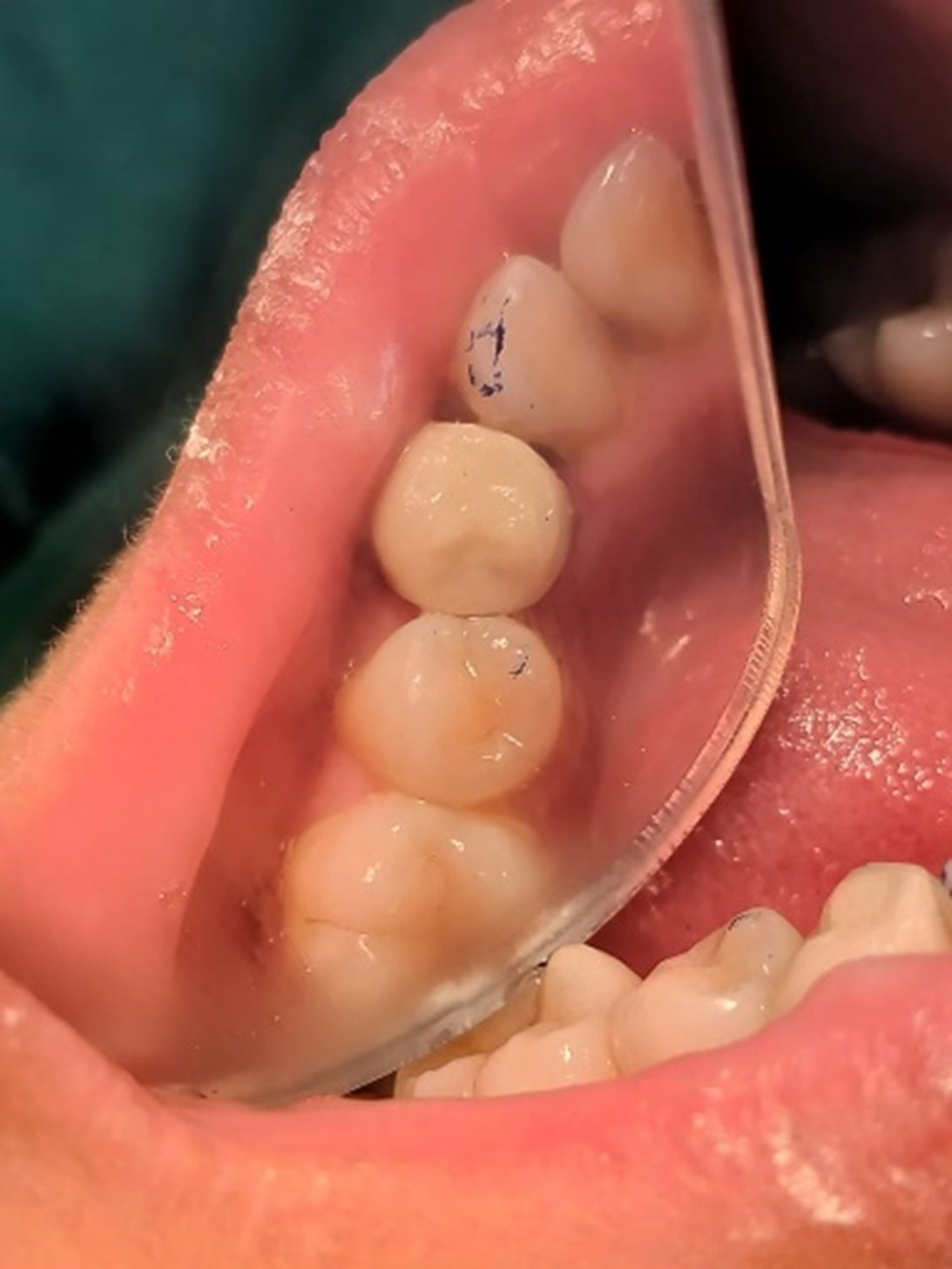
A 28-year-old male patient came to the department with the chief complaint of dislodged crown since 1 month. No history of sensitivity or pain. Non relevant medical history. No periapical radiolucency was seen under radiograph. On clinical examination rct treated 47 with dislodged post endo and crown was seen. Diagnosis made was rct treated tooth with dislodged crown. Preoperative image was taken. Post space preparation was done and fibre post was placed in the distal root of the mandibular molar.
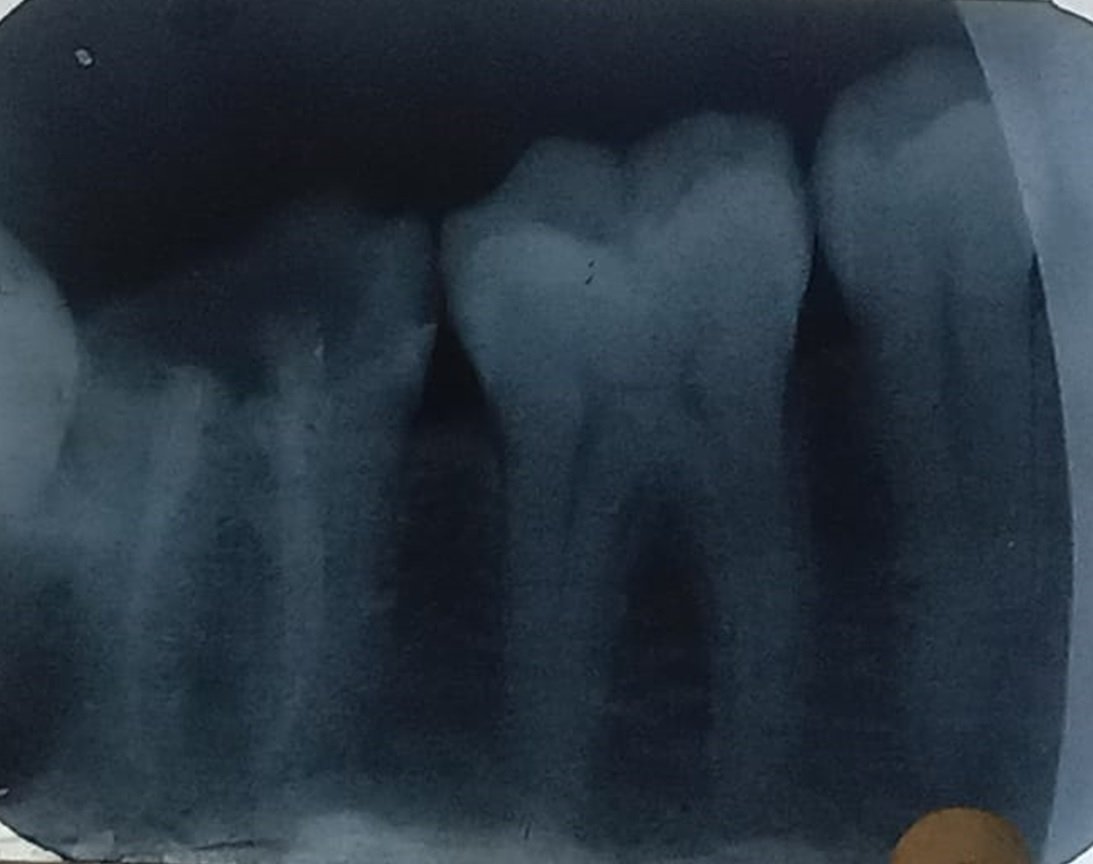
Preoperative Image

Post space preparation

Post space try in
Post space was prepared with peeso reamer and post try in was done. Fibre post was placed and core build up was done.

Postoperative Image
DISCUSSION
Adults may bite with a maximum force of 90 KGF(Kilogram- Force) and chew with a force ranging from 7 to 15 KGF.2 To withstand these stresses over time, a clinically effective restored tooth must mimic dentin and distribute stress properly along the root.3 Fiber posts with an elastic modulus similar to dentin result in less stress transfer, creating a more resilient post-core system.
Reports suggest that the elasticity of fiber-reinforced composite posts (FRCP) closely resembles dentin. Dentinal bonding creates a monoblock dentin-post-core system, enhancing stress distribution along the root under load.1
In these case reports, glass fibers were incorporated into the post system, initially developed for tooth-colored fillings and core build up with crown. The unidirectional R-glass composition significantly increases flexural strength, making it preferable for badly mutilated posterior teeth due to its excellent retention and stress distribution properties.
Glass fiber posts offer advantages such as greater flexural strength, ease of handling, suitability for high-stress regions, aesthetic acceptability, and compatibility with various composites.7 Their modulus of elasticity closely matches dentin, reducing the risk of irreparable root fractures.
Resin adhesive cement is used for cementing glass fiber posts, forming a strong bond between the post, core, and remaining tooth structure. This adhesive integration creates a monobloc repair, efficiently transferring and dispersing functional stresses throughout the tooth.10
CONCLUSION
The utilization of customized unidirectional glass fiber posts, tailored to match the internal architecture of the root canal in this case, showcased favorable clinical and radiographic outcomes. These posts exhibit excellent light conductivity, biocompatibility, ease of handling, and equivalent elasticity modulus to dentin. Additionally, they possess robust flexural and fatigue strength, along with exceptional cosmetic properties. This procedure is well-suited for restoring endodontically treated teeth, offering efficiency, minimal invasiveness, and suitability for the task at hand.
REFERENCES
- Tiu J, Belli R, Lohbauer U. (2021). Thickness influence of veneering composites on fiber-reinforced systems. Dent Mater. 37(3):477?485.
- Agarwal P, Nayak R, Elangovan G. (2018). A Predictable Aesthetic Rehabilitation of Deciduous Anterior Teeth in Early Childhood Caries. Case Rep Dent. 2018:e1742529.
- Naumann M, Schmitter M, Frankenberger R, Krastl G. (2018). Ferrule Comes First. Post Is Second! Fake News and Alternative Facts? A Systematic Review. J Endod. 44(2):212?219.
- Sorrentino R, Di Mauro MI, Ferrari M, Leone R, Zarone F. (2016). Complications of endodontically treated teeth restored with fiber posts and single crowns or fixed dental prostheses a systematic review. Clin Oral Invest. 20(7):1449?1457.
- Mehta SB, Bronkhorst EM, Lima VP, Crins L, Bronkhorst H, Opdam NJM, et al. (2021). The effect of pre-treatment levels of tooth wear and the applied increase in the vertical dimension of occlusion (VDO) on the survival of direct resin composite restorations. J Dent. 111:103712.
- Aminian A, Leven AJ, Ashley MP. (2023). Indications for the use of direct composite restorations in the management of tooth wear. Br Dent J. 234(6):395?399.
- Sonkaya E, Bak?r ?, Bak?r EP. (2020). Elution of residual monomers from dental composite resins. Biomed Res. 31 (5): 148-154.
- Wandscher VF, Bergoli CD, de Oliveira AF, Kaizer OB, Souto Borges AL, Limberguer Ida F, et al. (2015). Fatigue surviving, fracture resistance, shear stress and finite element analysis of glass fiber posts with different diameters. J Mech Behav Biomed Mater. 43:69-77.
- Figueiredo FED, Martins-Filho PRS, Faria-e-Silva AL. (2015). Do Metal Post–retained Restorations Result in More Root Fractures than Fiber Post–retained Restorations? A Systematic Review and Meta-analysis. J Endod. 41(3):309?316.
- Avc?lar ?H, Bak?r ?. (2023). Use of fiber-containing materials in restorative dentistry. J Dent Sci Education. 49?54.
Disclaimer from Guident
The views and opinions expressed in articles published in Guident are solely those of the authors and do not necessarily reflect the views of the editors, the editorial board or the publisher, Ivory India. Guident does not endorse any product, technique or treatment described. Clinical content is intended for qualified dental and medical professionals and is not a substitute for individual clinical judgement. Guident, its editors and the publisher accept no liability for any consequence arising from the use of information published in the journal.
How to cite this article
Dr. Rohit Babu, Dr. Siddhi Goyal, Dr. Anil Dhingra. Direct Application of Fiber-Reinforced Composite Resins in Post-Endodontic Restorations: A Case Series. Guident. 2024 Mar;17(4). Available from: https://guident.in/articles/endodontics/direct-application-of-fiber-reinforced-composite-resins-in-post-endodontic-restorations-a-case-series.html