Tulsi: The Holy Healing Herb...!!
Department of Conservative and Endodontics, Rama Dental College, Kanpur. India, Department of Conservative and Endodontics, Rajiv Gandhi Dental College & Hospital Bangalore, India, Department of Prosthodontics, Vananchal Dental College, Garwah, India
ABSTRACT
Plants are the richest source of drugs in traditional system of medicine, modern medicine and nutraceuticals. Medicinal plants are a source of great economical value all over the world. Ocimum Sanctum Linn (commonly called Tulsi) is a well known plant used in Indian system. Medicinal properties of Tulsi are known for several years of civilization. This medicinal herb is the most sacred and valued in traditional culture. This plant has also shown immense potential to be used as a potential agent in alternate dentistry. Tulsi is well known for its anti-microbial, anti-inflammatory, anti-carcinogenic, hepato-protective, immunomodulatory effects.

As the quote from Gita goes:
“Wherever Tulsi grows there is no misery. She is the holiest of the holy. Wherever the breeze blows her fragrance there is purity. Vishnu showers blessing on those who worship and grow Tulsi. Tulsi is sacred because Brahma resides in the roots, Vishnu resides in the stems and leaves and Rudra resides in the flowering tops.........”
“Tulsi” the Holy or Sacred Basil also commonly called “Tulasi” in sanskrit, is a herb with immense healing potential. The word Tulsi means “matchless or the one that cannot be compared”.(1) It is also called “Luole” in Chinese and “Holy Basil” in England. Besides having a rich traditional background this plant is also laden with tremendous medicinal and dental benefits. Also called ‘The Mother Medicine of Nature’, scientifically known as Ocimum Sanctum, Ocimum Tenuiflorum, it is a native throughout the Eastern World tropics. It is an erect herb, around 30–60 cm tall with hairy stem and simple green or purple leaves that are strongly scented. This medicinal plant is rich in secondary metabolites and essential oils. The therapeutic value of these metabolites is harnessed in the use of various drugs.(1)
Holy basil is found throughout the lowlands of India as well as Sri Lanka, Pakistan, Bangladesh, Myanmar, Southern China, Thailand, and Malaysia.
One of the greatest advantages of using plants as medicines in curing various ailments is their easy availability and almost no side effects(2).
HISTORY
It was discovered by ancient Rishis around 5000 years ago.
Tulsi traces its history back to the times of Charaka Samhita (around 200 BC) and Sushruta Samhita (400–100 BCE) where both mentioned the uses of this herb to treat people with snakebites and scorpion stings.
For almost three thousand years now, Holy Basil has been considered as one of India’s most powerful herbs. The daily use of this herb is believed to help maintain the balance of the chakras, (energy centers) of the body. It is acclaimed as possessing sattva (energy of purity) and as being capable of bringing on goodness, virtue, and joy in human life.(3)
COMPOSITION:
The main chemical constituents of tulsi are: olenolic acid, ursolic acid, rosmarinic acid, eugenol,carvacrol, linalool, β-caryophyllene (about 8%),[15] β-elemene (11%), and germacrene D (about 2%).
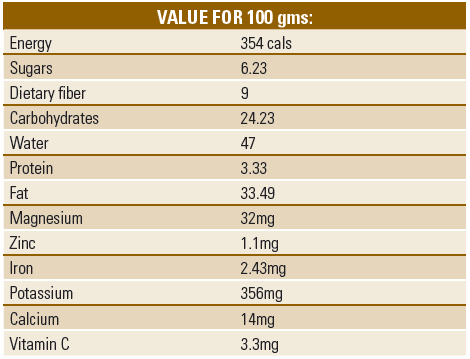
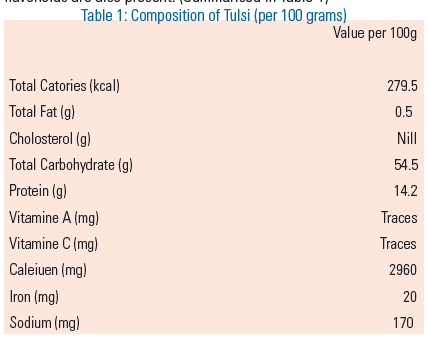
It also contains micro-minerals like Calcium, Zinc and Iron. Tulsi extract is also abundant in Magnesium. Magnesium is helpful in preventing cardiac diseases. It prevents accumulation of plaque in the arteries. Besides, this vitamins A and C are also known to be present(3)
Essential oils such as eugenol, carvacol, linalool, caryophylline, and methyleugenol as well as triterpenes such as ursolic acid and flavonoids are also present. (Summarised in Table 1)
TYPES OF TULSI
There are different types of Tulsi. The flowers of all types of Tulsi are purplish and grow in elongated racemes in close whorls. The following are the variuos types of Tusli (Holy Basil)(4):
1.The green leafed variety Sri Rama or Lakshmi tulsi (called O. Gratissimum) is the most common and grown in India and Nepal.
2.The second type, Krishna tulsi bears dark-green to purple leaves; this variety has a stronger taste and smell.
3.The third type Vana Tulsi, O. tenuiflorum is a green-leafed forest variety that often grows wild. Generally grows in lowland areas.

Fig 1: Showing different types of Tulsi found across the world
Other types of Tulsi are: Ocimum sanctum L (Tulsi)., O. canum (Dulal Tulsi), O. bascilicum (Ban Tulsi), O. kilimandschricum, O. americanum, O. camphora and O. Micranthum. They belong to the genus Ocimum that grow in different parts of the world and are known to have medicinal properties (Fig. 1).
GENERAL USES:
Different parts of Tulsi plant eg: leaves, stem, roots, seeds and flower can be used traditionally as an expectorant, analgesic, anticancer, anti diabetic, hepato-protective, hypotensive, etc in their action(5):
1. Gastrointestinal Disorder: One of Tulsi's traditional uses have been, the treatment of digestive disorders ranging from heartburn to bloating. Studies have suggested that there is a scientific basis to these long standing claims. Holy basil has been shown to have significant anti-ulcer activity. It reduces the effect of peptic acid or irritating drugs on the stomach lining and increases the production of protective stomach mucous coating(3).
2. Chemoprotective Effect: Holy basil has also been shown to protect the heart from damage caused by a widely used chemotherapy drug, adriamycin. It seems to work by protecting components of heart and liver cells from oxidative damage caused by free radicals generated by the chemotherapy.(5)
3. Adaptogen/ Anti-stress agent: Tulsi leaves are regarded as an 'adaptogen'. Recent studies have shown that the leaves afford significant protection against stress.A study showed that, chewing 12 leaves of basil, twice a day, prevented stress. It also has immuno-modulatory properties. Use of holy basil prevented increase of corticosterone levels. In an experiment, 40 milligrams of three tulsi compounds per kilogram body weight was administered to the subjects. These compounds decreased levels of the stress hormone, corticosterone and lowered blood sugars. The compounds also helped reverse stress-induced enlargement of the adrenal glands.(6)
Ayurveda relies on Tulsi leaves as a smoking cessation agent. It not only curbs the urge to smoke but as an anti-oxidant it repairs the damage done by smoking.(9)
4. Anti-oxidant: A water extract of holy basil has known to protect against radiation damage to the liver and chromosome of the cells. It prevented this damage by reducing hepatic lipid perioxidation and increasing the presence of two powerful cellular antioxidants: superoxide dimutase and superoxide catalase.(7)
5. Anti- Diabetogenic: Studies have shown that patients with Type II diabetes had significant reductions in blood sugar levels (upto 17.6 %) while fasting and smaller decreases in blood sugar levels and cholesterol levels after eating.(7)
6.Skin Diseases: Applied locally, basil juice is beneficial in the treatment of ringworm and other skin diseases. It has also been tried successfully by some naturopaths in the treatment of leucoderma. Oil extracted from Karpoora Tulsi is used in these preparations.(8)
7. Dissolves Stones: Tulsi being detoxifier and mild diuretic in nature, can help reduce uric acid level concentration in the blood as well as helps cleaning of the kidneys through urination. Acetic acid (CH3COOH) and certain components in its essential oils also facilitate dissolution of the stone. It has an analgesic effect as well thereby reducing the pain caused by stone.(7)
8. Immune modulation: When consumed on an empty stomach, in the manner prescribed by the Ayurvedic system of traditional herbalism, tulsi might stimulate the immune system. When healthy volunteers consumed 300 milligrams of tulsi, results showed an increase in their levels of immune-stimulating molecules, including interferon and interleukins, and several types of white blood cells. Researchers concluded that these preliminary results clearly demonstrated immune-modulating effects of tulsi.(7)
10. Cardio-Protective: It reduces the cholesterol levels in the blood and reduces venous plaque accumulation. Tulsi has antioxidant properties and reduces blood glucose levels. Tulsi reduces total cholesterol levels and reduces the blood pressure heart disease patients.(3)
DENTAL USES
Most of the uses of Tulsi are still at the experimental stages due to its inherent properties. The dental uses of Tulsi are as under9-12:
1. Maintainence of Oral Hygiene: Tulsi leaves are quite effective in treating oral conditions and also maintaining oral hygiene. Carraccol and Tetpene are the anti-bacterial agents present in this plant.
2. Treatment of Toothaches: The leaves of Tulsi contain 0.7% volatile oil and 20% methyl eugenol that render analgesic properties to Tulsi. It contains 1-hydroxyl 2-methoxy 4-allyl benzene type of eugenol.
3. Periodontal Disorders: Tulsi is supposed to have a huge role in maintainence of oral and periodontal health. The anti-oxidant produced by Tulsi reduces the periodontal tissue break down.
4. Precancerous Lesion (Oral Submucous Fibrosis): Tulsi is rich in anti-oxidants like Polyphenol, Rosmarinic acid and therefore can be utilised in treatment of such conditions.
5. Aphthous Ulcers: The anti ulceration effect is due to the cytoprotective effect of ocimum sanctum. A dosage of 100 mg/kg was found to be a potent anti ulcerogenic. Its decoction is known to be effective in treating peptic ulcers.
6. Anti-cariogenic: 4% extract of Tulsi is supposed to be the most effective against the streptococcus mutans. It produces the widest zone of inhibition of 22mm around the specimen.
SOME HOME REMEDIES THAT CAN BE SUGGESTED TO THE PATIENTS
1. Dental Decay: Its leaves, dried in the sun and powdered, can be used for brushing teeth. It can also be mixed with mustered oil to make a paste and used as toothpaste. This is very good for maintaining dental health, counteracting bad breath.
2. As a Mouth Freshener: chewing cardmom and 3-4 tulsi leaves twice a day can keep bad breath away.
3.Tulsi is an important constituent of many Ayurvedic cough syrups and expectorants. It helps to mobilize mucus in bronchitis and asthma. A mixture of ginger, black pepper, honey and tulsi leaves is a common at home remedy that relieves the symptoms of cold and flu.
4. The herb is a prophylactic or preventive and curative for insect stings or bites. A teaspoonful of the juice of the leaves is taken and is repeated after a few hours. Fresh juice must also be applied to the affected parts. A paste of fresh roots is also effective in case of bites of insects and leeches.
COMMERCIAL PREPARATIONS:
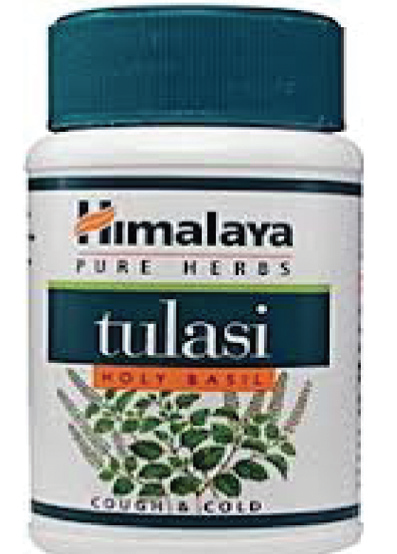
The dried/ powdered tulsi extract in gel caps and standardized extracts (2 percent ursolic acid) in capsules can be consumed to enhance the overall well being.

Tulsi Gel: Has more of a cosmetic use and is used in Herbal Cosmetics for people with sensitive skin.
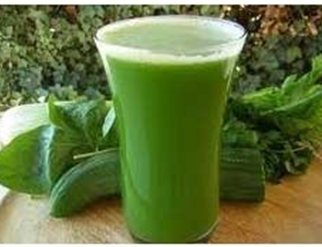
Tulsi Juice: Prevents Clogging of arteries and thereby prevents any Cardiac Problems.
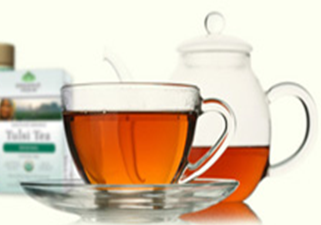
Tulsi tea is made from the leaves of the Tulsi plant. The beverage originated in India thousands of years ago and it is known to promote overall wellness and longevity
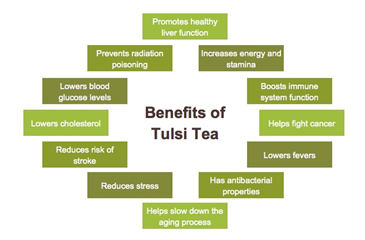
DOSAGE
The recommended dosage of Tulsi in various forms is mentioned as under (13) :
-Tincture: (1:5 or 1:2): 40–60 drops, three times per day.
-Fresh Leaves/ Powder Form: Add 1 tsp. dried leaf to 8 oz. hot water, steep, covered, 5–10 minutes. 4 oz can be taken upto three times per day.
-Capsule Form: consuming 2 to 3 capsules twice a day is the general recommended dosage.
-Tooth Paste Form: Brushing twice a day with tooth paste containing Tulsi can help reduce cariogenic bacteria.
PRECAUTIONS/ SAFETY ISSUES
There have been studies showing that Holy Basil might be toxic to the embryos. Until conclusive information exists, avoid using it during pregnancy. Holy basil also is reported to have an anti-fertility effect.
Preliminary studies indicate that holy basil might enhance CYP-450 activity (liver enzyme), thus speeding up the elimination of some medications and thereby reducing their systemic half life12.
Tulsi helps cure Type II Diabetes, but over use of this can cause more withdrawal of glucose from the body leading to damage of the vital organs which require glucose as an essential nutrient14.
CONCLUSION
Tulsi has many specific therapeutic applications. The herb's powerful general adaptogenic properties offer significant preventive and curative potential with respect to the stress-related degenerative diseases endemic to industrialized societies. Tulsi, definitely has incomparable properties. It has established its use in the field of medicine as an alternate to allopathy. Now, it is gaining gradual popularity in dentistry. Tulsi is truely the “Queen of Herbs”.
REFERENCES
- Mani, Vettam (1975). Puranic Encyclopaedia: a Comprehensive Dictionary with Special Reference to the Epic and Puranic Literature. Motilal Banarsidass Publishers. p. 797. ISBN 978-0-8426-0822-0.
- Deshpande, Aruna (2005). India: A Divine Destination. Crest Publishing House. p. 203. ISBN 81-242-0556-6.
- Dalal, Roshen (1998). Hinduism: An Alphabetical Guide. Penguin Books India. p. 424. ISBN 9780143414216.
- 4. Biswas NP, Biswas AK. Evaluation of some leaf dusts as grain protectant against rice weevil Sitophilus oryzae (Linn.) Environ Ecol. 2005;23:485–8.
- Sen P. Therapeutic potential of Tulsi: From experience to facts. Drug News Views.1993;1:15–21.
- Gupta SK, Prakash J, Srivastav S. Validation of traditional claim of Tulsi, Ocimum sanctum Linn. as a medicinal plant. Indian J Exp Biol. 2002;40:765–73.
- Chopra RN, Nayer SI, Chopra IC. New Delhi: CSIR; 1956. Glossary of Indian Medicinal plants.
- Anbarasu K, Vijayalakshmi G. Improved shelf life of protein-rich tofu usingOcimum sanctum (tulsi) extracts to benefit Indian rural population. J Food Sci.2007;72:M300–05.
- Kelm MA, Nair MG, Strasburg GM, DeWitt DL. Antioxidant and cyclooxygenase inhibitory phenolic compounds from Ocimum sanctum Linn. Phytomedicine.2000;7:7–13.
- Shishodia S, Majumdar S, Banerjee S, Aggarwal BB. Urosolic acidinhibits nuclear factor-kappaB activation induced by carcinogenic agents through suppression of IkappaBalpha kinase and p65 phosphorylation: Correlation with down-regulation of cyclooxygenase 2, matrix metalloproteinase 9, and cyclin D1. Cancer Res.2003;63:4375–83.
- Jaggi RK, Madaan R, Singh B. Anticonvulsant potential of holy basil, Ocimum sanctum Linn., and its cultures. Indian J Exp Biol. 2003;41:1329–33.
- Uma Devi P, Ganasoundari A, Vrinda B, Srinivasan KK, Unnikrishnan MK. Radiation protection by the Ocimum flavonoids orientin and vicenin: Mechanisms of action. Radiat Res. 2000;154:455–60.
- Narendhirakannan RT, Subramanian S, Kandaswamy M. Biochemical evaluation of antidiabetogenic properties of some commonly used Indian plants on streptozotocin-induced diabetes in experimental rats. Clin Exp Pharmacol Physiol.2006;33:1150–7.
- Hannan JM, Marenah L, Ali L, Rokeya B, Flatt PR, Abdel-Wahab YH. Ocimum sanctum leaf extracts stimulate insulin secretion from perfusd pancreas, isolated islets and clonal pancreatic beta-cells. J Endocrinol. 2006;189:127–36.
- Grover JK, Vats V, Yadav SS. Pterocarpus marsupium extract (Vijayasar) prevented the alteration in metabolic patterns induced in the normal rat by feeding an adequate diet containing fructose as sole carbohydrate. Diabetes Obes Metab.2005;7:414–20.
Disclaimer from Guident
The views and opinions expressed in articles published in Guident are solely those of the authors and do not necessarily reflect the views of the editors, the editorial board or the publisher, Ivory India. Guident does not endorse any product, technique or treatment described. Clinical content is intended for qualified dental and medical professionals and is not a substitute for individual clinical judgement. Guident, its editors and the publisher accept no liability for any consequence arising from the use of information published in the journal.
How to cite this article
Dr. Pushpa S., Dr. Puneeta Duggal, Dr. Amrita Mitra. Tulsi: The Holy Healing Herb...!!. Guident. 2013 Sep;6(11). Available from: https://guident.in/articles/general/tulsi-the-holy-healing-herb.html