Holistic Medicine in Dentistry: A Brief Review
Department of Oral Medicine and Radiology, K D Dental College and Hospital Mathura, India
ABSTRACT
Holistic dentistry also referred to as organic/biological dentistry, alternative dentistry, uncustomary dentistry, or biocompatible dentistry that is termed complementary and alternative medicine for dentistry. Holistic medicine partners between the mind, body and spirit for healing. This article reviews about the significance and impact of alternative and complementary medicine in dentistry.
Key words: Holistic, complementary and alternative medicine.
INTRODUCTION
Holism refers to a wholeness. The word stems from the greek word holos, meaning all, whole, and entire, total. During the past decade, holism has garnered more attention in both medicine and dentistry.
Alternative medicines are defined as therapeutic practices that are based on natural and traditional methods. Alternative medicine replaces the standard medical treatments.
Complementary medicine are the treatments that are provided in conjunction with allopathic treatment. Complementary medicine involves non-invasive and non-pharmaceutical.
National center for complementary and alternative medicine has classified it into major groups, which have subgroups and some overlaps.
- WHOLE MEDICAL SYSTEMS: cut across more than one of the other groups.
- MIND-BODY MEDICINE: takes a holistic approach to health that explores the interconnection between the:
- BIOLOGY-BASED PRACTICES: use substances found in nature such as
- MANIPULATIVE AND BODY-BASED PRACTICES: feature manipulation or movement of body parts.
- ENERGY MEDICINE:
a) Homeopathy
b) Naturopathy
c) Ayurveda
d) Traditional Chinese medicine
a) Yoga
b) Spirituality
c) Relaxation
a) Herbs
b) Other natural substances
a) Chiropractic
b) Osteopathic
c) Massage
a) Reiki
b) Magnets
c) Qigong
- BASED ON CULTURAL ORIGIN OR TYPE OF BELIEF
- unscientific belief systems
- traditional ethnic systems
- supernatural energies
- holistic therapy
- religion, faith healings, prayer
- TRIBAL MEDICINE
- SIDHA THERAPY
- AROMA THERAPY
HOMEOPATHY
Homeo, term as similar, and pathos, meaning suffering or disease, the word derives from Greek meaning. Homeopathy is recognized by the world health organization (who) as the second largest system of medicine in the world today.
DENTAL USES OF HOMEOPATHY
|
Dental Abscess |
Belladonna |
Bryonia |
Hepar Sulphuris |
Myristica |
Pulsatilla |
Pyrogenium |
|
Bruxisim |
Belladonna |
Podophyllum |
Tuberculinum |
|||
|
Periodontitis |
Arsenicum album |
Hypericum |
Staphysagria - |
Symphytum |
ux vomica |
Phosphorus |
|
Salivation |
Baryta carbonica |
Bryonia alba |
Phosphorus |
Pulsatilla |
||
|
Tooth eruption |
Calcarea carbonica |
Chamomilla |
Zlncum metallicum |
|||
|
Ulcerations |
Natrum muriaticum |
Nitricum acidum |
AYURVEDA
“Ayurveda” means living in tune with nature. Ayurveda is one of the oldest systems of Medicine and is nearly 5000 years with it roots from India. Ayurvedic have nature's power of remedies.
The “Ayurveda” is an Indian origin which blend the Sanskrit word “Ayur” (life) and “Veda” (Science of knowledge). Srila Vyasadeva wrote down “The Vedas” for the first time, which included a branch Ayurveda. Ayurveda was coined in the Himalayas, and it was initially practiced in areas of South India.
Ayurveda focuses on balancing three elemental energies:
- vata (air & space – wind)
- pitta (fire & water – bile)
- kapha (water & earth – phlegm)
Thereuptic procedures in dentistry listed in Ayurveda:
|
Dantha dhavani –brushing |
|
Mukha prakashalan –gargling |
|
Kavala-mouth yoga |
|
Gandhoosha-oil pulling |
|
Abhyanga -oil massage |
|
Vyayama –exercise |
|
Pratimarsha nasya |
The main aim of Ayurvedic Medicines is to harmonize and maintain the body, mind, and spirit. This balance is believed to lead satisfaction and healthy lifestyle.
NATUROPATHY
Natural Herbs have been in use for centuries to halt dental disease. Herbal extracts interact with specific chemical receptors within the body which makes them effective. Herbal medicines exhibit no or less adverse reactions in comparison with traditional medicines and the products can vary in their potency. Natural phytochemicals isolated from plants used in traditional medicine are considered as good alternatives to synthetic chemicals, herbal products are also being increasingly used as sedatives, or plaque reduction and healthy gums.
A. Phytotherapeutic substances are differentiated into three groups
- Plant products
- Animal products
- Mineral origin.
B. In dentistry, they are used as
- Antimicrobial agents
- Anti‑inflammatory agents
- Sedative and anxiolytics.
C. Miscellaneous endodontic irrigants, medicaments.
ACUPUNCTURE
Acupuncture stems "to puncture with a needle." Acupuncture is made up of two Latin words: acus, which means needle, and puncture, which implies insertion. Traditional Chinese Medicine (TCM) described acupuncture as: the stimulation of certain points on or near the surface of the human body through any technique of point stimulation with or without the insertion of needles, these include the use of electrical, magnetic, light and sound energy, cupping and moxibustion.
Acupuncture can be used to manage a wide range of disorders in maxillofacial region in place of conventional treatment modalities. Conditions where acupuncture can be used effectively include:
- Dental pain
- Dental anxiety and gag reflex.
- Temporomandibular joint (TMJ) pain or temporomandibular disorder (TMD).
- TMJ clicking and locking.
- Chronic muscle pain or spasm
- Atypical facial pain
- Nerve pain (neuralgia, especially trigeminal neuralgia, neuropathic pain, nerve injury)
- Headache (tension headache, migraine)
- Xerostomia (dry mouth)
- Paresthesia or anesthesia of the oral and paraoral structures.
YOGA
Yoga is an ancient Indian cultural heritage that is rapidly spreading around the world and being practiced by millions of people. It broadens one's perspective on life and refines one's personality, allowing practitioners to realize their full potential in a holistic way.
BASIC YOGA PRACTICES FOR DENTAL PRACTITIONERS
Energizing and loosening jathis:
Place your palms on your thighs and sit up straight. Lift your right hand and begin to shake it slowly while keeping your wrist joint in mind. Increase the pace of the movement a little and then begin shaking your hand as quickly as you can after some time. Continue shaking quickly for a few minutes. Stop shaking your hand after a few minutes and bring it back to your thigh. Take a deep breath and repeat.

Dynamic Kriyas for psychosomatic harmony:
Stand in a comfortable stance for Tala Kriya. Inhale deeply and raise both arms above your head until they are parallel. Stretch as high as you can by standing on your toes. Hold your breath and stretch your entire body from your toes to your fingertip. Exhale and return to a flat foot posture by relaxing your arms back to your sides.

Energizing mudras
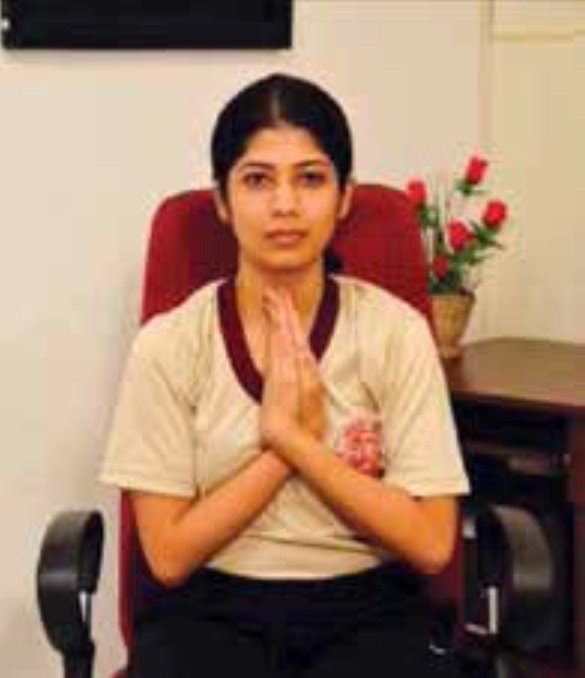
Hastha mudra grouping: gradually stretch your arms upwards and consolidate your palms in anjali mudra. the entire back is given an astounding stretch in this token of goal. All the higher chakras are empowered by this mudra. Hold it for a brief time and mull over the higher cognizance focused around here. Bring your hands down to your head with your wrists contacting the highest point of your head. This excellent, three-sided outline for your face is kailash mudra that empowers sahasrara chakra.

Garuda mudra: to play out the falcon signal, lift the two arms and broaden them before your chest. Bring your right hand over the left and cross your hands at the wrist uniting your palms. Bring the fastened hand position internal and afterward turn it up with the goal that the wound hand position is before your chest and throat. Gaze directly ahead. Garuda mudra powers nerve flows to pass from one side of the body to the next in this way achieving solid extremity. At the point when prepared loosen up your position and take your hands back to your thighs.
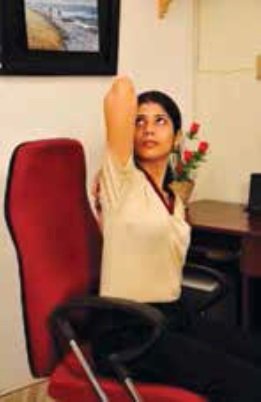
Kaki and Hasya Mudras: To do the ‘‘Kaki Mudra’ or the Crow Gesture, pucker or pout the lips, as in case you had been going to whistle, tensing the complete mouth and jaw region. Then liberating this Mudra, come right into a beautiful ‘Hasya Mudra’ or the Smile Gesture, enjoyable all of the facial muscles. Alternate the ‘Kaki Mudra’ to the ‘Hasya Mudra’ for some rounds. The‘Kaki Mudra’ and the ‘Hasya Mudra’ is a great exercise to stimulate nerves of the mouth and tone up the facial area. Relax with a few deep respiratory and experience the emotional launch and uplifted temper.
Chiropractic
The principle is to align the frame of musculoskeletal structure, specially the spine, will allow the frame to heal itself without surgical procedure or medication. Manipulation is used to repair mobility to joints confined via way of means of tissue damage due to a stressful event, consisting of falling, or repetitive stress. Chiropractic remedy is often used as a ache comfort opportunity for muscles, joints, bones, and connective tissue, cartilage, ligaments, and tendons. It is on occasion used alongside traditional scientific remedy.
Reiki
Reiki remedy is a biofield electricity restoration modality described with the aid of using the National Centre for Complementary and Alternative Medicine as “a fitness exercise wherein practitioners press their fingers gently on or simply above the person, with the aim of facilitating the person's personal restoration response.” According to the Reiki paradigm, surgical procedure disrupts a patient's energy flow patterns drifts. A Reiki practitioner locates his or her fingers in a sequence of positions on or above the recipient's frame to realign and beef up the energy flow with the drift with the aid of using transmitting “Reiki” (a shape of accepted existence electricity) into the frame and therefore influencing the frame's bodily and mental functioning in addition to its religious wellbeing.
Tribal medicine
Ethnomedicine is a type of traditional medicines. It is practiced through many traditional and local groups. It has associated written sources, additional knowledge and practices had been verbally transmitted over the centuries through various ethnic groups and specifically through indigenous peoples.
Aroma therapy
Odour experiences are naturally pleasant or unpleasant. The perceived pleasantness or unpleasantness of odors where proven to have an effect on memory, assignment performance, anxiety, mood, temper and emotions. The effect of odour on mood perception has been corelated to altered brain activity in limbic structures (amygdala, orbito- frontal cortex and anterior cingulate cortex) and in peripheral autonomic responses . They each play a function in hedonic or emotional processing of olfactory and perception of pain.
CONCLUSION
Alternative medicine improves the individual’s health and quality of life. Patients are more interested in Alternative medicine for many reasons; one of which is the high costs of conventional medicine; not all people can get access to medical treatment. Secondly conventional medicines can actually have mild to more serious side effects ranging from nausea, vomiting, and ulcers to anaphylactic reactions. CAM may become standard conventional practice after scientific efficacy verification.
Though it's far used everywhere in the world, in India, its use is tons greater due to their clean accessibility, no expert consultation required, and are considered safe to use and also because the primary health care services fall short in most rural areas. These medicines needs to be FDA approved and enhance its advantages and disadvantages to the public awareness. It is traditional, more natural, comparatively nontoxic, and biocompatible modalities. The information and knowledge of Holistic method and its remedies remains an ongoing process.
REFERENCES
- s. rohma et al. application of alternative medicine in dentistry: an overview. advances in dentistry and oral health 2018;9(1)
- k. srinivasan. holistic dentistry: natural approaches to oral health;scholars bulletin 2015;(267-270)
- vela desai et al. alternative medicines and their applications in dentistry- a brief review: international journal of pharmaceutical and chemical sciences 2013:(542-545)
- samuel et al. how homeopathy can be used in dental practice: dental nursing 2011:vol 7
- mahmoud h et al. homeopathy in dentistry: a review : international journal of contemporary dental and medical reviews 2015:5
- s.ferrer. homeopathic prescribing for chronic and acute periodontal conditions in 3 dental practices in the uk :homeopathy 2013: 242-247
- nilesh et al. homeopathic medicine – an adjuvant for dentistry: a review : international ayurvedic medical journal 2014:vol 2
- s.eames et al. homeopathy and its ethical use in dentistry :british dental journal 2011:vol 210
- bhanu sharm. homeopathic remedies for toothache:2010
- sangeetha k.m et al. ayurveda and dentistry: journal of ayurveda & holistic medicine 2015
Acknowledgement: We would like to extend our gratitude to Dr. VINAY MOHAN, Dr. ANUJ GAUR, Dr. BINISH KHAN & Dr. CHUMBENI ODYUO for their contribution in this review article.
Disclaimer from Guident
The views and opinions expressed in articles published in Guident are solely those of the authors and do not necessarily reflect the views of the editors, the editorial board or the publisher, Ivory India. Guident does not endorse any product, technique or treatment described. Clinical content is intended for qualified dental and medical professionals and is not a substitute for individual clinical judgement. Guident, its editors and the publisher accept no liability for any consequence arising from the use of information published in the journal.
How to cite this article
Dr. Ngurang Anam, Dr. Gopa Kumar Nair, Dr. Niharika Kumari. Holistic Medicine in Dentistry: A Brief Review. Guident. 2021 Jun;14(7). Available from: https://guident.in/articles/general/holistic-medicine-in-dentistry-a-brief-review.html