Importance of Colour Temperature in the Use Dental Operating Microscopes
Director, Upskill Dental Academy, Mumbai, India
The Dental operating microscope is an invaluable tool in the operatory. It is a life time investment and requires careful consideration of all the essential features and parameters prior to choosing one.
The color temperature of a light source is the temperature of an ideal black-body radiator that radiates light of a color comparable to that of the light source.
A black-body radiator is any object which fully absorbs all frequencies of light, just as a white body is any object which fully reflects all frequencies of light. Black-body radiation is a type of electromagnetic radiation (light) emitted by a black body (an opaque and non-reflective body) held at constant, uniform temperature. The radiation has a specific spectrum and intensity that depends only on the temperature of the body.
In other words, the hue (color or specific spectrum) of light emitted by a black body radiator is determined by its temperature.
The sun or a tungsten incandescent filament lamp are both examples of near perfect black body radiators.
The temperature of the black body radiator is measured in degrees Kelvin and therefore, the color (specific spectrum) of light emitted by a black body radiator can be determined by its temperature in degrees Kelvin.
Color temperature is a way to describe the light appearance provided by a light bulb. It is measured in degrees of Kelvin (K) on a scale from 1,000 to 10,000.light source.
Color temperatures over 5000 K are called “cool colors” (bluish), while lower color temperatures (2700–3000 K) are called “warm colors” (yellowish).
We frequently see microscope users making adjustments to the rheostat (voltage control) to either increase or reduce light intensity. While intensity is affected by changing the rheostat, making adjustments to the voltage also changes the color temperature emitted from your light source. Setting the microscope voltage too high results in a higher color temperature (bluish overall) or a lower color temperature (reddish-yellow ) when the voltage is too low.
For microscopical observations, a standardized color temperature has been established to ensure everyone looking at and working with a sample is seeing an identically illuminated image. Industry specialists determined that 5500K is the universally standardized color temperature, and maintaining 5500K will prevent different interpretations of absorption colors, pleochroic colors, dispersion staining colors, retardation colors, and reflection colors.
Ambient Lighting
Ambient lighting affects the impression of what is white in two ways. The first effect is the psychological reference that it provides. Since we are totally surrounded by this light,the mind sets its own “white” reference to this color white and perceive all other white as tinted. The second effect is a biochemical reaction that occurs in the eye. It is related to the depletion of the chemicals in the retina that sense the different colors of the spectrum: red, green and blue. This effect occurs when the blue sensing chemical is depleted in high color temperature light making the eye have a red shifted perception of the world. Conversely, when working in a low color temperature environment the red chemicals will be depleted and the eye will have a blue shifted perception of the objects.1
IMPORTANCE OF COLOR REPRODUCTION
Does it matter if the images we see down the microscope don’t match those captured by the camera? With poor color reproduction there is a chance that important information may be missed because the contrast between colors isn’t clear. Therefore, we need to adjust images taken on the microscope to account for the light source.
In image processing, this chromatic adaptation is referred to as ‘white balance’ or ‘color balance’. Data are collected by image sensors (such as photomultiplier tubes or camera sensors) and processed for color reproduction on computer screens or camera displays. Obviously, electronic image sensors and processors don’t match our cones and rods, and those sensors and processors can’t always tell that an apple is red in candlelight. Therefore, it’s important to take color correction into account when viewing and capturing images from microscopes.2
COLOR CORRECTION BY CAMERA SENSORS
The human eye and the image sensors employed in microscopy differ in perception of light and color. It’s important to match, as closely as possible, the colors we view down the eyepieces to the colors displayed on a monitor or camera.
Two of the most common image sensors in microscope camera are the Charge Couple Devices (CCD) and Complementary Metal Oxide Semiconductors (CMOS).
Cameras with CCD sensors are sensitive to infrared (IR) light, which can have the effect of reducing image contrast. Some cameras incorporate IR filters that can compensate for this sensitivity, or filters can be used in the microscope set-up.
Color reproduction will also vary between microscopes, room set-ups, and lighting conditions.
FACTORS AFFECTING COLOR REPRODUCTION
Light Source
Color temperature is measured in Kelvin (symbol ‘K’). higher temperature colors are called ‘cool colors’ (such as blue or white) and the lower temperature colors are known as ‘warm colors’ (such as red and yellow).

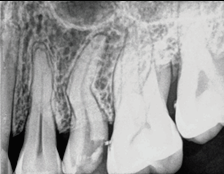
Pic A: Pre-Operative OPG
Microscope light sources vary with color temperature. For example, daylight is regarded as 5000 K and a tungsten halogen lamp has a temperature of around 3200 K. Filters can be used in microscope systems to raise or lower the temperature of the light source. Color temperature isn’t everything, though. A variety of light sources may have the same color temperature, but have different spectral properties.
Improper White Balance
White balance is the process of removing unrealistic color cast in an image. Because light sources vary in color temperature, this will have an effect on the white balance of an image on screen or captured by a camera.3
Choice of Monitor
Color reproduction will vary between monitors. Monitors must be calibrated when first installed. Calibration should be performed at regular intervals over the lifetime of the display.
REFERENCES
- images/s://bitesizebio.com/24510/importance-of-color-reproduction-in-microscopy-imges/
- http://www.spotimaging.com/resources/white-papers/how-to-improve-color-in-microscope-
- https://www.microscopyu.com/digital-imaging/color-balance-in-digital-imaging
Disclaimer from Guident
The views and opinions expressed in articles published in Guident are solely those of the authors and do not necessarily reflect the views of the editors, the editorial board or the publisher, Ivory India. Guident does not endorse any product, technique or treatment described. Clinical content is intended for qualified dental and medical professionals and is not a substitute for individual clinical judgement. Guident, its editors and the publisher accept no liability for any consequence arising from the use of information published in the journal.
How to cite this article
Dr. Pavana Kamath. Importance of Colour Temperature in the Use Dental Operating Microscopes. Guident. 2020 Jan;13(2). Available from: https://guident.in/articles/endodontics/importance-of-colour-temperature-in-the-use-dental-operating-microscopes.html