Comparison of Fluoride Varnish and Silver Diamine Fluoride on Enamel Remineralization Around Orthodontic Brackets Bonded with Resin Modified Glass Ionomer Cement: An in-Vitro Study
Department of Pedodontics and Preventive Dentistry, K.M. Shah Dental College and Hospital, Sumandeep Vidyapeeth, Vadodara, India
ABSTRACT
The objective of the present in vitro study is to investigate the effect of fluoride varnish and SDF on Enamel remineralization around orthodontic brackets bonded with RMGIC. Orthodontic brackets were bonded on 60 extracted premolars and they were divided into three groups of control, fluoride varnish group and SDF group. Then all the teeth were kept in thermocycling machine for 35 days and then premolars’s lingual section of teeth were taken and were evaluated under polarized light microscope. Photomicrographs were made at 20x magnification. In control group, we saw microleakage in the area surrounding orthodontic brackets. White spot lesions were seen. In fluoride varnish group, we saw less amount of microleakage compared to control group and additionally we saw surface roughness and overhanging of material and because of acid etching, surface roughness was increased which may be because of caries in future due to improper cleaning and food lodgment. In silver diamine fluoride group, there was no microleakage compared to the control group and fluoride varnish group as there was no surface roughness surrounding orthodontic brackets. An overall strong positive outcome was observed, indicating that SDF was sufficient enough to reduce the incidence and depth of enamel demineralization around orthodontic brackets. Hence advance considerations are required to be done in this prospect to toss more accentuation on SDF and its successful quality to inhibit demineralization and subsequently on dental caries.
Keywords: Fluoride varnish, Silver diamine fluoride, enamel remineralization, orthodontics, brackets, dental caries, enamel demineralization, thermocycling
INTRODUCTION
Orthodontic treatment is a way of straightening or moving teeth to improve appearance of teeth and how they work. It can also help to look after the long-term health of your teeth, gums and jaw-joints, by spreading the biting pressure over all your teeth. Orthodontic treatment includes orthodontic hardware like wires, bands, brackets, expanders, springs, elastics and screws. All this hardware provides surfaces for food debris, acids, bacteria and plaque to adhere to. Small germs can discover a hidden spot near braces and in tooth crevices, developing into bigger plaque clusters. If left unchecked, they will transform into a hardened plaque, known as tartar. Due to its porous nature, tartar allows for greater plaque accumulation, increasing the risk of tooth decay. Orthodontic treatment with fixed appliances predisposes patients to larger accumulations of bacterial plaque. Microorganisms in plaque lower its pH to a critical point, hydroxyapatite begins to dissolve and diffuse into acidic plaque. Remineralization is greatly enhanced by low levels of fluoride in saliva or plaque.
White spots that have been decalcified may be present on teeth following the removal of braces. These occurs when food particles and plaque biofilm are left on teeth and the bacteria in plaque produces acids that attack your teeth. This acid builds up around the brackets and bands of your braces, wearing down enamel.
While braces do help in preventing cavities by correcting teeth, wearing braces also increases the risk of decay. Frequent occurrence of enamel demineralization near brackets is common during orthodontic treatment due to inadequate oral hygiene. Poor brushing and flossing habits can leave food stuck in your teeth and braces over long periods. This can cause bad breath and a buildup of plaque which, in turn, leads to cavities, or swollen, tender gums. On removal of the braces, this can also leave staining and white marks on the teeth (demineralization, or a breakdown of tooth enamel). Demineralization is the process in which mineral ions from dental enamel is removed. Remineralization is the process of restoring mineral ions to hydroxyapatite’s lattice work structure.The demineralizations result in white spot lesions on orthodontic patients' teeth, affecting both the appearance and success of the treatment.
Fluoride is most effective in inhibiting beginning of caries and less effective in inhibiting progression of lesion. Previous studies proved the effectiveness of fluoride regimens like varnish, gel, rinse, and dentifrice, however, fluoride rinses that depend on patient cooperation may not be enough and may only offer limited help in preventing demineralization. On the other hand, it has been shown that varnishes provide high concentration of fluoride to decrease enamel demineralization in vitro. They have the advantage of adhering to enamel surface longer than other topical fluoride products, which indicates that their ability to increase fluoride uptake in enamel is better. Fluoride varnish leaves deposits of calcium fluoride on enamel and contributes to formation of fluorapatite in enamel, strengthens enamel surface and blocks diffusion of mineral ions from enamel surface.1 Peterson et al, observed that tri-monthly application of fluoride varnish resulted in reduction in caries and can be easily adapted to current orthodontic bonding techniques.3
Silver diamine fluoride (SDF, Ag(NH3)2F) has antibacterial action, inhibits caries progression via inhibiting biofilm formation, and facilitates enamel remineralization. SDF is demonstrated to be effective for caries reduction.5 SDF has been proven effective in preventing further cavity development once a cavity has already formed. SDF aids in eliminating the bacteria that deteriorate tooth surfaces and prevents them from spreading to adjacent teeth. Application of SDF or Fluoride varnishes is used as a preventive adjunct to reduce enamel demineralization adjacent to orthodontic brackets, particularly in patients who exhibit poor compliance with oral hygiene and home fluoride use.
AIM AND OBJECTIVES OF THE STUDY
Aim of the study
Comparison of fluoride varnish and silver diamine fluoride on Enamel remineralization around orthodontic brackets bonded with resin modified glass ionomer cement: An in vitro study.
OBJECTIVES OF THE STUDY
To evaluate the efficacy of fluoride varnish and SDF in preventing enamel demineralization lesions adjacent to orthodontic brackets bonded with resin modified glass ionomer cement which will be evaluated using polarized light microscopy
MATERIALS AND METHODOLOGY:
MATERIALS
- Extracted premolars
- Thymol solution
- Chlorhexidine solution
- RMGIC
- SDF
- Fluoride varnish
- Orthodontic brackets
- Etchant
- Artificial saliva solution
- Artificial caries solution
- Thermocycler unit
- Stereomicroscope
METHODOLOGY
Thirty premolars were extracted for orthodontic purposes, then preserved in a solution containing 0.1% thymol. Every tooth was later sterilized using a 0.12% chlorhexidine solution, and any remaining calculus, bone, and soft tissue was eliminated using ultrasonic scaling. Next, the outer layer of all teeth was polished with a combination of pumice and distilled water using a prophylaxis cup attached to a slow speed hand piece. Each tooth was rinsed with distilled water and then distributed randomly into one of three groups, each containing 10 teeth.
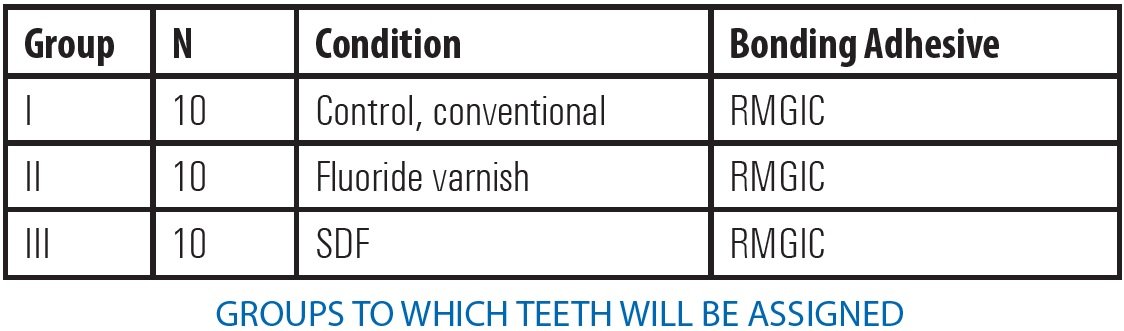
There were three sets of 10 teeth each. The first group served as the control group, receiving orthodontic brackets bonded to their teeth using RMGIC. Group 2 involved bonding orthodontic brackets with RMGIC and applying fluoride varnish. Group 3 had orthodontic brackets attached with RMGIC and received SDF application.
A piece of adhesive tape was cut to create a window the same size as an orthodontic bracket base. The strip was positioned so that the window was in the middle of the tooth's facial surface to prevent acid etching the entire enamel surface. The enamel, revealed through the window in the tape, was treated for half a minute with 35% phosphoric acid gel, washed with distilled water as per the manufacturer's guidelines, and completely dried using compressed air.
RMGI cement was used to bond Metro orthodontic brackets made of stainless steel to every tooth in groups 1, 2, and 3. After twenty minutes of bonding, the tape was taken off from each tooth and any extra residue from the tape was discarded.
A box was sketched using a graphite pencil around each bracket, positioned 2 mm away from the bracket's edge. Next, a thin layer of acid-resistant (nonfluoridated) varnish was applied to all teeth, excluding the 2mm space between the brackets and the bracket box that had been outlined.
The teeth in group 1 were left untreated, whereas the teeth in group 2 were dried and had a thin layer of Vanish (Ivoclar Fluor protector gel Ivoclar Vivadent) fluoride varnish applied to the exposed enamel within the box's lines. 10 teeth adhered with RMGI cement in group 3 were dehydrated and the visible enamel within the boundaries of the box was coated with a thin layer of SDF(N-SDF).
Once the SDF dried, all teeth in every group were placed in individual 200ml beakers containing an artificial saliva solution (E-saliva plus) with a neutral pH. Following 12 hours of biking in synthetic saliva, an artificial decay solution was introduced. The teeth were soaked in a solution twice a day, with a 12-hour gap between each immersion, for 1 hour in beakers with 200ml of artificial caries solution (Caphosol with 0.01 M of lactic acid at pH 4.4). Both solutions were kept in an incubator at a steady temperature of 37 degrees Celsius, with the artificial caries solution being replaced every 3 days over the course of the 35-day experiment.
Following 35 days of being exposed to the caries solution challenge, every tooth in both groups was extracted, cleaned with deionized water, and scrubbed for 5 seconds on every side with a Colgate Classic soft-bristled toothbrush, minus toothpaste, to induce physical erosion of the varnish material. Consequently, every tooth in each group was brushed twice a day. The teeth were alternated between the artificial saliva and caries challenge according to the protocol for a period of 35 days. Group 2's teeth received another application of fluoride varnish on day 15. On day 15, only the teeth in group 3 received a reapplication of SDF.
On the thirty-fifth day, the teeth were taken out of the artificial saliva solution, dried completely, and photographed before removing the brackets. A highspeed diamond saw was used to create buccolingual longitudinal sections of each tooth, approximately 400μm in size. The teeth were washed with de-ionized water and kept in individual containers labeled with group identification in de-ionized water. After each tooth section was dried with absorbent paper, it was put on a histological slide to be examined under polarized light microscopy with an Olympus BX50 microscope and 3CC Pro Series digital camera.Photomicrographs were captured using a 20X magnification level and high illumination. The digital photomicrographs were analyzed using Image Pro-Plus software.
OBSERVATIONS AND RESULTS
In control group, we can see microleakage in the area surrounding orthontic brackets. White spot lesions is seen.
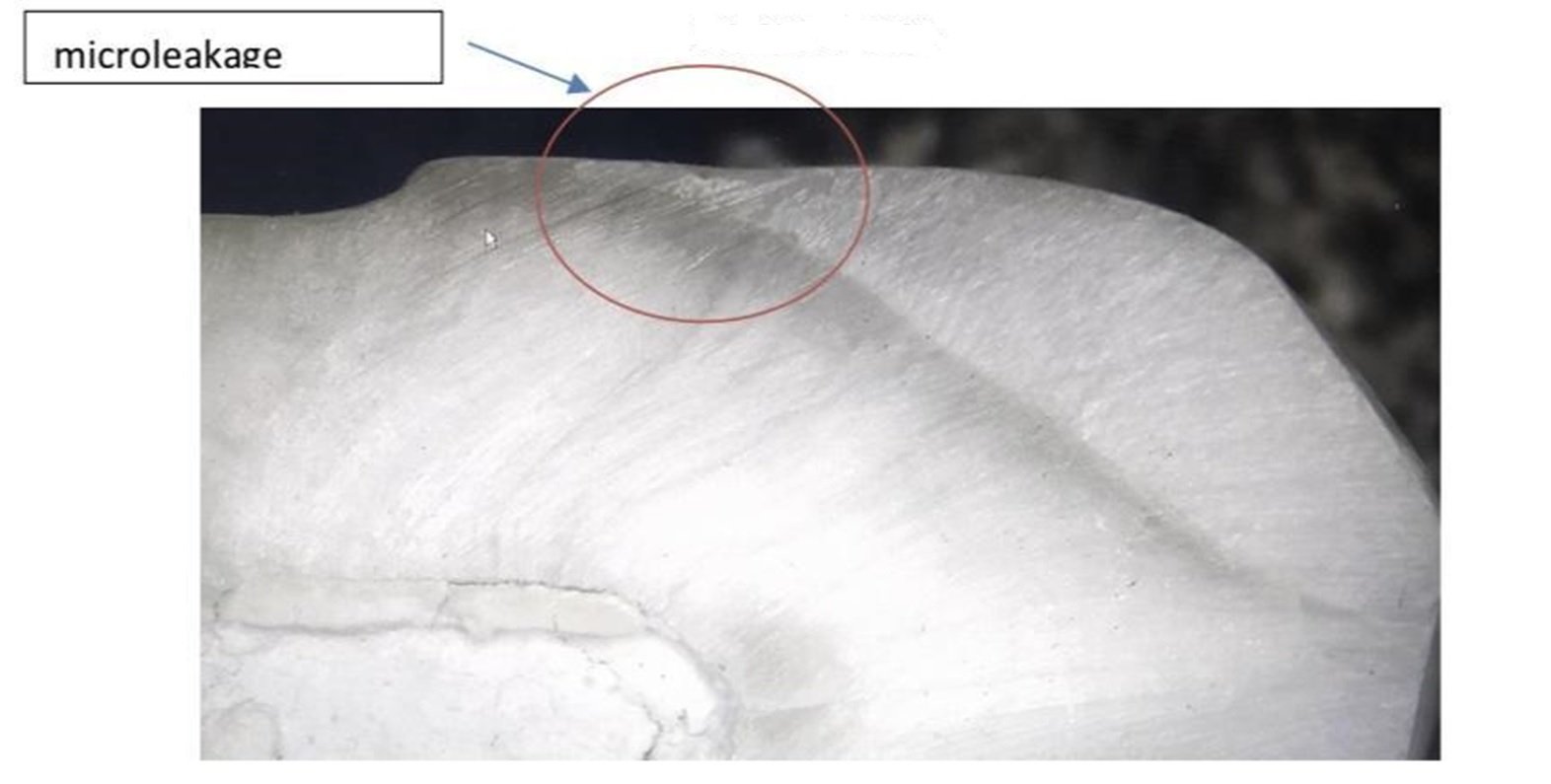
In fluoride varnish group, we can see less amount of microleakage compared to control group and additionally we can see surface roughness and overhanging of material and because of acid etchingsurface roughness is increased which may because of caries in future due to improper cleaning and food lodgment.
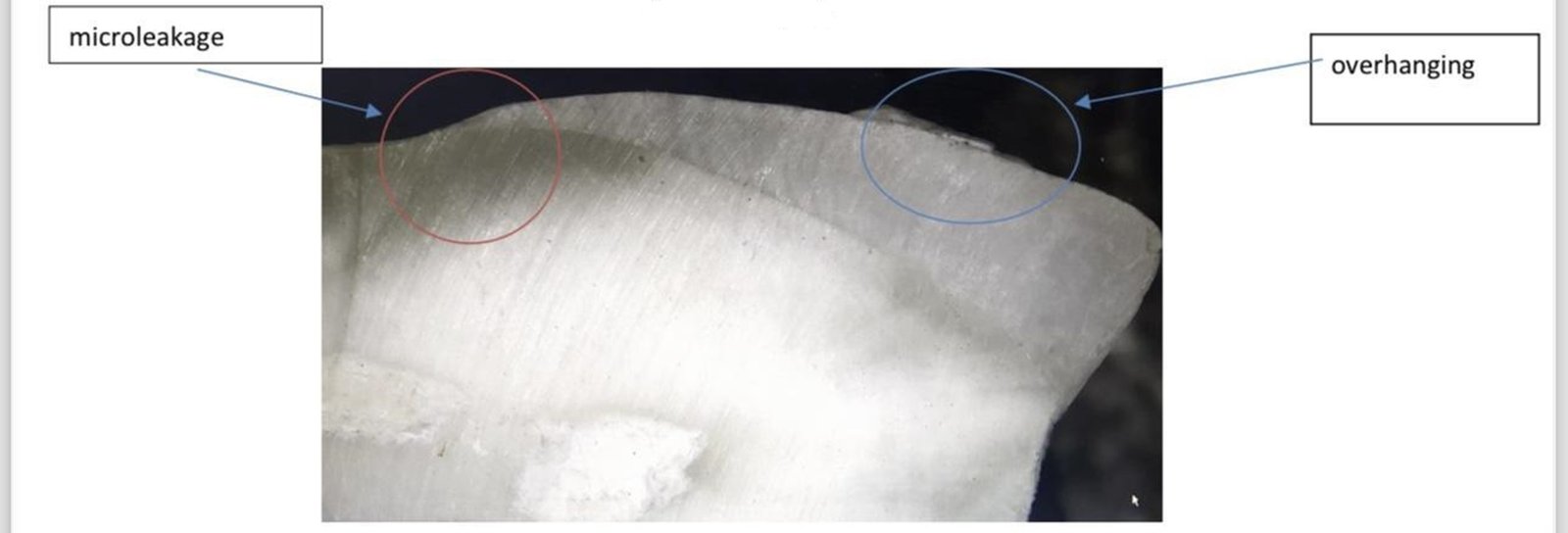
In silver diamine fluoride group, there is no microleakage compared to the control group and fluoride varnish group as there is no surface roughness surrounding orthodontic brackets. The surface is smooth.

DISCUSSION
This study was done to evaluate the efficiency of fluoride varnish and SDF in preventing enamel demineralization lesions adjacent to orthodontic brackets bonded with resin modified glass ionomer cement. Fluoride varnish and SDF have shown a significant results as they have helped in demineralization around orthodontic brackets on tooth and even there are cases of remineralization around orthodontic brackets on tooth because fluoride varnish and SDF lowers the pH and inhibits biofilm formation. Due to poor oral hygiene during orthodontic treatment, enamel decalcification may occur.
The 38% SDF solution used in our study had high concentration of silver(253,870 ppm) and fluoride(44,800 ppm) ions. SDF and hydroxyapatite forms calcium fluoride and silver phosphate in basic environment. Calcium fluoride acts as a pH-regulated slow release fluoride reservoir during cariogenic challenge. In addition, hydrogen phosphate ions facilitate calcium fluoride to form fluorapatite. Silver phosphate is more soluble than hydroxyapatite and fluorapatite thus it acts as a reservoir of phosphate ions facilitating the formation of fluorapatite from calcium fluoride.5 It was suggested that the presence of ammonia in SDF stabilizes the fluoride solution for extended periods, thereby increasing its bioavailability.9
The mechanism of GIC is remineralization of caries lesion. Carboxyl group(COO-) of polycarboxylic acid in GIC forms ionic bonds to calcium in enamel and dentin. When GIC powder and liquid are mixed, metals and fluoride ions are released, resulting in hyper mineralized zone between material and tooth structure.5
Effect of fluoride varnishes showed that they are much more effective in preventing acid attacks not only due to their high fluoride concentration, but also they have property of adhering to enamel surface. It forms calcium fluoride in enamel surface and supplies fluoride against acid attacks in mouth.4
Only premolars were chosen because orthodontic braces treatment is usually done in permanent dentition and premolars are easily available as they are extracted for orthodontic purpose.
Thermocycling is intended to simulate the thermal stress to which restorative materials and teeth would be exposed to by consuming drinks and food. Thermocycling method was chosen to provide exact replica of oral cavity as far as the temperature is concerned. 35 cycles of thermocycling were done. Artificial saliva is been used to provide so that the specimens can be immersed in it to get proper pH and chemical constituents of saliva. Artificial caries solution is been used because this is an in vitro study and patients usually consumes food and food lodgment occurs in dentition of orthodontic patient and to simulate the sugar consumption in patients so to provide the exact environment of oral cavity.
Stereomicroscopy is done as it is gold standard and reliable method compared to compound microscope. Reflected illumination is more commonly used in stereo microscopes than transmitted illumination, which is typically used in compound microscopes.
The present study results are in accordance to previous studies and support the hypothesis that topical fluoride application increases fluoride bioavailability in saliva thereby increasing tooth remineralization.10 In this research, sound enamel without cavities or exposed dentin was treated with SDF. The process is easy (dry and apply) so that any dental or medical professional can administer the treatment.
This could lead to an effective monitoring and low socioeconomic cost that can commensurate with fluoride varnish.9
CONCLUSION
Orthodontic treatment attempts to provide an esthetic dental and facial treatment for patients. Regrettably, a clear drawback of fixed orthodontic treatment is the occurrence of decalcification, also known as white spots, near brackets throughout the treatment process. This is a vitro study evaluated the ability of fluoride varnish and SDF to inhibit demineralization of enamel adjacent to orthodontic brackets. Nevertheless, using SDF in individuals without existing health issues adequately illustrated the aim of this research, which was to evaluate the rise in fluoride levels in saliva. Therefore, additional research is required in this area to focus more on the potential of SDF in preventing demineralization and dental caries.
SUMMARY
Considering the results of this and many other studies that have demonstrated the efficacy of fluoride varnish and SDF in reducing the incidence and depth of enamel demineralization, orthodontist should consider its routine clinical use especially in patients exhibiting poor oral hygiene.
REFERENCES
- Abeer Basunbul and Stanley A. Alexander, Effect of fluoride varnish on enamel demineralization around orthodontic brackets In vitro;2018. JSM Dent 6(1): 1104
- Wadih Abou Hamdan, The effect of fluoride varnish in preventing enamel demineralization around and under orthodontic bracket.2018. X: 1-11
- CF Demito, G Vivaldi-Rodrigues, AL Ramos, SJ Bowman, The efficacy of fluoride varnish in reducing enamel demineralization adjacent to orthodontic brackets: an in vitro study.2004.Dental Press J Orthod. 2019 Nov-Dec; 24(6): 48–55.
- Didem Nalbantgil, Mehmet Oguz Oztoprak, Derya Germec Cakan, Kemal Bozkurt and Tulin Arun, Prevention of demineralization around orthodontic brackets using different fluoride varnishes.2013. Eur J Dent 2013;7:41-47
- Ratichanok Nantanee, Busayarat Santiwong, Chutima Trairatvorakul, Hidenori Hamba, Junji Tagami, Silver diamine fluoride and glass ionomer differentially remineralize early caries lesions, in situ. 2016 Jul;20(6):1151-7
- Thomas Tasios, Spyridon N. Papageorgiou, Moschos A. Papadopoulos, Apostolos Tsapas, Anna-Bettina Haidich, Prevention of orthodontic enamel demineralization: A systemic review and meta-analyses.2009.Orthod Craniofac Res. 2019;00:1–11.
- M.L.Mei, E.C.M.Lo, C.H.Chu, Arresting dentine caries with silver diamine fluoride: What’s behind it? 2018. Journal of Dental Research I-8.2018 Jul;97(7):751-758.
- Dr. Violeta Contreras, Dr. Milagros J. Toro, Dr. Augusto R. Elias-Boneta, Ms. Angeliz Encarnacion-Burgos, Effectiveness of silver diamine fluoride in caries prevention and arrest: a systemic literature review. 2017. Gen Dent. 2017 ; 65(3): 22–29.
- Zohra Jabin, Iffat Nasim, Vishnu Priya V, Nidhi Agarwal, Comparative evaluation of salivary fluoride concentration after topical application of silver diamine fluoride and sodium fluoride:A randomized control trial. International journal of clinical pediatric dentistry, volume 15 issue 3(May-June 2022): 10.5005/jp-journals-10005-2398
- Weyant RJ, Tracy SL, Anselmo TT, et al. Topical fluoride for caries prevention: executive summary of updated clinical recommendations and supporting systemic review. J Am Dent Assoc 2013;144(11):1279-1291. DOI: 10.14219/jada.archive.2013.0057
Disclaimer from Guident
The views and opinions expressed in articles published in Guident are solely those of the authors and do not necessarily reflect the views of the editors, the editorial board or the publisher, Ivory India. Guident does not endorse any product, technique or treatment described. Clinical content is intended for qualified dental and medical professionals and is not a substitute for individual clinical judgement. Guident, its editors and the publisher accept no liability for any consequence arising from the use of information published in the journal.
How to cite this article
Dr. Manovishwa Patel, Dr. Bhavna Dave. Comparison of Fluoride Varnish and Silver Diamine Fluoride on Enamel Remineralization Around Orthodontic Brackets Bonded with Resin Modified Glass Ionomer Cement: An in-Vitro Study. Guident. 2024 Aug;17(9). Available from: https://guident.in/articles/research/comparison-of-fluoride-varnish-and-silver-diamine-fluoride-on-enamel-remineralization-around-orthodontic.html