Twin Occlusion Prosthesis for Glide-in Management of a Hemimandibulectomy Patient: A Case Report
Department of Prosthodontics and Crown & Bridge, Babu Banarsi Das College of Dental Sciences, Lucknow, UP, India
ABSTRACT
Surgical management of squamous cell carcinoma involving the mandible often necessitates partial or complete resection of the jaw, resulting in loss of mandibular continuity. Hemimandibulectomy leads to deviation of the remaining mandibular segment toward the resected side, accompanied by inferior rotation due to muscular imbalance and scar contracture. These changes significantly compromise mastication, speech, esthetics, and overall quality of life. Although surgical reconstruction is the preferred option, it may not always be feasible due to medical, economic, or anatomical limitations. Prosthetic rehabilitation therefore plays a pivotal role in restoring function. Twin occlusion prosthesis provides an effective solution by creating a broad occlusal table to facilitate functional contact during mandibular deviation. This article describes the prosthodontic rehabilitation of a hemimandibulectomy patient using a twin occlusion prosthesis and highlights its role in glide-in occlusal management.
INTRODUCTION
Hemimandibulectomy is a common surgical procedure performed in the management of malignant tumors of the mandible, particularly squamous cell carcinoma. Loss of mandibular continuity results in altered mandibular biomechanics, causing deviation of the mandible toward the surgical side during function. This deviation leads to difficulty in achieving stable occlusion, reduced masticatory efficiency, impaired speech, and compromised facial esthetics.
Restoration of form, function, and esthetics in such patients is a challenging task for prosthodontists. While surgical reconstruction using bone grafts or free vascularized flaps may restore continuity, it is not always possible. In such situations, prosthetic rehabilitation remains the primary means of improving function. Various prosthetic options have been described, including guide flange prosthesis, palatal ramp, neutral zone dentures, and twin occlusion prosthesis. Among these, twin occlusion prosthesis is particularly useful in patients with severe mandibular deviation where guidance therapy is ineffective.
CLASSIFICATION OF HEMIMANDIBULECTOMY DEFECTS
Cantor and Curtis classified mandibular resection defects into six classes based on the extent of resection and the presence or absence of mandibular continuity:
- Class I: Radical alveolectomy with preservation of mandibular continuity
- Class II: Lateral resection distal to the canine
- Class III: Lateral resection including the canine
- Class IV: Lateral resection extending to the midline
- Class V: Anterior resection involving the symphysis
- Class VI: Total mandibulectomy
This classification aids in treatment planning and selection of appropriate prosthetic rehabilitation.
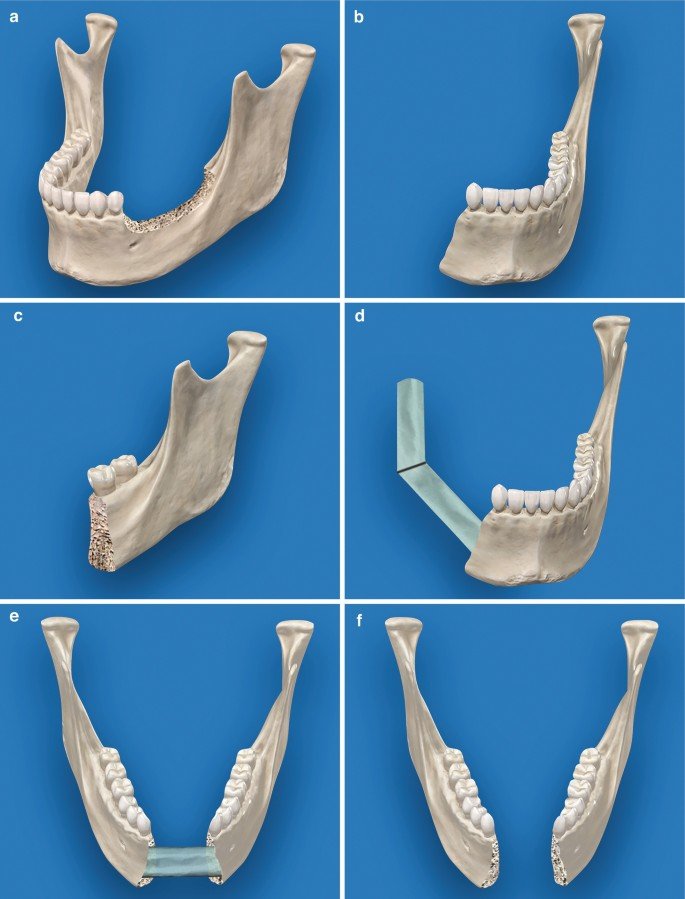
This classification aids in treatment planning and selection of appropriate prosthetic rehabilitation.
Prosthetic Treatment Options
Prosthetic management of hemimandibulectomy patients depends on the extent of resection, degree of deviation, and remaining dentition. Commonly used prosthetic modalities include:

Fig 1. Palatal ramp prosthesis

Fig 2.Guide flange prosthesis

Fig 3. Twin occlusion prosthesis
Twin occlusion prosthesis is indicated in patients with severe deviation where conventional guide flange therapy fails to establish a repeatable occlusal position.
CASE REPORT
A 54-year-old male patient reported to the Department of Prosthodontics with the chief complaint of difficulty in mastication and inability to chew food efficiently. The patient had a history of squamous cell carcinoma of the left mandible, for which he underwent surgical resection five years earlier. No surgical reconstruction was performed postoperatively.
Clinical Examination
Extraoral examination revealed facial asymmetry with deviation of the mandible toward the left side. Intraoral examination showed partial mandibular resection with loss of continuity and deviation during closure. Radiographic evaluation confirmed a Cantor and Curtis Class III defect. The maxillary arch was completely dentulous, while the mandibular arch showed missing teeth on the resected side.
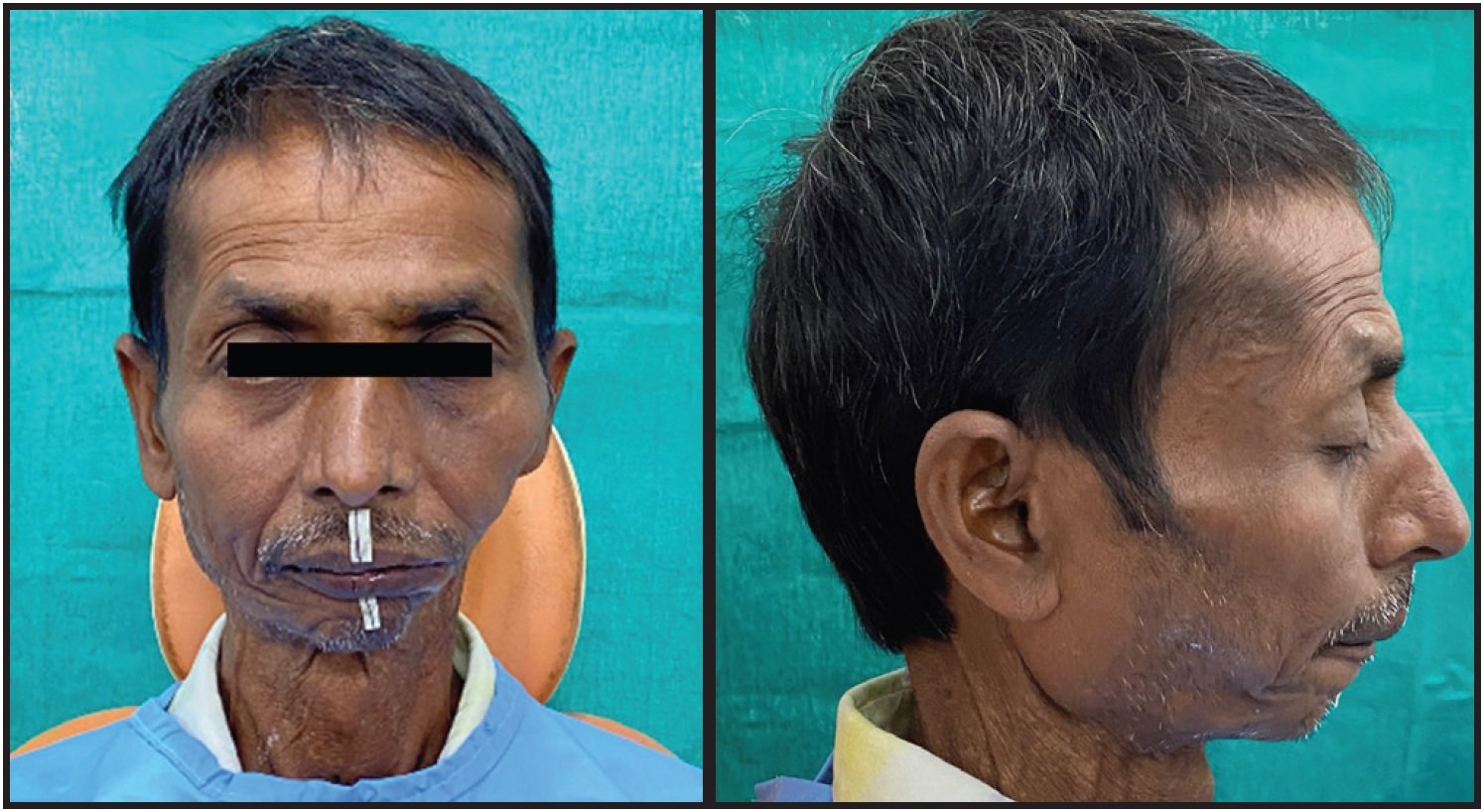
Fig 4. Extraoral view
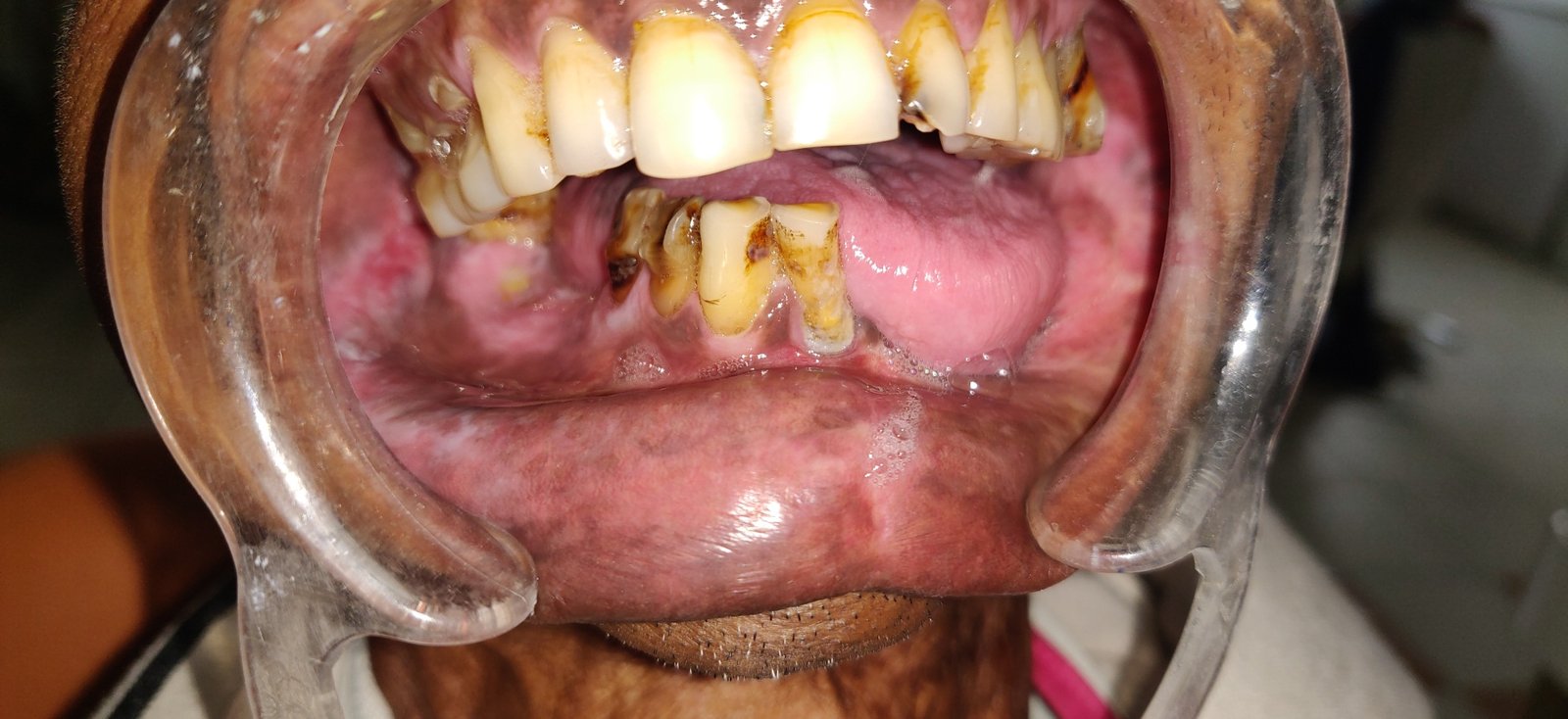
Fig 5. Intraoral View
CLINICAL PROCEDURE
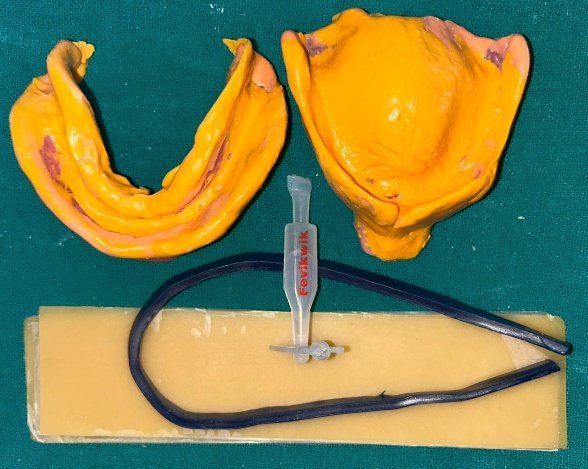
- Primary Impressions: Primary impressions of the maxillary and mandibular arches were made using irreversible hydrocolloid impression material and poured in dental stone.
- Jaw Relation: Record bases were fabricated, and maxillomandibular relations were recorded. Functional jaw relation was obtained by guiding the mandible into the most repeatable position during closure.
- Teeth Arrangement: Maxillary posterior teeth were arranged in two rows on the non-resected side. The palatal row served as a guiding occlusal surface, while the buccal row enhanced mastication. Mandibular teeth were arranged to occlude with the palatal row of maxillary teeth.
- Try-in: Wax try-in was carried out to evaluate occlusion, esthetics, phonetics, and patient comfort. Glide-in occlusion was confirmed.
- Denture Processing: The prosthesis was processed using conventional compression molding technique with heat-cured acrylic resin.
- Insertion: The finished prosthesis was inserted, and occlusal adjustments were carried out to ensure smooth mandibular guidance during function.
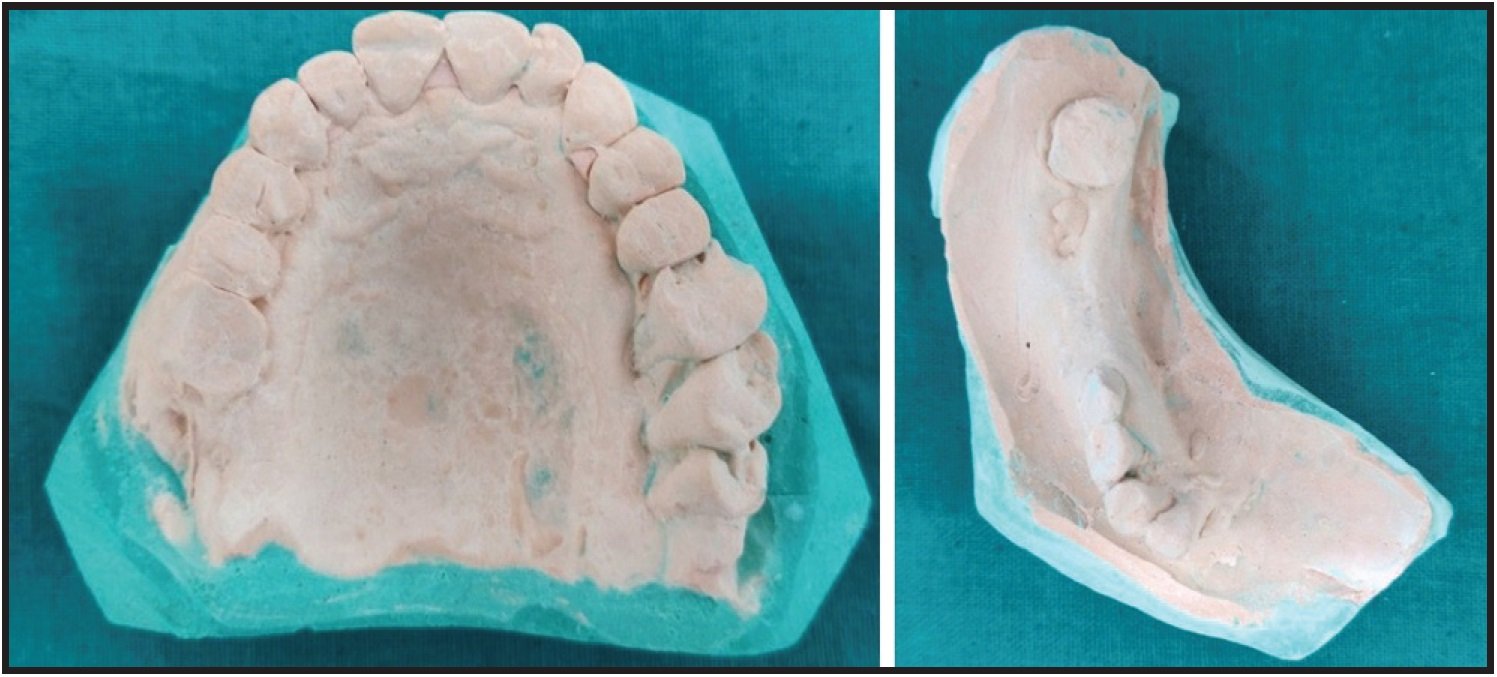
Fig 6. Final cast
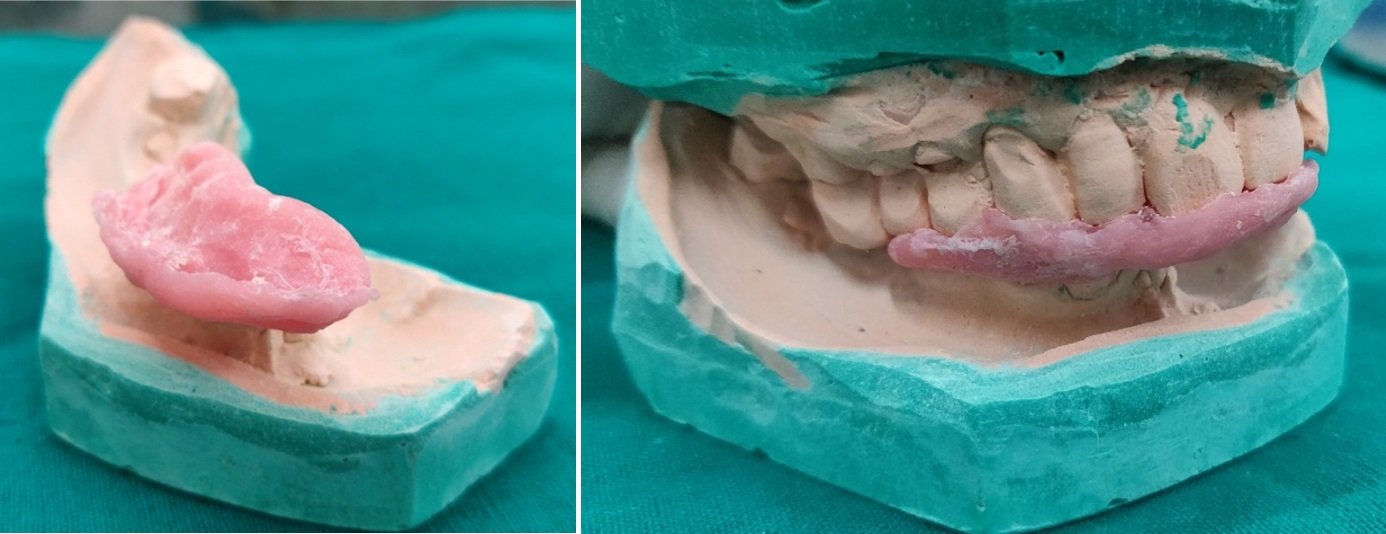
Fig 7.A functional occlusal record
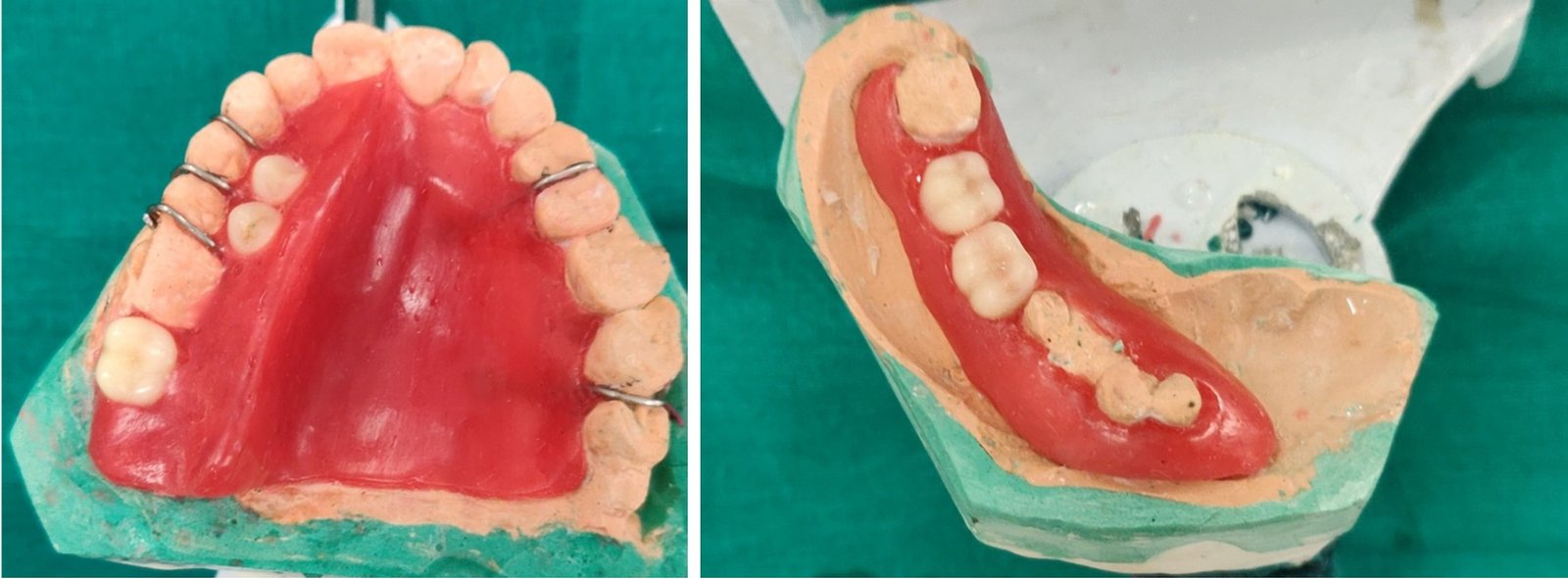
Fig 8. Teeth Arrangement
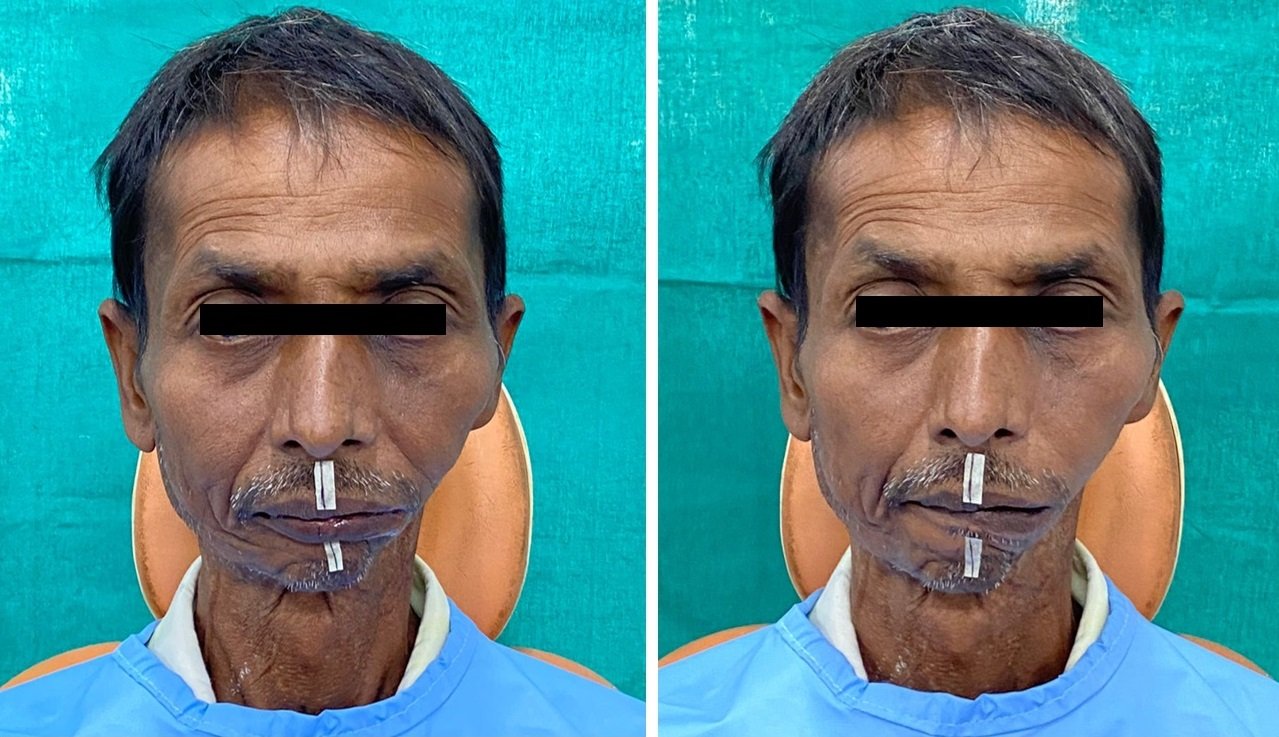
Fig 9. Pre and Post photographs
DISCUSSION
The extent of tissue loss following hemimandibulectomy directly influences the degree of mandibular deviation. In cases with severe deviation, guide flange prostheses may fail to provide adequate control or patient compliance. Twin occlusion prosthesis compensates for mandibular deviation by providing a widened occlusal table, enabling the mandible to achieve functional occlusal contact despite deviation.
This prosthesis is relatively simple to fabricate, cost-effective, and non-invasive. However, it does not correct mandibular deviation but rather accommodates it. Proper case selection and patient motivation are essential for successful outcomes.
CONCLUSION
Twin occlusion prosthesis is a simple, effective, and practical treatment modality for functional rehabilitation of hemimandibulectomy patients with severe mandibular deviation. It offers improved masticatory efficiency and patient comfort in situations where surgical reconstruction or guide flange therapy is not feasible.
REFERENCES
- Beumer J, Curtis T, Firtell D. Maxillofacial Rehabilitation: Prosthodontic and Surgical Considerations. St. Louis: Mosby; 1979.
- Cantor R, Curtis TA. Prosthetic management of edentulous mandibulectomy patients. J Prosthet Dent. 1971;25:446–457.
- Swoope CC. Prosthetic management of resected edentulous mandible. J Prosthet Dent. 1969;21:197–202.
- Robinson JE, Rubright WC. Use of guide planes in the prosthetic management of the mandibulectomy patient. J Prosthet Dent. 1964;14:992–999.
- Taylor TD. Clinical Maxillofacial Prosthetics. Chicago: Quintessence Publishing; 2000.
- Zarb GA, Bolender CL, Eckert SE, Jacob RF, Fenton AH, Mericske-Stern R. Prosthodontic Treatment for Edentulous Patients. 13th ed. St. Louis: Mosby; 2013.
- Aramany MA. Basic principles of obturator design for partially edentulous patients. Part I. Classification. J Prosthet Dent. 1978;40:554–557.
- Marunick MT, Harrison R, Beumer J. Prosthodontic rehabilitation of patients with maxillofacial defects. Curr Opin Otolaryngol Head Neck Surg. 2003;11:227–233.
- Keyf F. Obturator prostheses for hemimaxillectomy patients. J Oral Rehabil. 2001;28:821–829.
- Rahn AO, Boucher LJ. Maxillofacial Prosthetics: Principles and Concepts. Philadelphia: Saunders; 1970.
- Jain AR. Prosthetic rehabilitation of hemimandibulectomy patient with twin occlusion prosthesis: A case report. J Indian Prosthodont Soc. 2014;14(Suppl 1):S45–S49.
- Chalian VA, Drane JB, Standish SM. Maxillofacial Prosthetics: Multidisciplinary Practice. Baltimore: Williams & Wilkins; 1972.
- Sharry JJ. Complete Denture Prosthodontics. 3rd ed. New York: McGraw-Hill; 1974.
- McCord JF, Grant AA. Prosthetic management of edentulous patients with surgically resected mandibles. Br Dent J. 2000;188:211–215.
- Academy of Prosthodontics. Glossary of Prosthodontic Terms. J Prosthet Dent. 2017;117(5S):e1–e105
Disclaimer from Guident
The views and opinions expressed in articles published in Guident are solely those of the authors and do not necessarily reflect the views of the editors, the editorial board or the publisher, Ivory India. Guident does not endorse any product, technique or treatment described. Clinical content is intended for qualified dental and medical professionals and is not a substitute for individual clinical judgement. Guident, its editors and the publisher accept no liability for any consequence arising from the use of information published in the journal.
How to cite this article
Dr. Rehana Bano, Dr. Garima Agarwal, Dr. Mirza Hamza Baig. Twin Occlusion Prosthesis for Glide-in Management of a Hemimandibulectomy Patient: A Case Report. Guident. 2026 Apr;19(5). Available from: https://guident.in/articles/prosthodontics/twin-occlusion-prosthesis-for-glide-in-management-of-a-hemimandibulectomy-patient-a-case-report.html