Psychology of Geriatric Patients and Edentulism - a Prosthodontic Approach
Seema Dental College & Hospital Rishikesh, Utrakhand, India
ABSTRACT
Successful rehabilitation of geriatric edentulous patients depends not only on assessment of technical need and procedures but also assessing the patient clinically as well as psychologically. As we know satisfaction is subjective. It varies from individual to individual based on their specific need and demand which is expected from an old age patient as lots of physical, mental and social changes have been happening due to the ageing process. During prosthodontic rehabilitation of geriartric patients, psychological assessment is very crucial. Hence, being a Prosthodontist we must understand the psychology of patient, understand their expectations, counsel them and render them the best possible treatment.
Keywords : Psychology, Geriatrics, Edentulism
INTRODUCTION
There was a dramatic increase in life expectancy during the 20th century, chiefly due to advances in Medicine, Science, Education and Technology (WHO; Healthy Ageing - Adults with Intellectual Disabilities Summative Report).1 Increase of Geriatric population is on the rise, hence the number of geriatric patients who eventually at one point of time become partially or completely edentulous is also on the rise. The aging population constitutes a high-risk oral health group with impaired manual dexterity, cognitive deterioration and unmet treatment needs, which could be compounded by psychiatric morbidity. A Prosthodontists have to take care of those patients eventually.
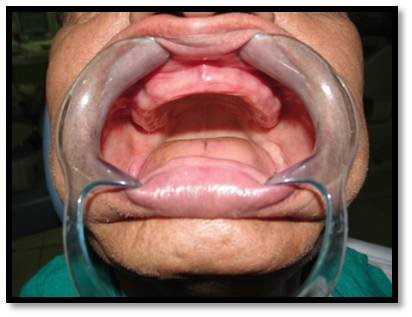
Edentulism has an immense effect on the self-esteem as well as health of a person. The preferred mode of rehabilitating a completely edentulous patient by conventional complete dentures is still the preferred mode of treatment for its various advantage, especially the cost factor and ease of fabrication. The improvement of satisfaction, efficiency, and masticatory performance in patients who are rehabilitated with new complete dentures has been reported over the years by several authors. However, the satisfaction level of the patient rehabilitated by conventional dentures is influenced by several factors, including the denture quality and the plated area, the quality of interaction in the patient-doctor relationship, past experience with complete dentures, if any and the psychological personality of the patient. The increased frequency of mental health problems above the age of 65 years which require specific diagnostic, therapeutic and re-adoptive approaches is at the root of the development of geriatric psychiatry (WHO; Psychiatry of the elderly).2 Hence pre-treatment evaluation of Psychological status of geriatric patients are necessary, like post evaluation after oral rehabilitation.
REVIEW OF LITERATURE
An extensive search through literatures provide some information regarding psychological considerations of geriatric edentulous patients. An intensive search goes back to 1958 wherein Jamieson C.H. stated that one must differentiate between the complaints based on deficient tissue tolerance and those due to mental and emotional stimuli (Jamieson, C.H. Geriatrics and the Denture Patient).3Ruth Freeman (1999) stated that psycho-social factors like financial cost, perceptions of need, dental anxiety state also act as barriers to accessing dental care (Ruth Freeman; ‘Barriers to accessing dental care : patient factors).4 Bandotkar et al (2007) stressed on the importance of personality in dentist-patient communication and of the psychosomatic component in prosthodontic patient (K.A.Bandodkar et al. Psychological considerations for complete denture patients).5 Warren et al (2014), showed the influence of psychological factors, biologic conditions and treatment for chronic conditions in the progression of periodontal diseases (Warren et al, Role of chronic stress and depression in periodontal diseases).6 Matias Rios et al (2016) tried to identify psychological factors that have a relationship with the most prevalent oral diseases in the elderly such as dental caries and periodontal diseases (Matias Ríos et al, Psychological factors and his influence in the oral health of older people).7
According to the World Health Organization, Dental caries and periodontal diseases have historically been considered the most important global oral health burdens. Severe periodontitis, which may result in tooth loss, is found in 5-15% of most populations. Prevalence of edentulousness (%) of elderly ( 65 to 74 ) in India is 19% (WHO; What is the burden of oral disease?).8 WHO also estimated that the proportion of the world's population over 60 years will nearly double from 12% to 22% between 2015 and 2050 (Ramdev P et al, Prosthodontic management of a completely edentulous patient with Huntington's disease: A rare case report.).9
Government of India is also giving due attention to the old age problems. The National Policy on Older Persons was announced in 1999 and declared 2000 as the National Year of older Persons. Old age, as the policy document reminds us, is not a separate part of life. The policy views the life cycle as a continuum, of which post 60 life is an integral part (National policy on older persons, 2009; Ministry of social justice and Empowerment, Govt. of India).10
Certain knowledge on Geriatric Medicine - the study of aging, are necessary which will help the Prosthodontists to understand which one is normal and which are not.
AGING
Human aging is defined as complex interactive alterations in the physical, psychological, social, philosophical and spiritual aspects of a person throughout the life span. Human aging is an important area within gerodontology (the study of aging) and geriatrics is health care in relation to aging. Aging is another stage of life like childhood, adolescence or adulthood. People age differently and experience aging differently based on heredity, lifestyle and attitudes.
AGING PHYSIOLOGY
One of the fundamental pathological aspects of aging process is the impairment of homeostatic mechanisms so that the milieu interior can’t be maintained in the face of environmental hostility. This renders old People vulnerable to various stresses. The decline in homeostatic reserve of each organ system is influenced by diet, environment, and personal habits and last but not least the genetic factors. Several important principles of aging include : i) individuals become more dissimilar as they grow ii)
abrupt decline in any system is always due to disease and not to normal aging etc.
Age related changes in the immune system :
The immune system undergoes several changes with advancing age. both humoral and cell mediated immunity are affected by aging. The age associated changes in the defence mechanisms occur in different organs. The commonest markers of immunosenescence are involution of thymus and decresed production of specific antibodies following exposure to antigens and vaccines.
AGING PATHOLOGY
Degenerative changes, particularly in the arteries and joints are an almost universal accompaniment of aging and lead to a heavy burden of disease in old age. It is not always easy to distinguish between the changes which are attributable to age and those which are attributable to disease e.g Osteoporosis, maintenance of blood pressure, impairment of the control of body temperature etc. Old people commonly shows evidence of several pathological process, some active and others inactive, nevertheless contributing to the total disability. One unfortunate consequence of multiple diseases is that the symptoms and signs or a new disease may be wrongly attributed to the old diseases already diagnosed. Patients themselves may describe their present symptoms to their old diseases so the dentist should always consider the possibility of new additional diagnosis.
Certain knowledge on Geropsychology is also very necessary for effective handling of the psychological issues of edentulous patients.
GEROPSYCHOLOGY
Psychology is the study of the mind and behaviour. Geropsychology is a field within psychology devoted to the study of aging and the provision of clinical services for older adults.
Psychological problems influencing the behavior of aged individuals can be due to physiological changes or reaction to social changes. The social changes like isolation and retirement (loss of income) leads to anxiety in these individuals. This could lead to lack of desire to lead normal lives in such individuals. The common physiological changes like loss of hair, loss of teeth and reduction in facial height leading to wrinkling has a huge impact on the behavior of the patient and ability to accept any medical or dental treatment. Geriatric psychiatry becoming a basic discipline for all the socio-medical providers including Prosthodontists.
Hence eliciting proper history is very important.
A deterioration in higher functions like memory and senses like hearing may cause some hindrance to a proper history. The elderly may suffer from Mental confusion; Deafness; Lack of concentration. There may be lack of co-operation too. Special emphasis on history takings shall always be on social history, drug history, assessment of activity and also on mental health.
PSYCHIATRIC DISORDERS
Depression -There is evidence that older adults with depression have a higher probability of having periodontal disease due to a lack of interest in personal oral hygiene. One of the explanatory models for the link between depression and periodontal diseases says that depression influences the immune and neuroendocrine systems, which directly affects inflammatory diseases.7
Community based studies revealed that symptoms of depression is as high as 15% in people over 65 years. Increased physical ill-health, psychological factors and aging brain- all contribute to the high prevalence. Symptoms are more common in women (IGNOU Booklet; Clinical geriatrics).11
Dementia -There are a group of diseases that gradually lead to the loss of mental functions including memory and other intellectual and functional abilities (Dementia) . Alzheimer’s type is the commonest form of dementia. It is insidious and slow growing.
OTHER PSYCHIATRIC DISORDERS
Anxiety Disorder –In geriatric practice anxiety disorder is seen commonly either as generalized anxiety disorder (restlessness, excessive sweating, palpitation and gastro-intestinal symptoms) or phobic anxiety/adjustment disorders.
Post traumatic Stress Disorder -This is characterized by experiencing the trauma (accident seen) through dreams and working thoughts with marked emotional disturbances.
Obsessive Compulsive Disorder – It is a recurrent intrusive thoughts, impulse or feeling inspite of trying to resist relates to repeatitive behaviour such as repeated hand washing etc.
Hypochondriasis- It is a condition relating to persistent reoccurrence with one or more serious physical disorders.
Somatisation Disorder – It relates to multiple, recurrent and frequently changing physical symptoms of several year duration.
ASSESSMENT OF THE MENTAL ATTITUDE
Psychologically, it has been stated that every individual has primary and secondary needs. The basic drive of an individual includes biologically important urges while the secondary drive includes urges that cause an individual to seek psychological satisfaction (Puneet Hegde et al, Assessment of the Mental attitude of the elderly for Prosthodontic treatment- A review of various classifications).12
De Van stated that we should meet the mind of the patient before we meet the mouth of the patient. Accurate diagnosis and a strict treatment protocol have proven to predict good long term survival rates for prosthodontists. Even if the prosthetic treatment is of excellent clinical quality, some patients will still be dissatisfied (Sunila Bukanakere Sangappa; Patient Satisfaction in Prosthodontic).13
A patient’s satisfaction is strongly related to his/ her personality and to his/ her relationship with the patient. Hence assessment of the mental attitude of the elderly is very important.
Various investigators have spoken about the need for classification of mental attitude of the patients seeking dental treatment thereby helping the clinician to provide better and satisfactory dental treatment.
In 1950 Dr.Milus M House proposed a general classification of completely edentulous patient’s mental attitude on the basis of how they behave in response to the prospect of becoming edentulous. The classification is based on extensive clinical experience rather than on scientific yardsticks or psychological inventories. It has stood up well to the test of time and deserves discussion at some length (Chandrashekar et al, Mental Attitude and Psychological Adaptive Response in Complete Edentulous Patients).14
The M.M. House classification on mental attitude are as follows:
Philosophical Patient : These are the patients who are considered to have the best mental attitude. They are willing to accept the Prosthodontist’s judgement without question. They understand the limitations of the dentist as well as the dental procedure. Most importantly they adjust well and accept that replacement of the teeth is required for the maintenance of health and appearance. They show interest in the treatment, ask valid questions and follows the Dentist’s post-denture advices.
Exacting Patient : These patients have all the good attributes of a philosophical patient but require extreme care and patience from the dentist. They expect each step to be explained to them in detail. They tend to question the abilities of the dentist and have unrealistic expectations from the dental treatment. Some cases may seek guarantee of treatment outcome. They can be managed, if handled properly. Some extra time is needed to explain the entire procedure to them. However with careful assessment and treatment, they can cooperate to the treatment.
Hysterical Patient :These patients are emotionally unstable, easily excitable and excessively apprehensive. These patients are usually having family problems or psychological disturbances. Based on their overall mental attitude, their prognosis is usually considered unfavourable. Hence additional professional help is usually required prior to the treatment for behaviour modification.
Indifferent :These types of patients have little concern for their teeth or oral health. They have little appreciation for the efforts of their doctor and often seek treatment because of the insistence of their families. They will give up easily, if problems are encountered with their new teeth. Indifferent patients require more time for their instruction on the value and use of dentures. Their attitude can be very discouraging to doctors who treat them.
Later on the M.M. House classification was re-evaluated as it was believed that certain terms used by earlier classification like ‘hysterical patient’ is regarded as derogatory and judgemental. Also the classification pertained to patient isolation and did consider the behaviour of the dentist as an influence over the patient’s reaction. Gamer et.al in his study has spoken about classification of patients based on two factors 1) The level or quality of engagement or involvement of the patient towards the dentist 2) The level of willingness to submit (trust) to the dentist.
Winkler mentioned the following categories:
The Hardly Elderly : They are group that are most often seen in recent times. Majority of the aged individuals now are mentally balanced and physically strong not requiring any assistance. They are also very active both socially as well as professionally. They anticipate the changes and accept them as challenges. They adapt very well to their surroundings and understand their limitations due to slow but continuous age related changes.
The Senile Aged Syndrome: These are the elderly individuals who have very poor resistance to diseases and get stressed very easily. They are depressed, dependent and often insecure. Due to their physical and emotional disadvantage, they are usually described as handicapped, chronically ill and disabled. They are usually not mentally prepared or physically able to adjust to the changes around them.
The Between Group: These are the individuals who are in between the previous two extremes. Their illnesses are predictable but they maintain a good degree of stability and balance.
ASSESSMENT ON ATTITUDE TOWARDS DENTURES
The geriatric patient can usually be grouped into three categories with respect to their attitude towards dentures :
The Geriatric Prosthetic Patient- These are the patients who understand the need for timely replacement of their old dentures and are motivated to get their new dentures made.
The Satisfied Wearer of Old Dentures - These patients may have old dentures which may be floating in their mouth and barely approximating the oral anatomy. There might be severe resorption of the alveolar ridges and loss of vertical dimension but these patients have learnt to live their dentures. They are very happy with their existing faulty dentures and will not give them up for anything. It is believed that the prognosis of new dentures in such patients might be very poor and they will object to the increased vertical dimension. The improved fit of the new denture might even start irritating their tissues.
DISCUSSIONS
After knowing the psychological status along with relevant other medical history and examination the prosthodontist shall decide on the actions to be undertaken on the particular case. Dentures should not be constructed, if a patient is under extreme physical and mental stress.
Visits shall be planned at short interval. Morning appointments can be beneficial as the geriatric edentulous patient usually has less tissue distortion early in the day. Patients should not be promised too much. The treatment plan should be discussed and understood by the spouse or other accompanied family member. Post-insertion issues should also be discussed. Partial, transitional or over dentures is usually the choice of treatment. Implant prosthesis can also be used.
In management of an edentulous patient, who is in need of complete dental prostheses, the goal is to resume his or her life with a renewed sense of confidence, a healthy smile and the ability to communicate with others without embarrassment. The emotional aspects of receiving dentures can be a major factor in many patients’ experiences of the process. A patient who is not mentally prepared for the transition to dentures, or who has unrealistic expectations about what life will be like after receiving them, may end up unsatisfied with dentures—regardless of how well crafted they may be. Because of this, dentists must play the role of counselor during this transition period. Prosthodontics is a specialty that requires the ability to meet patients’ needs when creating well-fitting and aesthetic dentures and partials. It is important to ensure these creations are technically superb so that patients can have the best-functioning and most attractive, natural smile. In the emphasis of delivering a technically ideal denture, it is important not to overlook the fact that it takes more than technical success to give a patient a successful denture experience overall. The Prosthodontist should communicate clearly with the patient every step to ensure the easiest transition/ retention to a life with dentures.
CONCLUSION
When handling geriatric edentulous patients, one must differentiate between the complaints based on deficient tissue tolerance and those due to mental and emotional stimuli. The many extraneous social influences conspire to make the aged feel unwanted and therefore unhappy. Meeting technological standards does not mean that the Prosthodontist is successful. It is to be kept in mind that the patient evaluates the treatment from the point of view of their own satisfaction. Thus, modification to standard procedures within the limits of medical, functional and psychological status can make the difference between success and failure. The Prosthodontist must be conï¬dent of addressing and managing the psychology of these patients. A thorough understanding of the geriatric mental state thus becomes important and signiï¬cant for the Prosthodontist.
REFERENCES
- WHO; Healthy Ageing - Adults with Intellectual Disabilities Summative Report:WHO/MSD/HPS/MDP/00.3
- WHO; Psychiatry of the elderly: who/mnh/mnd/96.7
- Jamieson C.H. Geriatrics and the Denture Patient. J Prosthet Dent. 1958;8:8–13.
- Ruth Freeman. Barriers to accessing dental care : patient factors. Brit Dent J. 1999;187(3).
- K.A.Bandodkar et al. Psychological considerations for complete denture patients. J Indian Prosthodont Soc 2007 ; 7(2).
- Warren et al. Role of chronic stress and depression in periodontal diseases. Peridontol 2014; 64(1):127-38.
- Matias Ríos-ErazoMatías, Borges-Yañez Socorro Aída. Psychological factors and his influence in the oral health of older people : A narrative review. J Oral Res 2016; 5(1): 43-49.
- WHO; What is the burden of oral disease? WHO update 2018.
- Ramdev P, Bhat S, Amarnath G S, Shruthi C . Prosthodontic management of a completely edentulous patient with Huntington's disease: A rare case report. Indian J Multidiscip Dent. 2017 ; 7(1):45-48.
- National policy on older persons. 2009. Ministry of social justice and Empowerment, Govt. of India, New Delhi – 110001.
- IGNOU Booklet; Clinical geriatrics; MME-005, IGNOU, School of Health Sciences publication, Nov 2009.
- Puneet Hegde et al. Assessment of the Mental attitude of the elderly for Prosthodontic treatment- A review of various classifications. Int J Humanities, Arts,Med Sci. 2016; 4(7): 93-100.
- Sunila Bukanakere S. Patient Satisfaction in Prosthodontic Treatment: Multidimensional Paradigm. J Indian Prosthodont Soc. 2012; 12(1):21–26.
- Chandrashekar et al. Mental Attitude and Psychological Adaptive Response in Complete Edentulous Patients, Research & Reviews. J Dent Sci. 2013; 1(3).
- Charles M. Heartwell, Syllabus of Complete Dentures. 4th edition.
- Zarb Bolender, Prosthodontic Treatment for Edentulous Patients. 12th edition.
- Sheldon Winkler, Essentials of Complete Denture Prosthodontics. 2nd edition.
Disclaimer from Guident
The views and opinions expressed in articles published in Guident are solely those of the authors and do not necessarily reflect the views of the editors, the editorial board or the publisher, Ivory India. Guident does not endorse any product, technique or treatment described. Clinical content is intended for qualified dental and medical professionals and is not a substitute for individual clinical judgement. Guident, its editors and the publisher accept no liability for any consequence arising from the use of information published in the journal.
How to cite this article
Dr. Himanshu Aeran, Dr. Varun Kumar, Dr. Arpita Ghosh Department of Prosthodontics. Psychology of Geriatric Patients and Edentulism - a Prosthodontic Approach. Guident. 2018 Sep;11(10). Available from: https://guident.in/articles/prosthodontics/psychology-of-geriatric-patients-and-edentulism-a-prosthodontic-approach.html