Awareness Among Dentist About Interactions Between Metallic Dental Prosthesis and Magnetic Resonance Imaging –a Questionaire Based Survey
Department of Maxillofacial Prosthodontics and Implantology Peoples College of Dental Sciences & Research Centre, Bhopal, Madhya Pradesh, India
INTRODUCTION
Today there are various imaging modalities used to evaluate the diseases of the oral cavity which includes panoramic radiography, ultrasound, computed tomography (CT) and magnetic resonance imaging (MRI). In recent times MRI has emerged as a very important life-saving diagnostic tool for the diseases of the head and neck region.1Many a times patients with dental restorations require MRI of the head and neck, to determine the progress of diseases or to find out the cause of any symptoms unrelated to the dental restorations.2
Dental restorations usually contains precious metals such as gold (Au), silver (Ag), platinum(Pt) and non-precious alloys like chromium(Cr), cobalt(Co), molybdenum (Mo), nickel(Ni) and other metals like titanium and titanium alloys.3 The prosthesis made from these metals such as dental implants, dental braces and metallic dental crowns may reduce the image quality in the region of MRI due to distortion caused by large magnetic field and signal loss. 4-6
Every dental professional should be aware of the interactions of MRI with the various restorative dental materials and the distortion of the images or the dislodgement of the prosthesis, which thereby can cause injury to the adjacent tissues. The present survey aimed to investigate the awareness among dentist about interactions between metallic dental prosthesis and magnetic resonance imaging.
MATERIALS AND METHODS
The present study is a descriptive, cross-sectional survey of undergraduate (final year students and interns) and specialists (postgraduates and faculty of Prosthodontics, Orthodontic, Oral Surgery, Endodontics and Oral Medicine) in different dental colleges in Bhopal, Madhya Pradesh. This is a questionnaire based survey which was conducted during June 2018 for a period of 14 days. The purpose of the survey was explained to the subjects participated in the study, so as to ensured their confidentiality. Written consent was obtained from the participants before filling the questionnaire.
A questionnaire containing 3 closed ended questions was circulated among 120 undergraduate, postgraduates and faculty in different dental colleges in Bhopal, Madhya Pradesh. The questions were regarding the awareness among dentist about interactions between metallic dental prosthesis and magnetic resonance imaging. Ethical approval for the study was obtained from the ethical committee of People’s College of Dental Sciences & Research Centre, Bhopal at the beginning of the study.
INCLUSION CRITERIA
The Participants included in the survey are undergraduate (final year students and interns) and specialists (postgraduates and faculty of Prosthodontics, Orthodontic, Oral Surgery, Endodontics and Oral Medicine) in different dental colleges in Bhopal, Madhya Pradesh.. The subjects willing to participate were only included in the study.
EXCLUSION CRITERIA
Undergraduate students other than final years and interns were excluded. Postgraduates and specialists other than subjects mentioned above were excluded from the study. The subjects who had not given their consent were excluded from the study.
DATA ANALYSIS
Counts and percentages were used for statistical analysis. The data were analyzed using the Statistical Package for the Social Sciences Statistical Software (IBM SPSS Statistics Version 20).
RESULTS
The Demographic data of survey were presented in Table1. A total of 120 dental students and professionals were given the questionnaire out of which 100% response were obtained, out of which 60% were female and 40% were male subjects. The responses for the different subjects participated in the study for questions asked were presented in Table 2.
When we asked the subjects “do you think metallic dental implants placed in oral cavity interact with MRI?” 63.64% faculty, 57.90% postgraduates knows about it whereas 53.33% undergraduate do not know about it.(Graph 1).
When we asked the subjects “do you think metallic Orthodontic braces, plates or metallic restorations placed in oral cavity interact with MRI?” 68.18% faculty, 60.53% postgraduates knows about it whereas 50% undergraduate do not know about it.(Graph 2).
When we asked the subjects “the metallic appliances or restoration should be removed during MRI” 63.64% faculty, 55.26% postgraduates knows about it whereas 55% undergraduate do not know about it.(Graph 3).

Table 1: Demographic data of subjects participated in the study.
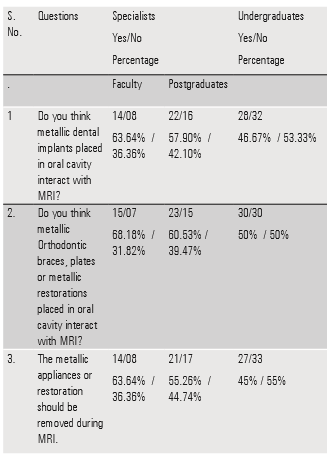
Table 2: Questions asked during survey and their responses.
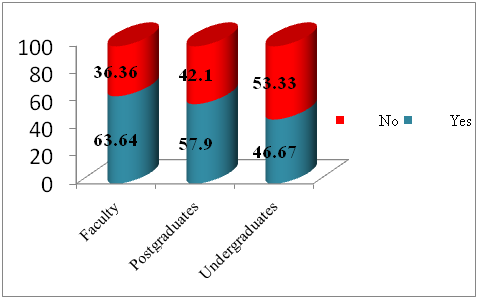
Graph 1: Do you think metallic dental implants placed in oral cavity interact with MRI?
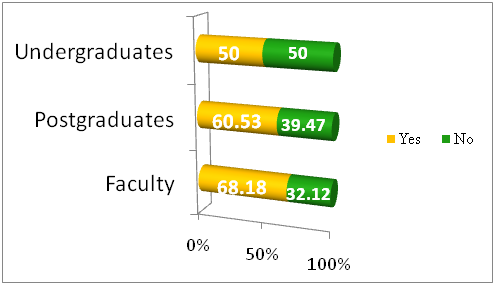
Graph 2: Do you think metallic Orthodontic braces, plates or metallic restorations placed in oral cavity interact with MRI?
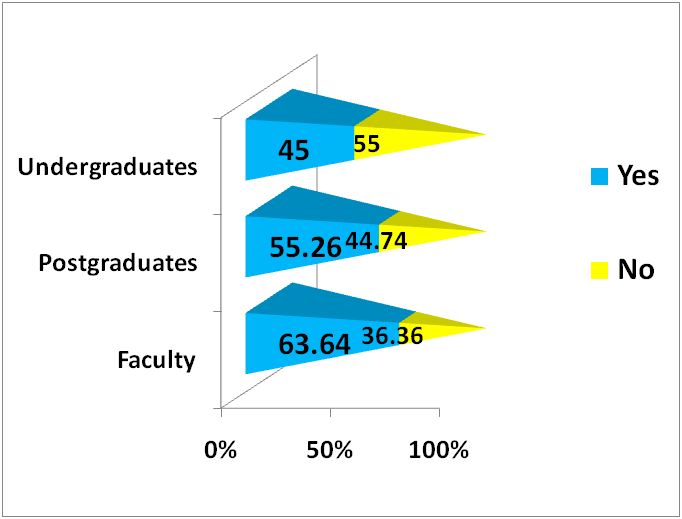
Graph 3: The metallic appliances or restoration should be removed during MRI.
DISCUSSION
The present descriptive observational survey was done to find the awareness among dentist about interactions between metallic dental prosthesis and magnetic resonance imaging. Today various restorative dental materials and metallic prosthesis are in use in dental profession and there was lack of awareness about their interactions with MRI in dental graduates and postgraduates.
Specific knowledge about the impacts of MRI at the level of dentist can save valuable time of the patient and prevent artifacts in MRI images. Artifacts occurred due to metal restorations may result in distortion or disappearance of the image and loss of important informations in MRI. In an attempt to find out a few answers, we had done this survey so as to improve the MRI related errors caused due to dental restorations or prosthesis.1
In a study by Costa et al6 it was found that 70% of the artifacts were caused by orthodontic appliances, followed by 18% with dental titanium implants and 4% with metallic crowns.
In a study by Mathew et al1 63.4% of dentists perceived that dental materials can produce artifact in MRI. In our study 53.3% dental graduates and post graduates think that metallic dental implants placed in oral cavity interact with MRI and 56.6% think that metallic orthodontic braces, plates or metallic restorations placed in oral cavity interact with MRI.
Metallic objects such as dental braces, dental implants, metallic dental crowns and restorations may reduce the image quality MRI taken in the maxillofacial region and thus leads to magnetic field distortion and signal. Patients having metallic implants or other metallic objects should be evaluated by using ex-vivo techniques before MRI is done, so that the degree and presence of ferromagnetism must be determined to make proper decision to avoid possible hazards associated with the use of MRI.7 Patients with particular ferromagnetic metallic implants or materials, as well as the other metallic objects that were determined to be non-ferromagnetic, can safely undergo imaging by MR scanners with static magnetic field strengths up to and including those used for the specific evaluations.8
Limitations of the present study were that students of first to third year were not included in this study. The study’s sample population comprised of only Bhopal subjects. A nationwide survey is required to give more accurate representation and results of dental graduates and postgraduates.
CONCLUSION
The results of the present study found that there was limited knowledge (up to 50%) of dental graduates and postgraduates on topic whether there is any interaction between dental materials and MRI. The present scenario needs to be changed by educating and increasing the awareness among undergraduate and postgraduates about it. Dental Council of India (DCI) and various national societies related to dentistry can play a key role by including this topic in study curriculum and increasing the awareness among dentists.
REFERENCE
- Mathew CA, Maller S, Maheshwaran M.Interactions between magnetic resonance imaging and dental material. J Pharm Bioallied Sci. 2013;5(Suppl 1):S113–S116.
- Mathew CA, Maller SV, Maller US, Maheshwaran M, Valarmathi S, Karrunakaran B. Evaluation of awareness among dentists about magnetic resonance imaging and their interactions with restorative dental materials: A survey among dentists in three districts of Tamilnadu. J Indian Acad Dent Spec Res 2016;3:6-9.
- Hubálková H, Hora K, Seidl Z, Krásenský J. Dental materials and magnetic resonance imaging. Eur J Prosthodont Restor Dent 2002;10:125-30.
- Chen DP, Wu GY, Wang YN. Influence of galvano-ceramic and metal-ceramic crowns on magnetic resonance imaging. Chin Med J (Engl) 2010;123:208–11.
- Harris TM, Faridrad MR, Dickson JA. The benefits of aesthetic orthodontic brackets in patients requiring multiple MRI scanning. J Orthod. 2006;33:90–4.
- Costa AL, Appenzeller S, Yasuda CL, Pereira FR, Zanardi VA, Cendes F. Artifacts in brain magnetic resonance imaging due to metallic dental objects. Med Oral Patol Oral Cir Bucal. 2009;14:E278–82.
- Shellock FG, Curtis JS. MR imaging and biomedical implants, materials and devices. An updated review.Radiol 1991;180:541-50.
- Shellock FG. MR imaging of metallic implants and materials: a compilation of the literature. AJR Am J Roentgenol 1988;151:811-4.
Disclaimer from Guident
The views and opinions expressed in articles published in Guident are solely those of the authors and do not necessarily reflect the views of the editors, the editorial board or the publisher, Ivory India. Guident does not endorse any product, technique or treatment described. Clinical content is intended for qualified dental and medical professionals and is not a substitute for individual clinical judgement. Guident, its editors and the publisher accept no liability for any consequence arising from the use of information published in the journal.
How to cite this article
Dr. Benaiffer Agrawal, Dr. Sunil Kumar Mishra. Awareness Among Dentist About Interactions Between Metallic Dental Prosthesis and Magnetic Resonance Imaging –a Questionaire Based Survey. Guident. 2018 Jul;11(8). Available from: https://guident.in/articles/prosthodontics/awareness-among-dentist-about-interactions-between-metallic-dental-prosthesis-and-magnetic-resonance-imaging.html