Obturator Prosthesis: Restoring Function and Form in Palatal Defects: A Case Report
Department of Prosthodontics, Crown, Bridge & Implantology, AME’s Dental College and Hospital, Raichur, India.
INTRODUCTION
Palatal defects may result from congenital malformations, trauma, disease, pathologic changes, radiation burns, or surgical intervention.1 These defects predispose the patient to hypernasal speech, leakage of fluid into a nasalcavity, and impaired masticatory function. Such defects need special prosthesis to establish oronasal seal which can be provided by obturator prosthesis.2
The Glossary of Prosthodontic Terms de?nes an obturator as “a maxillofacial prosthesis used to close a congenital or acquired tissue opening, primarily of the hard palate and/or contiguous alveolar or soft tissue structures”.3 The degree of obturator extension into the defect varies according to the con?guration of the defect, character of its lining tissue, and functional requirements for stabilization, support,and retention of the prosthesis.4
The open hollow obturator has disadvantages such as accumulation of food, debris, and mucus inside the hollow part leading to malodor and an increase in weight. The closed hollow obturator prevents water and food retention, enables cleaning,and has a reduced weight and maximum extension.5 The size of the defect, number of remaining teeth, amount of remaining bony structures, and ability of the patient to adapt to the prosthesis are few factors that a?ect the prognosis of the treatment.
CASE REPORT
A 58-year-old male patient presented to the Department of Prosthodontics and Crown-Bridge for the prosthetic rehabilitation of post maxillectomy defect resulting from COVID 19 necrosis of maxilla one year back. The patient complained of di?culty in mastication, nasal regurgitation of ?uids, and nasal tone in his voice. Intraoral examination revealed edentulous maxillary arch with large defect on medial and right side with oroantral communication and had flabby ridge. Masticatory and phonetic functions of the patient were a?ected.
Acoordingly treatment options were discussed with the patient. patient was not willing for surgical fixed options due to socioeconomic status. A removable prosthesis Obturator was planned. The treatment plan was made to rehabilitate this patient with a de?nitive obturator.
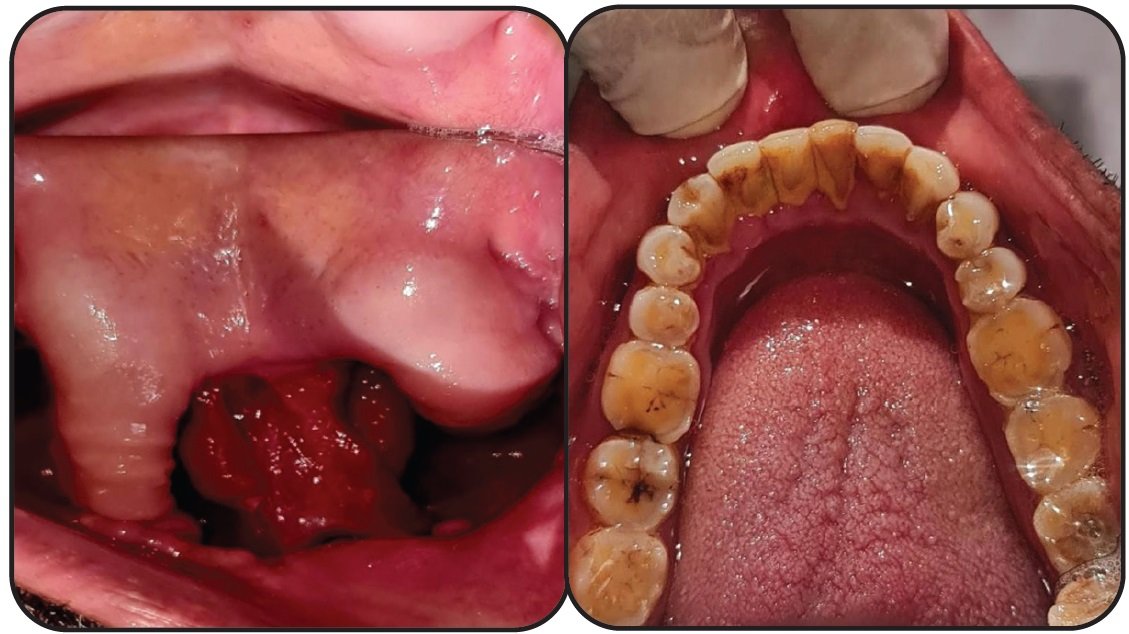
Edentulous maxillary arch with large defect on medial and right side with oroantral communication was seen and had flabby ridge & Mandibular arch
PROCEDURE
The primary impression was made using irreversible hydro-colloid (Zelgan 2002, DENTSPLY) and was poured with dental stone (Kalstone, Kalabhai) to obtain a primary cast. The defect was blocked with a gauze piece lubricated with petroleum jelly prior to impression making. Special tray was fabricated and Border molding was done using green stick impression compound (DPI pinnacle tracing sticks), and ?nal impression of defect was made with light viscosity addition silicone impression material (Reprosil, DENTSPLYCaulk, USA), and the cast was poured with type IV dental stone (Kalstone,Kalabhai Karson). Master cast was poured and jaw relation was recorded and transferred to a semi adjustable articulator (Hanau Wide Vue Articulator). Teeth arrangement was done and try in was done in patient mouth. Phonation, occlusion and fit of the prosthesis along with the aesthetics was checked in this step and was satisfactory to the patient. After try-in, waxed up obturator was processed conven-tionally with ?asking, dewaxing, and packing using heat-polymerizing acrylic resin (Trevalon Denture Material,DENTSPLY India Pvt. Ltd., India) . Packing with lost salt technique- a thin layer of heat cured acrylic resin was packed into the defect cavity and Salt crystals were placed over that layer and above which another layer of heat cure acrylic resin was packed. Finishing and polishing of the obturator prosthesis were done . It was then inserted into the patient’s mouth. The patient was happy and satis?ed with his improved function, speech, and esthetics. The patient was instructed about the maintenance of the prosthesis and periodic recall check-up .
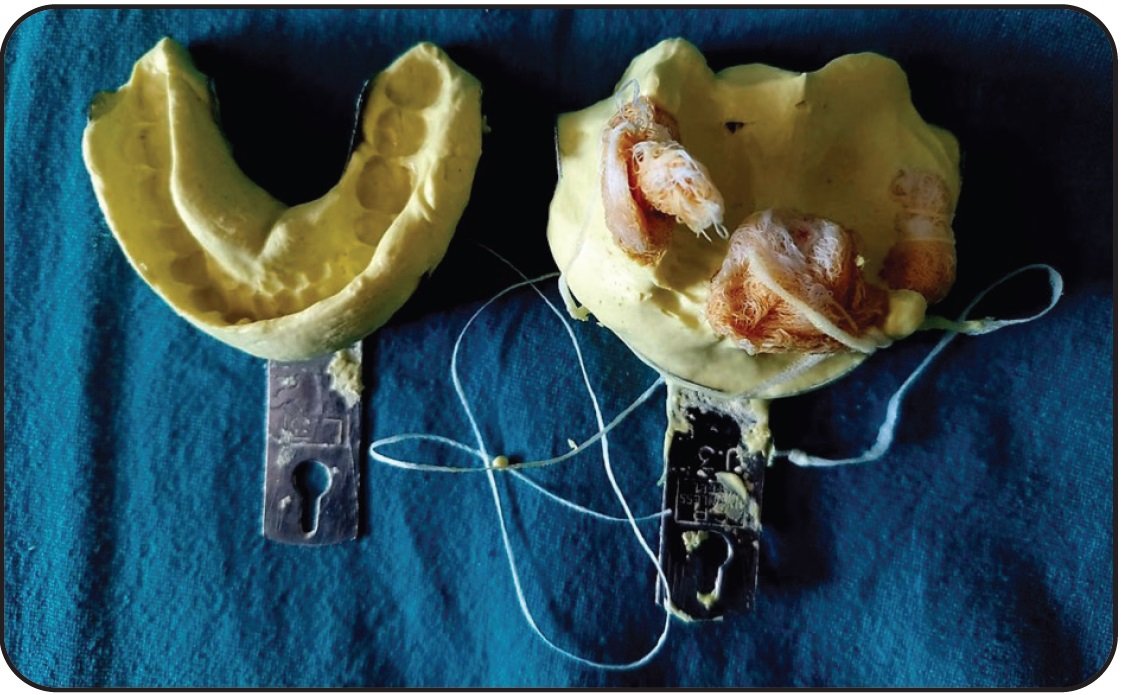
Primary impression
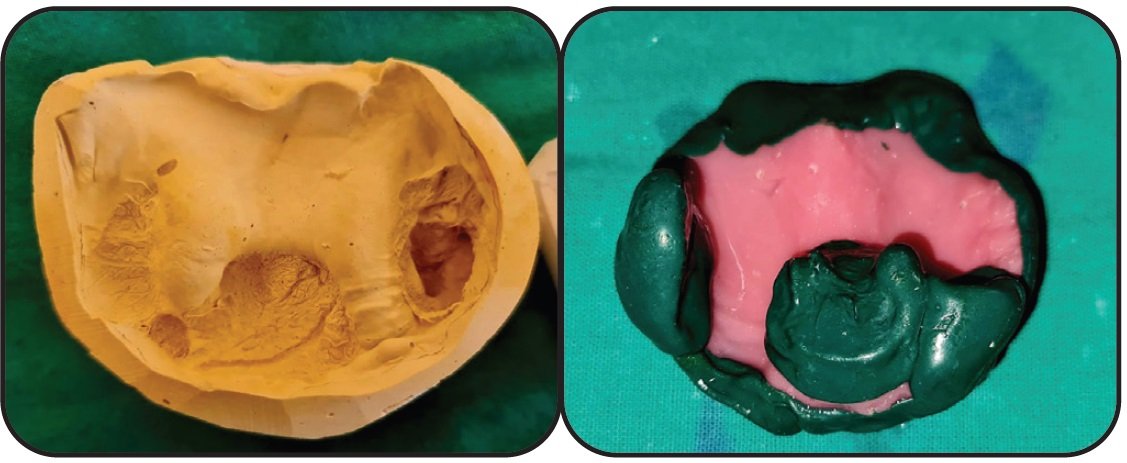
Diagnostic cast
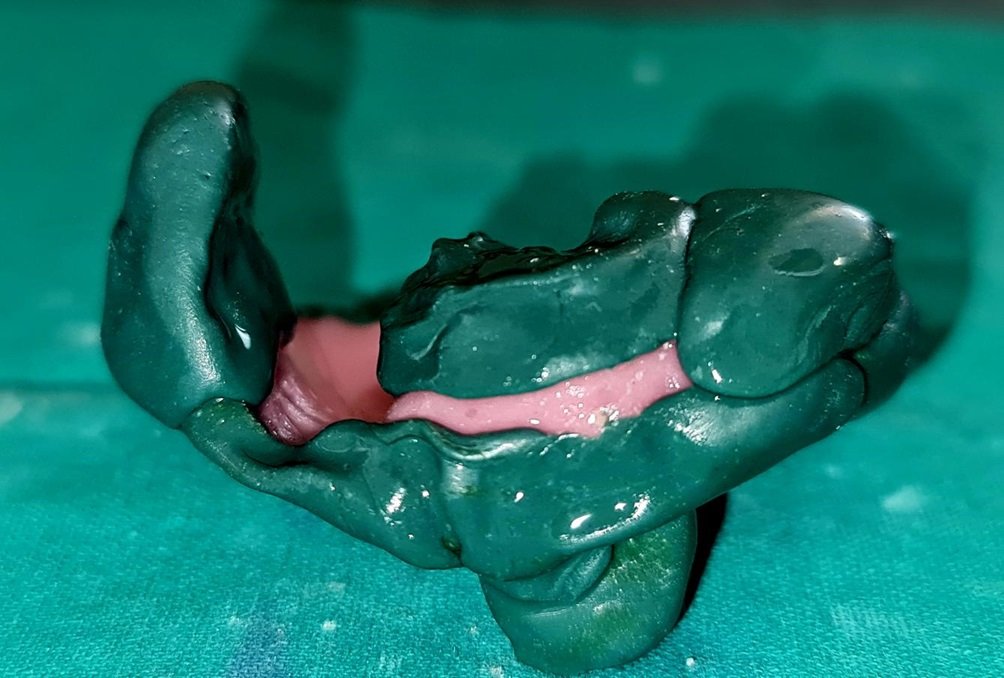
Special tray fabrication and border moulding done
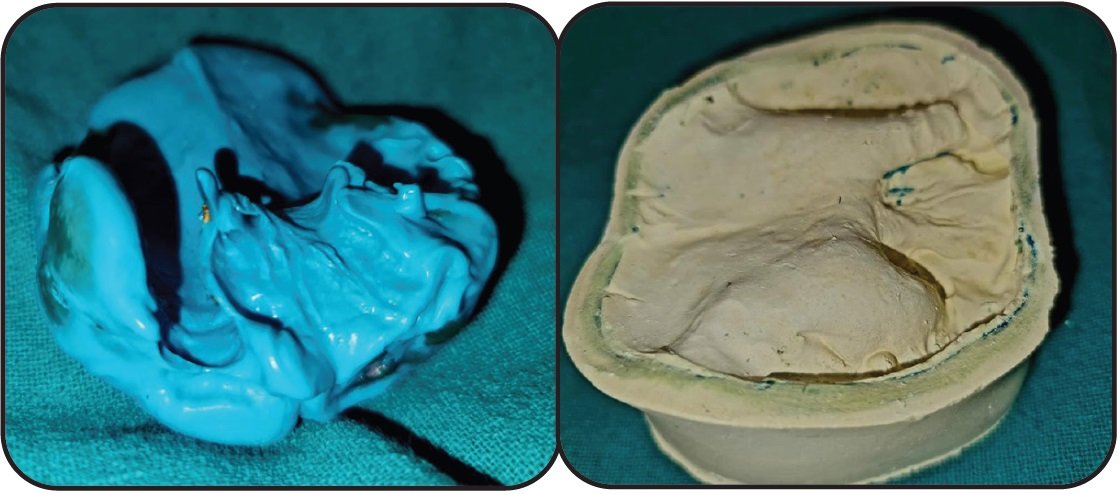
Secondary impression recorded using elastomeric impression material & Master Cast

Try-in done
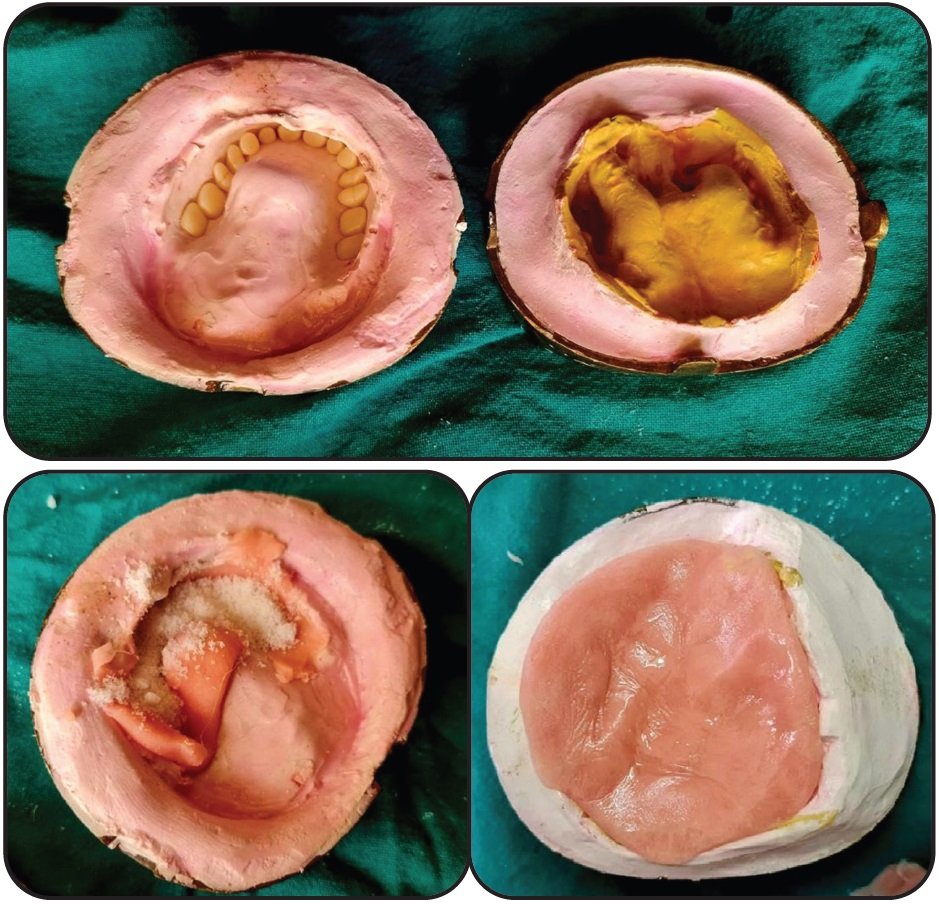
Flasking, dewaxing and packing with lost salt technique- a thin layer of heat cured acrylic resin was packed into the defect cavity And Salt crystals were placed over that layer and above that another layer of heat cure acrylic resin was packed


Final prosthesis
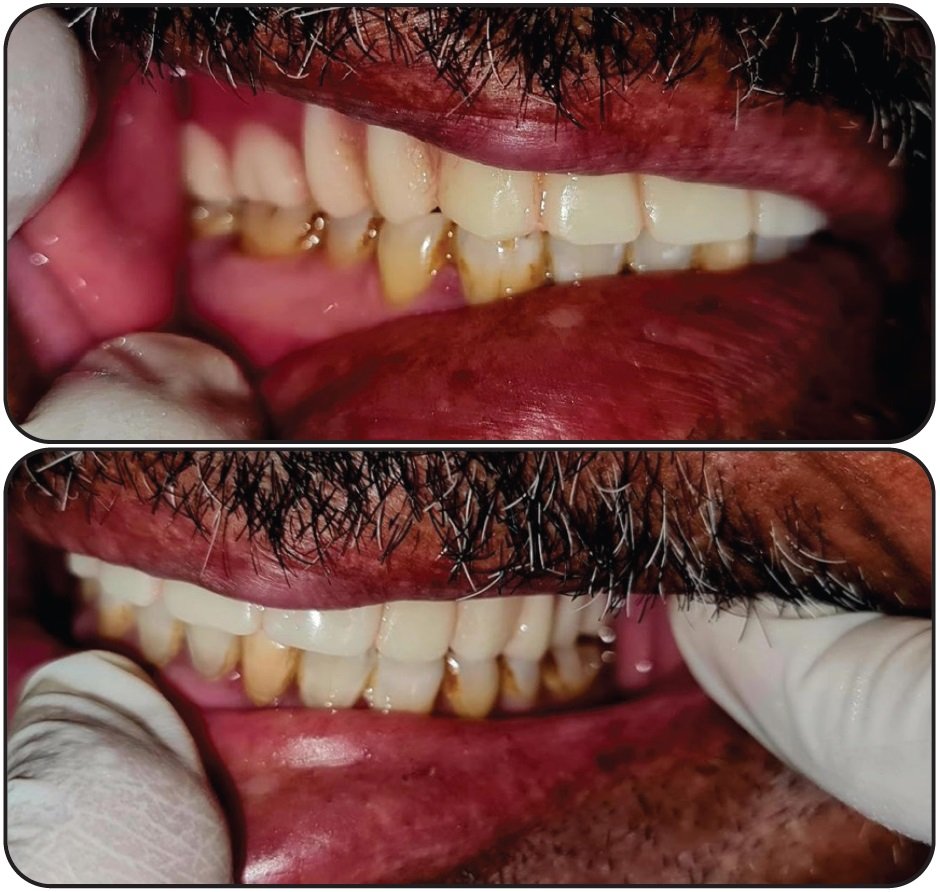
Final obturator prosthesis insertion

Before insertion & After insertion
CONCLUSION
A maxillectomy patient's rehabilitation presents a significant barrier in getting enough retention, stability, and support. The successful rehabilitation of such patients is made possible by a combination of extensive knowledge and skills and a deeper comprehension of the patients' demands. A definitive obturator prosthesis that is fabricated with optimal extension and design aids in the patient's rehabilitation by enhancing speech clarity, masticatory efficiency, and overall quality of life.
REFERENCES
- F. Keyf, “Obturator prostheses for hemimaxillectomypatients,” Journal of Oral Rehabilitation, vol. 28, no. 9,pp. 821–829, 2001.
- J. Rieger, J. Wolfaardt, H. Seikaly, and N. Jha, “Speech out-comes in patients rehabilitated with maxillary obturator pros-theses after maxillectomy: a prospective study,” InternationalJournal of Prosthodontics, vol. 15, no. 2, pp. 139–144, 2002.
- K. J. Ferro, S. M. Morgano, C. F. Driscoll et al., “The glossary ofprosthodontic terms,” Journal of Prosthetic Dentistry, vol. 94,no. 1, pp. 10–92, 2005.
- J. Kumar, M. B. Kandarphale, V. Aanand, J. Mohan, andP. Kalaignan, “De?nitive obturator for a maxillary defect,”Journal of Integrated Dentistry, vol. 2, no. 3, pp. 1–4, 2017.
- K. Hori, T. Miyamoto, T. Ono et al., “One step polymerizingtechnique for fabricating a hollow obturator,” Journal of Pros-thodontic Research, vol. 57, no. 4, pp. 294–297, 2013.
Disclaimer from Guident
The views and opinions expressed in articles published in Guident are solely those of the authors and do not necessarily reflect the views of the editors, the editorial board or the publisher, Ivory India. Guident does not endorse any product, technique or treatment described. Clinical content is intended for qualified dental and medical professionals and is not a substitute for individual clinical judgement. Guident, its editors and the publisher accept no liability for any consequence arising from the use of information published in the journal.
How to cite this article
Dr. P. R. Vinutna, Dr. Sunil Dhaded. Obturator Prosthesis: Restoring Function and Form in Palatal Defects: A Case Report. Guident. 2024 Dec;18(1). Available from: https://guident.in/articles/prosthodontics/obturator-prosthesis-restoring-function-and-form-in-palatal-defects-a-case-report.html