Artificial Intelligence in Prosthodontics: Transforming Diagnosis, Design, and Clinical Outcomes
Department of Prosthodontics and Crown & Bridge K.D. Dental College & Hospital, Mathura, UP, India
ABSTRACT
Prosthodontic rehabilitation plays a vital role in restoring oral function, esthetics, and quality of life in patients with partial or complete tooth loss. Conventional prosthodontic workflows are often complex, time-consuming, and highly dependent on clinician experience. Artificial intelligence (AI) has emerged as a promising adjunct in dentistry, offering improved diagnostic accuracy, standardized treatment planning, and enhanced digital workflows. In prosthodontics, AI applications include classification of partially edentulous arches, design of removable and fixed prostheses, implant identification, margin detection, and outcome prediction. This review summarizes current evidence regarding the application of artificial intelligence in prosthodontics, focusing on removable prosthodontics, fixed prosthodontics, and implant dentistry. Additionally, the benefits, limitations, ethical concerns, and future prospects of AI-assisted prosthodontic care are discussed. Integration of AI into prosthodontic practice has the potential to improve treatment predictability, efficiency, and patient-centered outcomes.
Keywords: Artificial intelligence, prosthodontics, machine learning, removable partial dentures, implant prosthodontics
INTRODUCTION
Loss of natural teeth adversely affects mastication, speech, facial esthetics, and psychosocial well-being. Prosthodontic treatment aims to restore oral function and improve overall quality of life. Several studies have demonstrated that appropriate prosthodontic rehabilitation leads to improved perceived general health and oral health-related quality of life.1,2 Treatment options for missing teeth include removable partial dentures, fixed dental prostheses, and implant-supported restorations, each with specific indications and limitations.3-5
Despite advancements in materials and techniques, prosthodontic treatment planning remains challenging due to the multifactorial nature of clinical decision-making. Factors such as occlusal load, abutment tooth condition, crown-root ratio, and patient-related variables influence treatment outcomes.6,7 Conventional workflows rely heavily on clinician experience and manual interpretation, which may lead to variability in diagnosis and treatment planning.
Artificial intelligence (AI), particularly machine learning and deep learning, has gained significant attention in dentistry for its ability to analyze large datasets and identify complex patterns. In prosthodontics, AI has been explored for diagnostic support, automated classification systems, prosthesis design, and outcome assessment.8,10,12,15 This review aims to present an overview of current applications of artificial intelligence in prosthodontics and to discuss its clinical relevance, limitations, and future potential.
ARTIFICIAL INTELLIGENCE: CONCEPTS RELEVANT TO PROSTHODONTICS
Artificial intelligence refers to computer systems designed to perform tasks that typically require human intelligence. Machine learning enables systems to learn from data and improve performance without explicit programming, while deep learning utilizes multi-layered neural networks for complex data processing. Convolutional neural networks (CNNs) are particularly effective for image-based analysis and are widely used in dental radiology and digital prosthodontics.
The increasing availability of digital records, radiographic images, and intraoral scans has facilitated the application of AI in prosthodontics. AI systems can process these datasets to support diagnosis, classification, and treatment planning with improved consistency and efficiency.
APPLICATIONS OF ARTIFICIAL INTELLIGENCE IN PROSTHODONTICS
AI IN DIAGNOSIS AND TREATMENT PLANNING
Accurate diagnosis and treatment planning are essential for long-term prosthodontic success. Parameters such as crown-root ratio and occlusal force significantly influence the survival of abutment teeth and prostheses.6,7 AI models can integrate multiple clinical variables to assist clinicians in selecting appropriate treatment modalities.
Classification of partially edentulous arches is a fundamental step in removable partial denture planning. Traditional classification systems, including McGarry and ICK classifications, are widely accepted but are subject to interobserver variability.13,14 AI-based classification systems using convolutional neural networks have demonstrated reliable performance in automatically categorizing partially edentulous arches, thereby improving objectivity and reproducibility.15
ARTIFICIAL INTELLIGENCE IN REMOVABLE PROSTHODONTICS
Removable partial dentures (RPDs) remain an important treatment option, particularly for patients with partial edentulism and economic constraints.4,5 However, RPD design requires careful consideration of biomechanics, support, retention, and stability.
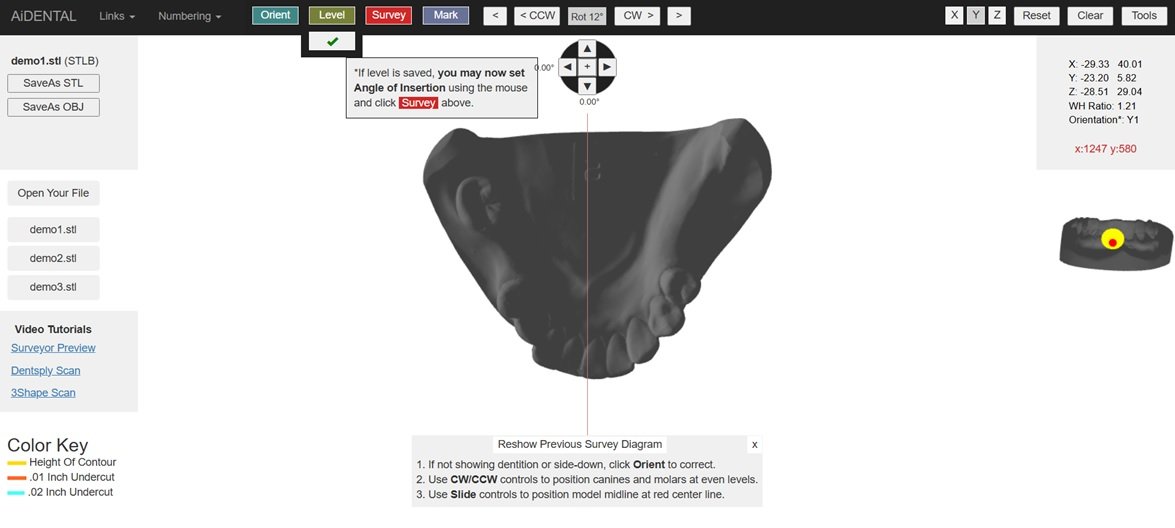
AI-assisted systems have been developed to support RPD design by automating preliminary steps such as arch classification and component selection.15 These systems have the potential to standardize RPD design, reduce human error, and improve workflow efficiency. Furthermore, AI models may assist in predicting abutment tooth survival by analyzing factors such as crown-root ratio and occlusal load.6
ARTIFICIAL INTELLIGENCE IN FIXED PROSTHODONTICS
Fixed prosthodontics involves precise tooth preparation, margin identification, and prosthesis fabrication. Margin detection remains a critical and technique-sensitive step in digital workflows. AI-based image processing techniques, including CNN-driven margin extraction methods, have shown promising accuracy in identifying tooth preparation margins, thereby improving precision and reducing operator dependency.12
Systematic reviews have reported growing evidence supporting the application of AI models in fixed prosthodontics, particularly for design optimization and quality control of tooth-supported restorations.8
ARTIFICIAL INTELLIGENCE IN IMPLANT PROSTHODONTICS
Dental implants are a predictable and widely accepted solution for tooth replacement.9 AI has been extensively explored in implant dentistry, particularly for radiographic analysis and prosthetic outcome evaluation.
Deep learning algorithms have demonstrated high accuracy in identifying and classifying dental implant systems from panoramic and periapical radiographs, assisting clinicians during implant maintenance and retreatment planning.10 Additionally, retrospective studies have evaluated AI applications in assessing outcomes of implant-supported monolithic zirconia crowns, indicating favorable clinical performance.11
IMPACT OF ARTIFICIAL INTELLIGENCE ON PATIENT-CENTERED OUTCOMES
Prosthodontic rehabilitation aims to improve mastication, dietary intake, and quality of life. Evidence suggests that functional outcomes such as occlusal force may be more important than the number of remaining teeth in elderly patients.7 AI-assisted treatment planning may enable more personalized prosthodontic solutions, thereby improving functional efficiency and patient satisfaction.
By enhancing diagnostic accuracy and reducing variability, AI has the potential to improve treatment predictability and long-term success, ultimately contributing to better patient-reported outcomes1,2
LIMITATIONS AND ETHICAL CONSIDERATIONS
Despite its advantages, the application of AI in prosthodontics faces several limitations. These include limited availability of large, high-quality datasets, lack of standardization across AI systems, and potential algorithm bias. AI models should be considered as decision-support tools rather than replacements for clinical judgment.
Ethical considerations such as data privacy, informed consent, transparency of algorithms, and accountability for AI-assisted decisions must be addressed prior to widespread clinical implementation.
FUTURE DIRECTIONS
Future advancements in artificial intelligence are expected to further integrate prosthodontics with digital dentistry. Automated prosthesis design, real-time treatment simulation, and predictive models for prosthesis longevity represent promising research areas. Large-scale clinical studies are required to validate AI systems and establish evidence-based guidelines for their use in prosthodontic practice.
CONCLUSION
Artificial intelligence is rapidly transforming prosthodontics by supporting diagnosis, treatment planning, and prosthesis fabrication. Current evidence highlights its usefulness in removable and fixed prosthodontics, as well as implant-supported restorations. Although challenges remain, continued research and responsible integration of AI technologies have the potential to enhance prosthodontic care and improve patient outcomes.
REFERENCES
- Reissmann DR, Schierz O, Szentpétery A, John MT. Improved perceived general health is observed with prosthodontic treatment. J Dent. 2011;39(2):326–31.
- Reisine ST, Fertig J, Weber J, Leder S. Impact of dental conditions on patients’ quality of life. Community Dent Oral Epidemiol. 1989;17(1):7–10.
- Abt E, Carr AB, Worthington HV. Interventions for replacing missing teeth: partially absent dentition. Cochrane Database Syst Rev. 2012;(2):CD003814.
- Campbell SD, Cooper L, Craddock H, Hyde TP, Nattress B, Pavitt SH, et al. Removable partial dentures: the clinical need for innovation. J Prosthet Dent. 2017;118(3):273–80.
- Bohnenkamp DM. Removable partial dentures: clinical concepts. Dent Clin North Am. 2014;58(1):69–89.
- Tada S, Allen PF, Ikebe K, Zheng H, Shintani A, Maeda Y. The impact of the crown-root ratio on survival of abutment teeth for dentures. J Dent Res. 2015;94(9):220–5.
- Inomata C, Ikebe K, Okubo H, Takeshita H, Mihara Y, Hatta K, et al. Dietary intake is associated with occlusal force rather than number of teeth in 80-year-old Japanese. JDR Clin Transl Res. 2017;2(2):187–97.
- Revilla-León M, Gómez-Polo M, Vyas S, Barmak BA, Gallucci GO, Özcan M, et al. Artificial intelligence models for tooth-supported fixed and removable prosthodontics: a systematic review. J Prosthet Dent. 2021.
- Jivraj S, Chee W. Rationale for dental implants. Br Dent J. 2006;200:661–5.
- Lee JH, Jeong SN. Efficacy of deep convolutional neural network algorithm for the identification and classification of dental implant systems using panoramic and periapical radiographs: a pilot study. Medicine (Baltimore). 2020;99(6):e20787.
- Lerner H, Mouhyi J, Admakin O, Mangano F. Artificial intelligence in fixed implant prosthodontics: a retrospective study of 106 implant-supported monolithic zirconia crowns. BMC Oral Health. 2020;20(3):1–8.
- Zhang B, Dai N, Tian S, Yuan F, Yu Q. Extraction method of tooth preparation margin line based on SOCTree-CNN. Int J Numer Method Biomed Eng. 2019;35(10):e3241.
- McGarry TJ, Nimmo A, Skiba JF, Ahlstrom RH, Smith CR, Koumjian JH, et al. Classification system for partial edentulism. J Prosthodont. 2002;11:181–93.
- Al-Johany SS, Andres C. ICK classification system for partially edentulous arches. J Prosthodont. 2008;17:502–7.
- Takahashi T, Nozaki K, Gonda T, Ikebe K. A system for designing removable partial dentures using artificial intelligence. Part 1: Classification of partially edentulous arches using a convolutional neural network. J Prosthodont Res. 2021;65(1):115–8
Disclaimer from Guident
The views and opinions expressed in articles published in Guident are solely those of the authors and do not necessarily reflect the views of the editors, the editorial board or the publisher, Ivory India. Guident does not endorse any product, technique or treatment described. Clinical content is intended for qualified dental and medical professionals and is not a substitute for individual clinical judgement. Guident, its editors and the publisher accept no liability for any consequence arising from the use of information published in the journal.
How to cite this article
Dr. Atasi Pandit, Dr. Razousinuo Khezhie, Dr. Abhinav Agarwal. Artificial Intelligence in Prosthodontics: Transforming Diagnosis, Design, and Clinical Outcomes. Guident. 2026 Jan;19(2). Available from: https://guident.in/articles/prosthodontics/artificial-intelligence-in-prosthodontics-transforming-diagnosis-design-and-clinical-outcomes.html