Irritational Fibroma in Children: A Case Report
Department of Pediatric & Preventive Dentistry, K.D. Dental College & Hospital, Mathura, India
ABSTRACT
Irritation fibroma is a benign, exophytic reactive oral lesion that develops secondary to injury. Its recurrence rate is rare but may happen in case of repeated trauma at the same site. This case report highlights the management of Irritational fibroma in the upper labial region of a 5-year-old female patient.
KEY WORDS: Irritational fibroma, surgical excision
INTRODUCTION
Fibroma, a benign neoplasm of fibroblastic origin, represents a reactive hyperplasia of fibrous connective tissue in response to local irritation or trauma.1 Various kinds of reactive lesions may occur on gingival mucosa. The etiology for these lesions may be irritants like plaque, calculus, overhanging margins and restorations. Irritational fibroma represents a reactive focal fibrous hyperplasia due to trauma or local irritation.2 The size of the growth is generally smaller than 1.5 cm, although there are few reports of 4–6 cm. Irritation fibroma is most commonly prevalent in anterior region and usually associated with interdental papilla.3 The most common clinical aspect is the growth of a well-limited smooth-surfaced tissue, usually of a normal coloured mucosa, having a sessile or pedunculated base, hard consistency, and smaller than 1.5 cm at its highest diameter.3 It is usually characterized by a slow, painless growth accumulated over a period of months or years.4
This paper represents the case of a Irritational fibroma present on the labial mucosa of upper anterior in a 5-year-old child.
CASE REPORT
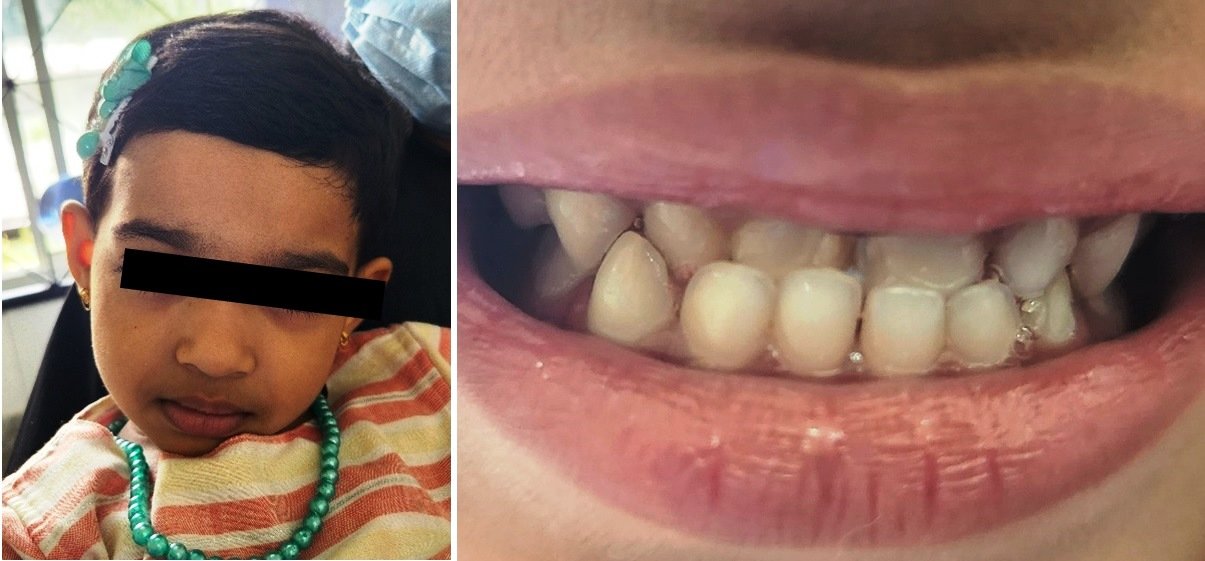
A 5-year-old female patient reported to the satellite centre running by KD dental college Shri Shyam Laxmi Dant Chiktsalaya (Shri Mataji Gaushala), Barsana Mathura (UP) with a chief complaint of an uncomfortable growth in the upper front tooth region of her mouth. She described it as a slow-growing mass on the upper labial region that appeared roughly 1 month ago. It was painless but created an irritation during speech and aesthetically.

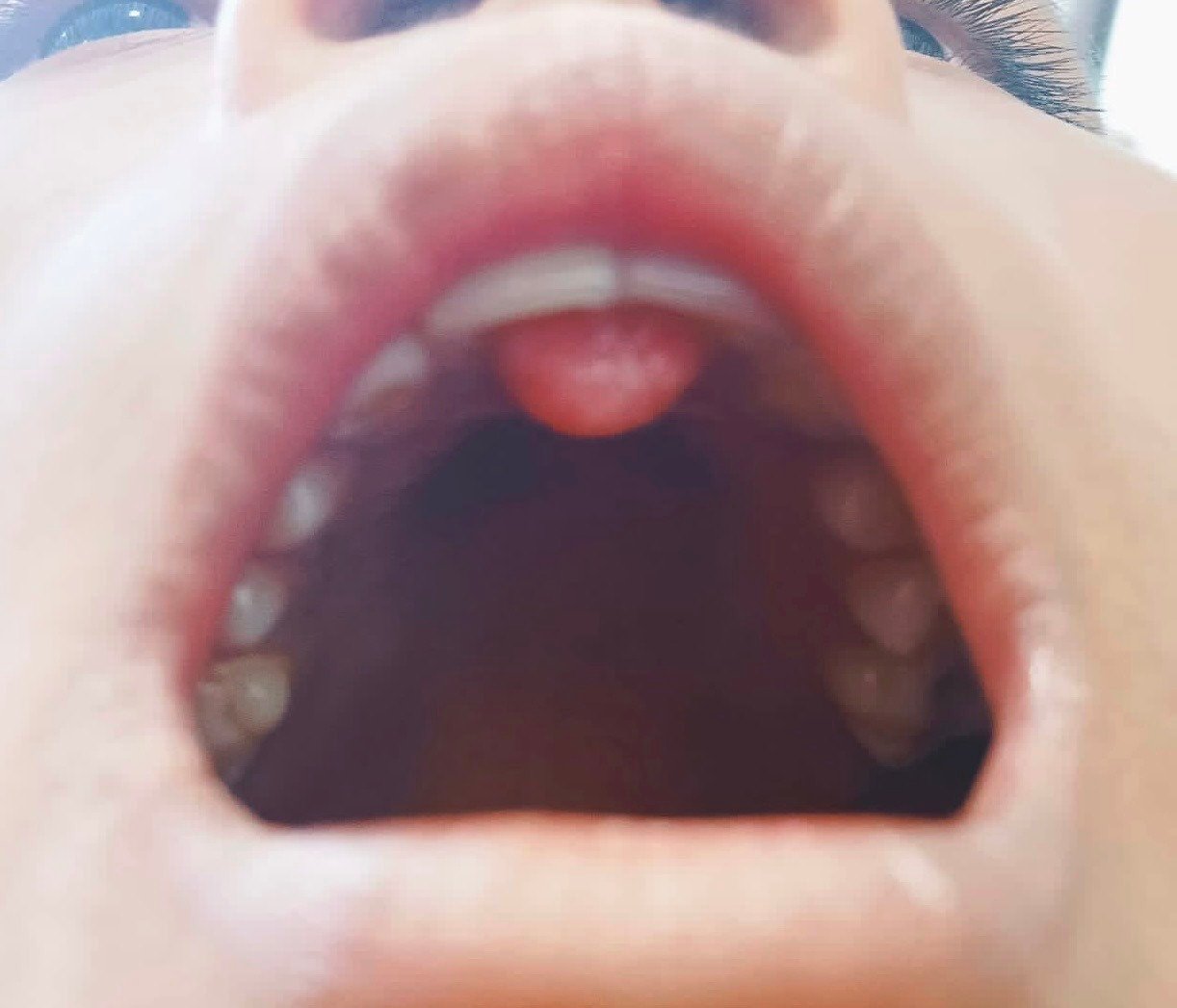
On intraoral examination, a small, smooth-surfaced, and pedunculated growth was observed in the interdental papillary region of the labial mucosa, in front of the Right central & Lateral incisor. It was about 1 × 1cm in size, soft, nontender, and attached to the labial mucosa.
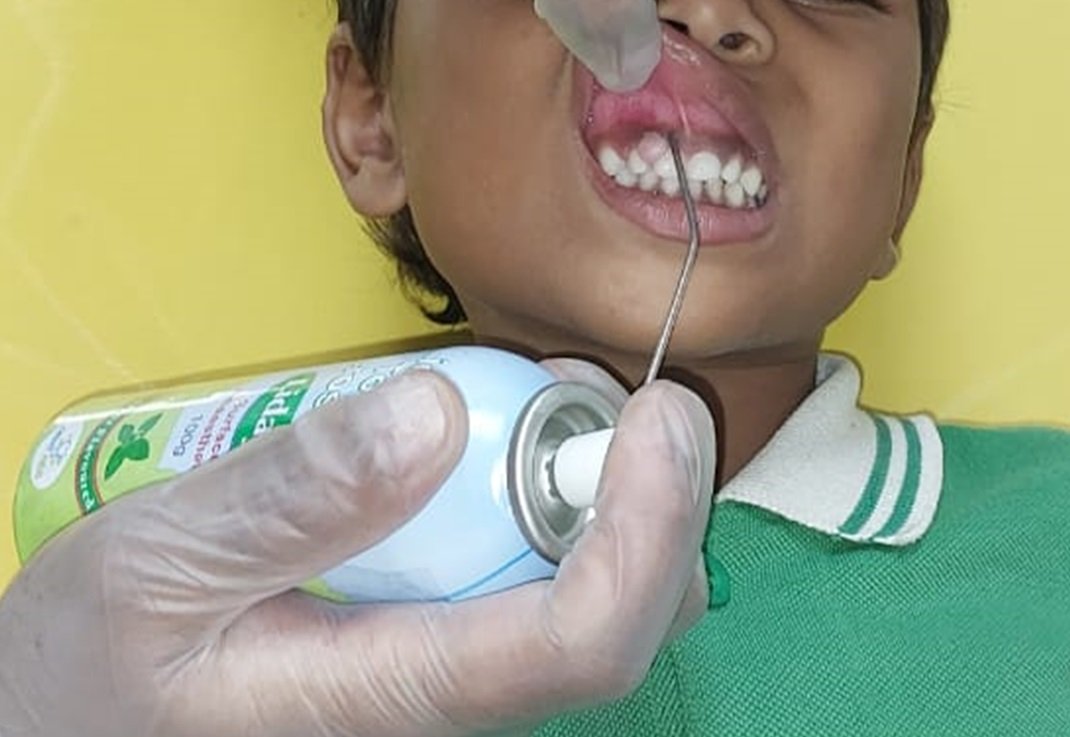


After obtaining an informed consent, routine blood investigations were carried out before undertaking the patient for surgery. Based on all the findings, the provisional diagnosis was made to be irritation fibroma on the labial mucosa due to unknown etiology. Possible differential diagnoses included giant cell granuloma, pyogenic granuloma, neurofibroma, or a benign salivary gland tumor, which would further be investigated by the biopsy. The treatment was thus planned to surgically excise the lesion. Phase I therapy involved supragingival scaling and rinses with chlorhexidine mouthwash twice daily for 1 week. The surgical procedure was then carried out wherein the lesion was completely excised using a BP blade after administering local anesthesia.
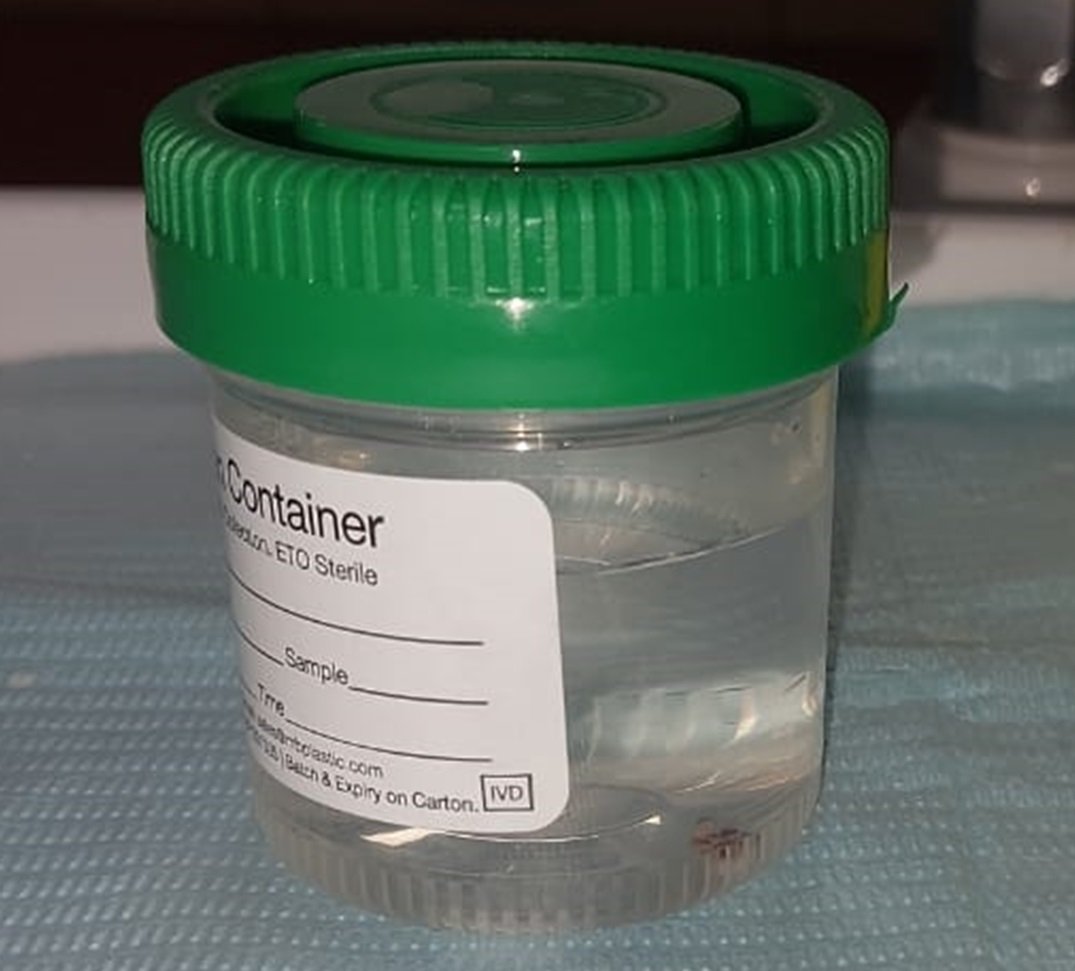

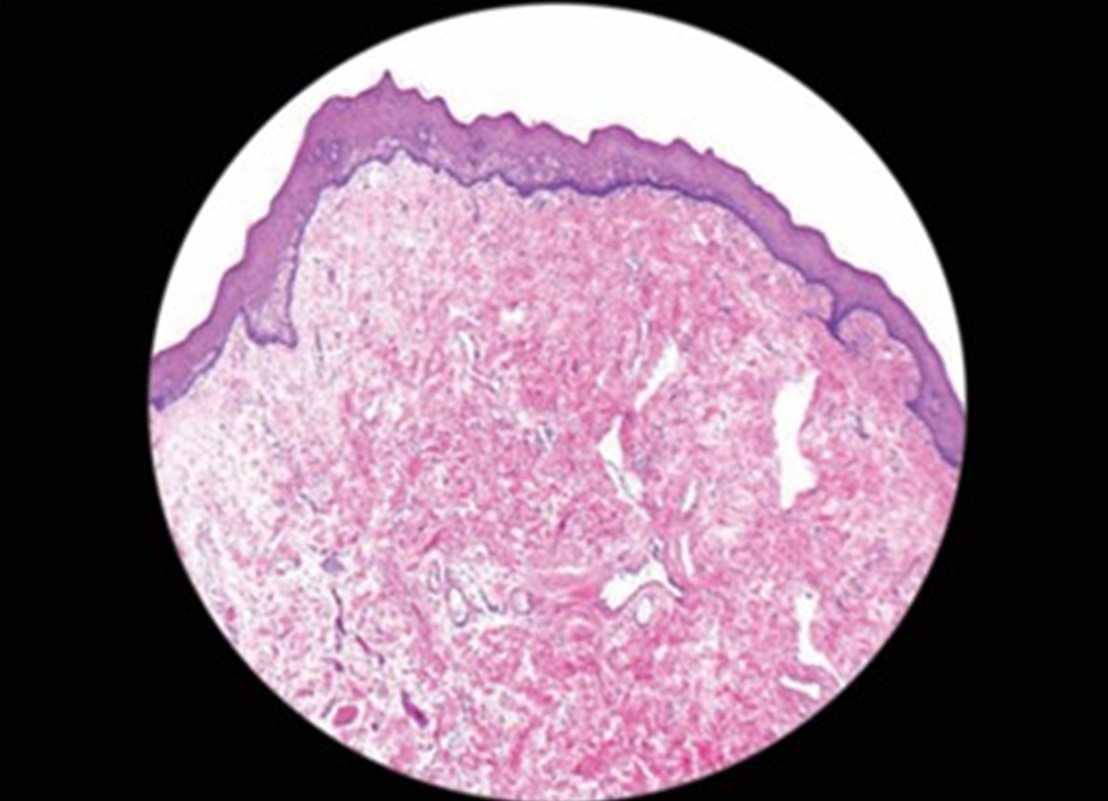

The histopathological report of the excisional biopsy showed Ortho keratinized stratified squamous epithelium with short rete pegs. The connective tissue stroma consisted of abundant collagen fibre bundles with proliferating fibroblasts, chronic inflammatory cells, and blood vessels, all of which were suggestive of a fibroma. The patient was followed up for 9 months since the treatment throughout which he displayed no signs of recurrence.
DISCUSSION
Localized fibrous tissue growths are common in the oral mucosa. The etiology of an irritational fibroma is usually due to continuous irritation. irritational fibromas shows a pattern of collagen arrangement depending on the site of the lesion and the amount of irritation. There are two types of patterns: (a) radiating pattern and (b) circular pattern. Thus, they hypothesized that when there is a greater degree of trauma, the former appears in sites which are immobile in nature (e.g., palate), while lesser trauma induces the latter and it occurs in sites that are flexible in nature (e.g., cheeks).5 The treatment of irritation fibroma is removing the etiological factors, scaling of adjacent teeth, and total surgical excision along with periosteum to minimize the possibility of recurrence. any irritant which can be seen, such as an ill-fitting denture, root stumps, and rough restoration should be removed. Long-term postoperative follow-up is most important because of the high growth potential.6
In this case report, the recurrence of the pathology was attributed to two possible reasons: non removal of the irritant and/or incomplete surgical excision of the lesion. A thorough oral examination was essential to point out the previously unnoticed irritant/etiological factor, which was found to be trauma from occlusion on the palate from the lower incisors, owing to the presence of a deep bite. Thus, for complete treatment, a multidisciplinary approach was adopted.7
CONCLUSION
Irritational fibroma clinically resembles with various lesions such as and peripheral giant cell granuloma, pyogenic granuloma so proper histopathologic investigation and radiographic evaluation are necessary for exact and final diagnosis.
REFERENCES
- Barker DS, Lucas RB. Localised fibrous overgrowths of the oral mucosa. Br J Oral Surg 1967;5(2):86–92. DOI: 10.1016/s0007-117x(67)80031-3.
- Kolte AP, Kolte RA, Shrirao TS. Focal fibrous overgrowths: A case series and review of literature. Contemporary clinical dentistry. 2010;1(4):271.
- Kendrick F, Waggoner WF. Managing a peripheral ossifying fibroma. J Dent Child 1996;63:135-8.
- Wood NK, Goaz PW. Differential Diagnosis of Oral and Maxillofacial Lesions. 5th ed., Missouri: Mosby; 2006. pp. 136–138.
- Barker DS, Lucas RB. Localised fibrous overgrowths of the oral mucosa. Br J Oral Surg 1967;5:86-92.
- Irritation fibroma: A case report Shaik Ali Hassan1*, Sumit Bheteja2, Neha Aggarwal3, Geetika Arora4 1Dental Surgeon, 2HOD, 3,4Reader, 2Dept. of Oral Medicine & Radiology, 3Dept. of Public Health Dentistry, 1-3Manav Rachna Dental College, Faridabad, Haryana, 4Inderprastha Dental College & Hospital, Ghaziabad, Uttar Pradesh, India
- Recurrent Irritation Fibroma—“What Lies Beneath”: A Multidisciplinary Treatment Approach Chahita M Lalchandani1, Sandeep Tandon2, Tripti S Rai3, Rinku Mathur4, Anupama Kajal
Disclaimer from Guident
The views and opinions expressed in articles published in Guident are solely those of the authors and do not necessarily reflect the views of the editors, the editorial board or the publisher, Ivory India. Guident does not endorse any product, technique or treatment described. Clinical content is intended for qualified dental and medical professionals and is not a substitute for individual clinical judgement. Guident, its editors and the publisher accept no liability for any consequence arising from the use of information published in the journal.
How to cite this article
Dr. Rajeev Kumar Singh, Dr. Sonal Gupta, Dr. Afsia Saly. Irritational Fibroma in Children: A Case Report. Guident. 2023 Dec;17(1). Available from: https://guident.in/articles/pedodontics/irritational-fibroma-in-children-a-case-report.html