Congenital Heart Diseases Manifestations and Management
Department of Pedodontics and Preventive Dentistry, K.D. Dental College & Hospital Mathura, U.P. India
INTRODUCTION
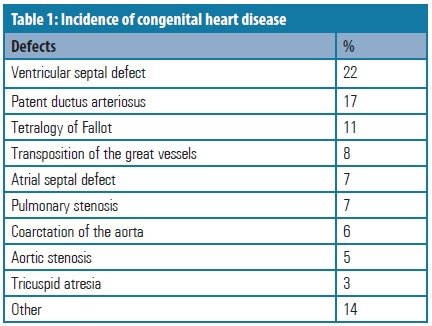
Congenital heart disease is a structural abnormality of the heart that is potentially of clinical significance. The etiology of congenital heart disease may vary from the aberration in normal embryonic development to the failure of the structure to progress beyond a certain point. Maternal infections and intoxications are also thought to be the contributing factors as they interfere with normal cardiogenesis (Table 1). Feeding difficulties such as excessive sweating, feeling breathless during the feed, persistent cold and cough, rapid breathing, grunting sounds, and restlessness can be few pointers indicating congenital heart disease.
CLASSIFICATION
1. According to Cyanosis
Cyanotic
➤ Decreased pulmonary blood flow: Tetralogy of Fallot (TOF), tricuspid atresia, pulmonary atresia, transposition of greater arteries, Ebstein anomaly, and persistent truncus with hypoplastic pulmonary artery.
➤ Increased pulmonary blood flow:
» Transposition of greater arteries with ventricular septal defects (VSDs)
» TOF with collateral
» Truncus arteriosus.
Acyanotic Heart Disease
➤ Shunt lesions
» Atrial septal defects (ASDs)
» Acyanotic heart disease with mitral stenosis
» Coronary atrioventricular fistula
» Atrioventricular canal defects partial/complete
» VSDs
» Patent ductus arteriosus
➤ No shunt lesions
» Obstructive>
» Pulmonary stenosis
» Aortic stenosis
» Coarctation of the aorta (COA)
» Peripheral pulmonary stenosis
» Nonobstructive
» Aortic regurgitation
» Pulmonary regurgitation
» Mitral regurgitation.
1. According to American Heart Association Classification
➤ Septal defects
» ASDs
» VSDs
➤ Obstructive defects
» Aortic stenosis
» Pulmonary stenosis
» COA
➤ Cyanotic defects
» TOF
» Transposition of great vessels
» Tricuspid atresia
» Pulmonary atresia
» Total anomalous pulmonary venous connection
» Hypoplastic left heart syndrome
CLINICAL MANIFESTATIONS
➤ Restlessness
➤ Frequent palpitations
➤ Syncope on exertion
➤ Short neck with low hairline
➤ Dysmorphism or mongoloid facies
➤ Feeding difficulties with the child
➤ Discoloration of lips and nails especially on crying
➤ Baby crying each time the feed is taken
➤ Poor physical development
➤ Abnormal pulse
➤ Look for tachypnea, altered breathing, and flaring of nostrils
➤ Features of shock or low cardiac output state
➤ Deformities such as polydactyly and fingerized thumb
➤ Repeated cold and cough indicative of lower respiratory tract infection
➤ History of squatting after exertion
➤ History of sibling with congenital heart disease
➤ Maternal history of infections, drug intake and diseases
➤ Puffy face and pitting edema over hands and feet indicates congestive heart failure
➤ Low or high birth weight children have more chances of developing congenital heart disease
➤ Color of the infant look for central cyanosis at palate, tongue and inner side of lip
➤ Symptomatic or asymptomatic murmurs.
ORAL MANIFESTATIONS
➤ Change in color of oral mucosa, indicating cyanosis
➤ Delayed eruption of the permanent teeth
➤ Striking changes in the tongue papillae and gingiva in TOF
➤ Cleft palate, midline abnormalities, and growth abnormalities are seen in particular with VSDs
➤ Pulp canal of maxillary incisors are found to be greatly enlarged and funnel- shaped in COA
➤ Increased incidence of dental caries in both the dentition due to high sugar content in medicated syrup z Increased incidence of periodontal disease
➤ Xerostomia can be seen as side effect of many cardiac drugs
➤ Patients with TOF present with poor dental hygiene due to enamel disturbances and gingival hypertrophy
➤ Tongue may show with geographical map appearance
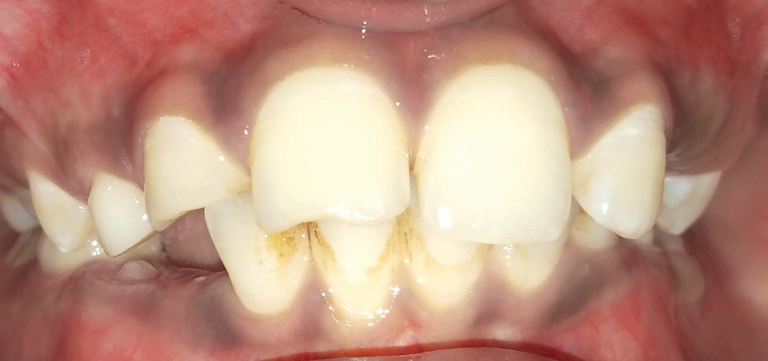
➤ Children with congestive cardiac disease have higher prevalence of malocclusion and crowding
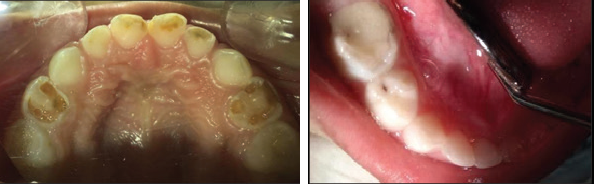
➤ Children who form TOF are shown to have enamel hypoplasia and dental neglect with high prevalence of dysmorphism
➤ Development anomalies of enamel causing enamel hypoplasia of dentition (Figs 1-3)
➤ Indulging in sweet snack food due to their chronic illness could be a contributing factor for increased incidence of caries (Fig. 4)
➤ The poor dental health is the result of inadequate professional and home care.

Fig 1
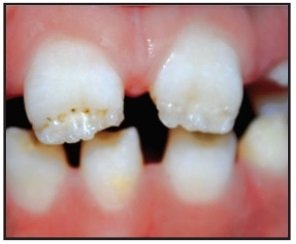
Fig 2
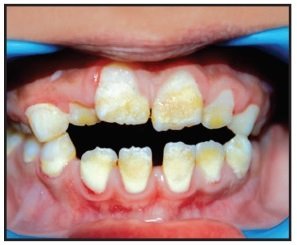
Fig 3
Fig 1-3: Multiple Types Of Hypoplastic Defects On Enamel
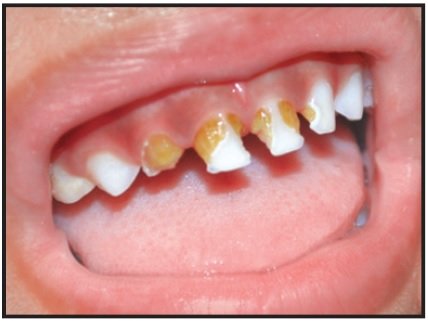
Fig 4: Children With Cardiac Disease Are Known To Have Increase Incidence Of Caries Due High Consumption Of Sugar Laced Syrups
DENTAL MANAGEMENT
➤ The basic protocol for all the unrepaired defects for oral health works on similar guidelines. The main aim of providing antibiotic prophylaxis is to protect the patient against developing bacterial endocarditis
➤ For treatment purpose these patients fall into four categories:
» 1. Unrepaired heart defect » 2. Repaired heart defect » 3. Uncomplicated repair of congenital heart disease more than 6 months » 4. Placement of prosthetic heart value.➤ Categories 1, 2, 3 require prophylaxis and only category 4 has been exempted from antibiotic prophylaxis
➤ After administration of antibiotic on physician’s advice routine examination can be performed
➤ In case of emergency, care should be conservative
➤ Bleeding problem should be kept in mind as patients with congenital heart disease may also be thrombocytopenic and polycythemic
➤ Alternatively, the polycythemic patients may also be on anticoagulants.
Disclaimer from Guident
The views and opinions expressed in articles published in Guident are solely those of the authors and do not necessarily reflect the views of the editors, the editorial board or the publisher, Ivory India. Guident does not endorse any product, technique or treatment described. Clinical content is intended for qualified dental and medical professionals and is not a substitute for individual clinical judgement. Guident, its editors and the publisher accept no liability for any consequence arising from the use of information published in the journal.
How to cite this article
Dr. Priya Verma. Congenital Heart Diseases Manifestations and Management. Guident. 2019 Aug;12(9). Available from: https://guident.in/articles/pedodontics/congenital-heart-diseases-manifestations-and-management.html