Botox: Tales Beyond Beauty
Department of Periodontology, Yenepoya Dental College, Mangalore, India
INTRODUCTION
In this era of passion to look beautiful various new technologies are emerging to enhance and improve the physical appearance of people. Botox is emerging as one popular treatment to improve various facial anomalies. Botox is safe conservative non-surgical reversible minimally invasive treatment modality to achieve better patient satisfaction and shows promising results in the management of muscle generated diseases. Botulinum toxin used in dentistry for the treatment conditions, such as parafunctional clenching, extracapsular myogenic temporomandibular disorder, trismus, and the associated headaches, is a new option for symptom relief in patients in whom conventional treatment are not effective.1
HISTORY
The potential for a therapeutic use for botulinum toxin was first recognised by Justinus Kerner who in 1817 provided the earliest account of food borne botulism. In 1989, after extensive laboratory and clinical testing of botulinum toxin type A (BotoxH, Allergan Inc, Irvine, California, USA), the Food and Drug Administration (FDA) approved it as a therapeutic agent in patients with strabismus, blepharospasm, and other facial nerve disorders, including hemifacial spasm. In 2000, the FDA approved BotoxH and botulinum toxin type B (MyoblocTM, Elan Pharmaceuticals Inc, Morristown, New Jersey, USA) as treatments for cervical dystonia, and Botox Cosmetic for treatment of glabellar (frown) lines. Although its widest application is still in the treatment of disorders manifested by abnormal, excessive, or inappropriate muscle contractions, its use is rapidly expanding to include treatment of a variety of dental,ophthalmological, gastrointestinal, urological, orthopaedic, dermatological, secretory, painful, and cosmetic disorders.2

BOTULINUM TOXIN
Botulinum toxin is a deadly poison produced by a Gram-positive bacterium called c botulinum. BT is a neurotoxin secreted by the anaerobic bacterium Clostridium botulinum, having eight serologic types (A,B, C1, C2, D, E, F, and G). The eight serotypes of BT have similar molecular structures and functions. The serotypes that are harmful to the human neurological system are A, B, E, F, and G, and BTA has the strongest Toxicity.3 In human beings, botulism is mainly caused by Types A, B, E, and rarely F, whereas in animals, it is caused by Types C and D. The toxin is heat labile and denatured by cooking.3,4
BTA is marketed as follows:
• Botox® (Allergan, Irvine, CA) in the USA.• Dysport® (Speywood Pharmaceuticals, Maidenhead, UK) in Europe.
• Xeomin® (Merz Pharmaceuticals, Germany) in Germany.
• Prosigne® (Lanzhou Biological Products Institute,China) in China.
BTB is marketed as follows:
• Myobloc® (Elan Pharmaceuticals, San Diego, CA) and• Neurobloc® (Elan Pharmaceuticals, Shannon, County
• Clare, Ireland).5
MECHANISM OF ACTION
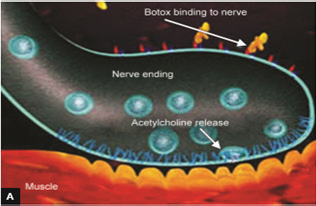
Figs 1A: Botox binding to nerve ending
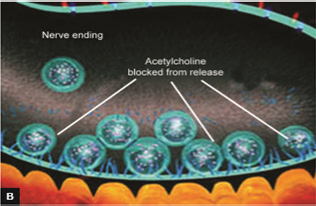
Fig: 1B: Blocking release of Acetylcholine
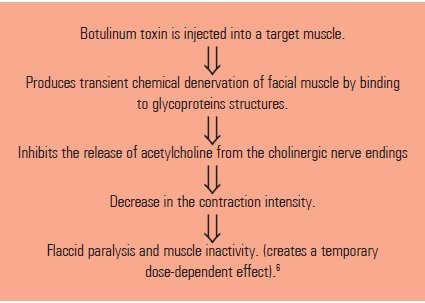
Fig: 1B: Blocking release of Acetylcholine
USES AND INDICATIONS OF BOTOX
It was proven that BT injections can improve cosmetics, reduce pain and relax retrain muscles which in turn enhance the dental treatment plans. The applications of BT injections have been classified into:
I. Cosmetic uses
1. Gummy smile.
2. Black triangle.
3. Masseteric hypertrophy (bulky jaws).
II. Therapeutic uses
1. Temporomandibular Disorders.
2. Trigeminal neuralgia.
3. Facial nerve palsy.
4. Bruxism and parafunctional habits.
5. Sialorrhoea.
6. Retraining Muscles During Orthodontic Treatment.
7. Complete denture wearers.
8. Dental implants.6
I. 1. Gummy smile
A smile with more than 2 mm exposed gingiva is known to be gummy smile (GS). It is one of the most common variations among the people, with predominance of females than males. The advantages of these injections are the increase of the patient self-esteem and their preference because their technique is less invasive, reasonable cost and requires less time despite its short-term effect.6
2. Black triangle
BT is used in the treatment of “black triangles” which is a common and challenging aesthetic problem. Dermal fillers can be injected into the interdental papilla to plump it and close the interdental space. Treatment outcome usually last for eight months or longer after which the treatment needs to be repeated.7
3. Masseteric Hypertrophy
Patients who are chronic jaw clenchers frequently present with masseter hypertrophy. In several small but well-documented clinical trials, the injection of small aliquots of Botox into the masseter muscles resulted in a sustained reduction of masseter hyperactivity.8,9
II 1. Temporomandibular Disorders
Temporomandibular disorders are often intermingled with other chronic pain disorders including fibromyalgia, chronic fatigue syndrome or tension type headache. Botulinum toxin can be a useful adjunct, especially in cases involving muscular hyperactivity. It also the treatment of dystonia, masticatory muscle hyperfunction, myofascial pain and to some extent, bruxism.10-12
2. Trigeminal Neuralgia
Trigeminal neuralgia (TN) is defined as sudden, usually unilateral severe brief stabbing recurrent episodes of pain within the distribution of one or more roots of the trigeminal nerve. The injection is administered in close proximity to the maxillary and mandibular nerve roots around the ganglions.13
3. Facial Nerve Palsy
Attempts have been made to treat facial paralysis with BTA. Inducing ptosis by temporarily paralyzing the muscle by injecting BTA in the levator palpebrae superoris can prevent drying of the cornea when the eyes cannot be closed normally because of facial nerve palsy. A method for treating patients with facial paralysis using BTA has been suggested, which induces facial symmetry by causing facial paralysis following the injection of BTA into the normal side of the patient’s face.3
4. Bruxism and Para Functional Habits
Bruxism is described as non-functional contact of the mandibular and maxillary teeth resulting in clenching or tooth grinding due to repetitive, unconscious contraction of the masseter and temporalis muscles. Botulinum toxin a limits the muscle contraction, and this reduction in clenching intensity will allow better reattachment of gum and bone after trauma. It can also limit clenching before and after periodontal surgery to improve healing.7,14
5. Sialorrhoea
Sialorrhoea, defined as an overflow of saliva from the mouth (drooling), negatively affects both patient’s quality of life and social interactions. It may occur in neurological and other akinetic disorders, for example, Parkinson’s disease and cerebral paralysis. Botox injections to the parotid and/or submandibular glands in such patients has been presented, with effects lasting 3–6 months and no major adverse effects.14
6. Retraining Muscles During Orthodontic Treatment
Botox can be used to prevent relapse of orthodontic treatment in case of patients with stronger muscle activity such as that of mentalis muscle. Botox can be used to reduce the intensity of the muscle post treatment and over time, the muscle may be retrained to a more physiological movement.15
7. Complete Denture Wearers
Jaw muscles are able to adapt themselves to the changing functional demands by altering their size, cross-sectional areas, and properties. BTA can be used in such patients struggling in getting used to a new set of dentures due to irregular and uncoordinated muscle activity, especially who have been edentulous for a long period of time by providing muscle relaxation.16
8. Dental implants
BT has been postulated to be therapeutically beneficial by allowing unimpeded osseointegration of implants. Stress due to any excessive functional force or any parafunctional habit may cause implant failure. Thus, injecting BTA relaxes the masticatory muscles, sparing the implant leading to unimpeded osseointegration. However, the body of literature supporting the use of BT in implantology is scarce and warrants further research.16
HOW TO USE IT
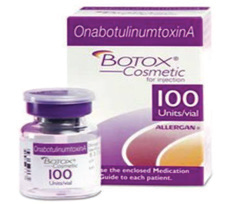
Each vial of BOTOX contains-
1. 100 Units (U) of Clostridium botulinum type A neurotoxin complex.
2. 0.5 milligrams of Albumin Human.
3. And 0.9 milligrams of sodium chloride in a sterile, vacuum-dried form without a preservative.15
General Guidelines
• Preparation has to be used within 4 h.• The area of the injection has to be covered with a topical anesthetic cream or can be anesthetized using ice.
• Start with a lower dose.
• Muscles should not be paralyzed completely.
• Males generally require higher dose due to larger muscle masses.
• The treatment with BT is based on palliative rather than curative approach as the blockade is temporary.
• Blockade lasts for three to 4 months after which there is sprouting of new axon terminals resulting in return of neuromuscular function.
• The general latency for BTA is 1 week, and it is recommended that injection is done no more than once every 12 weeks to avoid development of antibodies against the toxin.
• Following application, the clinical effect occurs within approximately 3–7 days, followed by 1–2 weeks of maximum effect, which then levels off to a moderate plateau until full nerve recovery within 3–6 months.16
Depending on the target muscle, injection dose is 10–50 U of Botox® per site (total of 200 U in the masticatory system).
Maximum of 400 U can be used if other sites in the head and neck are included in the protocol.
As a safety measure the commercialy available butulinum toxin A should have a “Boxed warning ”on its product including the adverse reaction as prescribed by both health Canada and FDA. The effect of the symptoms can range from one day to several weeks.17
CONTRAINDICATIONS
1. Pregnant or lactating woman as it may harm the baby.
2. Neuromuscular disorders as patients will be at risk of muscle weakness, diplopia, ptosis, dysphonia, dysarthria and severe dysphagia.
3. Patients under Ca channel blockers, cyclosporine and aminoglycosides medications as it may cause arrhythmia and myocardial infarction.
4. Patients with a history of allergy to any of the constituents of BT or saline solution as it may cause immediate hypersensitive reactions including anaphylaxis, serum sickness, urticaria, edema and dyspnea.
5. Psychological unstable patients.15
SIDE EFFECTS
• The muscles injected can be sore for a few days after the injections.• Botox can cause temporary partial weakening of the muscles injected.
• When Botox is used for a long time, it may cause atrophy of the muscles injected. This atrophy is reversible if the therapy is discontinued.
• There have been reports of temporary side effects such as flu-like symptoms, palpitations, tingling sensations, or nausea. These side effects are rare and usually go away within 1-2 days.1
FUTURE PERSPECTIVE
Although plenty of reports on the use of botulinum in dentistry are published, quality literature is scarce. Dental surgeons are well placed by their virtue of knowledge of facial anatomy, further skill enhancement training is warranted to prepare them to administer botulinum toxin for therapeutic uses. Many regulatory bodies in the United States have already started additional licensure procedures for practicing Botox® in dentistry. The interest among dental practitioners to practice botulinum is growing, mostly for esthetic dental reason.15
CONCLUSION
The journey of BT from a deadly poison to a remarkably resourceful therapeutic agent has broadened the horizon of dentistry Botox has been introduced as an effective treatment option to many dental conditions where surgical treatment was required. BOTOX is also used to complement aesthetic dentistry cases, as a minimally invasive alternative to surgically treating high lip-line cases, for denture patients who have trouble adjusting to new dentures, periodontal cases, gummy smiles, lip augmentation, and also for orthodontic cases where retraining of the facial muscles is necessary.
REFERENCES
- Azam A, Manchanda S, Thotapalli S, Kotha SB. Botox therapy in dentistry: A Review. Journal of international oral health: JIOH. 2015; 7(Suppl 2): 103.
- Jankovic J. Botulinum toxin in clinical practice. Journal of Neurology, Neurosurgery & Psychiatry. 2004 Jul 1; 75(7): 951-957.
- Park KS, Lee CH, Lee JW. Use of a botulinum toxin A in dentistry and oral and maxillofacial surgery. Journal of dental anesthesia and pain medicine. 2016 Sep 1; 16(3): 151-157.
- RR Filho ZG, Gonçalves BM. Applications of Botulinum Toxin in Dentistry- Literature Review. J Dent Oral Biol. 2016; 1 (3). 2016; 1013.
- Srivastava S, Kharbanda S, Pal US, Shah V. Applications of botulinum toxin in dentistry: A comprehensive review. National journal of maxillofacial surgery. 2015 Jul;6(2):152.
- Mostafa D. Botulinum Toxin in Dentistry. Saudi medical journal. 2018; 3: 1-5.
- Verma A, Srivastava S, Kharbanda S, Priyadarshini J, Gupta A. Botox: tales beyond beauty. journal of evolution of medical and dental sciences-jemds. 2015 Aug 27;4(69):12068-74.
- Al-Ahmad HT, Al-Qudah MA. The treatment of masseter hypertrophy with botulinum toxin type A. Saudi medical journal. 2006; 27(3): 397-400.
- Mandel L, Tharakan M. Treatment of unilateral masseteric hypertrophy with botulinum toxin: case report. Journal of oral and maxillofacial surgery. 1999;57(8):1017-9.
- Song P, Schwartz J, Blitzer A. The emerging role of botulinum toxin in the treatment of temporomandibular disorders. Oral diseases. 2007; 13(3): 253-60.
- Jeynes LC, Gauci CA. Evidence for the use of botulinum toxin in the chronic pain setting—a review of the literature. Pain Practice. 2008;8(4):269-276.
- Pappert EJ, Germanson T. Botulinum toxin type B vs. Type A in toxin-naïve patients with cervical dystonia: Randomized, double-blind, noninferiority trial. Movement Disorders. 2008; 23(4): 510-517.
- Botulinum toxin in the treatment of trigeminal neuralgia 6-Month follow-up Ülkü Türk Börü, mda, Arda Duman, mdb, Cem Bölük, mda,∗, Sanem Cos¸kun Duman, mda, Mustafa Tas¸demir, mdc.
- Awan KH. The therapeutic usage of botulinum toxin (Botox) in non-cosmetic head and neck conditions–An evidence based review. Saudi Pharmaceutical Journal. 2017 Jan 1; 25(1): 18-24.
- Nayyar P, Kumar P, Nayyar PV, Singh A. Botox: broadening the horizon of dentistry. Journal of clinical and diagnostic research: JCDR. 2014 Dec; 8(12): ZE25.
- Srivastava S, Kharbanda S, Pal US, Shah V. Applications of botulinum toxin in dentistry: A comprehensive review. Natl J Maxillofac Surg. 2015; 6(2): 152-159.
- Unjum Bashir, T. Naga Rajesh Naidu. Dental applications of botox. International Journal of Contemporary Medicine Surgery and Radiology. 2016; 1(1): 1-2.
Disclaimer from Guident
The views and opinions expressed in articles published in Guident are solely those of the authors and do not necessarily reflect the views of the editors, the editorial board or the publisher, Ivory India. Guident does not endorse any product, technique or treatment described. Clinical content is intended for qualified dental and medical professionals and is not a substitute for individual clinical judgement. Guident, its editors and the publisher accept no liability for any consequence arising from the use of information published in the journal.
How to cite this article
Dr. Swetha Jayan, Dr. Jyosthna G Madhurkar, Dr. Shashikanth Hegde. Botox: Tales Beyond Beauty. Guident. 2019 Aug;12(9). Available from: https://guident.in/articles/general/botox-tales-beyond-beauty.html