Ozone- the Future of Dentistry
Department of Prosthodontics & Implantology, K.D. Dental College & Hospital, Mathura (U.P) India
INTRODUCTION 1-6
OZONE and the first thing that comes to our mind is air pollution. But it is this ozone which protects us from the harmful sunrays that is the major reason for skin cancers. In fact ozone is commonly used in air purification systems, water purifiers, commercial laundries, swimming pools and spa! Many critically important uses of this powerful, naturally occurring gas are not so well known. It is the atraumatic, painless and non-invasive nature of ozone which makes it an ideal choice for treatment at dental clinics.WHAT IS OZONE? 7
Ozone is a triatomic molecule, consisting of three oxygen atoms. Ozone is a blue gas in stratosphere, which has a critical role in both the thermal structure of the stratosphere as well as the ecological framework for life on the Earth’s surface. O3 is a powerful oxidant capable of interacting as metabolic & immune modulator as well as anti-microbial agent. Multiple microbiological & the biochemical studies justified that there are no doubts about the effectiveness of ozone in bacterial reduction.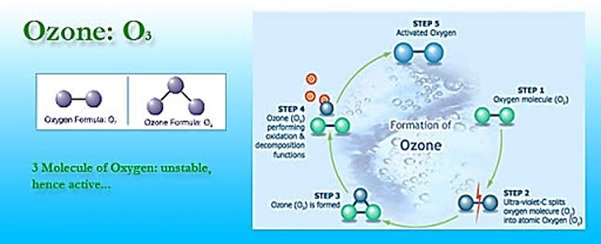
Its application in medicine and dentistry has been indicated for the treatment of 260 pathogens. The ozone therapy has been more beneficial than the present conventional therapeutic modalities that follow a minimal invasive and conservative dental treatment.
HISTORY 8
Christian Friedrich Schönbein (1840), a German Chemist, is regarded as the Father of ozone therapy. When he passed an electrical discharge through water, a strange smell was produced, which he called Ozone, derived from the Greek word ‘OZEIN’ which means odor. In 1857 Joachim Hänsler, a German physicist and physician, along with German physician,developed the first ozone generator for medical use. In 1860,Monaco first used it in water treatment plants .Dr. C. Lender in 1870. He purified blood in test tubes by using O3. Later, O3 application gained as a popularity as a therapeutic procedure throughout Europe and America .In 1881, it was used as a disinfectant in the treatment of diphtheria. In October 1893, Ousbaden, Holland became the first city to utilize a water treatment plant using ozone. In World War I and II it was used to treat wounded soldiers in the trenches . In early 20th century Food and Drug Act, revised its use and effect in the field of medicine.HOW OZONE WORKS? 9
Ozone works in the same manner as the human body. When infection occurs, white blood cells enter bacteria and create an oxidative burst. This reaction to the white blood cells causes a puncture and the wall of the targeted microbe, and the cell dies off.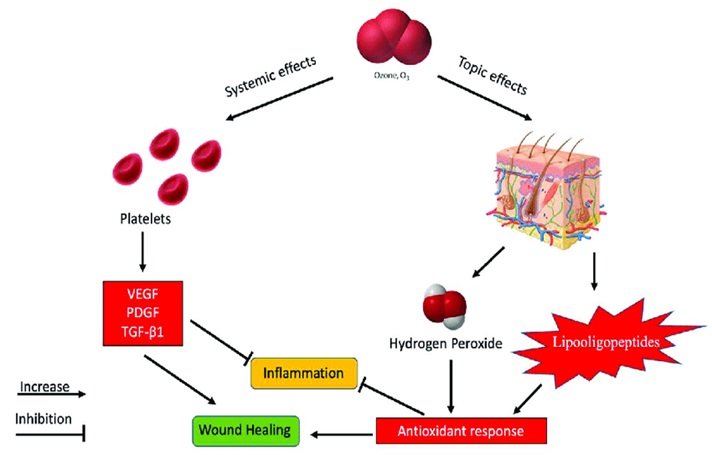
The several mechanism of actions of ozone are : anti-microbial, antiinflammatory, analgesic, immune stimulating, anti - hypoxic, detoxicating, bio-energetic and biosynthetic (activation of the metabolism of carbohydrates, proteins & lipids)actions.
DIFFERENT SYSTEMS FOR GENERATING OZONE GAS
- Ultra violet system: produces low concentrations of ozone, used in aesthetics & for air purification.
- Cold plasma system: used in air and water purification.
- Corona discharge system: produces high concentrations of ozone. It is the most common system used in the medical/dental field.
DENTAL OZONE GENERATORS 4
A. HEAL OZONEThe ozone unit for dental use was initially developed by CurOzone Inc. (Canada) and subsequently manufactured under license and distributed by KaVo Dental GmbH and Co. (Germany) under the name “HealOzone”.
The HealOzone procedure consists of a package which includes the application of ozone gas, the use of remineralizing agents, a patient kit and information on oral hygiene. The procedure usually takes between 20 and 120 second per tooth.
Immediately after ozone application the tooth surface is treated with a remineralizing solution (reductant) containing fluoride, calcium, zinc, phosphate.
• HealOzone application for the treatment of non cavitated lesions is usually repeated at 3 and 6 months.
B. THE OZOTOP
The OzoTop is a free flow ozone delivery system using a corona discharge. It is a compact, easy to use tabletop unit. The system may be used in all cases where point of placement disinfection is needed, including periodontology, endodontology, restorative, implantology, apthous ulcers/herpes,dentures and impression materials. Ozone is applied at 6, 12, 18, 24 seconds, depending on which treatment is required.
WHY THE OZONE REVOLUTION IN DENTISTRY? 10
Teeth need professional care. Harmful bacteria need to be removed in order to keep them healthy and beautiful. Brushing and flossing are very important in the fight against the bacteria, but often it’s insufficient. Ozone therapy is a non surgical dental treatment. This means dentist’s drill is not being used. It is painless, which unfortunately is not the case in most regular dental visits.The vision using ozone therapy is the patients natural teeth can be and must be maintained in a healthy state without using drills and invasive procedures. The secret lies in early detection, prevention and the BEST NEWS – it’s PAINLESS
CLINICAL APPLICATIONS OF OZONE IN DENTISTRY
- Treatment of dental caries11: The application of Ozone therapy in the treatment of dental caries is extensively studied and many studies have proved its effectiveness in the treatment of pit and fissure caries, root caries and interproximal caries. Ozone is delivered through a hand piece, which is equipped with a silicon cup. This treatment is an alternative therapy to conventional drilling and filling for non cavitated deciduous carious lesion.
- Endodontics12: In endodontic treatment instead of using irrigation chemicals (Naocl), Ozonated water can be used for irrigation. Ozonated oils like Ozonated sunflower oil, olive oil and ground nut oil was efficient in canal sterilization than the conventional irrigation by the Sodium hypochlorite and Sodium peroxide combination.
- Boon for Periodontics: The study of effect of ozonated water on proliferation of cells in periodontal ligament has resulted in the decontamination of root surface, without negative effect on the remaining periodontal cells on root surface.
- Ozone for treatment of periimplantitis13: For the prevention of periimplantitis an adequate and steady plaque control regimen must be ensured.
- Ozone therapy in oral and maxillofacial surgery: Ozone has a positive influence on bone metabolism and reparative process of the bone (Sanseverino ER et al., 1989).
- Ozone’s antiviral actions: All viruses are susceptible to ozone; yet differ widely in their susceptibility.
However, the other treatment modalities where Ozone therapy works are:
Biofilm purging, Bleaching, TMJ disorders, Tissue regeneration, Pain control, Accelerated healing, Gum recession.
IS OZONE SAFE? 14
Ozone, just like anything else, if it’s used in the proper concentration and correct application is very safe and beneficial. However some contraindications of ozone therapy are: Pregnancy, Glucose- 6- phoshate dehydrogenase deficiency (favism), Hyper thyroidism, Severe anemia, Severe myasthenia and Active caries.OZONE TOXICITY
Ozone inhalation can be toxic to the pulmonary system and other organs. Complications caused by ozone therapy are infrequent at 0.0007 per application. Known side effects are upper respiratory irritation, rhinitis, cough, headache, occasional nausea, vomiting, shortness of breath, blood vessel swelling, poor circulation, heart problems. European cooperation of medical ozone societies prohibited the intravenous injections of ozone gas due to risk of air embolism.
Cure for ozone toxicity:
The patient must be placed in the supine position. The patient should inhale the humid oxygen and treated with Vitamin E, & ascorbic acid.
OZONE AND COVID-19 - OZONE TREATMENT ON PPE 15
Ozone can successfully eliminate SARS-CoV-2 from the surface of PPE gowns and face masks, with a viricidal effect depending on ozone concentrations, exposure times, and relative humidity. The mechanisms of action of ozone depend on its strong oxidant effect, which explains its induced oxidative stress and its broad antimicrobial spectrum.This effect is mediated by peroxidation and damage of polyunsaturated fatty acids from cell membranes (in bacteria, mold, yeast, and spores), proteins (especially S-proteins), and lipids of capsid and viral envelopment, as well as by inducing indirect damage to DNA and RNA.

CONCLUSION
Ozone therapy allows a new vision, which complies with needs and demands of the public for noninvasive, effective dental care and it is truly a paradigm shift in dental practice. Ozone therapy has opened new ways in treatment for dental patients of all ages and applicable to a wide range of conditions of intra oral hard and soft tissues. It is especially suitable to the younger patients who are often scared of “drilling” and find conventional treatment unacceptable.The ozone therapy has been more beneficial than present conventional therapeutic modalities that follow a minimally invasive and conservative application to dental treatment. Treating patients with ozone therapy reduces the treatment time with a great deal of difference, and it eliminates the bacterial count more precisely. The treatment is completely painless and increases the patients’ acceptability and compliance with minimal adverse effect.
REFERENCES
- R. Garg, S. Tandon Ozone: a new face of dentistry Int J Dent Sci, 7 (2009), p. 2
- Saini R, Saini S, Sharma S. Periodontal disease linked to cardiovascular disease. J Cardiovasc Dis Res. 2010;1:161–2.
- Saini R, Marawar PP, Shete S, Saini S. Periodontitis a true infection. J Global Infect Dis. 2009;1:149–51.
- Saini R, Marawar PP, Shete S, Saini S, Mani A. Dental expression and role in palliative treatment. Indian J Palliat Care. 2009;15:26–9.
- Saini R, Saini S, Sharma S. Periodontitis: A risk factor to respiratory diseases. Lung India. 2010;27:189.
- Bortolaia C, Sbordone L. Biofilms of the oral cavity. Formation, development and involvement in the onset of diseases related to bacterial plaque increase. Minerva Stomatol. 2002;51:187–92.
- Burns DT. Early problems in the analysis and the determination of ozone. Fresenius J Anal Chem. 1997;357:178–83.
- Stübinger S, Sader R, Filippi A. The use of ozone in dentistry and maxillofacial surgery: A review. Quintessence Int. 2006;37:353–9.
- Viebahn-Hänsler R. The use of ozone in medicine: Mechanisms of action. Munich. 2003. May 23-25, [cited in 2003].
- V. Seidler, I. Linetskiy, H. Hubalkova, H. Stankova, R. Smucler, J. Mazanek. Ozone and its usage in general medicine and dentistry Prague Med Rep, 109 (1) (2008), pp. 5-13
- A. Bayson, E. Lynch. Antimicrobial effects of ozone on caries E. Lynch (Ed.), Ozone: the revolution in dentistry, London Quintessence Publishing Co. (2004), pp. 165-172.
- Alan Holland. Ozone in endodontics . Endod Pract (2010), pp. 6-10
- D. Iliadis, J. Brian, Millar. Ozone and its use in periodontal treatment Open J. Stomatology, 3 (2) (2013), pp. 197-202
- V BocciOzone as Janus: this controversial gas can be either toxic or medically useful Mediators Inflamm, 13 (1) (2004), pp. 3-11
- Bernardino Clavo et al. Effects of Ozone Treatment on Personal Protective Equipment Contaminated with SARS-CoV-2.MDPI JORNAL. Antioxidants 2020, 9, 1222; doi:10.3390/antiox9121222
Disclaimer from Guident
The views and opinions expressed in articles published in Guident are solely those of the authors and do not necessarily reflect the views of the editors, the editorial board or the publisher, Ivory India. Guident does not endorse any product, technique or treatment described. Clinical content is intended for qualified dental and medical professionals and is not a substitute for individual clinical judgement. Guident, its editors and the publisher accept no liability for any consequence arising from the use of information published in the journal.
How to cite this article
Dr. Preeti Sagar, Dr. Abhinav Agarwal. Ozone- the Future of Dentistry. Guident. 2021 Feb;14(3). Available from: https://guident.in/articles/general/ozone-the-future-of-dentistry.html