Knowledge and Awareness of School Teachers Regarding the Emergency Management of Traumatic Dental Injuries in Ludhiana - Preparedness or Practice Gap
Department of Pediatric and Preventive Dentistry, Baba Jaswant Singh Dental College, Hospital and Research Institute, Ludhiana, Punjab, India
ABSTRACT
Background: Traumatic Dental Injuries are among the most common oral health problems affecting school aged children. Since a large proportion of these injuries occur within the school environment, teachers often function as first responders, whose immediate actions can meaningfully influence long term prognosis, yet their preparedness for emergency management remains inconsistently documented.
Aim: To assess the knowledge and awareness of school teachers in Ludhiana, regarding the emergency management of traumatic dental injuries and identify the gaps in their preparedness.
Materials and method: A cross-sectional, questionnaire-based study was conducted among school teachers in Ludhiana. Data were collected using a structured questionnaire adapted from a previously published questionnaire, which assessed demographic details, prior exposure to dental trauma, knowledge of immediate management of avulsion injuries in both primary and permanent teeth.
Results: Of 200 respondents, 90% could differentiate between primary and permanent teeth and 85% supervised children during sports activities while only 30% had personally encountered tooth avulsion incident previously. For permanent tooth avulsion, only 20% identified immediate replantation as correct management. Regarding urgency, 60% correctly identified that care should be sought immediately. Storage medium knowledge was limited - 12.5% identified HBSS and 10% identified sterile saline, while 25% selected cold milk, an appropriate readily available storage medium while 35% would use a dry cotton pad, a practice which is detrimental to periodontal ligament viability. Only 55% knew to hold the avulsed tooth by the crown alone. Half of the respondents (50%) were dissatisfied with their own knowledge of dental trauma management, and 90% expressed a desire for further structured educational training.
Conclusion: School teachers in Ludhiana demonstrated substantial gaps in the emergency management of dental trauma particularly regarding replantation and storage media. Despite limited knowledge teachers showed strong willingness to be trained, underscoring a need for school based educational interventions.
Keywords: Dental trauma, Tooth Avulsion, Emergency Management, School Teachers, Knowledge and Awareness
INTRODUCTION
Traumatic dental injuries represent a significant global public health concern among children.1,2 A systematic review and meta-analysis estimated the global prevalence of traumatic dental injuries in primary teeth to be 24.2% with a higher prevalence among boys while other studies have reported prevalence ranging between 6% and 37%.2,3 Crown fractures and avulsion have consistently been shown to predominate in the permanent dentition. While luxation injuries are more frequently observed in primary teeth with falls remaining the leading etiological factor and schools being the most common sites of injury.3,4
Tooth avulsion is regarded as one of the most severe dental emergencies with reported prevalence of approximately 0.5% to 16%.5 According to the guidelines issued by IADT, the prognosis of an avulsed permanent tooth is strongly time-dependent, and immediate replantation is associated with better periodontal healing outcomes.5,6
Because a considerable proportion of dental trauma occurs at schools, teachers are frequently the first point of contact in such emergencies yet literature consistently documents gaps in their preparedness. Studies conducted in Turkey have found only a minority of teachers correctly identified storage medium for permanent tooth avulsion.8 Similar deficits have been reported in India, with surveys from Maharashtra, Rajasthan and Karnataka each describing inadequate baseline knowledge of trauma management among school teachers.9,10,11 A two- centre study from South India similarly found that fewer than a quarter teachers recognized the critical 30 minute window associated with optimal replantation outcomes.15 Although studies have evaluated teachers’ knowledge regarding dental trauma in other parts of India, there remains limited contemporary evidence from Ludhiana and the surrounding urban school setting. This gap is noteworthy, as teachers continue to serve as the first responders to dental trauma in the school setting. Hence the study was undertaken to assess the knowledge, awareness and attitudes of school teachers in Ludhiana Region regarding the emergency management of traumatic dental injuries.
Aims and objectives
The aim of this study was to assess the knowledge, awareness and attitudes of school teachers in Ludhiana regarding the emergency management of traumatic dental injuries.
MATERIALS AND METHODS
A cross-sectional, questionnaire-based study was conducted among 200 school teachers in Ludhiana, North India. A structured, self-administered questionnaire was used, adapted from a previously published study conducted among school teachers in Saudi Arabia.12 The questionnaire covered demographic details, general awareness of dental anatomy and supervisory exposure to children during sports activities, prior experience with tooth avulsion incidents, and specific knowledge related to the immediate management of avulsion in both primary and permanent teeth. It further assessed knowledge of appropriate storage media, correct tooth-handling technique, the urgency of seeking care following avulsion, and management of a dirt-contaminated tooth, in addition to teachers' self-perceived knowledge adequacy and their attitude towards structured training. The questionnaire was distributed among participating schools, and participation was voluntary.
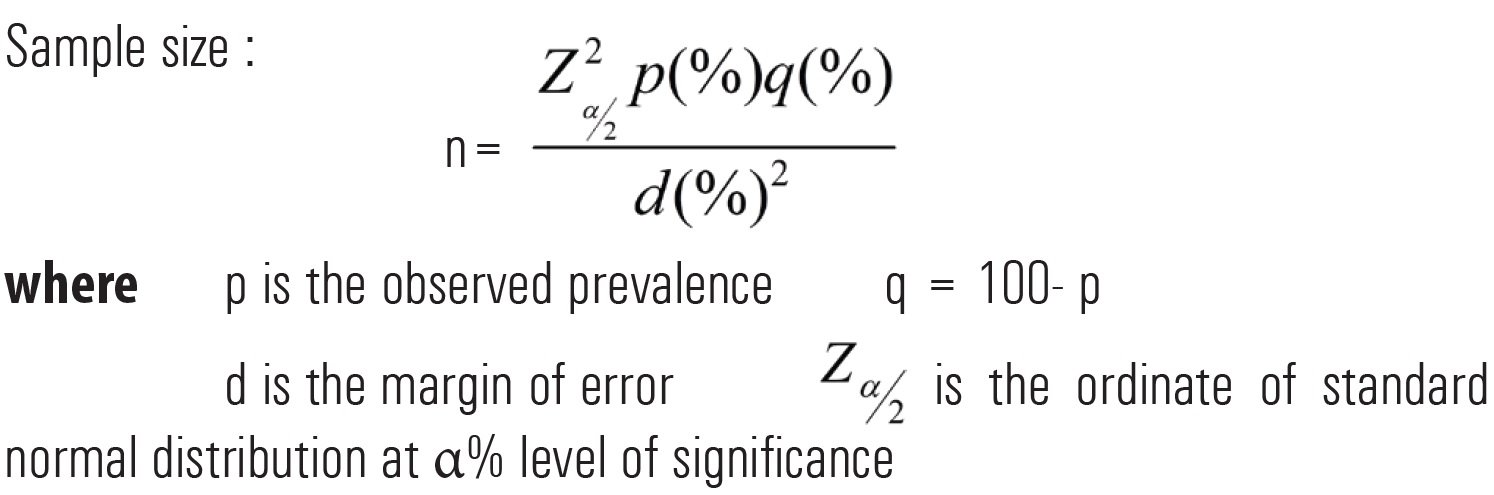
Calculations:
p (Prevalence of school teachers preferred to immediately refer the child to the dentist if trauma affects permanent teeth. Basim Almulhim. Knowledge and Awareness of School Teachers Regarding Emergency Management of Tooth Avulsion in the Kingdom of Saudi Arabia: A Cross-Sectional Study. The Open Dentistry Journal. 2022;16(1): e187421062112231).

Hence the minimum sample size required in the present study will be 195. Considering the error and attrition; the sample size will be increased to 200.
Statistical analysis: Data so collected was tabulated in an excel sheet, under the guidance of statistician. The frequency data was analysed using SPSS version 26.00 for windows; SPSS inc, Chicago, USA.
RESULTS
Table 1: Gender distribution
|
Gender |
N |
% |
|
Female |
180 |
90.0 |
|
Male |
20 |
10.0 |
|
Total |
200 |
100.0 |
Among the 200 participants, 180 (90.0%) were females, while 20 (10.0%) were males, indicating a marked predominance of female participants in the study population.
Table 2: Response to various questions
|
Question |
No (N) |
No (%) |
Yes (N) |
Yes (%) |
|
Can you differentiate between baby teeth and permanent teeth |
20 |
10.0 |
180 |
90.0 |
|
Do you supervise children during sports activities? |
30 |
15.0 |
170 |
85.0 |
|
Have you come across an accident where a tooth was avulsed? |
140 |
70.0 |
60 |
30.0 |
|
Are you satisfied with your knowledge on management of dental trauma? |
100 |
50.0 |
100 |
50.0 |
|
Do you think it is important to have an educational program in management of dental trauma? |
20 |
10.0 |
180 |
90.0 |
The above table presents the participants’ responses to questions assessing their knowledge, experience, and awareness regarding dental trauma. A large majority of participants, 180 (90.0%), reported that they could differentiate between primary (baby) and permanent teeth, while 170 (85.0%) reported supervising children during sports activities. Only 60 (30.0%) had previously encountered an accident involving tooth avulsion, whereas 140 (70.0%) had not. Regarding satisfaction with their knowledge of dental trauma management, 100 (50.0%) participants were satisfied and 100 (50.0%) were not satisfied. Importantly, 180 (90.0%) participants felt that an educational program on the management of dental trauma was necessary, while 20 (10.0%) did not. Overall, the findings indicate good awareness of basic dental aspects and a strong perceived need for further education regarding dental trauma management.
Table 3: Immediate management of avulsion of baby tooth
|
Response |
N |
% |
|
Don't know |
20 |
10.0 |
|
Refer the child immediately to dentist |
65 |
32.5 |
|
Throw out |
5 |
2.5 |
|
Wash the child's mouth with tap water and take the tooth in wet cloth |
110 |
55.0 |
|
Total |
200 |
100.0 |
The above table presents the participants’ responses regarding the immediate management of an avulsed primary (baby) tooth. The most common response was washing the child’s mouth with tap water and keeping the tooth in a wet cloth, reported by 110 (55.0%) participants. 65 (32.5%) participants appropriately identified the need to refer the child immediately to a dentist, while 20 (10.0%) reported that they did not know what to do. A small proportion, 5 (2.5%), incorrectly indicated that the avulsed tooth should be thrown away. Overall, the findings suggest that although many participants recognized some appropriate immediate measures, there was a considerable need for improved awareness regarding the correct management of avulsed primary teeth.
Table 4: Immediate management of avulsion of permanent tooth
|
Response |
N |
% |
|
Don't know |
20 |
10.0 |
|
Put the tooth back into original position |
40 |
20.0 |
|
Refer the child immediately to dentist |
105 |
52.5 |
|
Wash the child's mouth with tap water and take the tooth in wet cloth |
35 |
17.5 |
|
Total |
200 |
100.0 |
The above table presents the participants’ responses regarding the immediate management of an avulsed permanent tooth. The most common response was immediate referral of the child to a dentist, reported by 105 (52.5%) participants. 40 (20.0%) participants correctly indicated that the tooth should be repositioned into its original position, while 35 (17.5%) reported washing the mouth with tap water and keeping the tooth in a wet cloth. 20 (10.0%) participants reported that they did not know the appropriate management. Overall, the findings indicate that more than half of the participants recognized the need for prompt dental referral, although awareness of immediate tooth replantation was comparatively limited.
Table 5: Urgency of seeking care for avulsed permanent tooth
|
Response |
N |
% |
|
Before next day |
20 |
10.0 |
|
Immediately |
120 |
60.0 |
|
Within 30 minutes |
60 |
30.0 |
|
Total |
200 |
100.0 |
The above table presents the participants’ responses regarding the urgency of seeking professional care following avulsion of a permanent tooth. The majority, 120 (60.0%), reported that care should be sought immediately, while 60 (30.0%) indicated that care should be sought within 30 minutes. Only 20 (10.0%) participants considered seeking care before the next day appropriate. Overall, the findings demonstrate that most participants recognized the need for prompt dental care following avulsion of a permanent tooth.
Table 6: How would you keep the tooth till you reach the dentist?
|
Response |
N |
% |
|
Put it in any antiseptic solution |
5 |
2.5 |
|
Put it in cold milk |
50 |
25.0 |
|
Put it in cotton pad |
70 |
35.0 |
|
Put it in HBSS (Hank’s Balanced Salt Solution) |
25 |
12.5 |
|
Put it in sterile saline |
20 |
10.0 |
|
Put it in tap water |
15 |
7.5 |
|
Put it in wet handkerchief |
15 |
7.5 |
|
Total |
200 |
100.0 |
The above table presents the participants’ responses regarding the preferred medium for storing an avulsed tooth until reaching the dentist. The most commonly reported method was keeping the tooth in a cotton pad, reported by 70 (35.0%) participants, followed by cold milk in 50 (25.0%) participants. 25 (12.5%) participants selected Hanks Balanced Salt Solution (HBSS), while 20 (10.0%) chose sterile saline. Smaller proportions reported using tap water and a wet handkerchief, each by 15 (7.5%) participants, while 5 (2.5%) participants would place the tooth in an antiseptic solution. Overall, the responses indicate considerable variation in knowledge regarding appropriate storage media for an avulsed tooth, with relatively few participants identifying scientifically recommended storage media such as HBSS or milk.
Table 7: How would you hold an avulsed tooth?
|
Response |
N |
% |
|
Anywhere (from crown or root) |
55 |
27.5 |
|
Crown |
110 |
55.0 |
|
Root |
35 |
17.5 |
|
Total |
200 |
100.0 |
The above table presents the participants’ responses regarding the appropriate way to hold an avulsed tooth. The majority, 110 (55.0%), reported that the tooth should be held by the crown, while 55 (27.5%) participants would hold it anywhere, either by the crown or root. 35 (17.5%) participants reported holding the tooth by the root. Overall, more than half of the participants demonstrated awareness of the appropriate method of handling an avulsed tooth by identifying the crown as the preferred area to hold it, although a considerable proportion selected inappropriate methods.
Table 8: What would you do if the avulsed tooth was covered with dirt?
|
Response |
N |
% |
|
Rinse with tap water |
65 |
32.5 |
|
Scrub the tooth to remove dirt |
5 |
2.5 |
|
Wash with hydrogen peroxide |
30 |
15.0 |
|
Wash with sterile saline |
75 |
37.5 |
|
Wipe the tooth with tissue paper |
5 |
2.5 |
|
Would do nothing |
20 |
10.0 |
|
Total |
200 |
100.0 |
The above table presents the participants’ responses regarding the management of an avulsed tooth contaminated with dirt. The most common response was washing the tooth with sterile saline, reported by 75 (37.5%) participants, followed by rinsing with tap water in 65 (32.5%) participants. 30 (15.0%) participants reported washing the tooth with hydrogen peroxide, while 20 (10.0%) would do nothing. Smaller proportions reported scrubbing the tooth or wiping it with tissue paper, each accounting for 5 (2.5%) participants. Overall, the findings indicate that although a substantial proportion of participants selected appropriate gentle rinsing methods, some participants reported potentially inappropriate methods of cleaning an avulsed tooth.
DISCUSSION
Tooth avulsion is regarded as one of the most time-critical emergencies in the dentistry and unlike other dental injuries, its prognosis is strongly influenced by the actions taken immediately at the site of injury.5 According to IADT guidelines, immediate replantation offers the best prognosis and if immediate replantation is not possible, storage of the tooth in appropriate medium such as cold milk, HBSS, patient’s own saliva or saline, is essential for preserving the viability of periodontal ligament cells on the root surface.5,6 Because schools are among the most common sites of dental trauma in children, teachers are frequently the only adults present at the critical moment when these decisions must be made and their knowledge can directly determine the prognosis of the tooth.3,4
This study highlights a considerable gap between school teachers’ general awareness of difference between primary and permanent teeth and the specific actionable knowledge of emergency dental trauma management.
The most significant finding was that only 20% of the teachers correctly identified immediate replantation as the appropriate management for an avulsed permanent tooth while the majority instead opted for immediate referral alone. This finding is in agreement with the data from Punjab, India where the mean knowledge score was only 5 out of 10 and correct identification of replantation as the appropriate immediate management was uncommon regardless of the teachers experience or training background7; and from Turkey where few teachers correctly identified replantation or milk storage as appropriate first line actions.8 Taken together, this consistency across three distinct populations suggests that the gap is not incidental but structural. Replantation is a counterintuitive action for layperson since placing a dirty recently avulsed tooth back into a bleeding socket runs against the ordinary first aid instinct and in the absence of explicit training, referral understandably feels like the safer choice. This reasoning has been offered previously to explain similarly low replantation awareness and lay populations7 and it appears to hold equally in the present Ludhiana population.
Knowledge of appropriate storage media was similarly limited in the present study. Although one-quarter of participants identified cold milk, an appropriate readily available storage medium, 35% selected a dry cotton pad, suggesting that a substantial proportion remained unaware of the importance of maintaining periodontal ligament cell viability. This finding matches with the data from Spain, where 85.8% of the teachers lacked knowledge of an appropriate storage medium 13, and from South India where roughly half of the respondents could not identify a suitable storage medium and many defaulted to dry storage.15 The relative unfamiliarity and limited availability of HBSS in everyday settings may partly explain why milk was selected more frequently, although this explanation was not directly assessed in the present study.15
By contrast, tooth handling technique in the present sample was comparatively better than reported elsewhere, with 55% of the teachers correctly identifying the crown as the area to hold the tooth from. This is a more favourable result than the South Indian study where handling related knowledge gaps were reported along broader deficits and comprehensive management care protocols.15
Regarding urgency, 60% of the respondents in the study correctly recognized that care should be sought immediately, a figure considerably higher than the South Indian study where fewer than 25% of the teachers recognized critical 30-minute window for optimal replantation outcomes.15
A small number of respondents in the present study also endorsed practices likely to worsen prognosis such as 15% would use hydrogen peroxide and 2.5% would scrub a dirt contaminated tooth. A comparable pattern was reported in Saudi Arabia, where male teachers in particular were significantly more likely than female teachers to scrub a dirt covered avulsed tooth with a toothbrush before attempting replantation.14
Despite knowledge deficits, 90% of the respondents expressed a desire for further training and 50% independently recognized their own knowledge as inadequate. This finding is consistent with interventional data from Rajasthan where a structured education program produced a significant improvement in both knowledge and attitudes among primary school teachers10,11 and supports recommendations that training in the management of traumatic dental injuries be formally incorporated into teacher-training curricula.
Limitations: This study has several limitations. The cross-sectional design limits causal inference, while the questionnaire-based approach may be subject to recall and social-desirability bias. The study was conducted among teachers in Ludhiana, which may limit the generalizability of the findings to other regions. The marked predominance of female respondents may also have influenced the representativeness of the sample. Furthermore, questionnaire responses assess reported knowledge rather than actual performance during a dental trauma emergency.
CONCLUSION
School teachers in North India demonstrated considerable gaps in knowledge regarding the emergency management of dental trauma particularly in relation to replantation of avulsed permanent teeth and the selection of appropriate storage media while awareness of basic tooth identification and appropriate tooth handling was relatively better than knowledge of replantation and storage media. The strong willingness among teachers to undergo training indicates that the underlying issue reflects a genuine preparedness gap. Structured guideline based training programs for school teachers developed in collaboration with dental institutions represent a clear and actionable opportunity to strengthen first responder readiness and improve long term prognosis of dental trauma among school aged children.
REFERENCES
- Global Epidemiological Patterns, Etiology, and Risk Factors of Traumatic Dental Injuries in Children and Adolescents: A Systematic Review.
- Patnana AK, et al. The prevalence of traumatic dental injuries in primary teeth: a systematic review and meta-analysis. Dent Traumatol. 2021.
- Güngör HC. Management of crown-related fractures in children: an update review. Dent Traumatol. 2014.
- Akgün ÖM, Yildirim C, Polat GG, Altun C, Ba?ak F. Evaluation of traumatic dental injuries in pediatric patients: a cross-sectional study. Ulus Travma Acil Cerrahi Derg. 2025 Jul;31(7):698-704. doi:10.14744/tjtes.2025.84006. PMID:40629733; PMCID:PMC12256958.
- Fouad AF, Abbott PV, Tsilingaridis G, Cohenca N, Lauridsen E, Bourguignon C, et al. International Association of Dental Traumatology guidelines for the management of traumatic dental injuries: 2. Avulsion of permanent teeth. Dent Traumatol. 2020;36(4):331-342.
- International Association of Dental Traumatology. Dental Trauma Guidelines: Avulsion of Permanent Teeth.
- Kaur H, Kaur S, Kaur H. Prehospital emergency management of avulsed permanent teeth: knowledge and attitude of school teachers. Indian J Dent Res. 2012 Jul-Aug;23(4):556. doi:10.4103/0970-9290.104974. PMID:23257499.
- Cömert H, Ozdemir M, Baran E. Preschool and primary school teachers’ knowledge of emergency management of traumatic dental injuries: a cross-sectional study. J Oral Sci. 2026;68:106-111. doi:10.2334/josnusd.25-0425.
- Katge FA, Patil DP, Khakhar PJ, Poojari MS, Koticha PB. Knowledge and awareness of school teachers regarding emergency management of dental trauma in school children of Navi Mumbai. Indian J Dent Res. 2021 Jan-Feb;32(1):51-55. doi:10.4103/ijdr.IJDR_613_18. PMID:34269237.
- Biswas A, Khan M, Awate SJ, Chauhan M, Kavitake RD, Singh RP. To assess the knowledge and attitude regarding dental trauma and its management among school teachers. J Pharm Bioallied Sci. 2024 Jul;16(Suppl 3):S2806-S2808. doi:10.4103/jpbs.jpbs_266_24. Epub 2024 Jul 31. PMID:39346235; PMCID:PMC11426697.
- Prasanna S, Giriraju A, Narayan NL. Knowledge and attitude of primary school teachers toward tooth avulsion and dental first aid in Davangere City: a cross-sectional survey. Int J Clin Pediatr Dent. 2011 Sep-Dec;4(3):203-206. doi:10.5005/jp-journals-10005-1110. Epub 2011 Apr 15. PMID:27678227; PMCID:PMC5034079.
- Almulhim B. Knowledge and awareness of school teachers regarding emergency management of tooth avulsion in the Kingdom of Saudi Arabia: a cross-sectional study. Open Dent J. 2022;16:e187421062112231. doi:10.2174/18742106-v16-e2112231.
- Martínez-Fuentes A, Pabón-Carrasco M, Crespo-Gallardo I, Castelo-Baz P, Segura-Egea JJ, Martín-González J, et al. Level of knowledge and attitude of Spanish primary school teachers regarding tooth avulsion. J Clin Exp Dent. 2024 Oct 1;16(10):e1261-e1268. doi:10.4317/jced.62148. PMID:39544204; PMCID:PMC11559122.
- Alzahrani MH, Alghoraibi M, Alzubaidi MA, Basha S, Althomali Y, Mohamed RN, et al. Knowledge, attitude, and practice in dental trauma management among schoolteachers in Taif, Saudi Arabia. Healthcare (Basel). 2025 Jan 20;13(2):200. doi:10.3390/healthcare13020200. PMID:39857228; PMCID:PMC11764920.
- Vignesh KC, Felsypremila G, Deepa R, Jairam LS, Beevi AA, Muthu MS, et al. Assessment of schoolteachers' knowledge and experience in the emergency management of traumatic dental injuries: a two-center cross-sectional study. Int J Clin Pediatr Dent. 2026 Jul;19(7):905-912. doi:10.5005/jp-journals-10005-3554. Epub 2026 Jul 21. PMID:42582774; PMCID:PMC13458571.
Disclaimer from Guident
The views and opinions expressed in articles published in Guident are solely those of the authors and do not necessarily reflect the views of the editors, the editorial board or the publisher, Ivory India. Guident does not endorse any product, technique or treatment described. Clinical content is intended for qualified dental and medical professionals and is not a substitute for individual clinical judgement. Guident, its editors and the publisher accept no liability for any consequence arising from the use of information published in the journal.
How to cite this article
Dr. Divyani Gupta, Dr. Namita Singh, Dr. Vishakha Kashyap. Knowledge and Awareness of School Teachers Regarding the Emergency Management of Traumatic Dental Injuries in Ludhiana - Preparedness or Practice Gap. Guident. 2026 Nov;19(12). Available from: https://guident.in/articles/general/knowledge-and-awareness-of-school-teachers-regarding-the-emergency-management-of-traumatic-dental-injuries-in.html