Bioterrorism
Department of Public Health Dentistry, K. D Dental College & Hospital Mathura
INTRODUCTION
Bioterrorism is a phenomenon of illegal use of biological agents against a civilian population to influence the policy of a government in the pursuit of personal, political, religious or/and other goals.1 Biological agents can be spread through the air, water or in food. Terrorists tend to use biological agents because they are extremely difficult to detect and do not cause illness for several hours to several days.2 Any low-cost bioterrorist attack, even with a minor clinical impact due to a poorly pathogenic agent, can provoke a global deflagration with an immediate and long-lasting fear cost at the social level. From this standpoint, ever-changing public opinion might be the most important criterion and must be much more taken into account in the bioterrorist risk assessment, preparedness, and response, including an updated ready to-use communication tool.3
Nationally and trans-nationally, interfacing and strengthening the research, development, and implementation of these counter-measures is clearly beneficial for global health and security. Building efficient communications is a big part of the challenge.4 There is an urgent need to improve the knowledge and develop proficiency in the management of bioterrorism.5
HISTORICAL BACKGROUND
In pre-Christian era, around 300 B.C., the Greeks used animal cadavers to contaminate water wells of enemies. The Assyrians in sixth century poisoned enemy wells with a fungus that would render the enemy delirious. It is believed that the first recognized bioterrorism attack was during the siege of Caffa. The Tartars hurled the cadavers of their deceased into the city initiating a plague epidemic. In Naples, the Spanish contaminated wine with the blood of lepers and gave it to the French. During the French-Indian war in North America, Jeffrey Amherst distributed blankets contaminated with smallpox virus to native Americans supporting the French. During World War II Insect Flea vector(plague) Japanese Army Unit 731 developed the Uji bomb filled with pathogenic bacteria and fleas and used in battles against the Allies. Fleas infected with plague were also sprayed by Japanese aircraft, initiating an outbreak that lasted 6 years and killed 50,000 people. Several other similar attacks are believed to have resulted in a total of more than 100,000 casualties. Aum Shunrikyo cult of Japan attempted to develop aerosolized anthrax and botulinum toxin. In 2014 West Africa public was exposed to Ebola Virus Disease.6
CLASSIFICATIONS OF PATHOGENS AND DISEASE ENTITY
According to American Centre for Disease Control and Prevention (CDC) pathogens can be categorized according to the level of threat they represent:
- Category A — These high-priority agents pose a risk to national security, can be easily transmitted and disseminated, result in high mortality, have potential major public health impact;
- Category B — These agents are moderately easy to disseminate and have lower- morbidity and mortality rates than agents of A group;
- Category C — These agents are emerging pathogens that might be engineered for- mass dissemination because of their availability, morbidity and high mortality rate.2
CATEGORY A
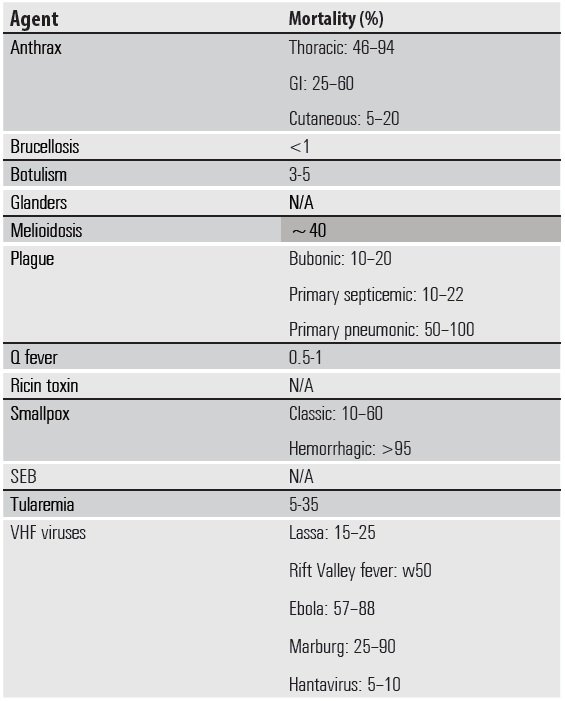
A high priority agent which includes organisms that pose a risk to national security. These agents can be easily disseminated, cause high mortality, cause public panic and social disruption, Require special action for public health preparedness.7
Table 1: Agents of Bioterrorism
CATEGORY B
These agents are moderately easy to disseminate, cause moderate morbidity, require enhanced disease surveillance, and public health diagnostic capacity.8
CATEGORY C
These agents include emerging pathogens which could be engineered for mass dissemination in the future and which have potential for high morbidity, mortality, and major health impact.9
DIAGNOSTICS BIOTERRORISM RESPONSE STRATEGY
Bioterrorism is probably the most inter-sectoral and international challenges among Chemical, Biological, Radiological, and Nuclear (CBRN) threats. To improve the interactions between these sectors there are some key issues involving R&D, training, event exercises, early warning and effective communication strategies that need to be addressed to rapidly share event information related to detection and identification. In this perspective, diagnostic capabilities are critical components to enhance the preparedness against bioterrorism.9 The various laboratory networks that have been established in different countries have more or less the same objectives: rapid detection, identification and characterization of pathogens, targeted surveillance programs, strengthen laboratory response capacities and capabilities, and recovery. This includes; harmonization of diagnostic methods, increasing diagnostic capacity, training and exercises, interactions with other networks, and coordination of diagnostic emergency response. For these reasons, a broad diagnostic portfolio is needed in order to respond to covert and overt bioterrorism incidents. Diagnostic collaboration and networks are essential for an efficient response to a bioterrorism attack. Diagnostic response strategies must consider the abilities of the network in handling of the following: laboratories expertise, index case, decision making, tracing and tracking, and crime scene investigations.
Reports by the US Congressional Research Service identifies strategic planning as one of four critical areas of bioterrorism preparedness and that agency implementation will be a key component to translate strategic goals into effective programs and polices.10 The European Union has also developed strategic plans on how to counter bioterrorism and CBRN attacks that are outlined in the EU CBRN Action Plan.11 The Action Plan were implemented in the period 2010 to 2014. Some examples of other countries focusing on strategic planning for bioterrorism are Canada (CRTI, 2007), South Korea.12 A lot of progress has been made in strengthening local, regional/state, national and international capacities to detect and respond to bioterrorism since letters containing spores of Bacillus anthracis were sent via the US mail in 2001.13 14 The anthrax letters caused the CDC to revise its strategic plan for bioterrorism preparedness and response15, which is focused on the following six focus areas:
- Preparedness planning and readiness assessment (including the National Pharmaceutical Stockpile);
- Detection, surveillance and epidemiology capacity;
- Laboratory capacity including diagnosis and characterization of biological agents;
- Response and health alert network/communications and information technology;
- Communicating Health Risks and Health Information Dissemination; and
- Education and training.16

Figure 1: The US Laboratory Response Networks in terms of operational components; National laboratories to perform definitive characterization, Reference laboratories to perform confirmatory testing and Sentinel labs to recognize and rule-out bio-threat agents (Nauschuetz, 2005).
In 2004 the World Health Organization (WHO) published the latest edition of their bio-safety manual.17 After publication of this manual, WHO continued to work and in 2006 they published the Biorisk Management: Laboratory Biosecurity Guidance (WHO, 2006). This guide integrates bio-safety and bio-security. The European Committee for Standardization/Comité Européen de Normalisation (CEN) has continued to work on the WHO Bio-risk management standard, and in 2008 CEN published Laboratory Bio-risk Management Standard CWA.18 Harmonized methods and protocols are extremely important for multi-sectoral cooperation.19 This means that standard protocols and reagents must be used to confirm tests. These activities can differ from country to country. To allow development of standardized and validated methods for detection and identification of bio-threat agents, proficiency testing and ring trials by sending samples to different laboratories are required. For this reason a Critical Reagents Program (CRP) has been established in the US. The CRP collection includes inactivated antigens of select agent, genomic materials from bio-threat agents and monoclonal and polyclonal antibodies of bio-threat agents.20 This is a key component of laboratory preparedness as shortages of critical reagents will significantly influence the response testing.21 Based on validated reagents new methods can be developed, evaluated and tested.22
Law enforcement and public health must plan together to develop diagnostic response strategies for overt and covert bioterrorism incidents. This involves joint efforts to: (i) follow-up on lessons learned from previous incidents; (ii) scenario planning, training and exercises; (iii) Research & Development activities; and (iv) validate and implement methods in response plans. Methods for detection and identification of microorganisms and toxins forms the basis.23
Initial sampling and rapid detection is crucial.24 However, food, environmental and clinical samples all contains components that may inhibit the analysis (e.g., PCR-inhibitors). Appropriate sampling and pre PCR processing strategies are therefore needed in order to circumvent inhibition.25 For this purpose models to investigate PCR inhibition is an important step to study and evaluate prior to applying a method for a specific purpose. Another important function is to have a laboratory surge capability in different areas in order to improve the robustness of the diagnostic capacity during a bioterrorism incident.26
Laboratories must be able to detect, identify, respond and recover from covert and overt bioterrorism incidents.Key recommendations include:
- Multi-sectoral and international laboratory cooperation to obtain rapid detection and identification of bio-threat agents
- Robust sampling and laboratory capacity for high-throughput needs
- Laboratory capabilities for diagnostic characterization needs
- Efficient IT-systems for sharing of data.
EVOLUTION OF BIOLOGICAL TERRORISTS WEAPON CAPABILITIES
The significant events to date are:
• 1990-94, the Japanese Aum Shinrikyo group’s unsuccessful attempts to procure, produce and disperse anthrax and botulinum toxin;27
• 1999, November 2001, al-Qaida, the unsuccessful early efforts to obtain anthrax and to prepare a facility in which to do microbiological work;
• October-November 2001, the successful “Amerithrax” distribution of a high-quality dry-powder preparation of anthrax spores, which had been prepared within the preceding 24 months.
Table 2: Comparison of BW Efforts by the Aum-Shinrikyo and al-Qaida
|
Number of professionally trained individuals |
Total number of individuals |
Duration of effort and status of program |
Access to pathogens |
Acquisition of equipment |
Acquisition of information |
Funds expended |
|
|
Aum shinkriyo |
2-3 |
10-12 |
1990-1994(including lab work) |
None: attempt to obtain failed |
adequate |
300 books |
Estimate 10 million dollar |
|
Al- qaida |
1-2 |
unknown |
1998-2001 |
Apparently none |
Minimal, but precise |
12 books 20 academic journal |
Not known |
U.S. officials in the past had identified individuals in Canada, the Philippines, Dubai, and in the UAE who are known to be involved in transshipments to terrorist-supporting countries. The sales had been made by the Defense Reutilization and Marketing Service, which in 3 1/2 years had sold 18 safety cabinets, 199 incubators, 521 centrifuges, 65 evaporators, and 286,000 full-body protective suits.28
After the years of strident alarms regarding the interest of international terrorist groups in biological weapons, and after the U.S. domestic anthrax incidents in 2001 and the enormous post-9/11 buildup of “Homeland Security” to protect against bioterrorism involving expenditures of $7-8 billion by the time of the GAO report in the fall of 2003, this was an amazing demonstration of one dysfunctional branch of government facilitating exactly what the rest of the government was ostensibly trying to protect against. To add to the irony, the 3 1/2-year period investigated—between October 1,1999, and March 31, 2003—places its onset during the tenure of none other than Secretary of Defense William Cohen, avid warner of “the bioterrorism threat.”
Biological weapons are appealing to certain non-state actors because of what they represent. They can cause considerable damages – at the economic (financial losses), societal(disruptions, psychological impact) or physical level (highly contagious and deadly, mass casualties). This level of intent is rather high compared to that expected from state actors. Terrorists in particular are expected to want to pursue BW for their high consequence, mass casualty attacks: “many of today’s terrorists want a lot of people watching and a lot of people dead” and fundamentalist terrorist groups justify the deployment of biological agents by the occurrence of diseases in religious texts.
LAW AND BIOTERRORISM
Geneva Protocol of 1925, for several decades was the principal international treaty in the field. Different conventions are described in turn in which information is being given about the international obligations that they establish and the national measures required to fulfill those obligations.29
Subsequent development of that law can be seen in the Brussels Declaration of 1874, which outlawed, inter alia, the use of poison or poisoned weapons, and again at the Hague Peace Conference of 1899, where agreement was reached to “abstain from the use of projectiles the sole object of which is the diffusion of asphyxiating or deleterious gases”. The 1899 Conference also adopted a convention that enunciated in treaty form the Brussels Declaration’s prohibition of the use of poison or poisoned weapons in land warfare, a prohibition that was later included in the 1907 Hague Convention IV concerning the laws and customs of war on land. Following the extensive use of chemical weapons, such as chlorine and mustard gas, during the First World War, the international community agreed to strengthen the existing legislation on these weapons so as to prevent their future use.
The Biological Weapon Convention was ratified in 1972 on the prohibition of developing, producing, stockpiling, possessing, or maintaining biological agents in amounts that could not be justified for prevention, self-protection, or other peaceful purposes. This convention is not an anti-terrorism convention as the convention does not specifically prohibit the use of biological weapons by non-state actors. Indeed, at that time, the state parties did not consider the possibility of bioterrorism when the BWC was conceived.30
The provision on the Terrorist Bombing Convention is addressing bioterrorism, that the convention will criminalize unlawful and illegal use of "explosive and another lethal device" in, into, or against the place of public use to cause death or serious bodily injury or likely to result in major economic loss. The meaning of ‘explosive or other lethal devices' as written in article 1 paragraph 3 (a) and (b): 3) "Explosive or other lethal devices" means:
(a) A weapon or device that is designed to explode or incinerate and also has the capability to cause serious bodily injury, substantial material damage, or even death;
(b) A weapon or device designed to have the ability to disseminate chemical toxins, biological agents or radiation or radioactive material, or any other similar substances can cause serious bodily injury, substantial material damage, or even death to a human.
In eradicating bioterrorism, UNSCR 1540 is considered an effective instrument to preclude terrorists from performing their actions.
The development of UNSCR 1540 in the scope of bioterrorism eradication includes:
- UNSCR 1540 focusing more on non-state actors (individual being);
- UNSCR 1540 also apply to Biological Weapons Conventions (BWC) countries;
- UNSCR 1540 mandated member states to take into account the prevention of bioterrorism under their jurisdiction, and
- UNSCR 1540 becomes the initiator of "quasi compliance" body under limited verification and implementation roles.
The UN Security Council takes several actions relating to the risk of terrorism by using NUBIKA weapons, including UNSCR 1540. The key features in this convention:31
- The 1998 SUA Convention outlined international cooperation working under the commission of unlawful acts concerning the safety of maritime navigation, as follows: the series of violent acts against a person who bears a threatening device which potentially will destroy or damage the ship, and the act of seizing the ship by force.
- The 2005 SUA convention regulates the use of a ship in preventing the act from causing serious damage or even death, the transfer of terrorism in evading the prosecution, and the unlawful transfer of weapons through maritime routes that potentially caused mass destruction.
To date, there has been no specific convention that regulates the issue of bioterrorism comprehensively. Therefore, as the peacekeeper of states, the United Nations (UN) shall immediately establish stronger regulations to eradicate terrorism in any manner and prevent relating acts to protect the world's security.
Completion of the following five phases of activities prior to an incident are essential for successful response to a bioterrorist attack.32
Public Health Role in Bioterrorism32
(a). Preparedness phase: This phase includes actions to be taken by different agencies to ensure required state of preparedness. These include:
1. Evaluation of the laboratory facilities,
2. Evaluating the hospital preparedness in emergency response and case management in case of an imminent attack,
- Conduct training of health professionals,
- Rapid Response Team (RRT) and Quick Response Medical Team (QRMT) who would be the first responders, work out the legal provision and their implications.
- Ensure that requirement of safe drinking water is met, ensure availability of adequate stocks of medicines and vaccines,
- Coordinate with security organization,
- Organize mock drills for health professionals, government departments, animal husbandry, security,
- Law enforcing and other agencies so as to assess their preparedness levels to act in case of an attack,
- Prepare contact details so that communications is unhampered during an attack.
(b) Early Warning Phase:
- The early warning in the surveillance system includes activities like case definitions, notification, compilation and interpretation of epidemiological data.
- Early detection and rapid investigation by public health epidemiologist is critical in determining the scope and magnitude of the attack and to implement effective interventions
(c) Notification Phase:
- It is mandatory to report any unusual syndrome or usual syndromes in unusual numbers to appropriate authorities.
- The activities in this phase include rapid epidemiological investigations, quick laboratory support for confirmation of diagnosis, quarantine, isolation, keeping health care facilities geared for impending casualty management and evolving public health facilities for control.
(d) Response Phase:
- In this phase the activities include rapid epidemiological investigation, quick laboratory support, mass casualty management and initiation of preventive, curative and specific control measures for containing the further spread of the disease.
(e) Recovery Phase
- The setbacks suffered as a result of the bioterrorist attack are restored and lessons learnt in this phase are incorporated in the future preparedness plans.
The damage done to the public health facilities and the essential items utilized during the response phase are replenished. The RRTs compile and analyze data to identify the deficiencies experienced in the implementation of the response measures.
BIO-THREAT AND ONE HEALTH APPROACH
One Health is defined as the ‘‘collaborative effort of multiple disciplines—working locally, nationally, and globally—to attain optimal health for people, animals and the environment’’ through policy, research, education, and practice.33 There have been ample warnings in the recent past like the spread of highly pathogenic pandemic H1N1 influenza in 2009, influenza H7N9 in 2013, Middle East respiratory syndrome coronavirus (MERS-CoV), Zika, and Ebola.34
When deliberate, the key ingredient required for developing a bioweapon is widespread availability of pathogens/biological agents (BAs). BAs consist of microorganisms like viruses, bacteria, fungi, protozoa, prions, or other toxins produced by living organisms that may be produced and released deliberately for causing disease and death in humans, animals, or plants, with the potential of an epidemic or pandemic. Insects can also be used as agents for bio-weapons. The concept of One Health can be extended for understanding and prevention of bio-risks.
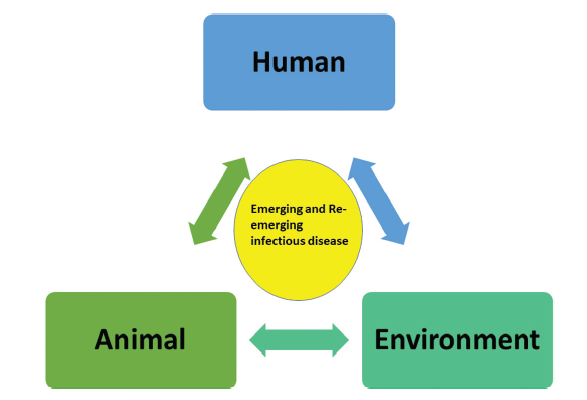
Figure 2: One Health concept: Inter-linkage between human health, animal health, and ecosystem.140
Multiple factors favour the emergence of new pathogens naturally, including high human population density, wildlife and microbial diversity, and environmental factors like climate change, conflicts and natural catastrophes, which increase man-animal contact. The animal spillover, cross-species jumping can lead to introduction of novel pathogens which can spread like a fire in a nascent population.35 Newer techniques like Geographic Information System (GIS), remote sensing may be used to track real time changes in ecosystem and its effects on atmospheric condition.36 The research includes weaponizing resistant recombinant novel pathogen strains, chimeric viruses using newer technologies like Clustered Regularly Interspaced Short Palindromic Repeats (CRISPR).37
Another example of One Health Security presented at the January workshop was the 3-year AniBio-Threat project. The consortium was coordinated by the SVA in Sweden, and there were 8 European member states in the consortium: Italy, the United Kingdom, Germany, the Netherlands, Denmark, France, Hungary, and Sweden. In addition to the range of countries that participated in the AniBio-Threat project, there was great diversity of expert participation in the fields of veterinary medicine, security, forensics, animal and public health, food safety, and academia. The focus of the project was intentionally pragmatic and operational and included superintendents, sergeants and police officers, fingerprint experts, lawyers, communicators, DNA specialists, veterinarians, medical doctors, bacteriologists, virologists, molecular biologists, agronomists, pharmacists, and modelers, who all participated substantively. In total, a staff of 170 people contributed to Ani-BioThreat from the law enforcement and animal and public health communities, aiming to bridge gaps in multisectoral capability. Some of these gaps included the areas of risk ranking methodologies, early warning, actionable knowledge and developing a collaborative early warning culture, and harmonization of laboratory response networks.38,39
The objectives of the Global Health Security Agenda (GHSA) will require not only a ‘‘One Health’’ approach to counter natural disease threats against humans, animals, and the environment, but also a security focus to counter deliberate threats to human, animal, and agricultural health and to nations’ economies.
NEXT GENERATION BIOTERRORISM
The JASON group that met in 1997 grouped potential genetically engineered pathogens into six broad groups of potentially futuristic threats:
- Binary biological weapons
- Designer genes
- Gene therapy as a weapon
- Stealth viruses
- Host swapping diseases
- Designer diseases
With the advancement in genetic engineering and synthetic biology techniques, complex genetic manipulations have become possible for creation of “tailor-made” microorganisms. Harmless bacteria or viruses can be made pathogenic or infectious by genetic manipulation mediated via multiple gene transfers and through construction of synthetic or chimeric microorganisms. The JASON advisory group has been used to provide technical advice to the US Dept. of Defence, briefing on near term future threats due to development of genetically engineered bioweapons.
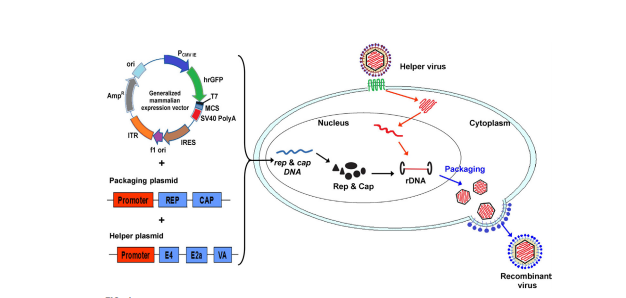
Figure 3: Schematic representation showing construction of synthetic viruses.
Biological warfare can be used with impunity under camouflage of natural outbreaks of diseases to decimate human populations and to destroy livestock and crops of economic significance. With the rapid evolution in synthetic biology techniques, the construction of synthetic biological agents and their further use as next generation bioweapons has been rapidly increasing, which eventually has enhanced the risk of biological warfare compared to the past. Many draft and whole genome sequences of important pathogenic bacteria and viruses infecting humans have been decoded to date and are accessible through nucleic acid sequence databases, such as Genbank, EMBL, DDBJ, GDB: The Human Genome DB, Microbial Genome DB for Comparative Analysis (MBGD), Virulence Factors of Bacterial Pathogens (VFDB), The National Microbial Pathogen DB Resource (NMPDR), Virus Pathogen Resource (ViPR), Integrated DB for Viral Genomics (viruSITE), Barcode of Life Data Systems, CTD (Comparative Toxico-genomics DB), etc. So, there exists a virtual platform in the form of essential genes, virulence factors, or synthetic constructs with humanized infectious elements that provide huge scope to the bio-weaponeers to develop next generation bioweapons based on designer genes or designer diseases models for instigating serious consequences in future bioterror attacks. A simple alteration in genetic compliment may make a pathogen more deadly than the existing natural forms.
The emergence of next generation bio-weapons including chimeric agents previously unknown to man can be even more dangerous and challenging than natural agents as they can cross all the barriers of pathogenicity. Also, due to current limitations in the methods of detection, protection, and decontamination, there exists a huge knowledge gap that needs attention for developing appropriate defensive strategies against bio-warfare agents.40
VACCINATION FOR BIOTERRORISM AGENTS
Three different outbreak responses to test different vaccination program options, under varying attack scenarios, for effectiveness of epidemic control and estimation of needed resources:41
Strategy 1: Targeted vaccination
This was the basis of tested age-based targeted vaccination strategies and first responders. Therefore, modeling done of the different outcomes if the vaccination is prioritized to:
- 5–19 years age group (being the age group with the highest number of contacts/transmissions),
- 60–79 years age group (being the age group with highest risk of complications and death)
- All HCWs and all 5–19 years old
- All HCWs only
Strategy 2: Ring vaccination
Isolation of cases and percentage of traced vaccinated contacts are based on available pre-eradication data and assumed to be 95% in the base case scenario, which is likely for cases hospitalized and isolated in a high-income setting.
Strategy 3: Mass vaccination
It is needed in order to calculate the vaccine coverage needed to stop a smallpox outbreak and reduce transmissions >1 per infected. In order to implement mass vaccination, fixed number of doses are delivered per day and calculation of the duration of the campaign (in days) is needed to reduce transmissions to zero; however, the distribution changes daily. The distribution of doses is kept proportional to the weighted size of each age group, immunity level, and susceptible or latent group. The number of doses needed to reach the required coverage to stop transmission depends from the proportion of latent and susceptible people (each with a different vaccine effectiveness), which varies over the epidemic.
CONCLUSION
Bioterrorism is deliberate use of biological agents to cause illness or death in people, animal and plants. It has potential to result in high morbidity and mortality. Historically Greeks, Assyrians, Spain, French, Japan, German, Soviet and America had an incident of use of biological weapons on their enemy nations. Biological agents are typically natural but it can be mutated or altered in lab to cause disease and make them resistant to current medicines. Many mediums to spread bioterrorism along with virulence, infectivity and more lethal characteristics is developed by state as well as by individual. American Centre for Disease Control and Prevention classified bioterrorism according to threat level which represent as Category A, Category B and Category C. To respond to human, animal and plant bio-threat agents a number of laboratory facilities are needed. The laboratories must be equipped with appropriate and evaluated instruments that also are operational in a BSL-3 or BSL-4 laboratory. Research and development activities between first responders, forensic institutes and public health officials are required during pandemic if needed.
The concept of one health can be extended for understanding and prevention of bio-risk. The emergence of next generation bio-weapons are more dangerous and challenging due to current limitation in methods of detection, protection, and decontamination. There exists a huge knowledge gap that needs attention for developing appropriate defensive strategies against bio-warfare agents. Quick development and deployment of a vaccine is essential in success of prevention of further damage after the bioterrorism attack. Vaccinating after exposure may have no effect on preventing disease so the vaccination must occur immediately after exposure for prophylaxis to work. The newer continuous scientific research in field of bio-weapon threats and preparedness strategy are required for protection against newer biological agents.
REFERENCES
- Radosław Ambroziak, Sławomir J. Ambroziak, Ryszard J. Katulski, Jarosław Sadowski, Jacek Stefański, Edyta Lelo. Bioterrorism characteristics and possibilities of prevention. Scientific Journal Of Polish Naval Academy 2016;1:206
- Centres for Diseases Control and Prevention. Emergency Preparedness and Response: Bioterrorism Overview. Available from URL: http://www.bt.cdc.gov/ bioterrorism/overview. (Accessed on February 15 2021)
- Edgar J. DaSilva. Biological warfare, bioterrorism, bio-defence and the biological and toxin weapons convention. Electronic Journal of Biotechnology 1999:2(3)
- European Centre for Disease Prevention and Control. Best practices in ranking emerging infectious disease threats—a literature review 2015. https://ecdc.europa.eu/sites/portal/files/(Accessed February 23, 2021).
- Sumeet Bhatt, Gururaghavendran Rajesh, Deepika Thakur. Knowledge, Perceived Need for Education, and Willingness to Participate in Bioterrorism Preparedness among Students in an Indian Dental Institute: A Questionnaire Study. Medical Journal of Dr. D.Y. Patil Vidyapeeth 2017;10(6):526-531.
- Lyn Gilbert. A Short history of bioterrorism. Centre for Infectious Diseases & Microbiology-Public Health; 2011.
- Das S, Kataria VK. Bioterrorism: A Public Health Perspective. Medical Journal of Armed Forces India 2010; 66(3):255-260.
- Sekharkar Sitanshu, Pradhan HK, Pattnaik B. Bioterrorism : How prepared are we? Indian Journal of Medical Specialities 2012;3(1):43-48.
- Morse S. A., Kellogg R.B., Perry S., Meyer R.F. The Laboratory Response Network. Preparedness Against Bioterrorism and Re-Emerging Infectious Diseases. J. Kocik, Janiak, M., Negut, M. Amsterdam, IOS Press 2004:26-35.
- Gottron F., Shea D.A. Federal Efforts to Address the Threat of Bioterrorism: Selected Issues and Options for Congress. C. R. Service, CRS Report for Congress 2011.
- European Council. Communication from the commission to the european parliament and the council on strengthening chemical, biological, radiological and nuclear security in the European Union - an EU CBRN Action. 2004 (Accessed on March 12, 2021)
- Hwang H. S. The strategic plan for preparedness and response to bioterrorism in Korea. Journal of Preventive Medicine of Public Health 2008;4:209-213.
- Karwa M, Bronzert P, Kvetan V. Bioterrorism and critical care. Critical Care Clinician 2003;19(2):280; and NATO Handbook on the Medical Aspects of NBC Defensive Operations, Part II–Biologic. Washington, DC: US Department of Defense, Department of the Army 1996.
- Smith L. A Bioterrorism: what level is the threat and are vaccines the answer? Expert Review of Vaccines 2004;5:493-495.
- Koplan J. CDC’s strategic plan for bioterrorism preparedness and response. Public Health Reports 2001:9-16.
- Kun L. G. & Bray D. A. Information infrastructure tools for bioterrorism preparedness. Building dual- or multiple-use infrastructures is the task at hand for state and local health departments, IEEE England Medicine Biological Magazine 2002;5:69-85.
- WHO. Laboratory Bio-safety Manual. World Health Organisation 3rd edition 2004.
- CEN. The Laboratory Bio-risk Management Standard 2008. ( Accessed on March 23, 2021)
- Hodges L. R., Rose L. J., O’Connell H. & Arduino M. J. National validation study of a swab protocol for the recovery of Bacillus anthracis spores from surfaces, Journal of Microbial Methods 2010;2:141-146.
- CRP. Critical Reagents Program 2011. ( Accessed on March 23, 2021)
- APH. Critical Shortage of LRN Reagents. Silver Spring MD, Association of Public Health Laboratories (APHL) 2006. ( Accessed on March 25, 2021)
- Donoso Mantke O., Schmitz H., Zeller H., Heyman P., Papa A. & Niedrig M. Quality assurance for the diagnostics of viral diseases to enhance the emergency preparedness in Europe. European Surveillance 2005;6:102-106.
- Musshoff F. & Madea B. Ricin poisoning and forensic toxicology. Drug Test Anal 2009; 4:184-191.
- Leport C., Vittecoq D., Perronne C., Debord T., Carli P., Camphin P. & Bricaire F. Infections at risk for epidemic or biological threat. Importance of the initial management of suspect patients. Presse Med 2011;4(1):336-340.
- Knutsson R. & Rådström P. Detection of pathogenic Yersinia enterocolitica by a swab enrichment PCR procedure. Methods Molecular Biology 2003:311-324.
- Knutsson R., van Rotterdam B., Fach P., De Medici D., Fricker M., Lofstrom C., Agren J., Segerman B., Andersson G., Wielinga P., Fenicia L., skichby J., Schultz A. C. & Ehling-Schulz M. Accidental and deliberate microbiological contamination in the feed and food chains--how bio-traceability may improve the response to bioterrorism. International Journal of Food Microbiology 2011:123-128.
- Leitenberg. Aum Shinrikyo’s Efforts to Produce Biological Weapons: A Case Study in the Serial Propagation of Misinformation. Terrorism and Political Violence1999; 11(4):149-158.
- Gregory D. Kutz. DoD Excess Property: Risk Assessment Needed on Public Sales of Equipment that Could be Used to Make Biological Agents. Testimony by U.S. General Accountability Office to the Committee on Government Reform House of Representatives 2003. (Accessed on June 25, 2021)
- World Health Organization. Public health response to biological and chemical weapons. WHO guidance : 2nd edition 2004. (Accessed on June 28, 2021)
- Eric Merriam. The International Legal Regime Affecting Bioterrorism Prevention, National Security Law Journal 2014;3(1):1-46.
- United Nations Office on Drugs and Crime, The International Legal Framework Against Chemical, Biological, Radiological And Nuclear Terrorism. Counter-Terrorism Legal Training Curriculum 2016;34.
- Standard Operating Procedures (SOP) for responding to a terrorist attack using biological agents. Government of India, Ministry of Home Affairs 2006.( Accessed on July 24, 2021)
- Rubin C, Myers T, Stokes W. Review of Institute of Medicine and National Research Council recommendations for One Health initiative. Emerg Infect Dis Dec 2013;19(12):1913-1917.
- World Health Organization. Emergencies, preparedness, response: Disease outbreaks by year. Available from: http://www.who.int/csr/don/archive/year/en/ (Accessed on July 30, 2021).
- Ahmed AK. Spillover: Animal infections and the next human pandemic. Yale J Biol Med 2013;86:107-12.
- Thakur JK, Singh SK, Ekanthalu VS. Integrating remote sensing, geographic information systems and global positioning system techniques with hydrological modeling. Appl Water Sci 2017;7 :1595-608.
- DiEuliis D, Giordano J. Gene editing using CRISPR/Cas9:implications for dual-use and Bio-security. Protein Cell 2018;9:239-40.
- Knutsson R, Skiby JE, Gronvall GK. AniBioThreat: bioterrorism threats to animals, feed, and food. Biosecur Bioterror 2013;11( 1):153-160
- Sundqvist B, Bengtsson UA, Wisselink HJ. Harmonization of European laboratory response networks by implementing CWA 15793: use of a gap analysis and an ‘‘insider’ exercise as tools. Biosecurity Bioterror 2013;11(1):36-44.
- Anshula Sharma, Gaganjot Gupta, Tawseef Ahmad, Kewal Krishan, Baljinder Kaur. Next generation agents (synthetic agents): Emerging threats and challenges in detection, protection, and decontamination. Handbook on Biological Warfare Preparedness 2020.
- Valentina Costantino a , Mohana Kunasekarana , and Chandini Raina MacIntyre.Modelling of optimal vaccination strategies in response to a bioterrorism associated smallpox outbreak. Human vaccines and immune-therapeutics 2021;17(3):738–746 .
Disclaimer from Guident
The views and opinions expressed in articles published in Guident are solely those of the authors and do not necessarily reflect the views of the editors, the editorial board or the publisher, Ivory India. Guident does not endorse any product, technique or treatment described. Clinical content is intended for qualified dental and medical professionals and is not a substitute for individual clinical judgement. Guident, its editors and the publisher accept no liability for any consequence arising from the use of information published in the journal.
How to cite this article
Dr. Deepak Thakur, Dr. Navpreet Kaur, Dr. Roopali Gupta. Bioterrorism. Guident. 2021 Aug;14(9). Available from: https://guident.in/articles/general/bioterrorism.html