Challenges in Prevention N Control of COVID-19 Pandemic in Dentistry
Department of Oral Pathology, Yenepoya Dental College, Yenepoya (Deemed to be University), Mangalore
ABSTRACT
The menace of COVID 19 pandemic has become a major public health concern all over the world. It is a pandemic outbreak that originated from Wuhan, Hubei province of China in December 2019. All healthcare professionals including dental surgeons are in the front line and a high chance of constantly getting infected. Droplet and aerosol transmissions are the utmost concern in dental clinics and dental college hospitals. Hence, COVID 19 has a high risk of spread through droplets and aerosols generated during dental procedures from infected patients. This review article highlights the dental perspective and discusses the various preventive measures undertaken to control the spread of infection in dental clinics and dental college hospital setups.
Keywords: COVID-19, Dental clinics, Dental colleges, aerosols, pandemic.
INTRODUCTION
Coronaviruses are non-segmented, enveloped RNA virus of Coronaviridae family. The name is derived from Latin word, corona meaning crown - like appearance, the important characteristic feature found in these viruses. These viruses are distributed among mammals including humans and birds 1. There are four different types of coronaviruses namely HKU1, NL63, 229E, OC43 which causes mild respiratory disease in humans.2
There have been two incidences of the coronavirus outbreak in the past. The first incidence was in 2002–2003 when a new coronavirus crossed over to humans via the intermediary host of palm civet cats in china leading to severe acute respiratory syndrome coronavirus affecting 8422 people mostly in china and hong kong and caused 916 deaths (mortality rate 11%).3 Later in 2012, Middle East respiratory syndrome coronavirus (MERS-CoV) originated in Saudi Arabia via the intermediary host of dromedary camels affecting 2494 people causing 858 deaths (fatality rate 34%).2,4 The COVID-19 virus also known as severe acute respiratory syndrome coronavirus 2 (SARS-CoV-2) originated from Wuhan, Hubei province of China in December 2019 is rapidly spreading around the world.5
SITUATION UPDATE DECLARED BY WHO
Ongoing measures like tracking of mobile phone GPS, personal data, hand stamping, hospital isolation and home quarantine are followed to prevent the spread of transmission. Nationwide lockdown is announced by the Prime Minister of India by imposing a complete ban on people from stepping out of their homes to help in breaking the chain of transmission and flattening the curve as said by Dr Henk Bekedam, WHO Representative to India.6
Pathogenesis
Researchers have found out that the SARS-CoV-2 protein called Spike attaches to a human protein called ACE2, which allows the virus to enter cells. Two teams of researchers have also found that the human protein neuropilin-1 (NRP1) also helps in the viral invasion. The studies also suggest that blocking the interaction between the virus and these proteins could provide a way to fight coronavirus infection. These studies have yet to be peer – reviewed.7
Disease Transmission
Symptomatic persons are at high risk of viral transmission among close contacts after exposure with incubation periods ranging between 2-14 days. Disease transmission is due to close contact with an infected person (within about 3–6 feet), inhalation of air expelled respiratory droplet, coughing or sneezing without covering mouth, nose, touching contaminated surfaces and then wiping one’s mouth, nose, or eyes. Symptoms include fever, cough, sore throat, difficulty in breathing, pneumonia in both lungs, multi-organ failure and in some cases death.8 Healthcare workers are at high risk of infection with COVID-19. Hence precautionary measures need to be taken to prevent the spread of transmission of viral infection.
Preliminary preventive measures to be undertaken by the public.
- Avoid close contact with people having fever, cough etc.
- Avoid touching nose, mouth, eyes without washing hands.
- Wipe hands with alcohol based hand sanitizer. Wash hands with soap and water for 20 seconds if hand sanitizers are not available.
- Stay indoors when you are having symptoms related to cold/flu.
- Cover your nose with a tissue during sneezing, then throw the tissue in the trash.
- Clean and disinfect frequently touched materials and surfaces.
- Home isolation for up to 2 weeks if you have travelled from an affected area.9
Consolidated Travel advisory instructions issued in view of COVID-19
Home quarantine and social distancing of 14 days are advised for people returning from infected areas like Italy, Iran, China, Singapore, Japan, Republic of Korea, Spain, France, Germany by the Ministry of health and family welfare, Government of India 10. In the majority of the cases (80%), the infection will be mild and doesn’t require any special treatment. In elderly patients, it can prove to be risky if left untreated. The overall fatality rate is 2– 3.4%.1
Possible transmission routes of COVID -19 in dental clinics
Dental health care personnel are at high risk of COVID - 19 infections due to close proximity with infected patients which involve face-to-face communication, coughing, sneezing and talking without a mask, handling of sharp instruments, inhalation of airborne microorganisms, direct contact with blood, oral fluids, aerosols, and indirect contact by touching contaminated instruments or environmental surfaces during dental procedures.
Droplet and aerosol transmission of COVID-19.
Droplet and aerosol transmission are the utmost concern in dental clinics and dental college hospitals. Most of the dental procedures involve the use of high - speed air rotors with water coolant generating large amounts of aerosol and droplet mixed with the patient’s saliva and blood during treatment. The aerosols are small enough to stay airborne for a long period before they settle on the surface of the environment and enter the respiratory tract. Hence, SARS-CoV-2 has a high risk of spread through droplets and aerosols from infected patients in dental clinics and dental college hospital.
Practice Points in dental clinics.
- Treat only emergency or urgent cases. (Table 1).
- Perform urgent procedures only after telephone consultation and through pre-fixed appointments only.
- Postpone appointments if dental patients are having symptoms of a respiratory infection.
- Home isolation of 14 days is advised to those returning from abroad.
- Take a detailed travel and health history.
- Assess temperature readings of all patients using non - contact digital thermal scanner and advised to use a sanitizer on the entrance as well as before performing dental procedures.
- Take the contact details and address of all patients treated.
- Use a rubber dam to decrease exposure to infectious agents.
- Use high-speed dental handpiece with anti-retraction valves to reduce the backflow of oral microbe during dental procedures producing an aerosol.
- Autoclave hand pieces after each patient use.
- Avoid intraoral radiographs and ultrasonic scaling.
- Patients should be asked to rinse with a 1% hydrogen peroxide solution before each appointment.
- Clean and disinfect public areas touched frequently, including door handles, chairs, bathrooms.
- Instructions should be given to patients on how to use tissues to cover nose and mouth when coughing or sneezing.
- Provide a disposable surgical face mask to the patients and isolate them in a single-patient room.
- Dental personnel should wear personal protective equipment (PPE) like a disposable surgical face mask, non - sterile gloves, gown, face shield and eye protection while treating suspected patients with a flu-like or other respiratory illness.
- Dental surgeons may use FFP3 respirator while treating suspected or infected patients cases during aerosol generating dental procedures.
- Provide hand sanitizer to dental staff that contains at least 60% alcohol after treating the sick person.
- Dental Clinic should be well ventilated by maintaining natural air circulation through frequent opening of windows.
- Display instructions notice about basic hygiene, cough etiquette, social distancing and disposal of contaminated items in trash cans at areas like (reception, elevators, each floor)
- Install a two-way speaker system at the reception area made of a glass barrier.
- Waiting chairs should be distanced, preferably a meter apart.
- Cashless/contactless payment methods are preferred.
- Paper tissues used by patients should be discarded in containers with lid.
Practice Points in dental colleges.
- Frequently touched areas like biometric punching, lift buttons, door handles, chairs, tables, computer keyboards, phones should be disinfected as a preventive measure.
- Students and staff should be instructed to avoid touching the eyes, nose, mask surface, mouth with unwashed hands.
- Students and faculty members who had a history of travel to an affected area are advised to follow home isolation of 14 days.
- Dental schools should announce students and staff to stay home if they are sick and conduct online virtual classes if needed.
- Students must work online from home/hostel with their mentors to complete all necessary work allotted.
- Students are advised to stay hostel/home after classes and refrain from group discussions and social gatherings.
- Cancel university-sponsored travel, conferences and events.
- Cancel sports and cultural events for students, faculty members.
- Reschedule on - campus external visitors, guest lectures and speakers.
- Encourage dental staffs to conduct webinars.
- Reschedule undergraduate, postgraduate, PhD exams until further notice from university.
- Dental staffs should be encouraged to conduct online examinations or assessments.
- Dental college authority should monitor the protective measures taken to prevent the spread of infections among the teaching /non teaching faculties, dental students, nurses and academic staffs as they continue to serve and educate.
- Any suspected cases among dental staff or students should be referred to the government or private hospitals for isolation and testing.
- Staff should work on rotation more frequently, preferably, should avoid long working hours.
- Administrative personnel working in the reception area should be trained on hand hygiene, social distancing, and proper use of facemask for patients.
- Educate all health care workers on proper selection and the use of personal protective equipments.11,12,13,14,15,16
Disinfection of the dental clinic settings
Dental clinics need to be disinfected after each treatment procedures to prevent transmission of the virus among the community.
- Non-aerosol related procedures:
- Clean and disinfect general areas, frequently contaminated surfaces including chairs, door handles.
- Use of disinfectants like Isopropyl alcohol, 0.5 % sodium hypochlorite.
- Reusable instruments should be pretreated, cleaned, sterilized, and properly stored.
- Aerosol related procedures - To post as the last case of the day followed by fumigation and ventilation, in addition to point 1. 17
Management of medical waste during dental procedures
The medical waste generated during dental procedures should be transported to the storage area of the medical institute and the reusable instruments should be cleaned and sterilized. The medical and domestic waste of suspected or confirmed 2019-nCoV patients generated by the dental treatment should be marked and disposed with the help of double-layer yellow color package bags according to the requirement for the medical waste management.15
Commercial kits for nasal/throat swab based diagnosis of COVID-19 in India.
- Currently, RT- PCR probes are procured from USA by ICMR - NIV for diagnosis of COVID -19 and are distributed across the country, to the testing laboratories.
- US FDA EUA/CE IVD approved kits can be used directly after due approval from DCGI and intimation to ICMR for diagnosis of COVID-19.18
Newer Additional Strategies for COVID-19 Testing
- RT-PCR is the gold standard as the frontline test for the diagnosis of COVID-19.
- Standard Q COVID-19 Ag kit assay developed by SD Biosensor has been recommended to use in combination with the gold standard RT-PCR test as a point of care diagnostic assay for testing in the containment zones as well as hospitals.19
Prophylaxis of SARS-CoV-2 infection
The National Taskforce for COVID-19 recommends the use of hydroxy-chloroquine as prophylaxis of SARS-CoV-2 infection.
- On day 1 - 400 mg twice a day, followed by 400 mg once weekly for the next 7 weeks; for asymptomatic healthcare workers involved in the treatment of suspected or confirmed cases of COVID-19.
- On day 1 - 400 mg twice a day, followed by 400 mg once weekly for the next 3 weeks; for asymptomatic household contacts of laboratory confirmed cases.
Contraindications
- Not recommended in children under 15 years of age.
- Contraindicated in patients with a known history of retinopathy, known hypersensitivity reactions to hydroxychloroquine.20
Vaccination
WHO has evaluated that the following vaccines against COVID-19 have met the necessary criteria for safety and efficacy as of 3 June 2021.21
- AstraZeneca/Oxford vaccine
- Johnson and Johnson
- Moderna
- Pfizer/BionTech
- Sinopharm
- Sinovac
Impact of COVID-19 pandemics on global socio-economy
The spread of COVID-19 has caused a detrimental impact on human morbidity and mortality. They are equally distressing on socio - economic consequences for the whole world. It is necessary to strengthen biomedical research and improve the healthcare delivery system, for preventing the serious consequences of pandemics outbreak.22
CONCLUSIONS
The menace of COVID-19 pandemic has become a major public health concern all over the world. The impact of coronavirus has created fears and panic among the people due to social media. People should stop spreading myths and false information about the disease and try to be patient. In this, tough time we all should join hands together as a team to tackle this pandemic situation wisely. There will be an increased incidence of outbreaks of viruses and pathogens of zoonotic origin in the future. Therefore, efforts should be made ready to formulate measures to tackle pandemic outbreaks. We have summarized the possible ways of virus transmission in dental setup and reviewed some of the practical strategies to prevent the spread of COVID - 19 transmission during dental diagnosis and treatment. There should be recent advances in the field of epidemiology, disease biology, molecular biology, genomics and proteomics, to predict and prevent the unsuspected onset of epidemics and pandemics of infectious diseases in the future. The government should support and provide funds to conduct more research activities to tackle any pandemic outbreak in the future.
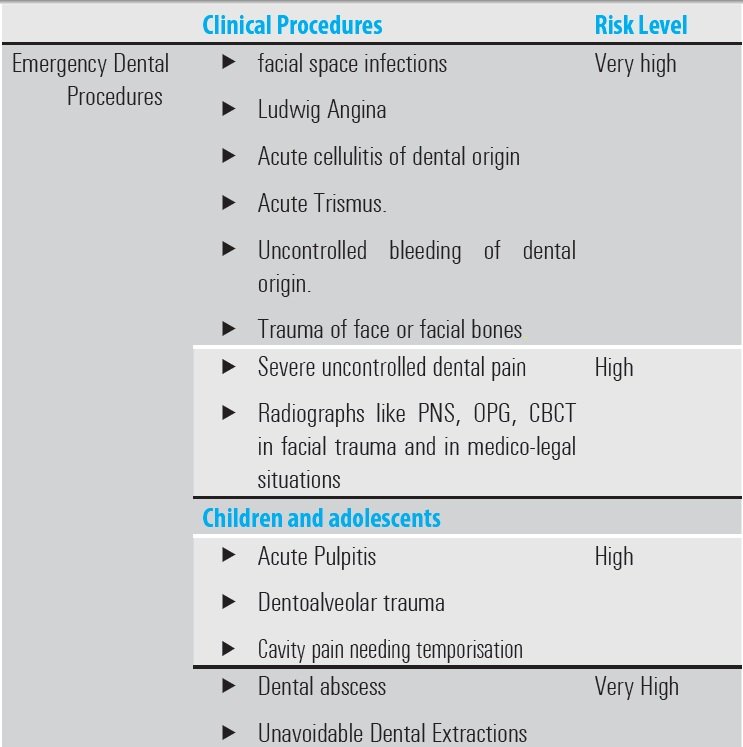
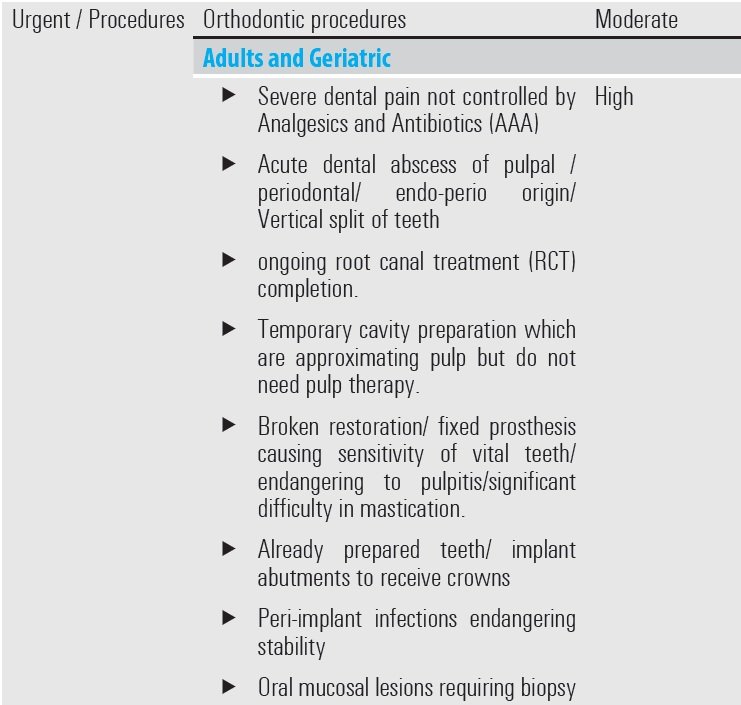
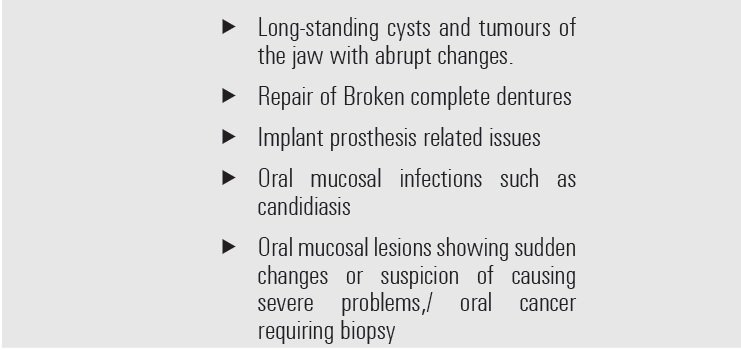

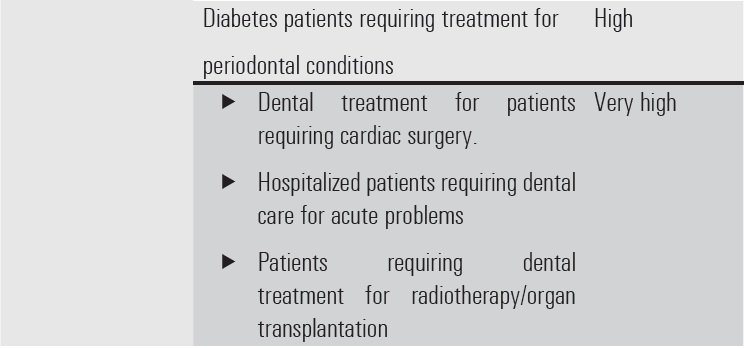
Table 1: List of dental procedures asymptomatic for COVID-19. (Issued by the ministry of health and family welfare dated 19/05/2020).16
REFERENCES
- Ramesh N, Siddaiah A, Joseph B., Tackling coronavirus disease 2019 (COVID 19) in workplaces. Indian Journal of Occupational and Environmental Medicine., 2020, 24,16-18.
- Singhal T.A., Review of Coronavirus Disease-2019 (COVID-19). The Indian Journal of Pediatrics., 2020,13, 1-6.
- Chan-Yeung M, Xu RH., SARS: epidemiology. Respirology.,2003, 8 Suppl, S9–14.
- K. McIntosh, M. Hirsch, A. Thorner., Middle East respiratory syndrome coronavirus: Virology, pathogenesis, and epidemiology. 2017.
- Wang C, Horby PW, Hayden FG, Gao GF., A novel coronavirus outbreak of global health concern. Lancet., 2020, https://doi.org/10.1016/S0140-6736(20)30185-9.
- World health organization, India. Coronavirus Disease (COVID-19). Available from: https://www.who.int/india/emergencies/novel-coronavirus,2019(Accessed 28 march, 2020).
- Nature. Corona virus research updates: A finely detailed map reveals a viral protein’s Achilles’ heel, 2020. Available from: https://www.nature.com/articles/d41586-020-00502-w(accessed 25 June , 2020).
- Centre for disease control and prevention. Coronavirus (covid - 19). Available from:https://www.cdc.gov/coronavirus/2019-ncov/about/transmission.html (accessed March 21, 2020).
- Centre for disease control and prevention. What you need to know about coronavirus disease 2019 (COVID-19).Availablefrom:https://www.cdc.gov/coronavirus/2019-ncov/downloads/2019-ncov-factsheet.pdf.( accessed March 21, 2020).
- Ministry of Health and Family Welfare ( MoHFW) , Government of India,. Consolidated Travel advisory in view of COVID19. Available from: https://www.mohfw.gov.in/ConsolidatedTraveladvisoryUpdated11032020.pdf. (accessed March 21, 2020).
- American dental Association. ADA releases coronavirus handout for dentists based on CDC guidelines. Availablefrom:https://www.ada.org/en/publications/ada-news/2020-archive/february/ada-releases-coronavirus-handout-for-dentists-based-on-cdc-guidelines. (accessed March 21, 2020).
- American dental Association. Dental schools take proactive steps in response to coronavirus outbreak.Availablefrom:https://www.ada.org/en/publications/new-dentist-news/2020-archive/march/dental-schools-take-proactive-steps-in-response-to-coronavirus-outbreak.( accessed March 21, 2020).
- Corona virus (covid - 19 ): centre for disease control and prevention.Interim Infection Prevention and Control Recommendations for Patients with Suspected or Confirmed Coronavirus Disease 2019 (COVID-19) in Healthcare Settings. Availablefrom:https://www.cdc.gov/coronavirus/2019-ncov/infection-control/control-recommendations.html.(accessed March 23, 2020).
- IDA- Indian dental association. Indian Dental Association’s Preventive Guidelines for Dental Professionals on the Coronavirus Threat.Availablefrom:https://www.ida.org.in/pdf/IDA_Recommendations_for_Dental_Professionals on the Coronavirus Threat.pdf,( accessed March 23, 2020).
- Peng X, Xu X, Li Y, Cheng L, Zhou X, Ren B., Transmission routes of 2019-nCoV and controls in dental practice. International Journal of Oral Science., 2020, 12, 1-6.
- Ministry of health and family welfare. Guidelines for Dental Professionals in Covid-19 pandemic situation;Available from: https://www.mohfw.gov.in/pdf/DentalAdvisoryF.pdf,( accessed June 25, 2020).
- Krithikadatta J, Nawa R R, Amalavathy K, McLean W, Gopikrishna V., Indian Endodontic society. Endodontic and Dental Practice during COVID-19 Pandemic: Position Statement from Indian Endodontic Society, available from: https://www.ies.org.in/(accessed march 26, 2020).
- Indian council of medical research department of health research. Guidelines for use of commercial kits for nasal/throat swab based diagnosis of COVID-19 in India.availablefrom:https://icmr.nic.in/sites/default/files/upload_documents/rev guidelines for use_of_commercial_kits_for_diagnosis_of_covid_240320.pdf (accessed march 24, 2020).
- Indian council of medical research department of health research. Advisory Newer Additional Strategies for COVID-19 Testing; available from https://www.icmr.gov.in/pdf/covid/strategy/New_additional_Advisory_23062020.pdf, (accessed june 24,2020).
- Indian council of medical research department of health research. Recommendation for empiric use of hydroxy-chloroquine for prophylaxis of SARS-CoV-2 infection. Availablefrom:https://icmr.nic.in/sites/default/files/upload_documents/HCQ_Recommendation_22March_final_MM_V2.pdf, (accessed March 24, 2020).
- World health organization,https://www.who.int/emergencies/diseases/novel-coronavirus-2019/covid-19-vaccines(assessed September 29, 2021)
- Tandon P N., COVID-19: Impact on health of people & wealth of nations. Indian J Med Res., 2020, DOI: 10.4103/ijmr.IJMR_664_20.
Disclaimer from Guident
The views and opinions expressed in articles published in Guident are solely those of the authors and do not necessarily reflect the views of the editors, the editorial board or the publisher, Ivory India. Guident does not endorse any product, technique or treatment described. Clinical content is intended for qualified dental and medical professionals and is not a substitute for individual clinical judgement. Guident, its editors and the publisher accept no liability for any consequence arising from the use of information published in the journal.
How to cite this article
Dr. Sameera Begum, Dr. Riaz Abdulla, Dr. Akhter Husain. Challenges in Prevention N Control of COVID-19 Pandemic in Dentistry. Guident. 2021 Sep;14(10). Available from: https://guident.in/articles/general/challenges-in-prevention-n-control-of-covid-19-pandemic-in-dentistry.html