Non-Vital Bleaching: Restoring Radiance to Discolored Teeth: A Report of Two Cases
Department of Conservative Dentistry and Endodontics, Seema Dental College And Hospital, Rishikesh
ABSTRACT
The single discoloured tooth poses an aesthetic dilemma. While several treatment approaches are available, bleaching offers a minimally invasive, aesthetic treatment modality. Predictability and success with bleaching stems from correct diagnosis, didactic treatment planning and the utilisation of appropriate techniques. Discoloured non-vital teeth are frequently compromised owing to previous trauma, caries, endodontic therapy and failed restorations. Destructive invasive treatment options are likely to weaken the residual structure of the tooth. This paper discusses modern approaches to the treatment of discoloured teeth. The paper will include a detailed technical account on the application of the bleaching technique, with several clinical examples.3
INTRODUCTION
A radiant smile is a universal symbol of confidence and positivity. However, discolored or stained teeth can mar the appearance of an otherwise charming smile. Dental discoloration can occur due to various reasons, including intrinsic factors such as trauma, tetracycline staining, or developmental disorders. Fortunately, non-vital bleaching has emerged as a safe and effective solution to restore the natural brilliance of discolored teeth, helping individuals regain their self-assurance and social ease.4
UNDERSTANDING NON-VITAL BLEACHING
Non-vital bleaching, also known as internal bleaching or walking bleach technique, is a dental procedure specifically designed to whiten teeth that have undergone endodontic treatment.2
Endodontic treatments, such as root canal therapy, can sometimes lead to internal discoloration of the tooth due to residual blood pigments or other materials that seep into the dentin. Non-vital bleaching is a conservative and minimally invasive approach that targets the discoloration from within the tooth, offering a non-surgical way to improve aesthetics.1
THE NON-VITAL BLEACHING PROCEDURE
The procedure typically involves the following steps:
- Access Cavity Preparation: The dentist creates an access cavity through the crown of the tooth, allowing access to the root canal system.
- Cleaning and Sealing: The root canal system is thoroughly cleaned, and any remaining gutta-percha or sealer is removed to ensure the absence of any obstructions.
- Placement of Bleaching Agent: A bleaching agent, often a mixture of sodium perborate or hydrogen peroxide, is placed inside the pulp chamber and sealed with a temporary filling.
- Multiple Appointments: Depending on the severity of discoloration, multiple appointments might be necessary to achieve the desired shade.
- Final Restoration: Once the desired shade is reached, the access cavity is permanently restored with a composite filling or a dental crown, completing the procedure.1
CASE REPORTS
Case Report 1
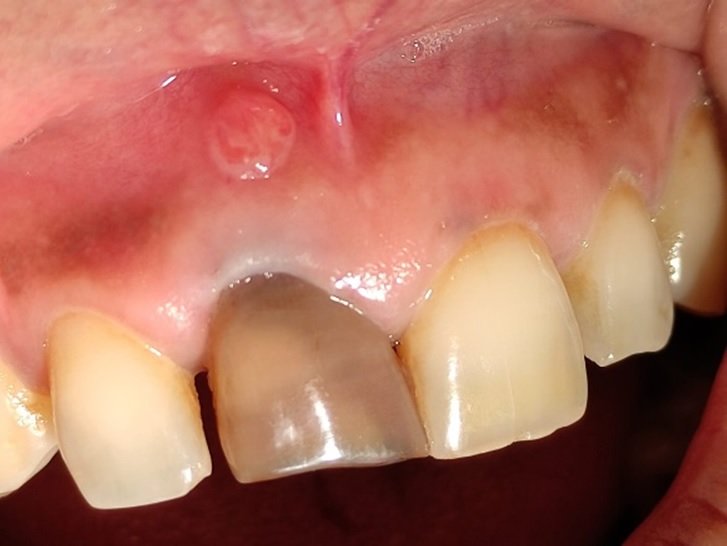
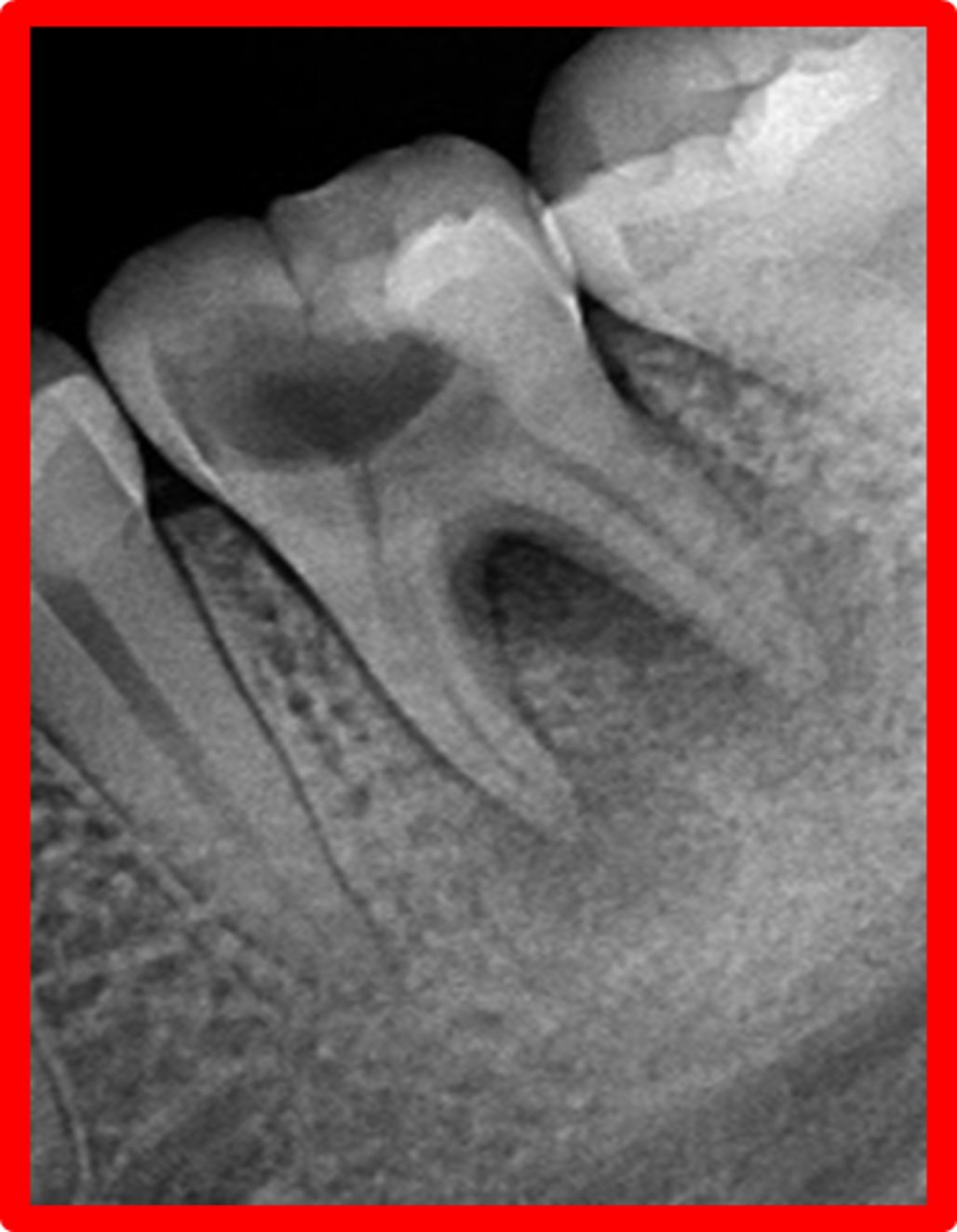
25 year old Patient name Ravi reported to the Department of Conservative dentistry and Endodontics with the chief complaint of discolored tooth in upper left front tooth region since 3 years. On the basis of clinical and radiographic examination Root canal treatment was advised which was followed by non vital bleaching and followed by composite restoration

PREOPERATIVE IMAGE

POST OPERATIVE IMAGE
Case Report 2
36 year old Patient name Anita reported to the Department of Conservative dentistry and Endodontics with the chief complaint of discolored tooth in upper right front tooth region since 2 years patient also gave history of endodontic treatment 4 years back of the same tooth on the basis of clinical and radiographic examination non vital bleaching was done.

PREOPERATIVE IMAGE

POST OPERATIVE IMAGE
DISCUSSION
Tooth discoloration varies in etiology, appearance, localization, severity, and adhesion to tooth structure. It can be defined as being extrinsic or intrinsic on the basis of localization and etiology. In the walking bleach technique the root filling should be completed first, and a cervical seal must be established. The bleaching agent should be changed every 3-7 days.5
The thermocatalytic technique involves placement of a bleaching agent in the pulp chamber followed by heat application. At the end of each visit the bleaching agent is left in the tooth so that it can function as a walking bleach until the next visit. External bleaching of endodontically treated teeth with an in-office technique requires a high concentration gel.7
It might be a supplement to the walking bleach technique, if the results are not satisfactory after 3-4 visits. These treatments require a bonded temporary filling or a bonded resin composite to seal the access cavity.9
Bleaching can have adverse effects, both localized and systemic (toxicity, free radical, etc). Possible localized adverse effects are on dental hard tissues and mucosa, tooth sensitivity when the bleaching material is in contact with vital teeth, interaction with adhesive mechanisms, external cervical resorption risk, damage to composite restorations, and dental material solubility.10
Discolouration of teeth may have a significant social impact on children and adolescents. Intervention should be minimally destructive of tooth tissue and should not compromise future restorative options towards this approach.8
CONCLUSION
Non-vital bleaching has emerged as a popular and effective solution to tackle dental discoloration stemming from endodontic treatments. With its conservative approach, natural results, and positive impact on self-confidence, it has become a go-to choice for many patients seeking to restore the brilliance of their smiles. However, as with any dental procedure, it is essential to consult with a qualified dentist to determine the suitability of non-vital bleaching for individual cases.6
REFERENCES
- Bizhang M, Heiden A, Blunck U, Zimmer S, Seemann R, Roulet JF. Intracoronal bleaching of discolored non-vital teeth. Oper Dent. 2003 Jul-Aug;28(4):334-40. PMID: 12877416.
- Leith R, Moore A, O'Connell AC. An effective bleaching technique for non-vital, discoloured teeth in children and adolescents. J Ir Dent Assoc. 2009 Aug-Sep;55(4):184-9. PMID: 19753907.
- Caughman WF, Frazier KB, Haywood VB. Carbamide peroxide whitening of nonvital single discolored teeth: case reports. Quintessence Int. 1999 Mar;30(3):155-61. PMID: 10356567.
- Sulieman M. An overview of bleaching techniques: 2. Night Guard Vital Bleaching and non-vital bleaching. Dent Update. 2005 Jan-Feb;32(1):39-40, 42-4, 46. doi: 10.12968/denu.2005.32.1.39. PMID: 15739663.
- Nixon PJ, Gahan M, Robinson S, Chan MF. Conservative aesthetic techniques for discoloured teeth: 1. The use of bleaching. Dent Update. 2007 Mar;34(2):98-100, 103-4, 107. doi: 10.12968/denu.2007.34.2.98. PMID: 17432774
- Lim KC. Considerations in intracoronal bleaching. Aust Endod J. 2004 Aug;30(2):69-73. doi: 10.1111/j.1747-4477.2004.tb00186.x. PMID: 15378975
- Chen Y, Huang Y, Deng X. External cervical resorption-a review of pathogenesis and potential predisposing factors. Int J Oral Sci. 2021 Jun 10;13(1):19. doi: 10.1038/s41368-021-00121-9. PMID: 34112752; PMCID: PMC8192751.
- Barakah R, Alwakeel R. Non-vital Endo Treated Tooth Bleaching with Sodium Perborate. Curr Health Sci J. 2019 Jul-Sep;45(3):329-332. doi: 10.12865/CHSJ.45.03.13. Epub 2019 Sep 30. PMID: 32042463; PMCID: PMC6993762.
- Joiner A. The bleaching of teeth: a review of the literature. J Dent. 2006 Aug;34(7):412-9. doi: 10.1016/j.jdent.2006.02.002. Epub 2006 Mar 29. PMID: 16569473.
- Bartlett D. Bleaching discoloured teeth. Dent Update. 2001 Jan-Feb;28(1):14-8. doi: 10.12968/denu.2001.28.1.14. PMID: 11819944.
Disclaimer from Guident
The views and opinions expressed in articles published in Guident are solely those of the authors and do not necessarily reflect the views of the editors, the editorial board or the publisher, Ivory India. Guident does not endorse any product, technique or treatment described. Clinical content is intended for qualified dental and medical professionals and is not a substitute for individual clinical judgement. Guident, its editors and the publisher accept no liability for any consequence arising from the use of information published in the journal.
How to cite this article
Dr. Ayushi Rawat, Dr. Renu Rajput, Dr. Anil Dhingra. Non-Vital Bleaching: Restoring Radiance to Discolored Teeth: A Report of Two Cases. Guident. 2023 Aug;16(9). Available from: https://guident.in/articles/endodontics/non-vital-bleaching-restoring-radiance-to-discolored-teeth-a-report-of-two-cases.html