Anterior Composite Restorations: A Case Series
Department of Conservative Dentistry and Endodontics, Seema Dental College And Hospital, Rishikesh
ABSTRACT
Due to the benefits, including immediate aesthetics, minimum invasion, cost effectiveness, adhesion to tooth structure, and chair side treatment options, direct anterior composite restorative procedures have been very popular in recent years. The most frequent reason for tissue loss in the aesthetic zone of the dentition is a severe damage to the dental hard tissue. The aesthetic restoration of maxillary central incisors with cracked incisal edges is difficult, difficult, and technique-sensitive. The expertise and abilities of the operator are crucial to its success. This case study demonstrates how to replicate the palatal structure of teeth that require aesthetic repairs using a putty index technique.
KEY WORDS: Composites, Putty Index,Esthetics,Mylar Strip
INTRODUCTION
Injury to the anterior teeth can cause a number of cosmetic, phonetic, and functional issues.1 Crown fractures, which may or may not include dental pulp, are a common consequence of injuries to the anterior portion of the teeth. Direct composite resin or methods like putty indexing can be used to quickly repair non-dental pulp fractures (Ellis classes I and II).2 This procedure has the advantage of providing precise palatal anatomy for major defects, and it can also be utilised to simultaneously correct another defect.3 The incisal edge fracture, midline diastema, angle fracture, and anterio
space closure can all be repaired with the putty index technique. In order to reproduce the palatal contour and restore the form and function of the teeth utilizing direct composite restorative materials, a method is described in this case study.4 Dentists can illustrate their ideas for the new smile by employing an intraoral mock up and a putty index that is specifically developed for them.
CASE REPORT 1
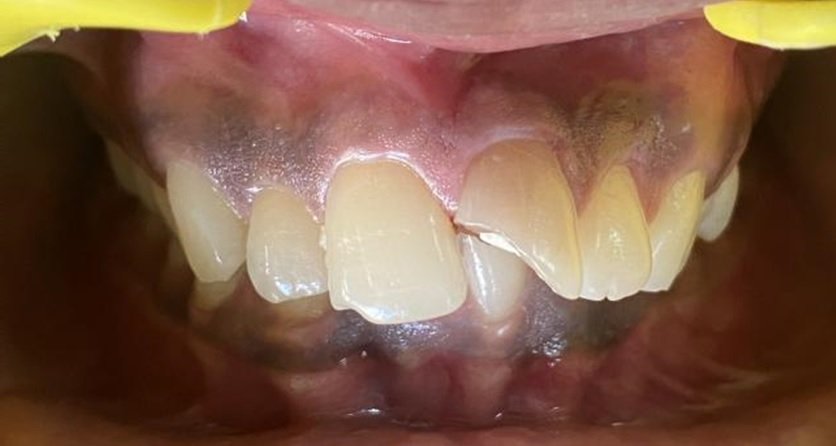
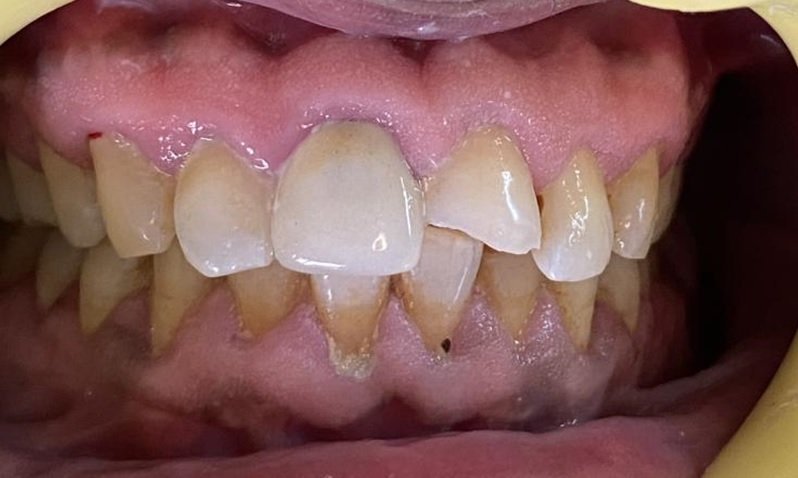
A 29 years old male patient reported to the department of Conservative dentistry and Endodontics with the chief complaint of broken tooth in the front tooth region since 1 week and wanted the treatment for the same. Patient gave a history of trauma from 8 month back due to falling from the bike. On the Clinical examination revealed an uncomplicated crown fracture with respect to 21 (Ellis class II fracture) involving enamel and dentin. The teeth were sensitive to cold with no other association of hard and soft tissue injuries. Teeth were not tender on percussion. teeth v itality was checked using Electric pulp tester,on which teeth gave normal response as compared to adjacent and contra lateral teeth.
Based on all evaluations, a direct composite restoration using a putty index in this case was the treatment of chioce .Treatment procedure was explained to the patient and informed consent was taken.
In the first appointment,A putty impression was made using putty and a putty index was created.
This index was then split into two halves in the mesio-distal direction to obtain palatal and labial halves respectively, the palatal half was then checked intraorally for the fit, which will later serve as the reference guide and act as a rigid template to reconstruct palatal surface. A modification at this stage from the conventional method is the placement of mylar strip on the adjacent tooth so as to prevent composite material adhering to the adjacent tooth structure. Bevels were then given on the labial aspect of the tooth to remove any unsupported enamel margin and also to increase the surface area.Appropriate shade selection of the direct composite material (DENTSPLY, Spectrum) and appropriate Isolation was carried out. the facial and lingual surfaces of the affected tooth was etched using 37% phosphoric acid for 15 seconds followed by application of bonding agent (DENTSPLY, Spectrum) .And was cured for30 secs. Putty index with the mylar strip was then placed in the mouth to check for proper fit.
Composite is placed when the putty index and mylar strip are in the place, and a palatal wall/shelf is created and by not extending it labially beyond the middle of the contact point and cured for 30 seconds.
The putty index was then carefully removed leaving behind a rigid layer of composite bonded to the teeth which acts as a reference guide for further placement of composite material.The patient was satisfied with the final results.
PRE OPERATIVE
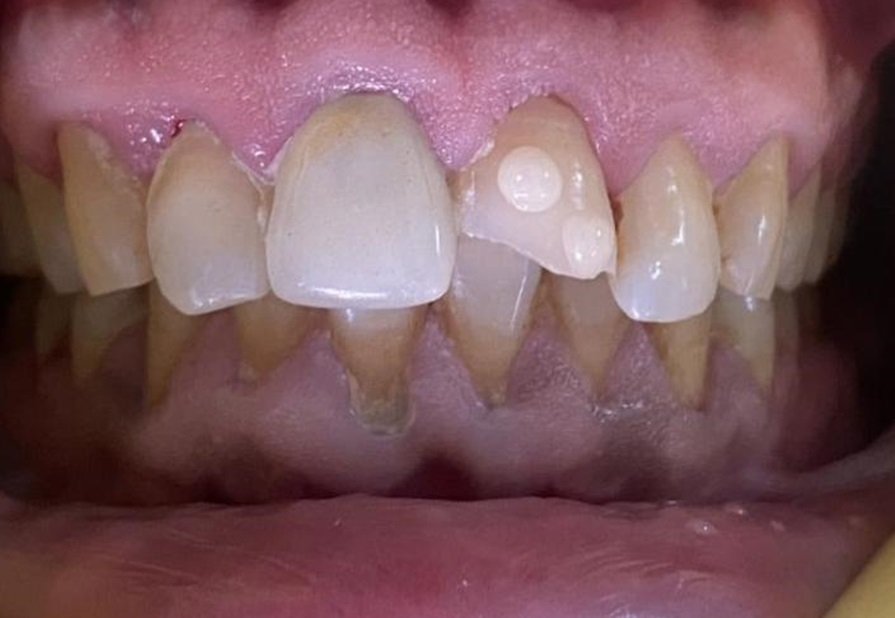
SHADE SELECTION
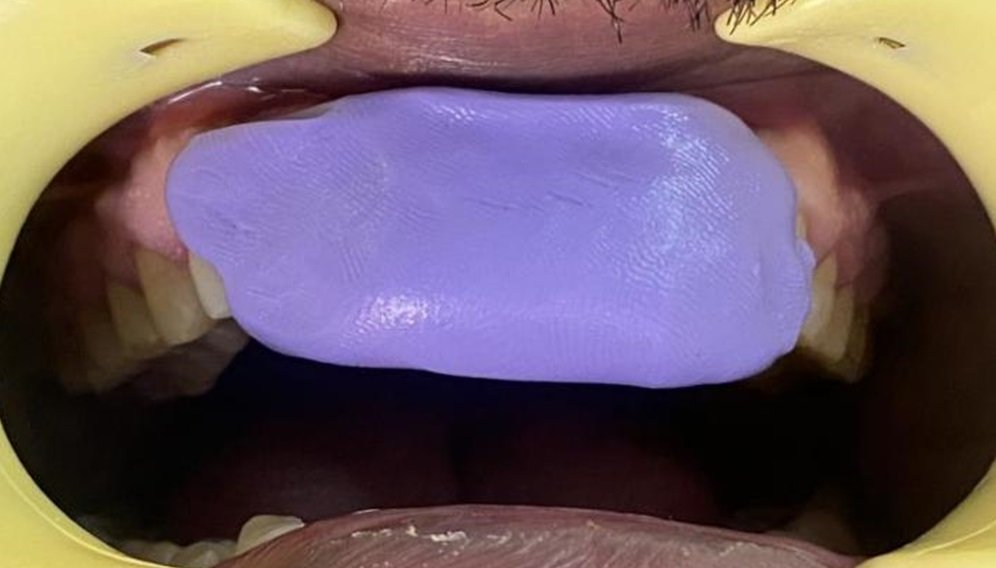
PUTTY IMPRESSION

PUTTY INDEX

BEVEL PLACEMENT

ACID ETCHING
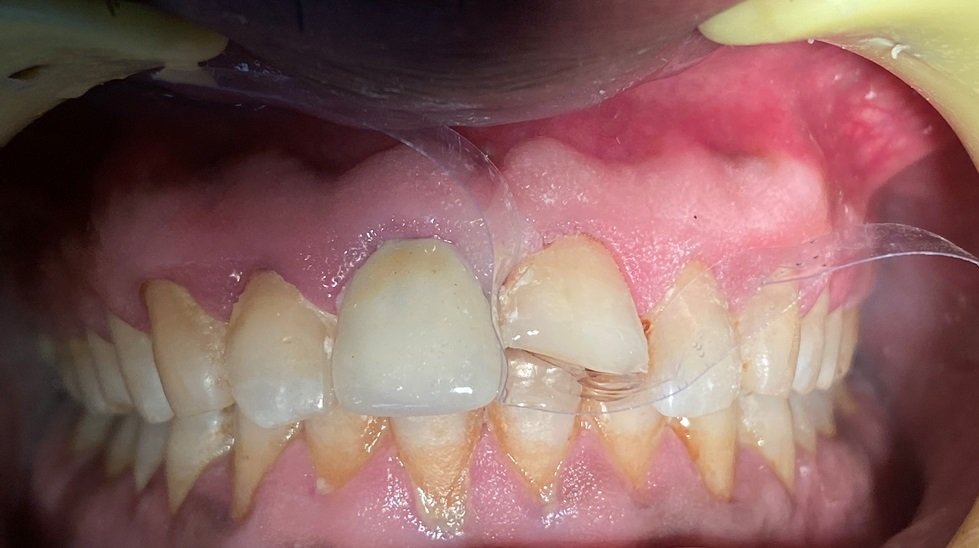
MYLAR STRIP PLACED BONDING AGENT APPLICATION

FINAL RESTORATION
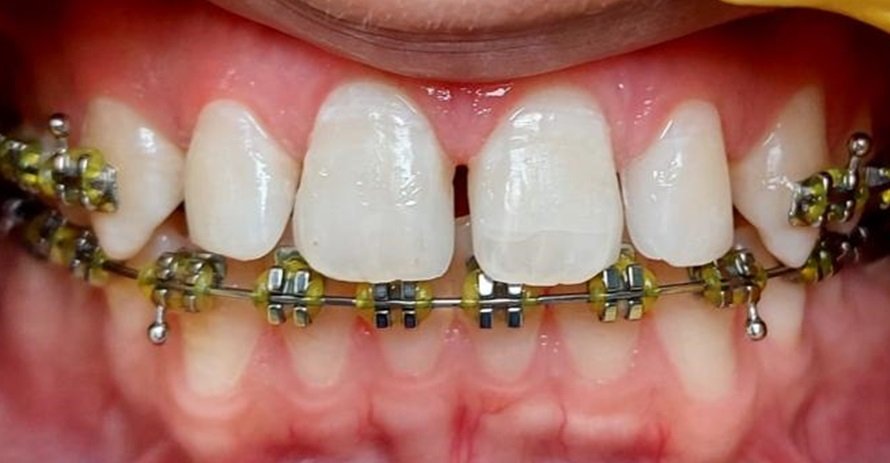
A 22-year-old male patient reported to the Department of Conservative Dentistry and Endodontics of Seema Dental College and Hospital, Rishikesh with the chief complaint of spacing in upper anterior teeth. The patient was going under orthodontic treatment for the same since last 1 year but the gap did not close properly because of the discrepancy of the tooth width.
The oral hygiene of the patient was satisfactory, and no significant hard and soft tissue findings were found. The labial frenum associated with the diastema was normal in size and position. Various treatment modalities (conservative restorative and prosthetic procedures including veneers and crowns) were discussed with the patient. A minimally invasive approach with a direct composite resin restoration was planned to restore the fracture and midline diastema. Diagnostic impression and cast was made and wax pattern was made on the cast. The pattern was shown to the patient and informed and explained that the diastema shouldn’t be closed completely so that the golden proportion and hence the esthetics can be maintained.
A superfine diamond bur was used to roughen the proximal enamel surfaces for optimal adhesion, extending from the facial line angle to the lingual line angle. The adjacent tooth was separated by Teflon tape. The enamel was etched with 32% phosphoric acid for 30 seconds. After rinsing and drying, bonding agent (One-Step) was applied according to manufacturer's instructions and cured for 10 seconds using a LED curing unit. Resin composite was used for the composite build-ups due to its good handling property and shade matching. The composite was placed and polymerized using a layering technique to simulate natural tooth color and translucency. Each layer was light-cured for 40 seconds. Care was taken to achieve the desired proximal contour, especially in the gingival embrasure area and golden proportion was maintained. Polishing discs were used for detailed polishing from rough to fine grains by using a low speed hand piece. Patient was satisfied by the esthetics.
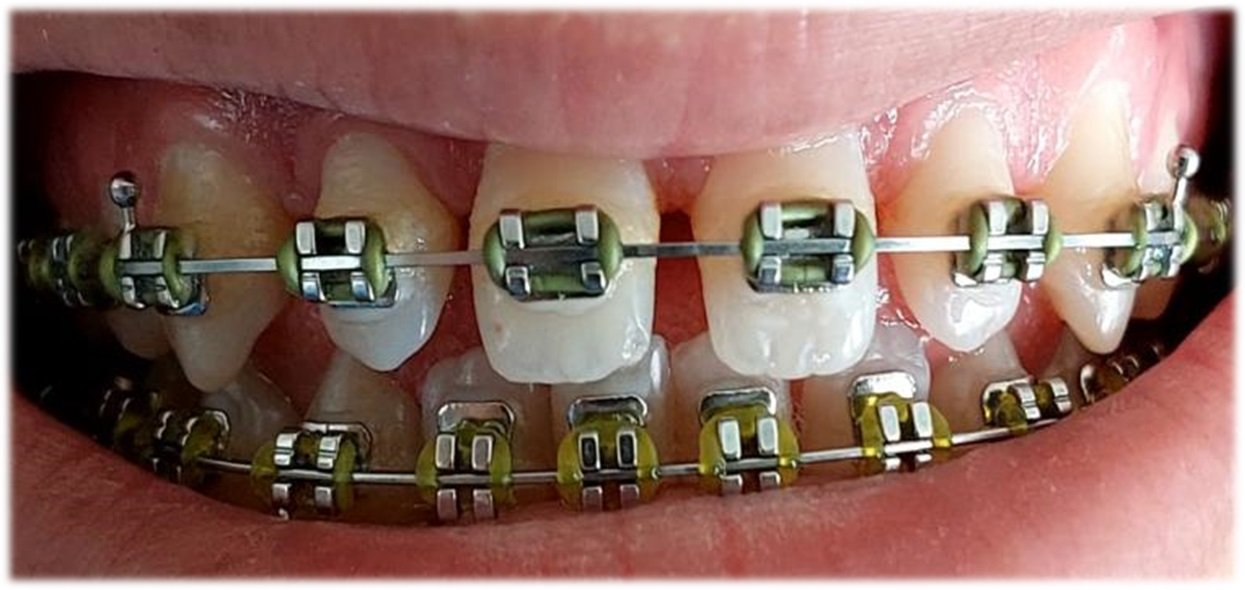
PRE OPERATIVE IMAGE
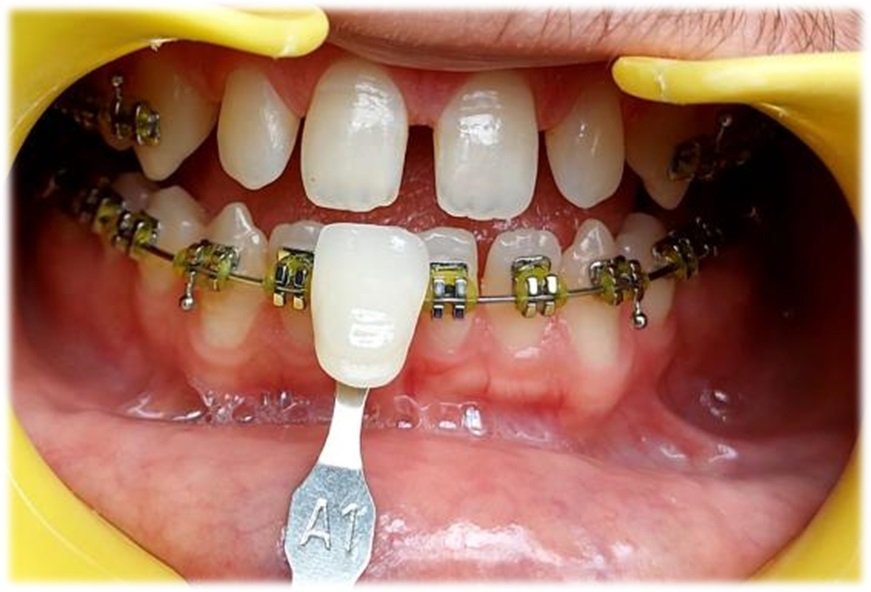
SHADE SELECTION
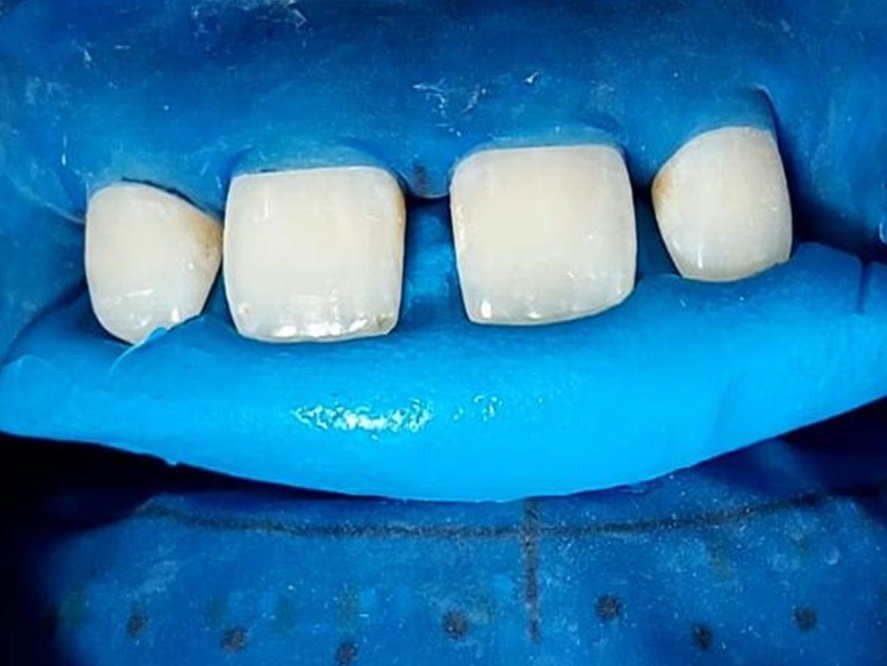
RUBBER DAM AND PUTTY INDEX PLACEMENT
POST OPERATIVE IMAGE
DISCUSSION
If aesthetics are your main concern, composite restorations are a cost-effective treatment option. The anterior composites' tensile strength was said to be exceptionally good teeth.5 Traumatic oral tissue loss produces a variety of effects, including functional loss, aesthetic concerns, and psychological issues.
Direct composite resin restoratives are an affordable and chair side treatment option for simple crown fractures. The success rate of direct composite restorations has increased even more thanks to advances in technology and bonding solutions.3 From an aesthetic standpoint, treating fractured anterior teeth presents a significant problem for dentists.6
In this instance, a direct repair was planned utilising the putty matrix technique, taking the patient's age and socioeconomic position into consideration. With the shape, size, and inclination of the teeth already predetermined, the putty index technique makes it easier to reconstruct the tooth structure by serving as a guide that allows dentists to design the treatment in detail.7 Determining the incisal edge thickness and cervico incisal length of teeth enables for simple insertion in the area that needs to be restored.6,7 In addition to serving as an index, it also functions as a stiff plate that acts as a template to hold the restorative material.
To guarantee strong bonding and good adaption of composite and tooth contact, a bevel was made to expose enamel rods and eliminate any unsupported tooth structure. Following the layering of the composite resin, the surface was properly finished and polished to produce a highly polished finished restoration.
REFERENCES
- Yildirim Z, GÖMEÇ ÖY. Treatment approaches for traumatized anterior teeth with excessive tissue loss: three case reports. J Istanbul UnivFac Dent 2017; 51(2):54-60.
- Kim KY, Kim SY, Kim DS, Choi KK. Use of temporary filling material for index fabrication in Class IV resin composite restoration, RestorDent Endod2013;38(2):85-89.
- Sherwood A ,RathakrishnanM, Savadamaoorthi KS, Bhargavi P, Kumar VV. Modified putty index matrix technique with mylar strip and a new classification for selecting the type of matrix in anterior proximal/incisal composite restorations. Clinical Case Reports 2017; 5(7):1141-1146.
- Peumans M, De Munck J, Fieuws S, Lambrechts P, Vanherle G, Van Meerbeek B. A prospective ten-year clinicaltrialof porcelain veneers. J Adhes Dent2004;6(1):65–76.
- Al-Khayatt AS, Chaudhuri AR, Poyser NJ, BriggsPF, Porter RW, Kelleher MG et al. Direct composite restorations for the worn mandibular anterior dentition: a 7-year follow-up of a prospective randomised controlled split-mouthclinical trial. J Oral Rehabil. 2013;40:389-401.
- Hassan A,Shahid O. Esthetic Restorations,The putty matrix Technique.J Dow Uni Health Sci 2013;7(3) 122-125
- Santos MPA, Maia LC, The Reference Guide ;A Step by step Technique for Restoration of Fractured Anterior Permanent Teeth, J Can Dent Assoc 2005,71 (9):643-646.
Disclaimer from Guident
The views and opinions expressed in articles published in Guident are solely those of the authors and do not necessarily reflect the views of the editors, the editorial board or the publisher, Ivory India. Guident does not endorse any product, technique or treatment described. Clinical content is intended for qualified dental and medical professionals and is not a substitute for individual clinical judgement. Guident, its editors and the publisher accept no liability for any consequence arising from the use of information published in the journal.
How to cite this article
Dr. Ayushi Bangari, Dr. Aryama Balodi, Dr. Anil Dhingra. Anterior Composite Restorations: A Case Series. Guident. 2022 Aug;15(9-10). Available from: https://guident.in/articles/endodontics/anterior-composite-restorations-a-case-series.html