Anterior Aesthetic Rehabilitation Using Chairside Direct Composite:: A Case Report
Department of Conservative Dentistry and Endodontics, Seema Dental College And Hospital, Rishikesh
ABSTRACT
Direct composite restorations offer a conservative and efficient solution for anterior aesthetic rehabilitation. This case series presents six different clinical scenarios managed chairside using adhesive composite techniques. Emphasis is placed on minimally invasive protocols, layering techniques, and immediate aesthetic outcomes. All cases demonstrated satisfactory functional and aesthetic results.
Keywords: Anterior composite, aesthetic dentistry, composite veneering, direct composite restorations, aluminum oxide discs
INTRODUCTION
The demand for minimally invasive aesthetic dentistry has significantly increased in recent years. Direct composite restorations allow clinicians to restore form, function, and aesthetics in a single visit while preserving maximum tooth structure. Advancements in adhesive systems and composite materials have enabled predictable outcomes, making direct composites a preferred choice for anterior restorations.
CASE 1
A 21-year-old patient reported with previous composite restorations in upper front teeth and wanted to get them corrected. There was no history of pain or sensitivity. Intraoral examination revealed existing restorations irt 12, 11, 21 and these teeth gave normal response on pulp vitality tests (Cold Test and EPT). Direct Composite Re-restoration was planned and procedure was performed under rubber dam followed by finishing and polishing.
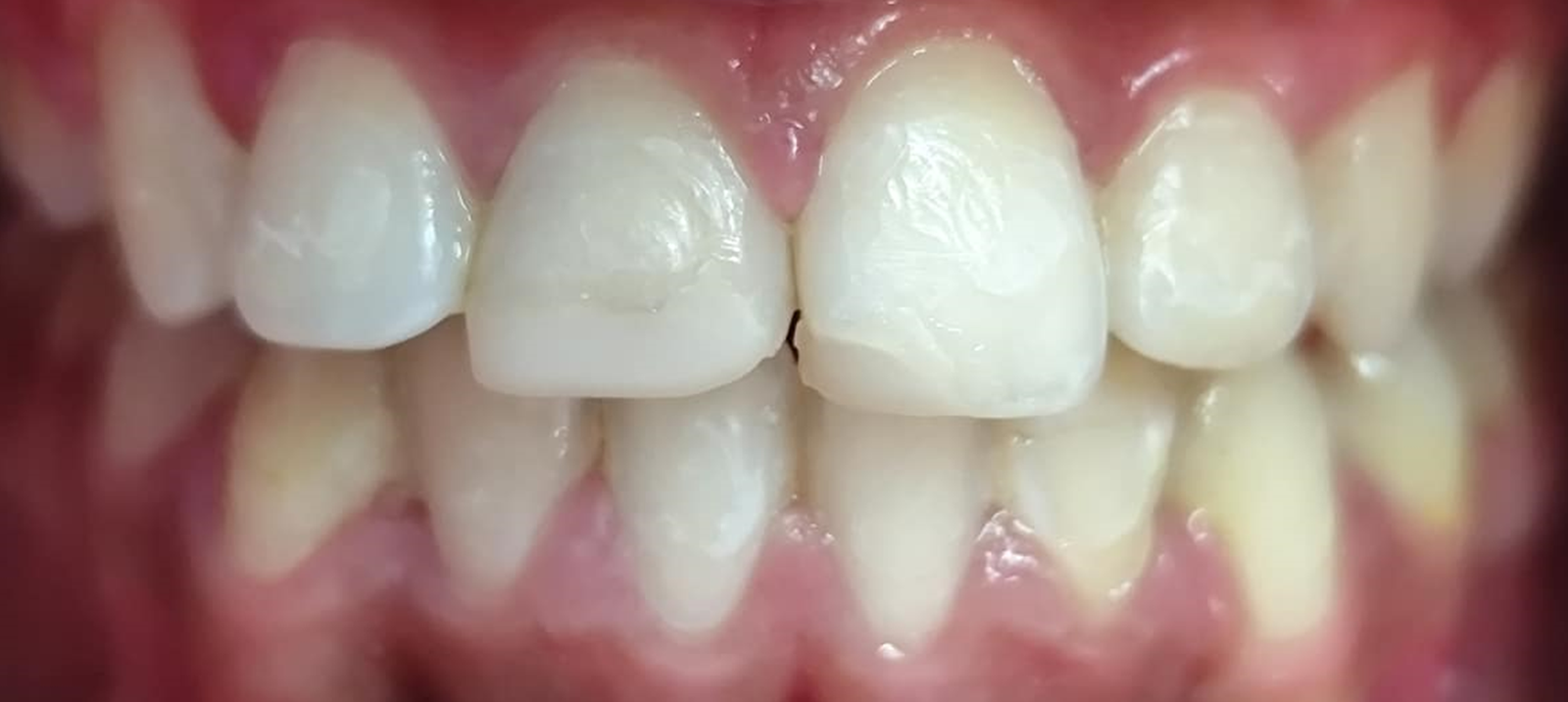
Fig. 1A: Pre-operative view showing previous composite restoration done irt 12, 11, 21
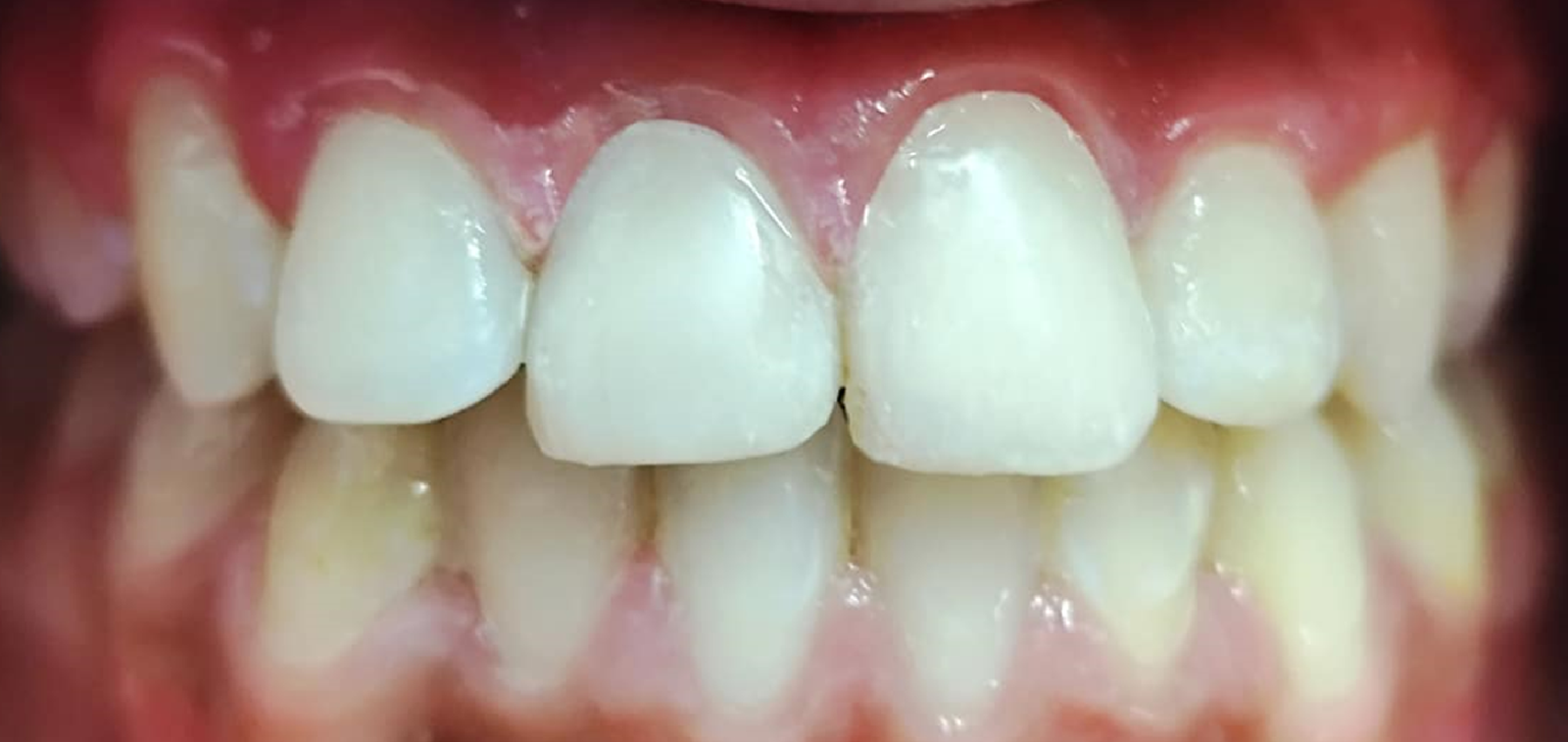
Fig. 1B: Post-operative view showing re-restoration followed by finishing and polishing.
CASE 2
A 14-year-old patient reported with chief complaint of broken upper tooth and gave history of biting on hard food that led to it. On clinical examination, Elli’s Class I fracture was observed irt 21 with normal response on pulp vitality tests. Patient did not give history of pain or swelling. Direct composite veneering was planned irt 21, procedure was performed under rubber dam and completed with finishing and polishing.

Fig. 2A: Pre-operative view showing Elli’s class I fracture irt 21
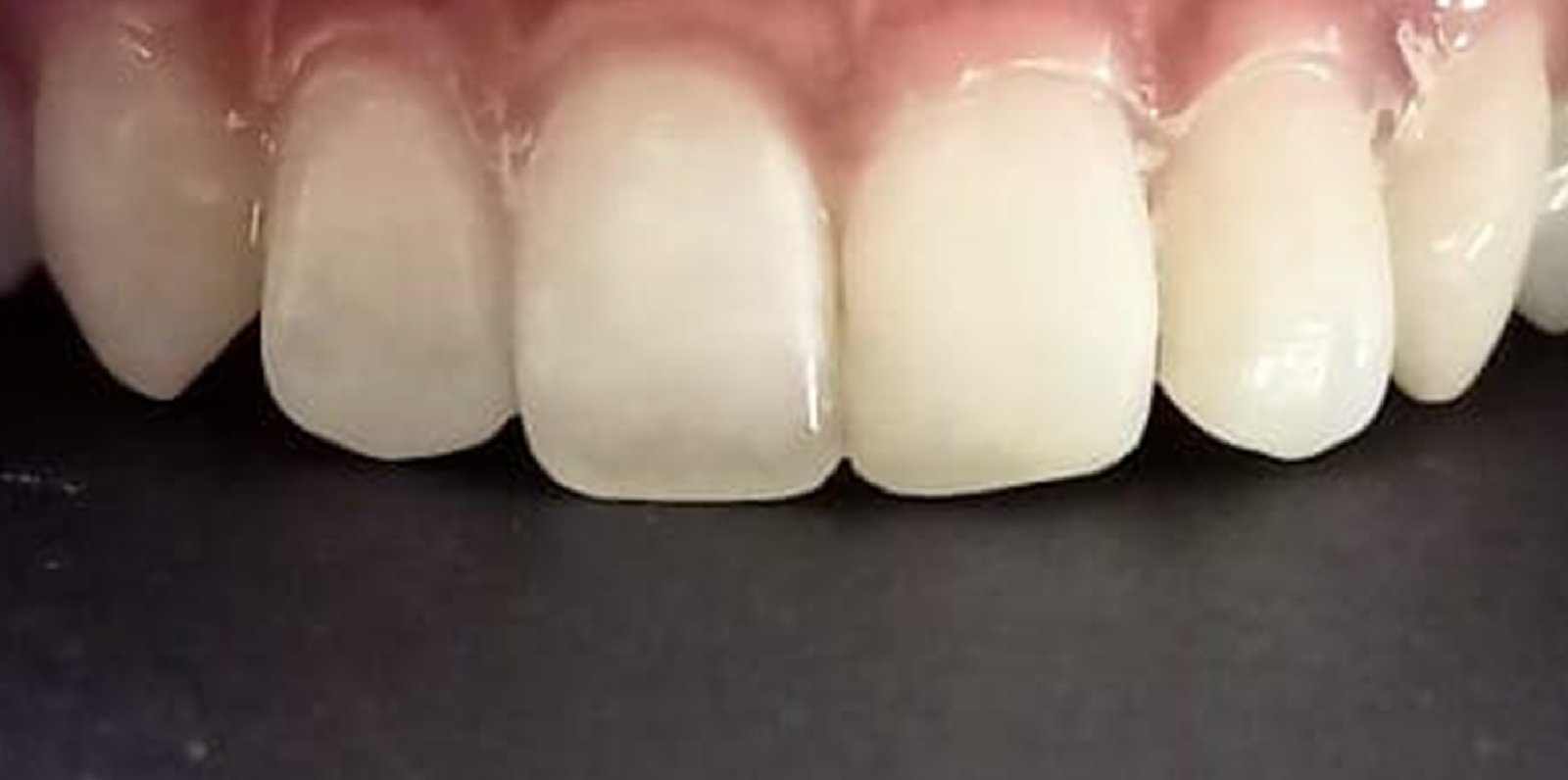
Fig. 2B: Post-operative view after direct composite restoration followed by finishing and polishing
CASE 3
A 16-year-old patient reported with chief complaint of broken upper tooth and gave history of fall. On clinical examination, Elli’s Class II fracture was observed irt 22 with normal response on pulp vitality tests. Patient did not give history of pain or swelling. Direct composite veneering was planned irt 22, procedure was performed under rubber dam and completed with finishing and polishing.
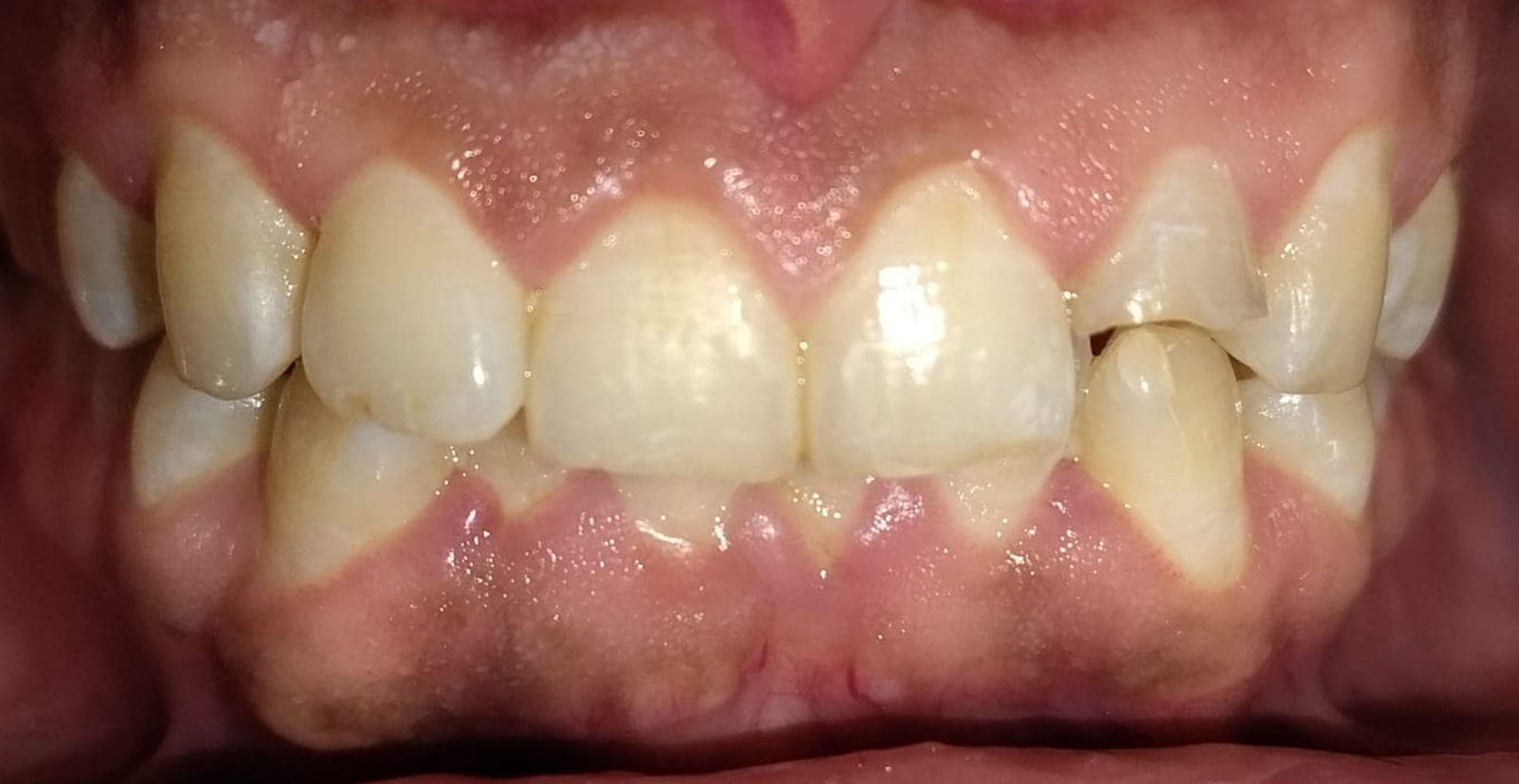
Fig. 3A: Pre-operative image showing Elli’s class II fracture irt 22.
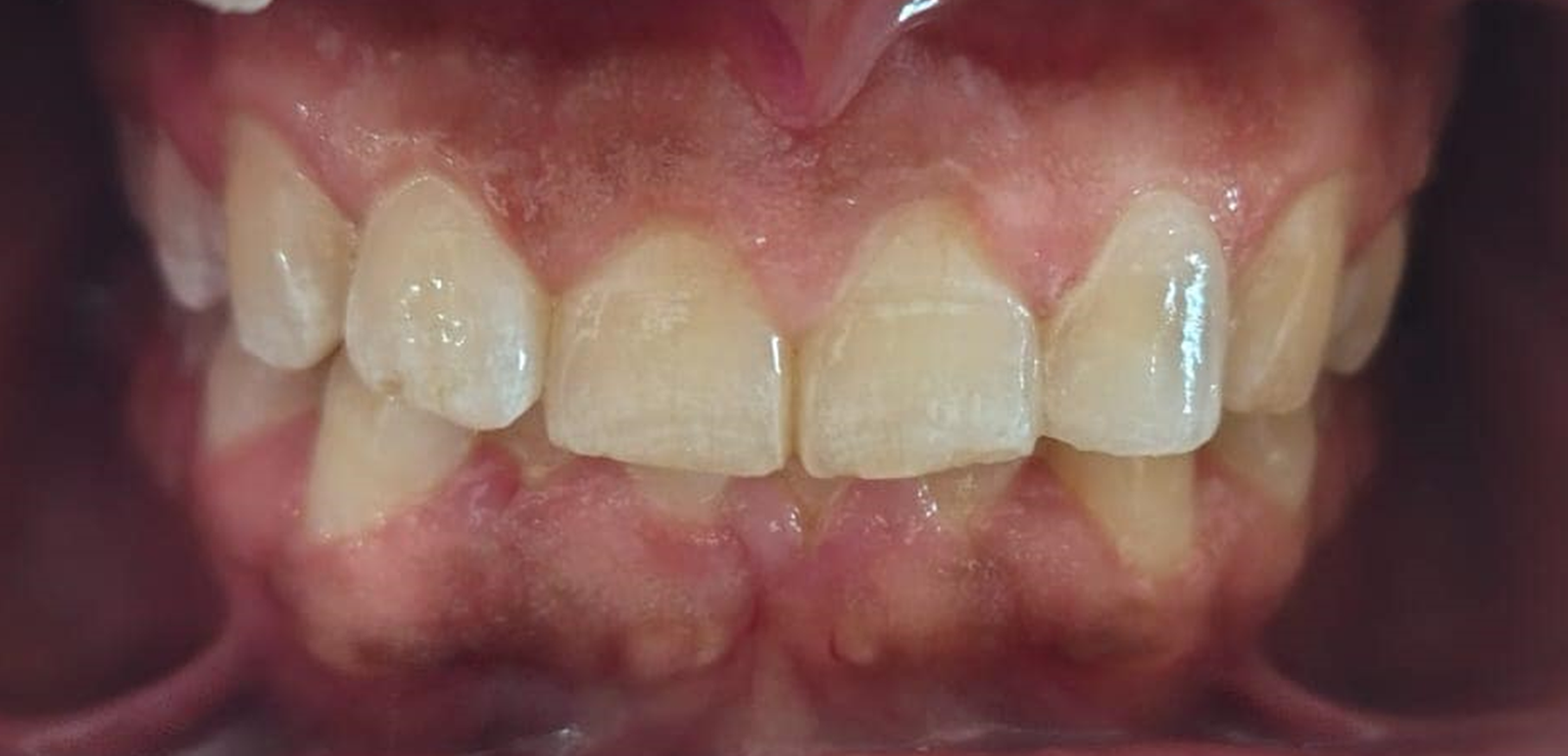
Fig. 3B: Pre-operative image after composite restoration followed by finishing and polishing.
CASE 4
A 15-year-old patient reported with chief complaint of spacing and discoloration and wanted to get her teeth orthodontically aligned. Patient gave history of restorations in upper teeth 1 year ago On clinical examination, it was observed that previous restorations were dislodged along with secondary caries irt 11, 12 ; with normal response on pulp vitality tests. Patient did not give history of pain or swelling. Direct composite veneering was planned irt 11, 12, procedure was performed under rubber dam and completed with finishing and polishing after which patient was referred for orthodontic space closure.
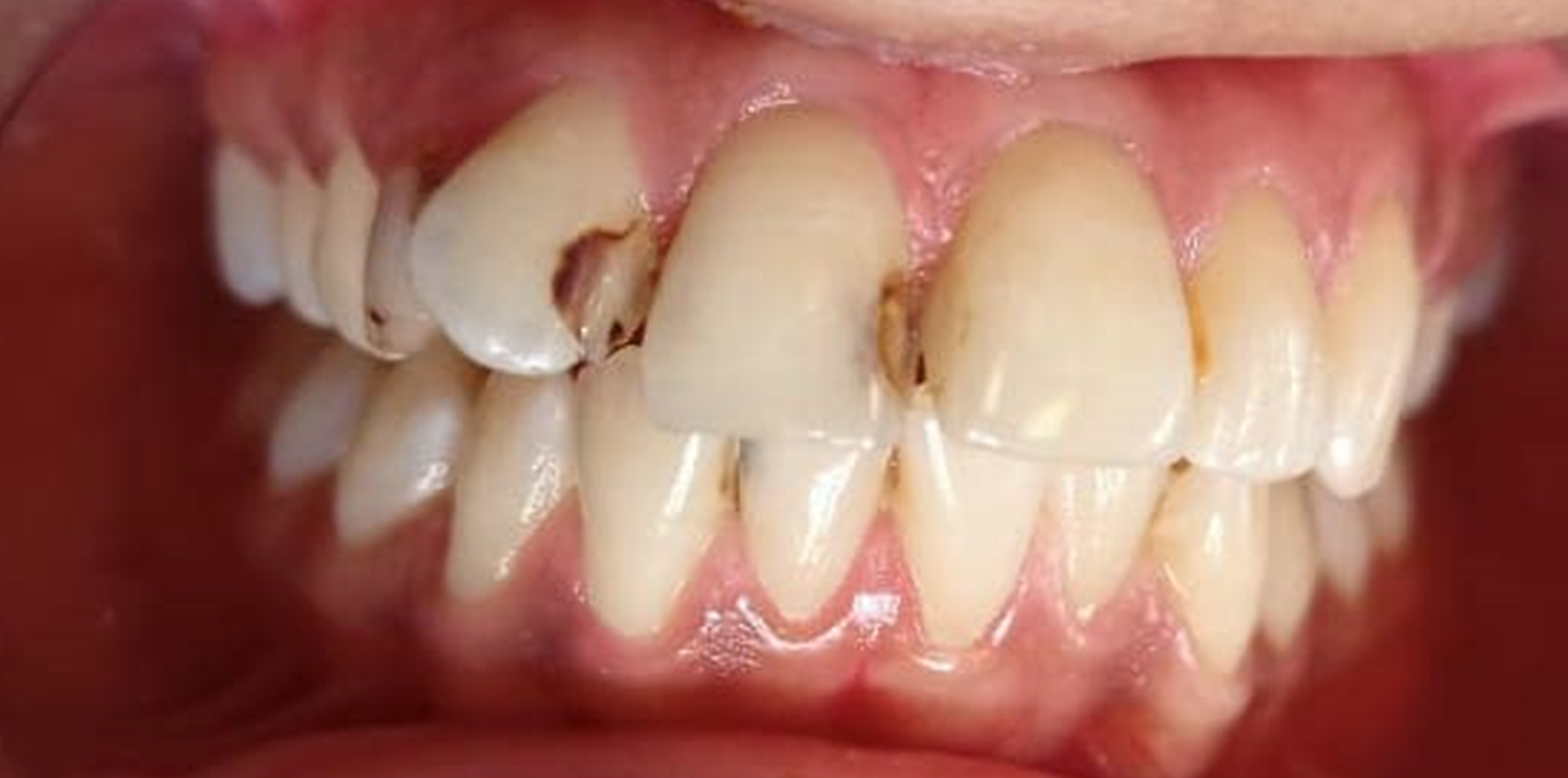
Fig. 4A: Pre-operative class III caries irt 12, 11.

Fig. 4B: Post operative final outcome
CASE 5
A 20-year-old patient reported with chief complaint of unpleasant smile. On clinical examination, Elli’s Class III caries were observed irt 13, 12, 11 with normal response on pulp vitality tests. Patient did not give history of pain or swelling. Direct composite veneering was planned irt 13, 12, 11, procedure was performed under rubber dam and completed with finishing and polishing
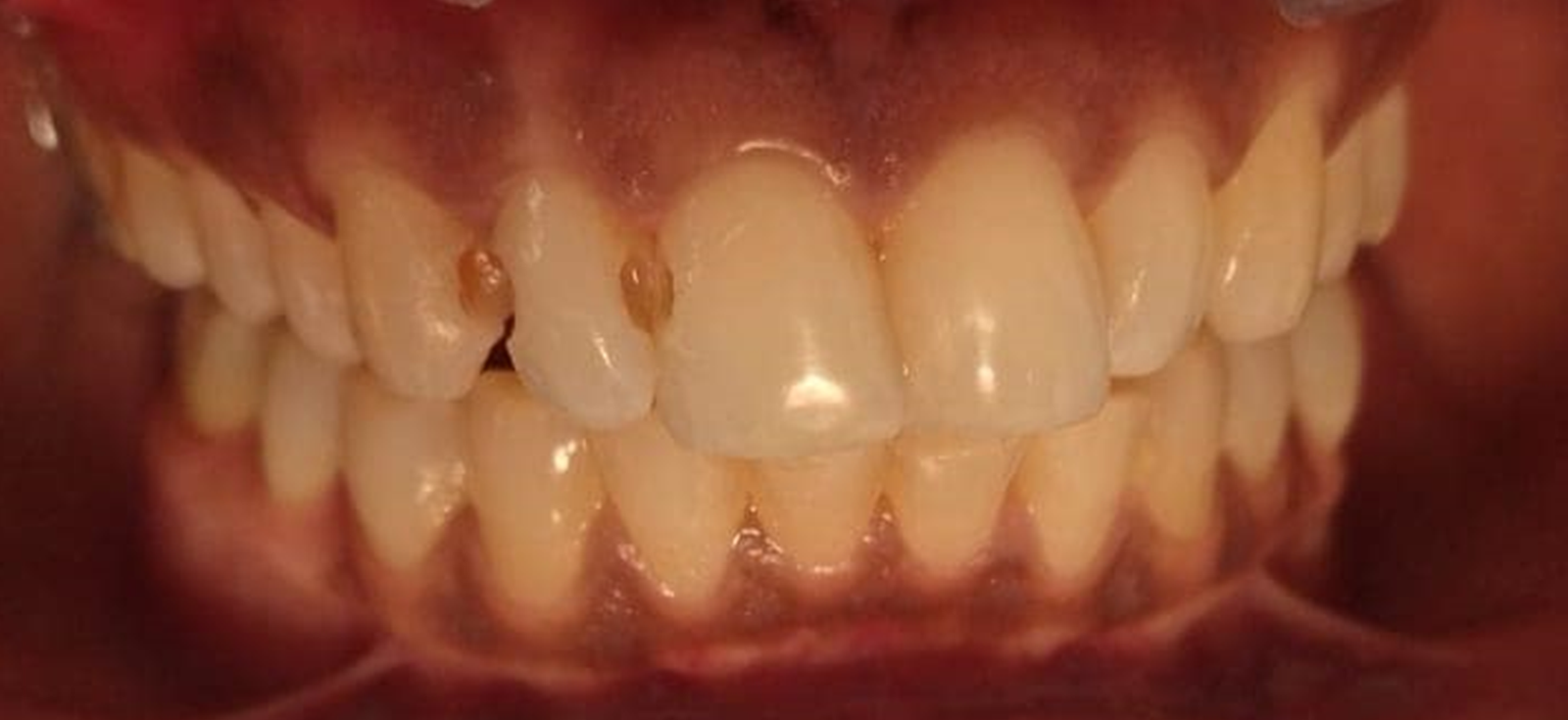
Fig. 5A: Pre-operative class III caries irt 13, 12, 11.

Fig. 5B: Post operative final outcome.
CASE 6
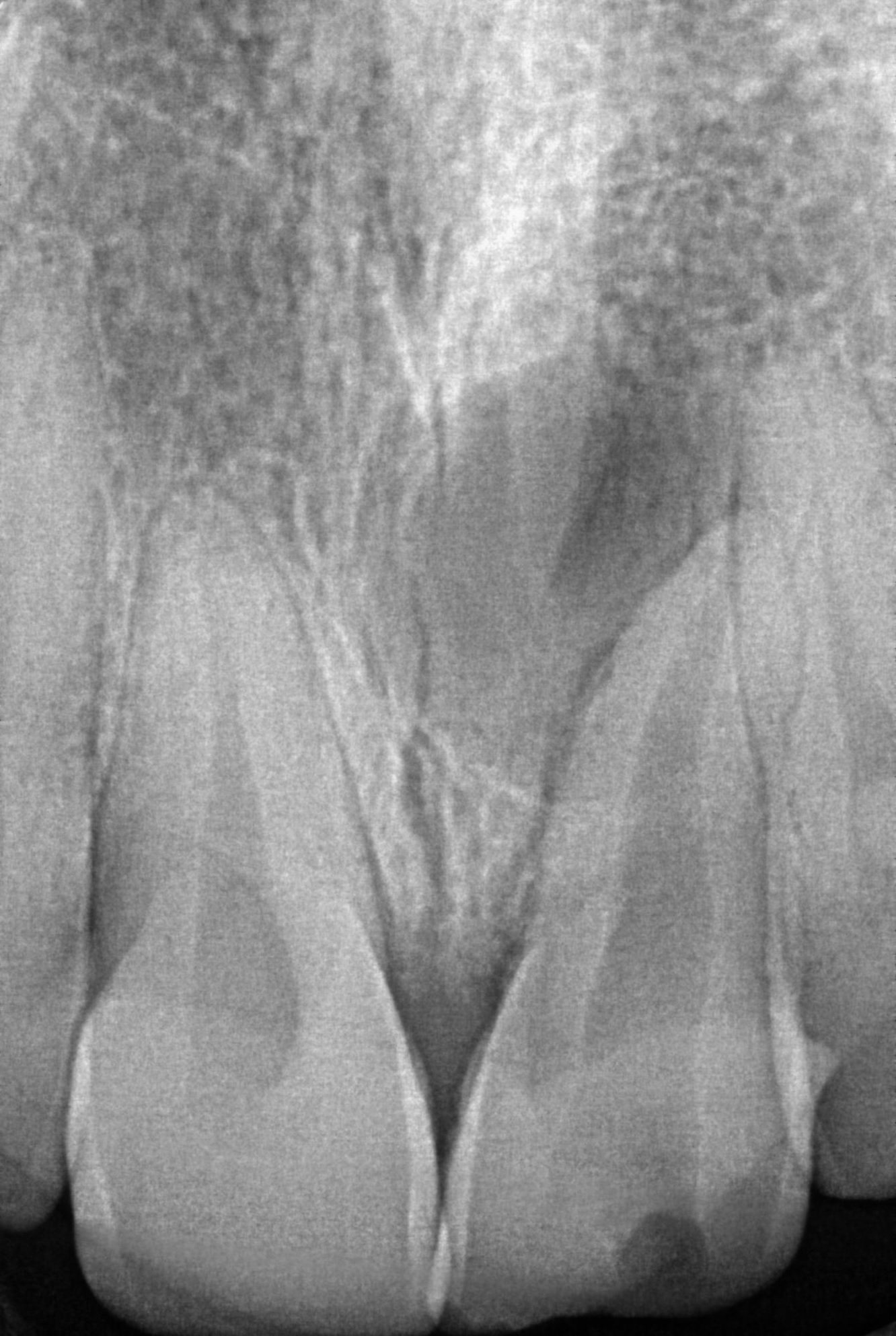
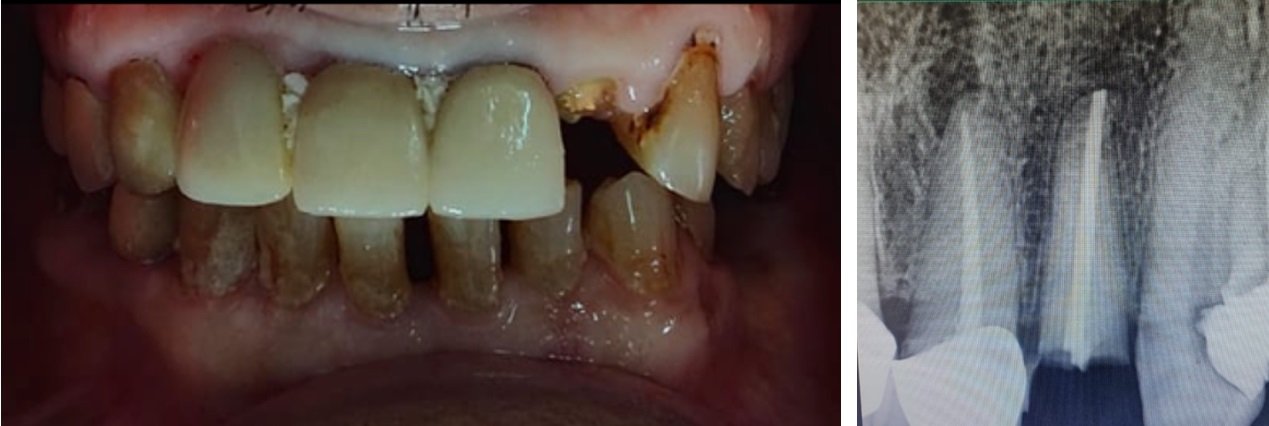
A 23-year-old patient reported with chief complaint of discolored upper front tooth. On clinical examination, deep class V caries was observed irt 21 with no response to pulp vitality testing. Patient did not give history of pain or swelling. Intra oral peri-apical radiograph showed radiolucency involving enamel, dentin and pulp irt 21. Based on clinical signs, symptoms and investigations, diagnosis of pulpal necrosis irt 21 was made. Non-surgical root canal treatment irt 21 followed by direct composite restoration was planned irt 21, procedure was performed under rubber dam and completed with finishing and polishing
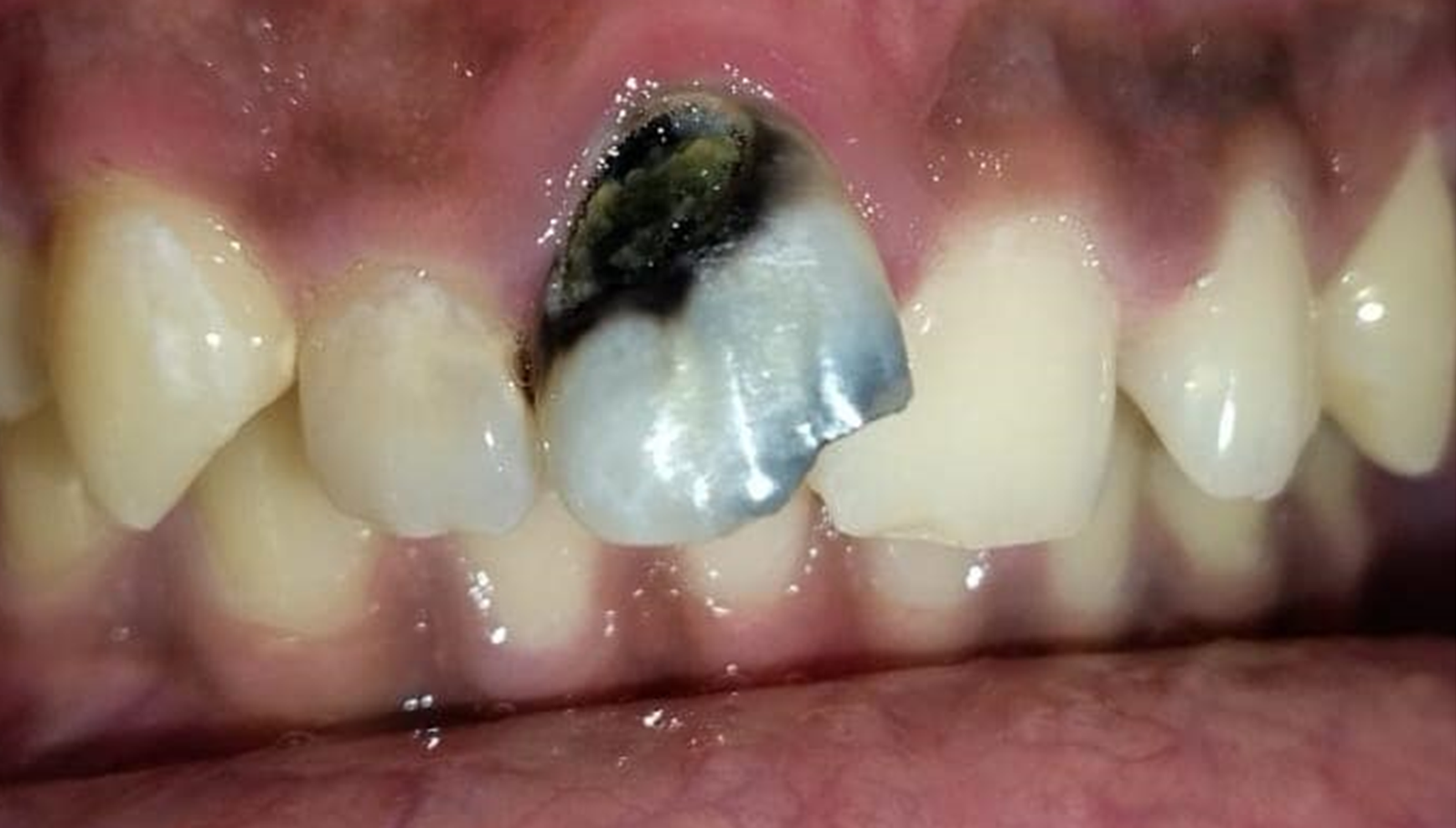
Fig. 6A: Pre-operative deep class V caries 21.
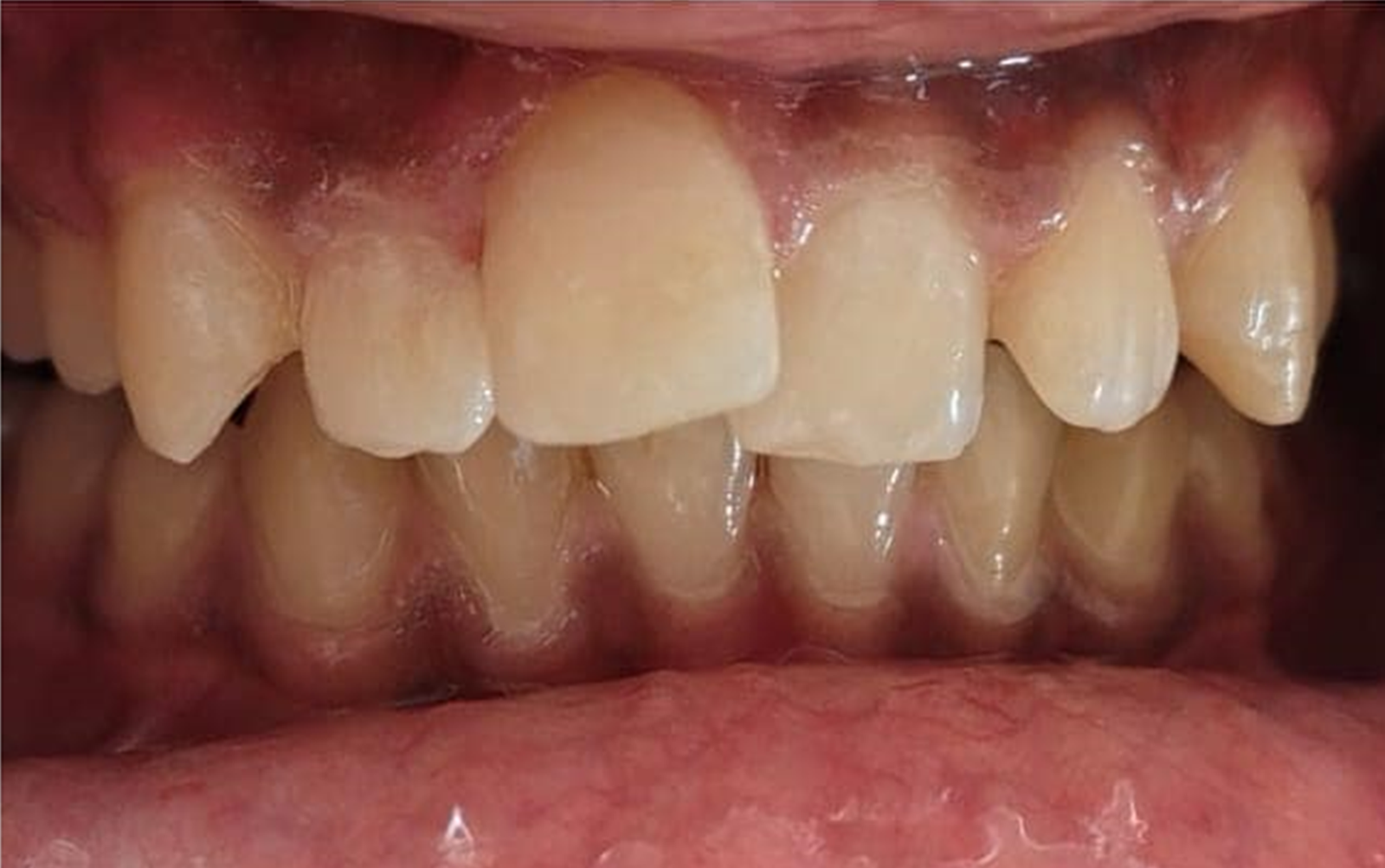
Fig. 6B: Post operative image after RCT irt 21 followed by direct composite restoration.
Clinical Protocol
Shade selection prior to isolation. Rubber dam isolation preferred. Etch-and-rinse bonding technique used. Layering technique included palatal shell, dentin core, and enamel layer. Finishing and polishing performed using finishing fine/extra-fine diamond burs, aluminum oxide discs, polishing points/cups, and polishing pastes.
DISCUSSION
Direct composite restorations provide a conservative and versatile approach for anterior aesthetics. Success depends on proper case selection, morphology understanding, and layering technique. Immediate results and patient satisfaction were achieved in all cases.
CONCLUSION
Chairside direct composite restorations are an effective, minimally invasive solution for anterior aesthetics with predictable outcomes.
REFERENCES
- Faunce FR, Myers DR. Laminate veneer restoration of permanent incisors. J Am Dent Assoc . 1976;93:790–2. doi: 10.14219/jada.archive.1976.0055
- Paolone G. Direct composite restorations in anterior teeth Managing symmetry in central incisors. Int J Esthet Dent. 2014;9(1):12–25
- Mackenzie L, Parmar D, Shortall AC, Burke FT. Direct anterior composites: a practical guide. Dental update. 2013 May 2;40(4):297-317.
- Jefferies SR. The art and science of abrasive finishing and polishing in restorative dentistry. Dent Clin N Am. 1998;42:613–27.
- LeSage BP. Aesthetic anterior composite restorations: a guide to direct placement. Dental Clinics of North America. 2007 Apr 1;51(2):359-78.
- Muhamad AH. Restoring fractured anterior tooth using direct composite restoration: a case report. Global Journal of Dental Sciences1. 2019;1.
- Torres CR, Zanatta RF. Composite restoration on anterior teeth. InModern Operative Dentistry: Principles for Clinical Practice 2019 Dec 15 (pp. 465-575). Cham: Springer International Publishing.
- Baratieri LN, Araujo E, Monteiro Jr S. Color in natural teeth and direct resin composite restorations: Essential aspects. European Journal of Esthetic Dentistry. 2007 Jun 1;2(2).
- Nahsan FP, Mondelli RF, Franco EB, Naufel FS, Ueda JK, Schmitt VL, Baseggio W. Clinical strategies for esthetic excellence in anterior tooth restorations: understanding color and composite resin selection. Journal of Applied Oral Science. 2012 Apr;20(2):151-6.
- Varvar? EB, Mesaro? A?, Culic B, Varvar? AM, Dudea D. Resin composite layering technique for direct anterior teeth restorations. PALESTRICA OF THE THIRD MILLENNIUM. 2010:234.
Disclaimer from Guident
The views and opinions expressed in articles published in Guident are solely those of the authors and do not necessarily reflect the views of the editors, the editorial board or the publisher, Ivory India. Guident does not endorse any product, technique or treatment described. Clinical content is intended for qualified dental and medical professionals and is not a substitute for individual clinical judgement. Guident, its editors and the publisher accept no liability for any consequence arising from the use of information published in the journal.
How to cite this article
Dr. Vidya Chawla, Dr. Deepshikha Sainwal, Dr. Seema Dixit. Anterior Aesthetic Rehabilitation Using Chairside Direct Composite:: A Case Report. Guident. 2026 Jul;19(8). Available from: https://guident.in/articles/endodontics/anterior-aesthetic-rehabilitation-using-chairside-direct-composite-a-case-report.html